



PlayStation Network is one of the biggest gaming ecosystems in the world. Accounts, multiplayer features, store pages, patches, friend lists, and all the small data checks that make the PS4 and PS5 experience feel smooth depend on cloud services running at massive scale. Sony uses AWS to help manage that workload across regions, absorb huge spikes in traffic, and keep critical services stable. It is the kind of work most people never notice, but it shapes a lot of the gaming experience we take for granted.




Why PlayStation Moved PSN to AWS
Before the PS4 era, much of PlayStation Network lived on traditional servers. That setup worked for a while, but the network kept growing and the expectations around online features kept growing with it. Millions of people were logging in, downloading games, checking their trophies, or jumping into multiplayer sessions at the same time. The older approach could not keep up with that kind of load forever.
Sony started shifting PSN into the cloud to handle the increasing scale. AWS offered a global footprint and the ability to spin resources up or down depending on demand. That meant PSN could handle everything from regular day-to-day traffic to the massive spikes that happen when a big game launches or a major update drops. Moving to AWS also helped Sony break PSN into smaller services that could be updated faster and managed independently.
Over time, PlayStation Network grew into a large cloud-backed system made up of many connected parts. Sony has talked publicly about running more than 50 online services and over 200 microservice components. These handle things like account security, matchmaking, store browsing, and all the tiny background checks that make the PlayStation experience feel consistent.
The goal was simple. PSN needed to be fast, stable, and ready for sudden bursts of activity around the world. AWS helped Sony get there by giving them the scalability and flexibility they needed. It also allowed the teams to focus on improving features rather than maintaining physical servers.

The AWS Services Powering PSN Today
PlayStation Network is made up of a lot of moving parts. Most people never see them, but they work together to keep things running smoothly whenever you sign in or start a game.
Sony has talked about several AWS services that support these features in different ways. You do not need cloud experience to understand them. Think of each service as a tool that helps PSN stay fast and stable.
Here’s a high-level look at how PlayStation Network uses different AWS services behind the scenes. You don’t need to know every piece. It just shows how many tools work together to keep things running.
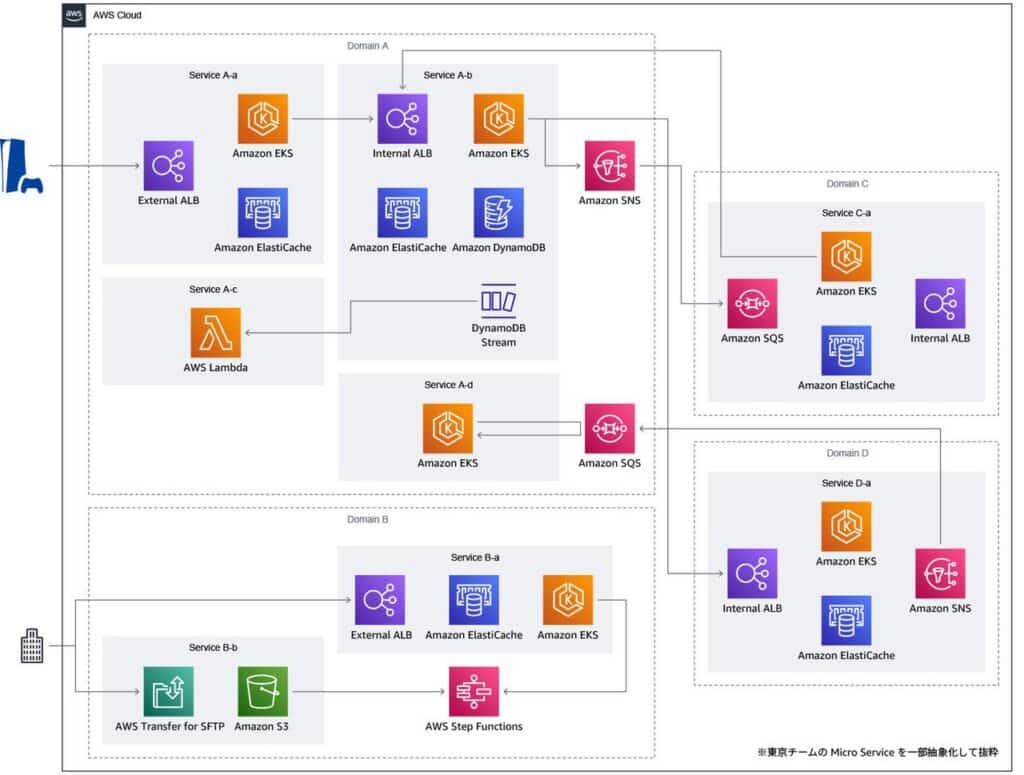
Amazon ECS for Running PSN’s Many Services
Sony uses Amazon ECS to run the smaller services that make up PSN. These include account checks, game licenses, social features, and other background tasks.
ECS helps Sony update these services quickly and scale them when traffic increases. It keeps the system flexible instead of relying on one big server that might slow down under heavy load.
DynamoDB for Fast, Reliable Player Data
Player profiles, saved settings, and many other pieces of data live in DynamoDB. It is a database that can respond quickly from anywhere in the world.
That matters when you have millions of people logging in at the same time. DynamoDB handles that load without Sony needing to manage hardware.

ElastiCache for Quick Responses
Some parts of PSN need fast, repeated lookups. Matchmaking is a good example.
Instead of asking the database every time, PSN stores some short-term information in ElastiCache to keep things responsive.
Sony has even shared a story about how AWS helped them fix a load imbalance issue in ElastiCache during development. That support helped avoid problems before launch.
SNS and SQS for Event Messages
These two services help PSN pass information between systems. One service sends a message. The other receives it and makes sure it gets processed. This helps with things like notifications, background tasks, and other behind-the-scenes jobs that keep the network in sync.
Kinesis for Real-Time PS5 Activity Data
PS5’s Activity Cards and real-time UI updates rely on cloud-delivered information. Sony has talked about using Amazon Kinesis to collect and handle this data.
When you see progress updates or game tips appear inside the PS5 interface, that information moves through a data pipeline supported by Kinesis.
AWS Transfer for SFTP for Massive Game Files
Game updates and submissions can be huge, sometimes over 100 GB. Sony uses AWS Transfer for SFTP to move these files quickly and securely between regions. This helps developers send new builds for testing and lets Sony distribute patches worldwide without bottlenecks.
How AWS Helped Launch the PlayStation 5
The launch of a new console puts enormous pressure on online services. Millions of people sign in at once, download updates, link accounts, check store pages, and start exploring new features. Sony talked about this openly during a developer session at AWS re:Invent, and it gives a clear look at how much work goes into keeping everything stable.
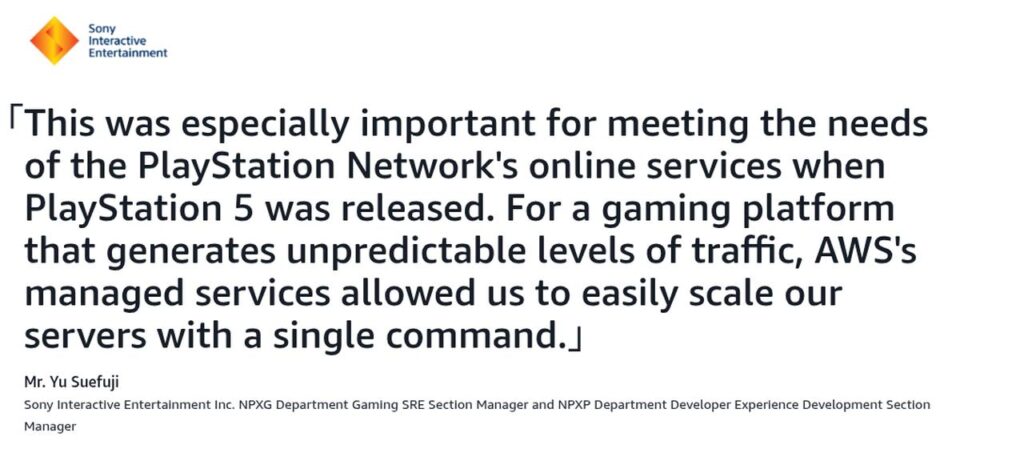
When the PS5 was preparing for release, Sony teams were spread across different regions and could not gather in the same room. They relied heavily on AWS tools and support to build a virtual operations center. Engineers used a shared dashboard to track traffic, system health, and any unusual behavior in real time. It was a different kind of launch, but the cloud made it possible.
Sony also ran stress tests before the console shipped. These tests pushed PSN far beyond normal traffic to see how the system would react. One technique was a controlled burn, where teams gradually increased load until something broke. This let them fix issues early. They also used chaos testing to simulate sudden failures. It may sound strange, but intentionally breaking services helped them understand how the system recovered.


AWS engineers stayed closely involved throughout the process. When Sony discovered an unexpected load issue inside ElastiCache, AWS teams helped track down the cause and fix it quickly. Sony said this support became a key part of keeping launch systems steady.
One of the biggest improvements came from how fast Sony could deploy changes. Before moving to AWS, deployments were slower and more limited. With cloud infrastructure in place, they increased their deployment frequency several times over and reduced deployment times significantly. Faster updates made it easier to react to unexpected problems as they appeared.
The final launch went smoothly, even with record traffic and global demand. Most people never noticed the work that went into it, which is usually the sign of a good launch.
Scaling for Millions: PSN’s Global Snapshot
PlayStation Network supports one of the largest gaming communities in the world. That alone brings a lot of complexity. Millions of people are signing in at different times, spread across regions with different internet speeds, consoles, and habits. The system needs to react to all of that without slowing down. AWS helps Sony handle this by letting PSN scale up and down based on real activity.

Sony has talked about PSN supporting more than one hundred million active accounts. That means the network sees traffic spikes every time a new game drops or when major updates go live. These spikes often double or triple normal traffic within minutes. Without cloud infrastructure, that kind of surge could overwhelm servers. Using AWS, PSN can temporarily increase its capacity and then scale back down when things settle.
This helps with everyday gameplay, but it also matters for global events. A big multiplayer release, a popular free weekend, or a seasonal update can hit all regions at once. AWS gives Sony the flexibility to meet that demand. Most gamers never think about this level of scaling because it happens in the background. It helps keep downloads and online features stable during big releases. The goal is to keep everything smooth so the experience feels consistent no matter when you log in.
AWS regions also help reduce latency by keeping certain tasks closer to users. This is not related to cloud gaming. It supports regular online features like authentication, game activity checks, and background communication between PlayStation services. For most gamers, this just means sign-ins and online checks feel a little quicker. It is a small piece of the bigger system, but it helps keep things responsive.
PSN is a clear example of how much modern gaming relies on cloud technology. The ability to absorb huge waves of activity is not something traditional servers could handle alone. Cloud infrastructure makes it possible for PlayStation to deliver a stable experience to millions of people around the world.
How This Reflects the Future of Online Gaming Infrastructure
Cloud technology is becoming a bigger part of how modern gaming works, even when the games themselves are not streamed from the cloud. PlayStation Network is a strong example of this shift. The service relies on cloud tools to stay flexible, absorb traffic spikes, and keep features running across regions. It shows how much online gaming depends on scalable infrastructure rather than local hardware alone.
This trend is not limited to Sony. Many gaming services now use cloud platforms to support multiplayer features, store browsing, account systems, and real-time updates. These tools help teams deliver features faster and fix issues more quickly. They also let developers handle global launches without building huge server rooms in every region. It is a practical approach that keeps growing as networks become more complex.
For cloud gaming fans, this is another reminder that cloud technology shapes the entire gaming ecosystem. Even when a company is not offering cloud-streamed games, the cloud still plays a major role behind the scenes. Online features, instant updates, leaderboards, friend lists, and store pages all depend on reliable infrastructure. The stronger that foundation becomes, the smoother gaming feels on the surface.
PlayStation Network’s use of AWS shows how cloud services help support giant communities and unpredictable traffic patterns. It highlights the value of building systems that can evolve quickly. It also reflects a larger industry trend toward cloud-backed gaming experiences, where infrastructure plays a quiet but essential role.
The Role of Cloud Tech in Today’s Gaming
It is easy to take online features for granted, especially when they quietly work in the background. The cloud plays a major part in that. PlayStation Network is a good example of how much modern gaming depends on stable, flexible infrastructure. Millions of people sign in, download updates, browse the store, jump into multiplayer, or check their progress every day. All of that activity sits on top of cloud-backed systems that scale when needed.
AWS helps Sony manage that global load while giving teams the tools to react quickly when something changes. These systems do not power cloud gaming. They support the everyday online features that PS4 and PS5 users rely on. The cloud has become a quiet part of the PlayStation experience, running behind the scenes while people focus on the games themselves.
Understanding how PSN uses AWS gives a clearer picture of the work required to keep a global network steady. It also shows how cloud technology has become an essential part of the gaming world. Not flashy. Not visible. But important. And as online features continue to grow, strong cloud infrastructure will keep shaping how we play.
As always, remember to follow us on our social media platforms (e.g., Threads, X (Twitter), Bluesky, YouTube, and Facebook) to stay up-to-date with the latest news. This website contains affiliate links. We may receive a commission when you click on these links and make a purchase, at no extra cost to you. We are an independent site, and the opinions expressed here are our own.