



Anno 117: Pax Romana puts you in charge of building a Roman city from scratch, and it gets to the point quickly. You land on a mostly empty stretch of coastline with a few basic tools and a long list of expectations. Food needs to move. Housing needs to grow. Money needs to stay positive. Within the first hour, you are already juggling supply lines, road layouts, and production chains that refuse to stay simple for long.
You play as a governor sent out from Rome, tasked with turning rough land into a working province. That role matters less for story flavour and more for how the game frames your decisions. Every choice has a knock-on effect. Add more housing and your economy improves, but now you need better services. Expand production and your income rises, but only if roads and storage can keep up.




If you have spent time with previous Anno games, the rhythm will feel familiar once things get moving. The focus is still on population tiers, trade, and keeping goods flowing where they need to go. What stood out for me early on was how quickly the game pushes you to think about logistics instead of individual buildings. You stop placing things because they look good and start placing them because the system demands it.
For newcomers, the opening hours are patient without being slow. The game explains its systems as you use them, then steps back and lets you feel the consequences. Miss a step and your economy stalls. Fix it and everything starts moving again. That loop becomes the hook.
Anno 117: Pax Romana is not about quick wins or spectacle. It is about solving small problems that stack up into something much bigger, one supply chain at a time.
Living Under Roman Rule
Anno 117: Pax Romana frames its campaign around your role as a Roman governor trying to keep multiple masters happy at once. You arrive with authority, but it becomes clear early on that most of the real power sits somewhere else. Orders come down from Rome, and you are expected to act on them quickly, even when they clash with your own plans.
Early missions ease you into the political tone. One task might ask you to support a public event. Another suddenly demands resources or coin with very little warning. These moments create a steady sense of pressure. You are building a city, but you are also reacting to expectations that never fully stop. I found myself adjusting layouts and production chains not because I wanted to, but because the story nudged me in that direction.

Conversations play out through short scenes where you choose how to respond. You can stay agreeable, push back gently, or show hesitation when demands start stacking up. Those choices do not swing the campaign in wildly different directions, but they change how the exchanges feel. It becomes less about winning arguments and more about deciding what kind of governor you want to be.
Other characters drift in and out of the campaign. Advisors bring problems tied directly to city management, like which operations to prioritise or which specialists to rely on. Rival governors appear with their own complications, sometimes dragging personal issues or legal trouble into the mix. Helping them can smooth things over. Ignoring them can create tension that lingers for later chapters.
The campaign also moves you between regions, which helps the story feel like it is progressing alongside your city. Latium feels orderly and familiar once things are running smoothly. Albion carries more uncertainty, both in tone and in the challenges it throws at you. Shifting between the two kept the narrative from settling into a routine.
The story never asks you to stop playing the game to watch it unfold. It happens alongside your building, often pushing you to adapt rather than reset. By the time the campaign starts wrapping up, it feels less like a tutorial and more like a record of how your province ended up the way it did.
Keeping Goods and People Flowing
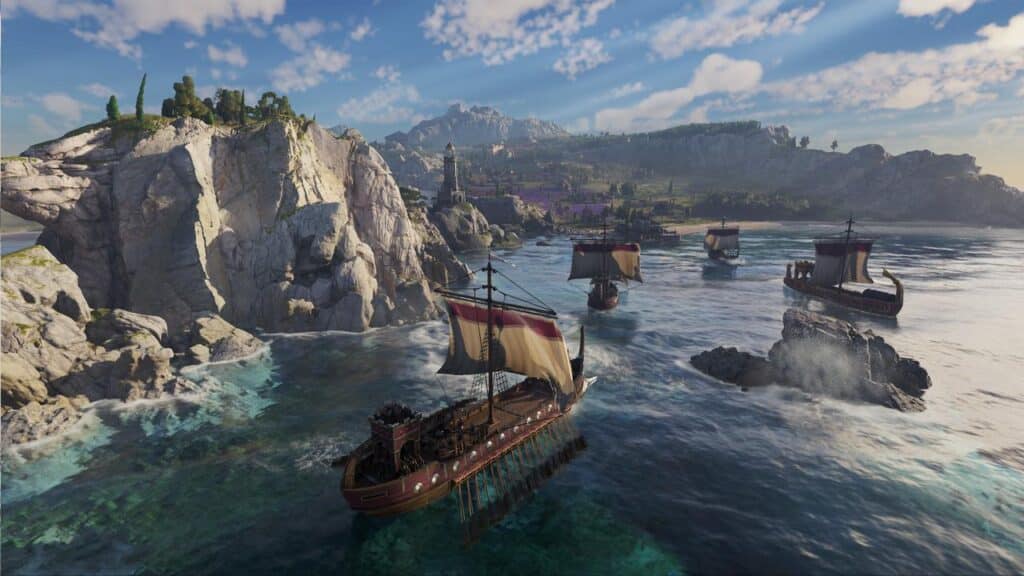
Gameplay in Anno 117: Pax Romana settles in once you get past the opening steps. You start small, placing basic housing and food production, then expand outward as new needs appear. That calm does not last long. Every upgrade unlocks new demands, and those demands ripple through your city faster than you expect.
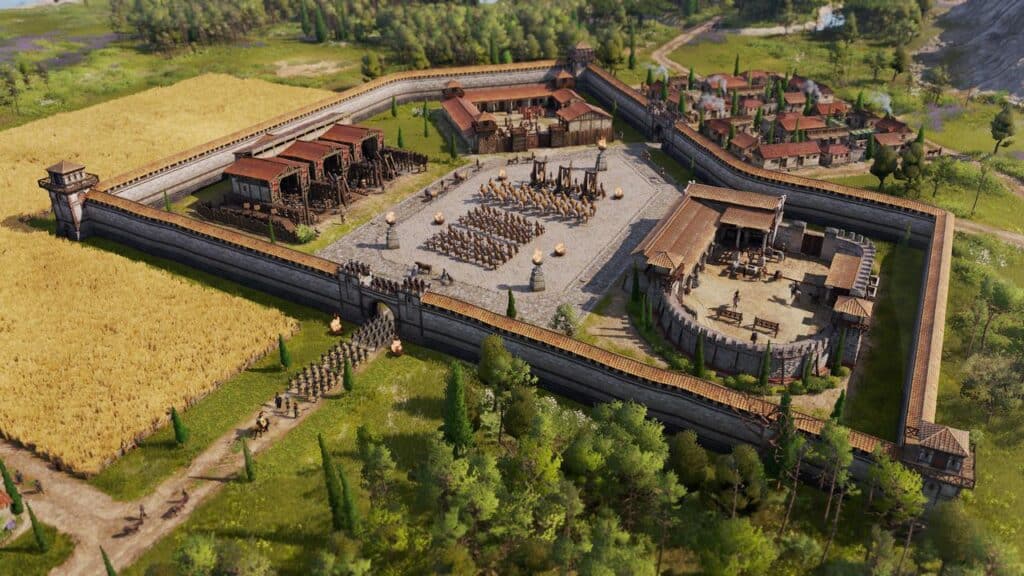
What worked for me early on is how quickly the game teaches you to think in chains instead of individual buildings. You are not just placing a farm or a workshop. You are thinking about where materials come from, how far they need to travel, and whether storage and roads can keep up. Fixing one problem often reveals another. When something breaks, the cause is usually clear.
Expansion becomes the natural next step. Certain resources are not available on your starting land, which pushes you to settle new islands or rely on trade. That shift changes how you read the map. Instead of focusing on a single growing city, you start managing a network of connected hubs that depend on each other. Moving goods efficiently matters just as much as producing them.
Roads end up being more important than they first appear. A poorly connected district can slow production even when everything else looks correct. Upgrading routes improves flow in a way you can feel almost immediately. Watching carts move faster and warehouses clear out feels like fixing a problem that was quietly holding everything back.
Trade is where things finally came together for me. It is easy to overproduce early and let goods pile up with no plan. Once I started setting export thresholds and selling excess stock, the economy opened up. Turning surplus into income made the city feel far more stable. From that point on, expansion felt planned instead of reactive.
Military systems and diplomacy sit alongside the city building rather than replacing it. Defence matters, but it never takes over the experience. It influences where you build and how you prioritise resources, especially as your territory grows. I liked that it stayed tied to planning instead of becoming a separate layer.
The campaign introduces these systems gradually, then steps back. Sandbox and co-op modes give you room to push further once everything clicks. Whether playing solo or with others, the core loop stays the same. Build carefully. Watch how goods move. Adjust when things stall.
Gameplay in Anno 117: Pax Romana rewards attention. Once you understand how everything fits together, keeping your cities running becomes much easier.
Seeing the City Come Alive
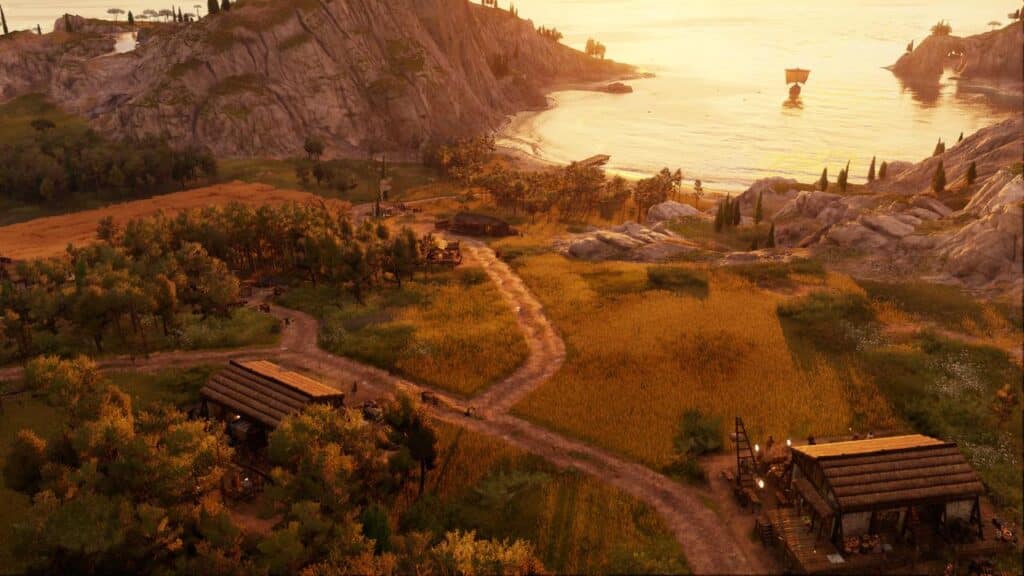
Anno 117: Pax Romana is easy to read once your city starts spreading. Buildings are distinct enough that you can tell production areas, housing, and service zones apart without digging through menus. When something is not working, you can usually spot the issue just by following the roads and watching where goods slow down.
I ended up zooming in a lot more than I thought I would. Streets feel busy once a city gets going. Workers move between buildings, carts roll toward warehouses, and ports stay active as ships come and go. I found myself dropping the camera closer to street level more often than expected, just to check how things were actually functioning instead of relying on overlays.
Pulling back gives a clear sense of scale. You can see districts grow outward, production clusters form, and trade routes stretch across the water. Latium and Albion also feel different in tone. One settles into order fairly quickly. The other keeps you a bit more cautious, especially early on, which made planning feel more deliberate.
The interface does a lot of work in the background. Most of the information you need is there, but it takes time to learn where everything lives. Production chains, storage details, and trade controls are all accessible, though some deeper information sits a few layers in. Once I got comfortable switching views and menus, checking details became quicker and less distracting.




Performance held up as my cities grew larger. Even when cities got crowded, things stayed smooth. I could pan around the map and hop between settlements without it feeling sluggish.
Overall, I rarely felt like the game was fighting me. I could spot problems by watching traffic and production instead of digging through numbers. It held together during longer sessions, and after a while the interface stopped feeling like a hurdle and just became part of how I played.

Anno 117: Pax Romana Rewards Careful City Building With Long Term Payoffs
Anno 117: Pax Romana is the kind of game that settles in the longer you play it. At first, you are just trying to keep food moving and money steady. A few hours later, you are tweaking trade routes, reshaping districts, and fixing problems you caused without even realising it at the time. That slow build is the appeal.
What kept me coming back was how clear cause and effect usually feel. If something goes wrong, you can almost always trace it back to a decision you made earlier. A road placed poorly. A warehouse too far away. A production chain pushed too hard. Fixing those issues feels good because the solution comes from paying attention, not guessing.
The Roman setting works because it stays in the background. It gives context to why demands keep coming and why expansion never really stops, but it never pulls focus away from the city itself. By the end of the campaign, it felt less like finishing a story and more like stepping back and looking at a place I had shaped piece by piece.
There are moments where things feel busy, especially while you are still learning where information lives and how multiple settlements interact. That early friction fades once everything starts making sense. After that, the game becomes easier to read and easier to manage without losing what makes it interesting.
If you like city builders where progress comes from understanding systems instead of chasing big moments, Anno 117: Pax Romana fits nicely. It rewards patience, planning, and the kind of small fixes that quietly turn a struggling province into something that finally runs on its own.
Anno 117: Pax Romana
Summary
Anno 117: Pax Romana delivers a city-building experience that rewards patience and planning over quick wins. Its focus on supply chains, trade, and smart layouts makes every decision feel connected, especially once your province starts to sprawl. The Roman setting frames the pressure without getting in the way, letting the systems stay front and centre. If you enjoy city builders that feel better the more you understand them, this one sticks.
As always, remember to follow us on our social media platforms (e.g., Threads, X (Twitter), Bluesky, YouTube, and Facebook) to stay up-to-date with the latest news. This website contains affiliate links. We may receive a commission when you click on these links and make a purchase, at no extra cost to you. We are an independent site, and the opinions expressed here are our own.