


Bluey’s Quest for The Gold Pen understands the difference between a kids’ game and a game that only wears a kids’ licence. It isn’t trying to turn Bluey into a complicated platforming mascot or stretching the show into something older than it needs to be. It takes one of the show’s simplest ideas, a family drawing together, and builds a bright little adventure around imagination, collectibles, and kid-friendly puzzle solving.
That makes it a strong fit for younger Bluey fans, especially if they’re still getting used to adventure games. The tradeoff is clear. This is a single-player game with repeated stage patterns, so it loses some of the family couch-play value you’d expect from Bluey. If you’re hoping to sit down with your kid and play together, that missing co-op mode hurts.

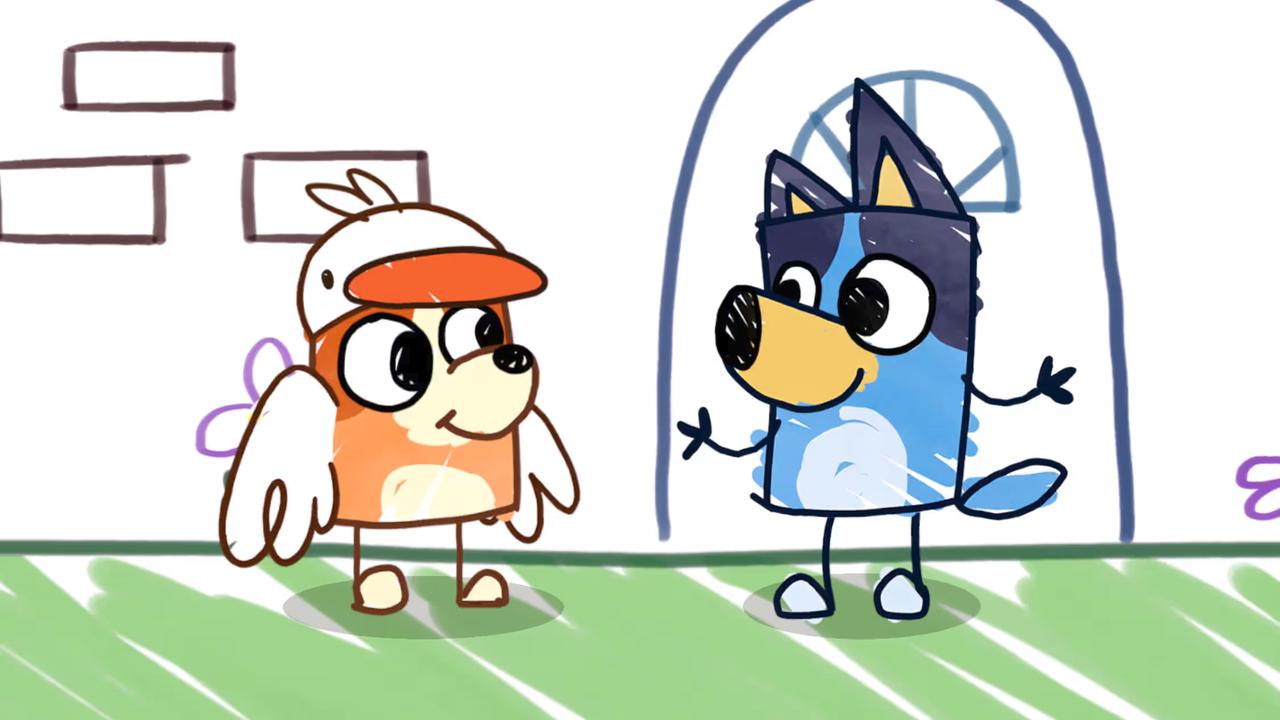
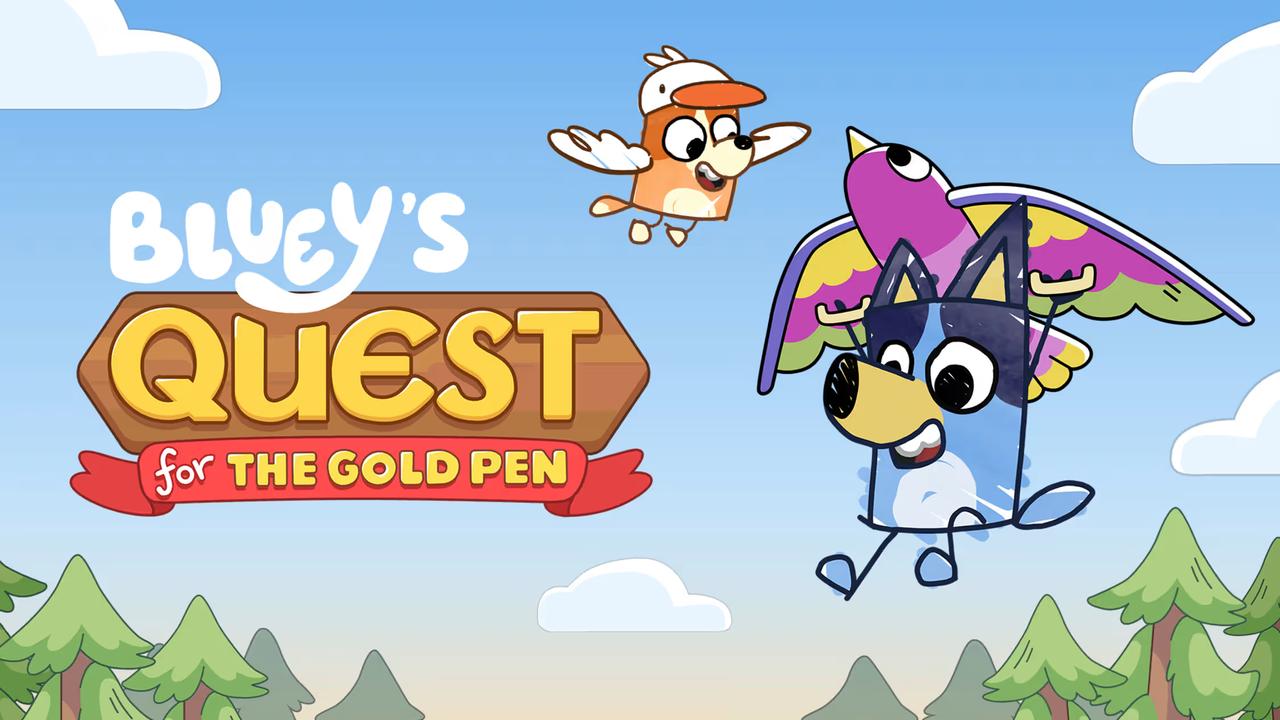
The story begins with Bluey and Bingo drawing with their family before Bandit takes the gold pen and becomes the fantasy troublemaker at the centre of their pretend adventure. From there, Bluey heads into a sketched-out world where Bingo becomes Bingoose, a goofy goose version of herself who helps move the quest along.
The drawing idea is where the game starts to find its personality. This doesn’t look like a normal 3D recreation of the TV show. It looks like Bluey’s family has scribbled a fantasy map into existence, with colourful areas, odd little characters, and a sense that every stage exists because someone at the table added another silly idea. The returning voice cast helps the story scenes connect to the show instead of coming across like a silent spin-off.
Bingoose Keeps The Quest Moving
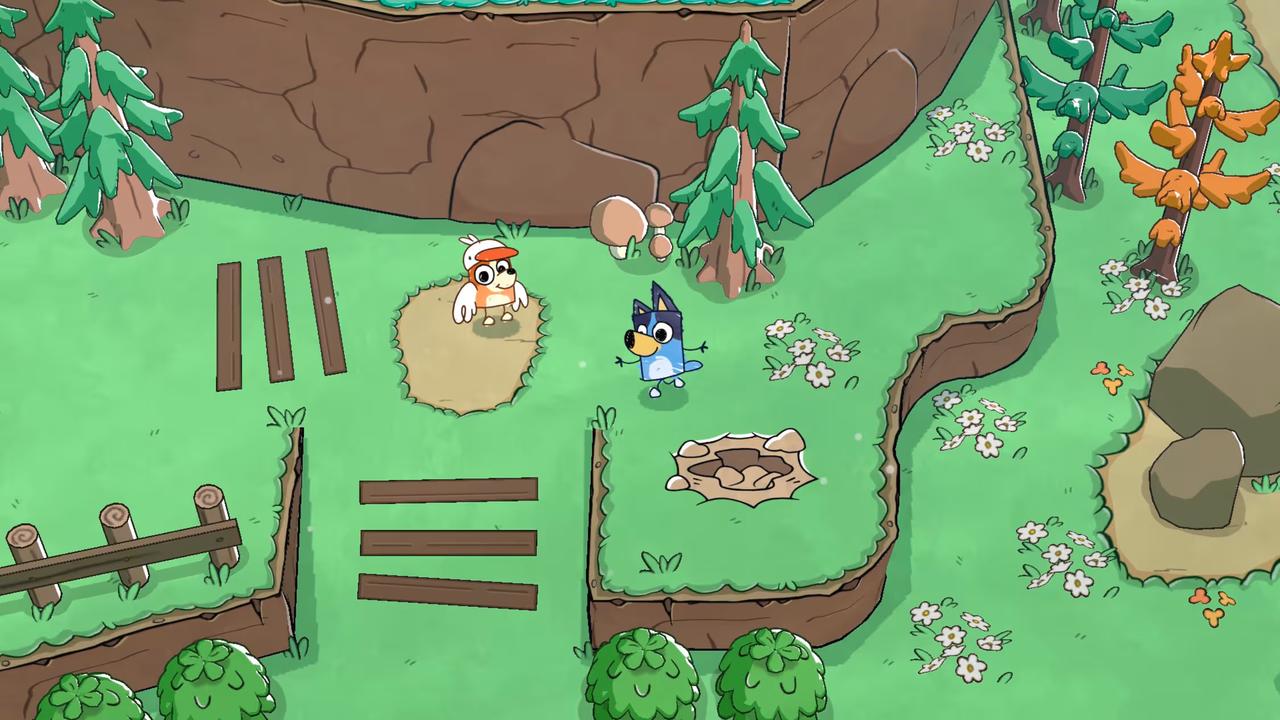
The main adventure is built around open-ended stages. You wander through each area, collect key items, solve simple tasks, and gather enough goose food to move toward the next route. The exact objective changes as you move through the game, but the core gameplay loop stays the same. Explore the map, clear small challenges, and earn what you need to move forward.
I like how forgiving that structure is. You don’t need to clear every task to advance. That leaves younger kids room to explore without getting stuck on one challenge for too long. If a timed collectible route or search task becomes annoying, the game usually leaves enough other things nearby to keep the stage moving. For Bluey’s audience, that’s the right call. Completion becomes a choice rather than a requirement.
Bingoose also works as more than a joke. She points attention toward important spots, which helps the game guide younger kids without filling the screen with tutorial boxes. One small route captures the approach well. Bingoose honks toward a nearby path, Bluey follows a short side challenge, and the reward feeds back into the stage goal without stopping everything for a long explanation.

The structure does repeat. Most stages follow the same broad pattern of exploring paths, finding side tasks, earning collectibles, and opening the way forward. I started to notice that after a few areas, especially when another stage sent me down a familiar path toward another short challenge. The tasks change enough to keep the adventure moving, but the pattern underneath is easy to spot.
Collectibles And Toys Keep Each Map Active
Bluey’s Quest for The Gold Pen has more going on than its gentle pace first suggests. Each stage includes main collectibles tied to progress and extra things to chase if you want to clear the map. That approach is a good fit for kids who enjoy checking every corner, because there’s usually something nearby to find without making the screen crowded.
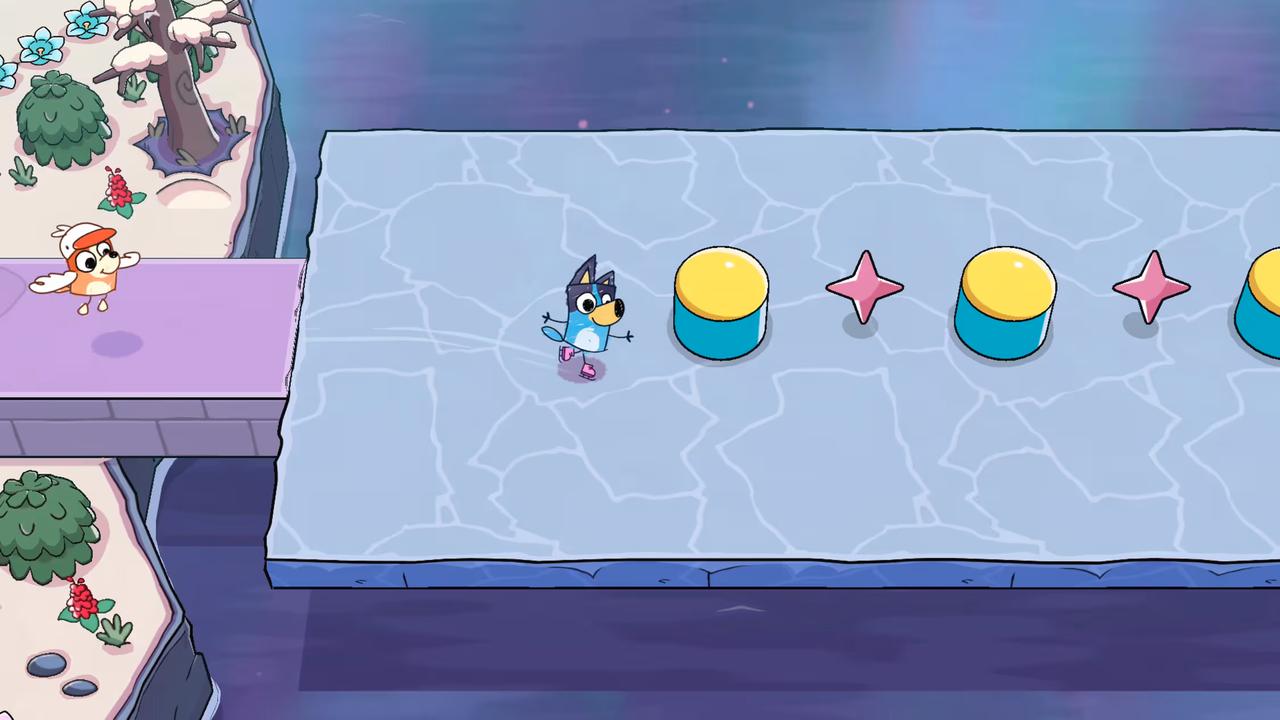
The stage toys add variety across the adventure. Some areas put Bluey on a bike or send her across the water in a small boat. Others change the route with gliding, skating, or grappling challenges that give each map its own little twist. The game gets more interesting when one of those ideas changes the route in front of you. Ice skating lets Bluey reach higher spots. Grappling pulls her across gaps. A boat turns part of the map into a small water route.
Those actions aren’t complicated, and that’s the point. Holding back on complexity makes the game easier for younger kids to understand. The better tasks connect the tool, the action, and the reward clearly. Use the toy, reach the spot, earn the collectible. It’s simple, but it teaches the basic flow of adventure games in a way that makes sense.
The weaker moments come when the toy is more interesting than the path around it. Some stage routes start to blend together because you’re still moving through similar corridors and stopping for short tasks along the way. The game avoids dragging by changing the activities often, but it doesn’t fully escape that repeated pattern.
The lack of co-op becomes even more noticeable here. A Bluey game about siblings, pretend play, and family imagination practically begs for a second controller. Having Bingoose in the world but not letting someone control her comes across as a missed opportunity.
The Look And Feel Bring Out The Bluey Personality
The look and feel bring out a lot of the Bluey personality. The drawn-world style is a smart fit because it avoids simply copying the show’s usual locations in game form. Instead, the adventure looks as though it has been filtered through a child’s sketchbook. Snow-covered paths, wooded spaces, and fantasy areas all feel like pieces of the pretend adventure Bluey and Bingo are building together.

That art direction also helps the game feel warm without relying on complicated visual tricks. Characters belong inside the family’s made-up story. The environments have enough colour and motion to keep younger kids interested, and the handmade look fits the idea of Bluey and Bingo building an adventure out of whatever they imagine next.
The voices help sell the whole thing. Bluey games need the cast to work because the show’s timing and family energy are such a large part of why people connect with it. Here, the performances make the cutscenes play closer to a short Bluey story wrapped around the adventure. Unlockable clips also add a reason to keep pushing through stages beyond simply collecting more items.
As a family-friendly adventure, the game is colourful, clear, and built around simple actions that younger kids can follow.
Bluey’s Quest for The Gold Pen Knows Its Audience
Bluey’s Quest for The Gold Pen is a good fit for the right household. If you have a younger Bluey fan who wants something kid-friendly, funny, and manageable, this is better suited to them than a complicated platformer that expects fast reactions and perfect timing. The forgiving stage goals, optional collectibles, and simple toy use make it a strong first adventure game.
It’s less convincing if you’re looking for more challenge beyond the licence. Older gamers will probably see the repeated stage pattern quickly. The tasks are light, the challenge level stays low, and the game doesn’t push its stage toys very far before moving to the next idea.
The biggest disappointment is the missing co-op. Bluey is about play, siblings, family routines, and imagination shared between people. A single-player-only structure works, but the game leaves its most obvious family feature out of reach. Being able to control Bluey and Bingo together would have made the adventure feel more natural for the source material.
Even with that limitation, the game has the right heart. Bingoose is funny. The drawn world has personality. The collectibles make exploration worthwhile for kids who want to check every corner. The kid-friendly difficulty lets younger gamers enjoy the adventure without turning every challenge into a wall.
Bluey’s Quest for The Gold Pen isn’t trying to be more than it is. It’s a light family adventure that understands Bluey’s imagination and offers younger fans a friendly way to step into it. If you want a first adventure game for a Bluey fan, it’s worth considering. If you wanted a richer co-op game for the whole family, that missing second-controller option is the one thing that may hold it back.
Bluey’s Quest for The Gold Pen

Summary
Bluey’s Quest for The Gold Pen turns a family drawing game into a kid-friendly adventure for younger fans.Bingoose, optional collectibles, and stage toys keep the maps busy, but the repeated stage pattern and lack of co-op hold it back. It’s a sweet first adventure game if your household wants more Bluey beyond the show.
As always, remember to follow us on our social media platforms (e.g., Threads, X (Twitter), Bluesky, YouTube, and Facebook) to stay up-to-date with the latest news. This website contains affiliate links. We may receive a commission when you click on these links and make a purchase, at no extra cost to you. We are an independent site, and the opinions expressed here are our own.