


Cassette Boy looks simple at first glance. The visuals are stripped back, the world feels small, and everything about it gives off that quiet indie vibe where you think you already know what kind of game you’re getting. That feeling does not last long.
Before long, Cassette Boy starts playing with how you see the world around you. The core idea is straightforward but surprisingly clever. If something is not on screen, it might as well not exist. That single mechanic ends up driving almost everything you do, from solving puzzles to getting around enemies. It is the kind of concept that feels familiar if you have played games like The Legend of Zelda or Fez, but it is handled here in a way that feels more focused and a little more playful.
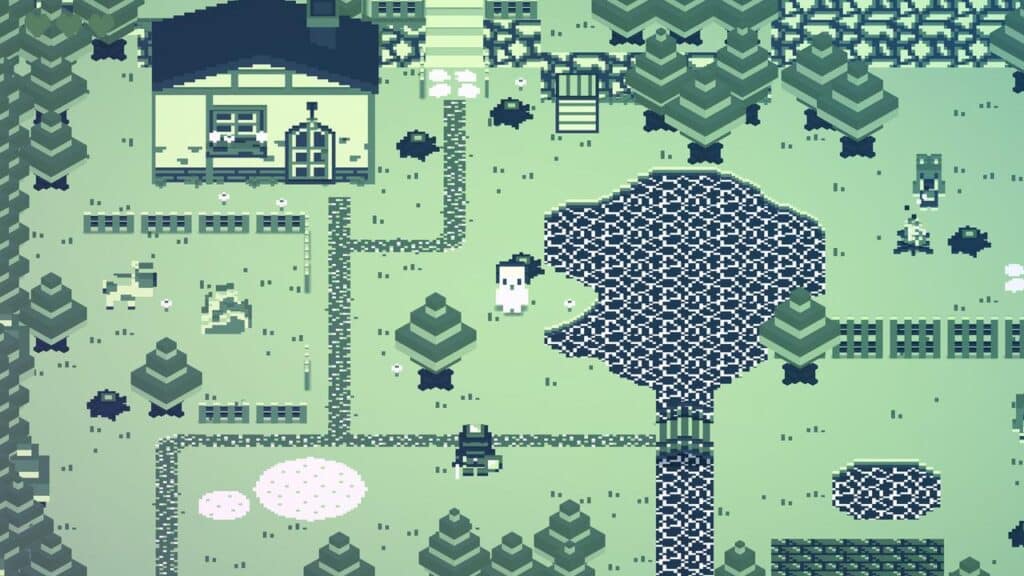
You start out in a small town that feels intentionally ordinary. You talk to a few characters, get your bearings, and head out into the world. Then the camera rotation comes into play, and things start to click. Doors vanish when you turn away from them. Obstacles stop being a problem if you cannot see them anymore. What looks like a dead end often turns into progress once you think about the space differently.
That early stretch does a good job of setting expectations. Cassette Boy does not rush you, and it does not explain everything upfront either. Instead, it trusts you to experiment and figure things out as you go. Sometimes that leads to those great little “oh, that’s clever” moments. Other times it can feel a bit unclear on purpose. Either way, it quickly becomes obvious that this is a puzzle game first, with everything else built around that idea.
A World That Explains Itself Slowly
Cassette Boy keeps its story simple and out of the spotlight. You are not pulled into long cutscenes or handed constant explanations. Instead, the game gives you a basic setup and lets everything else unfold as you explore.
You begin in a small, quiet town that feels intentionally familiar. After talking to a few characters, it becomes clear that something is wrong with the world, starting with the disappearance of the moon. From there, the story unfolds slowly as you move through different areas, clear dungeons, and notice small changes in the environment and the people around you.
The game trusts you to figure things out on your own. Dialogue is brief, and most of the storytelling happens through implication rather than direct explanation. You are meant to notice patterns, pick up on details, and piece things together on your own. It gives the whole experience a subtle sense of mystery without trying to force emotional moments or heavy themes.

That approach will not work for everyone. If you are looking for a strong narrative hook or deep character development, this section of the game may feel a bit light. But the story never gets in the way of what the game is really about. It sets the tone, gives the world some personality, and then steps back.
By the time you are a few hours in, it becomes clear that the story is there to support the puzzles and exploration, not compete with them. And for a game built around observation and experimentation, that balance feels right.
Playing With Perspective Instead of Power
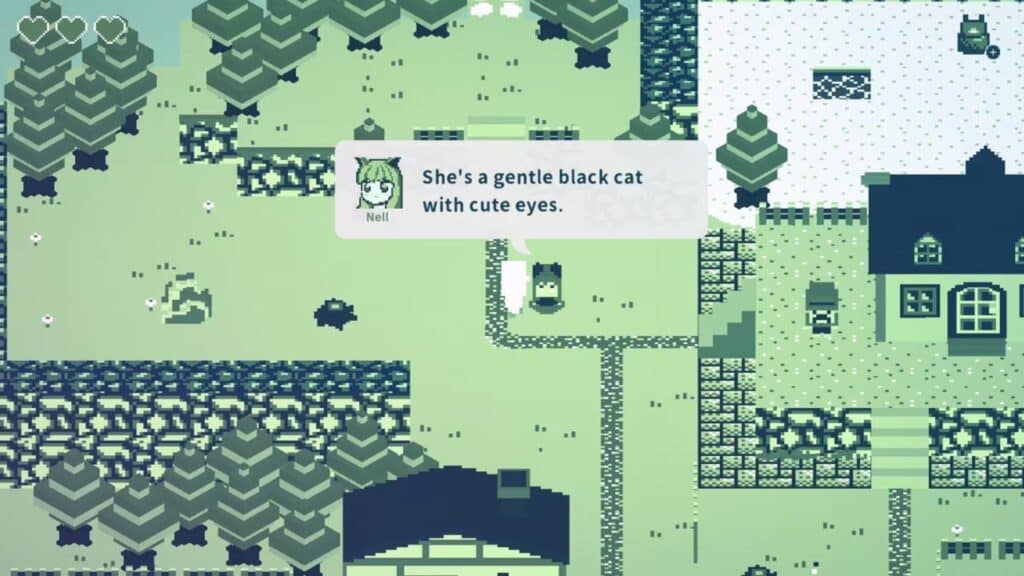
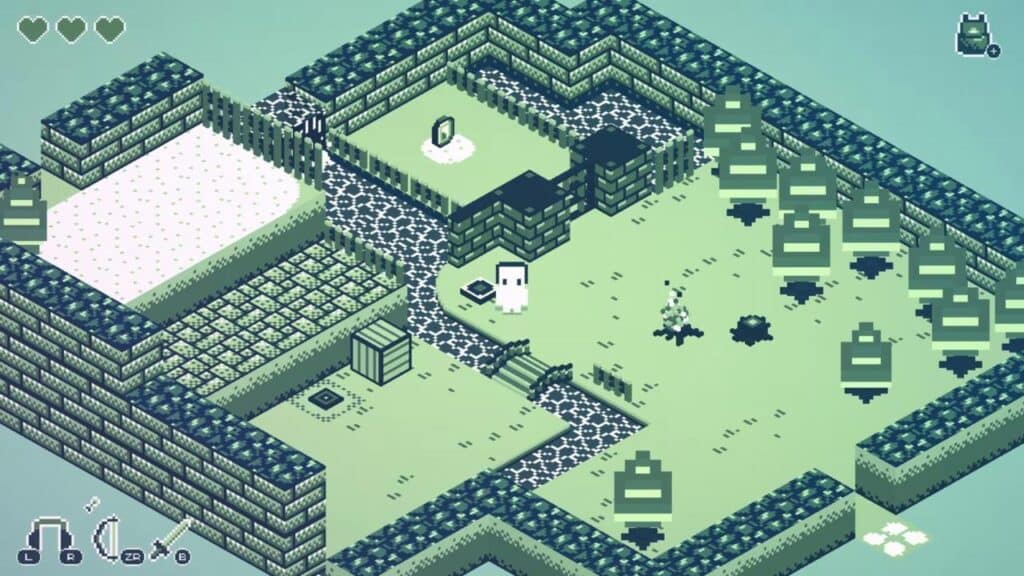
Gameplay in Cassette Boy revolves almost entirely around how you view the world rather than how fast you can react or how hard you can hit. The core mechanic is simple on paper. You rotate the camera, and anything that falls out of view effectively stops existing. In practice, that idea ends up carrying a surprising amount of weight.
Early on, this shows up in small ways. A blocked path becomes passable if you turn the camera just enough to hide the obstacle. A switch can be held down by rotating the world so it stays out of sight. Enemies that feel overwhelming at first can sometimes be avoided entirely by changing your perspective instead of fighting them head-on. The game teaches these ideas slowly, and for the most part, it does a good job of letting you learn through experimentation rather than tutorials.
When the Puzzles Start Asking More of You
As you progress, the puzzles start to ask more of you. Rooms are built around specific camera angles, timing, and positioning, and success often comes from thinking about space rather than movement. Some solutions feel immediately clever once you see them, while others take a bit of trial and error. That sense of discovery is where Cassette Boy is at its strongest. When a solution clicks, it feels earned.
That said, the system is not always as smooth as it could be. There are moments where the logic feels slightly unclear, especially when multiple elements are interacting at once. A few puzzles rely on very precise positioning, and it is not always obvious why something is or is not working. When that happens, progress can briefly stall until the game’s internal rules become clearer.
Combat is folded into this same structure. You have a sword and a ranged option, but fights are fairly simple and mostly serve as extensions of the puzzle design. Some enemies can be handled creatively through camera manipulation, while others fall back on straightforward attacks. It works well enough, but it is not the main draw.
Overall, Cassette Boy works because it sticks to its core idea and doesn’t lose sight of what it’s trying to do. Even when things get a little rough, the game always pulls you back toward its puzzle-first approach, and that’s what keeps it engaging.
A Distinct Look That Serves the Design
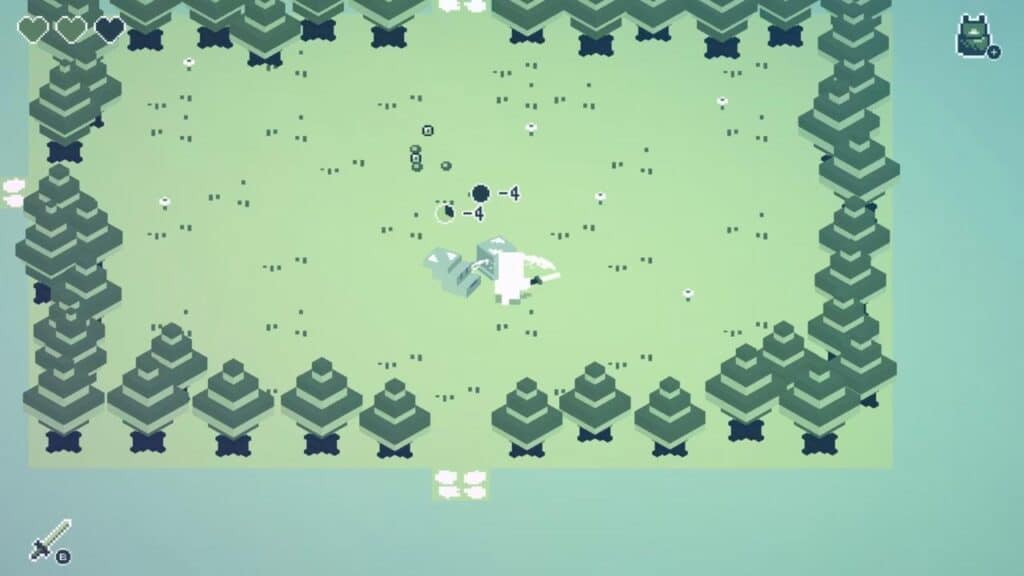
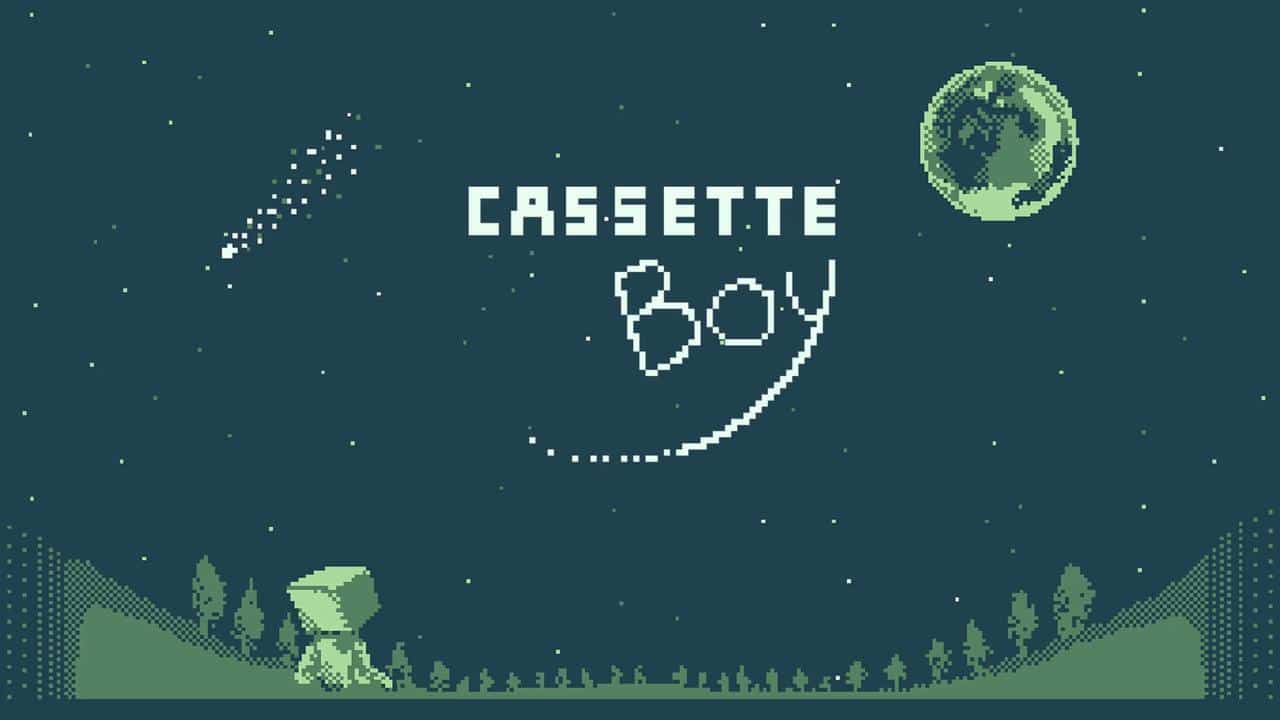
Cassette Boy keeps things visually simple, and that choice ends up working in its favour. The limited colour palette and Game Boy–inspired look might seem plain at first, but once you’re playing, it becomes clear why the game is built this way. The clean visuals make it easier to read the world, which matters when so much of the experience depends on understanding space and perspective.
The camera rotation plays a big role in how everything comes together. Flipping the world around feels smooth and consistent, and it’s easy to tell what has changed from one angle to the next. That clarity is important, since many puzzles rely on spotting how objects line up or disappear when viewed from a certain direction. The presentation does a good job of staying readable, even when multiple elements are on screen at once.
Character and enemy designs are simple but fit the tone of the game well. Animations are minimal, yet clear enough that you always know what’s happening. The UI is also clean and easy to navigate, which helps keep your focus on exploring and experimenting rather than managing menus. There are moments where the screen can feel a little busy, especially in tighter areas, but it rarely becomes frustrating.
The audio is pretty low-key overall. The music sits in the background and doesn’t get in the way, and the sound effects make it easy to tell when you’ve triggered something or changed the layout of a room.
Playing on Xbox Series X, everything felt smooth and consistent. Load times were quick, controls felt responsive, and nothing ever pulled me out of the experience. The presentation fits the slower, more thoughtful pace of the game and supports what it’s trying to do.
Cassette Boy Is a Solid Puzzle Adventure With Limits
Cassette Boy keeps its focus narrow, and that focus shapes the entire experience. It does not try to do too much at once. Instead, it builds everything around its core puzzle mechanic and lets that idea carry the game forward.
The perspective-based puzzles are where the game is at its best. Working out how to manipulate space, hide objects, and approach problems from different angles can be genuinely satisfying, especially when a solution finally clicks. At the same time, the game does not always communicate its rules clearly. And, there are times where progress slows simply because it is not obvious what the next step should be.
Combat and exploration play a supporting role rather than driving the experience. Fighting enemies gets the job done but rarely stands out, and the overall scope stays fairly small. That said, the pacing is steady. The game does a good job of keeping you engaged without overstaying its welcome. The presentation and sound design support this approach, keeping the focus on the puzzles without becoming distracting.
Cassette Boy will appeal most to players who enjoy puzzle-heavy games and do not mind taking their time to experiment and figure things out. It is not built around constant action or a strong narrative push. Though it does offer a thoughtful experience for those willing to meet it on its own terms.
There are a few rough edges, and not every idea lands perfectly, but the central mechanic is strong enough to carry the experience. For players who enjoy problem-solving and discovery over spectacle, Cassette Boy is an easy recommendation.
Cassette Boy
Summary
Cassette Boy is a puzzle-focused game that’s more about thinking things through than reacting quickly. It’s at its best when you’re rotating the world, testing ideas, and slowly figuring out how everything fits together. Some puzzles can be a little unclear at first, and combat never takes centre stage, but the core mechanic does enough to keep things interesting.
As always, remember to follow us on our social media platforms (e.g., Threads, X (Twitter), Bluesky, YouTube, and Facebook) to stay up-to-date with the latest news. This website contains affiliate links. We may receive a commission when you click on these links and make a purchase, at no extra cost to you. We are an independent site, and the opinions expressed here are our own.