


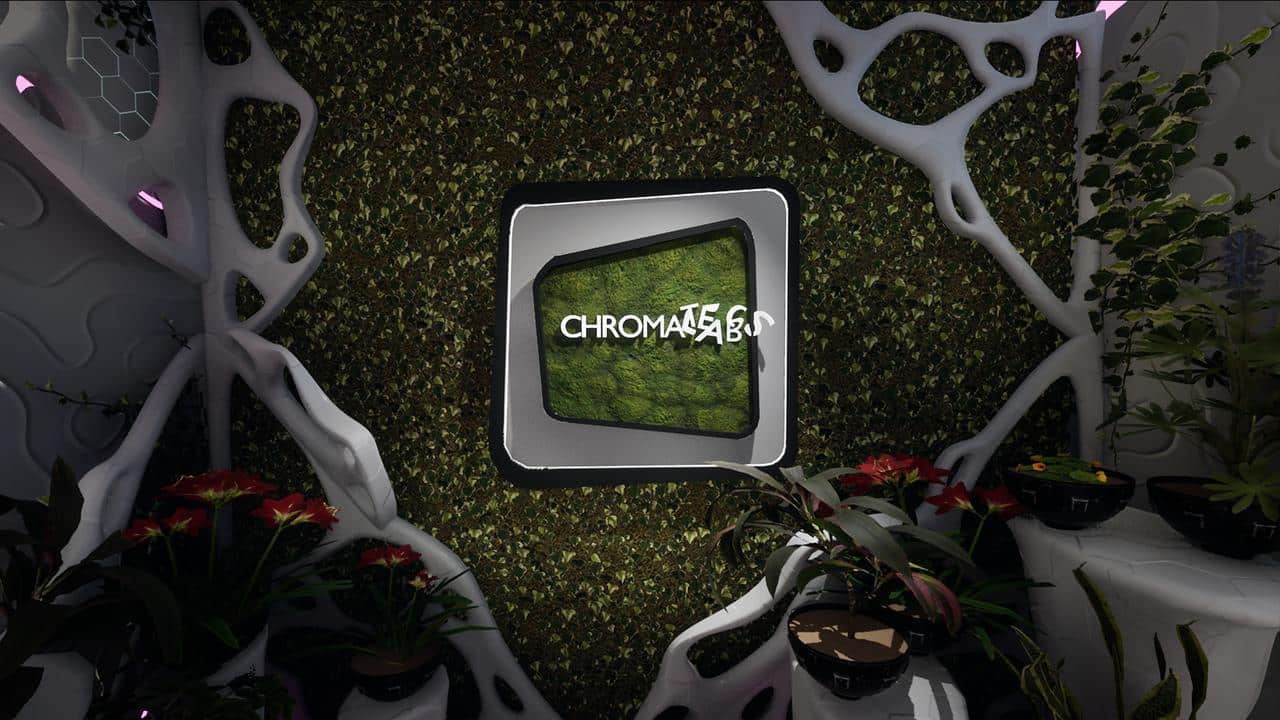
ChromaGun 2: Dye Hard drops you back into sealed test rooms full of colour puzzles. A voice in the ceiling keeps talking while you work. This sits right in that Portal style corner of puzzle shooters, only you are solving problems with paint instead of wormholes. You are stuck in a lab again, running “experiments” for the company. A fake way out drops you straight into another stack of chambers.
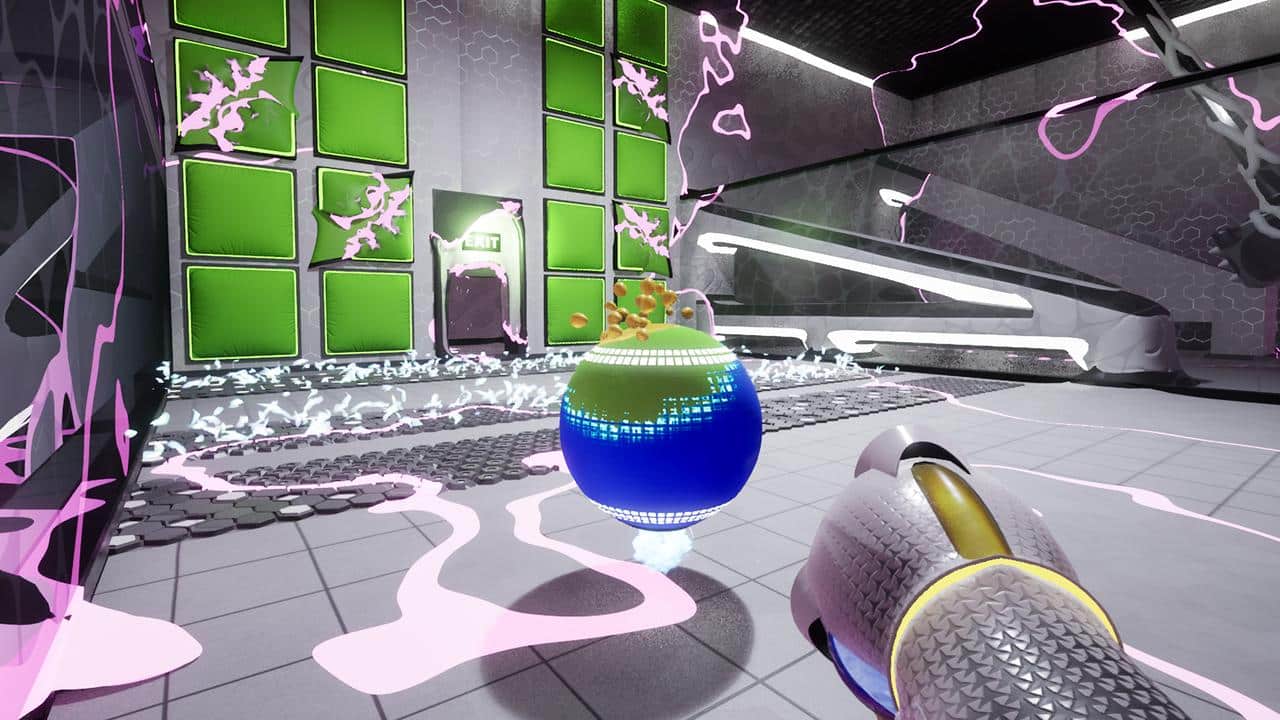
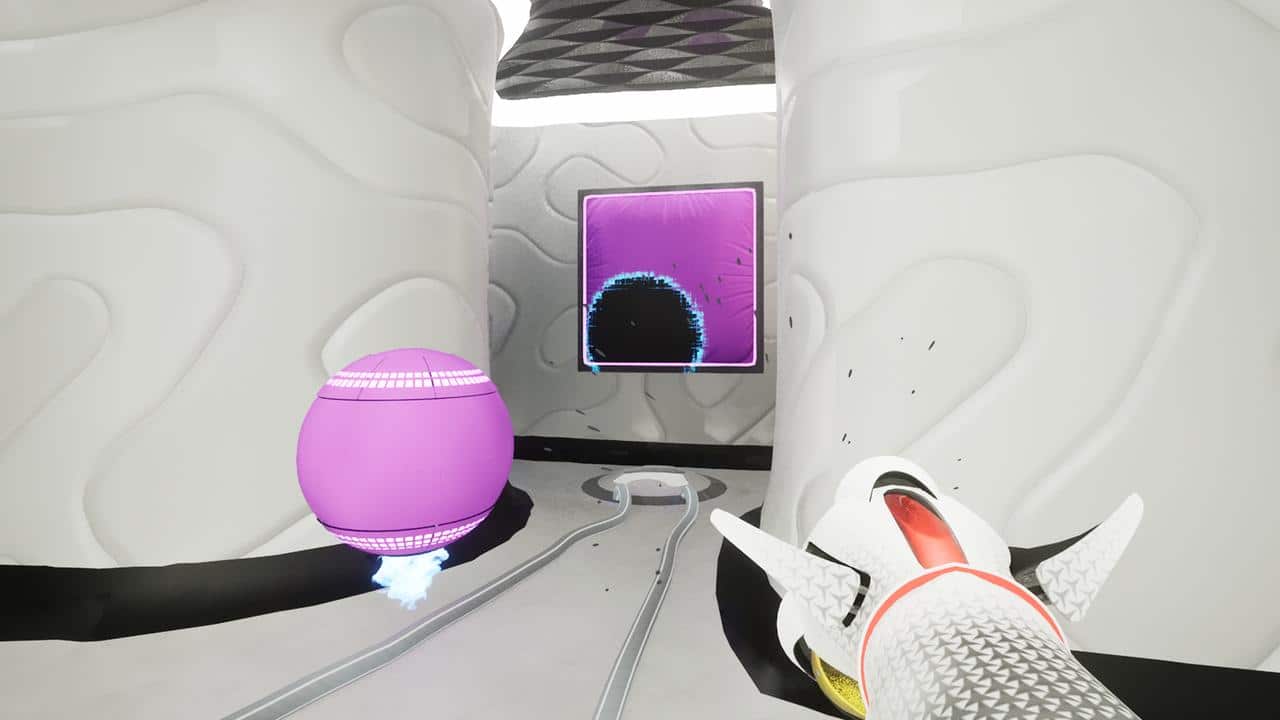
Your main toy is the ChromaGun, a first person paint gun that fires red, blue, and yellow shots. Hit WorkerDroids and wall panels with the same colour and Magnetoid Chromatism kicks in. It pulls them together until something blocks the path. Mix colours to make green, orange, or purple. Erase paint when you need a clean reset. Then try to line up drones on switches, lifts, and doors without trapping yourself in a corner.



The game keeps adding new wrinkles as you move between dimensions. Each one has its own look and supervisor on the intercom. Some rooms are simple one idea puzzles you clear in a couple of minutes. Others stretch across several floors with side corridors hiding golden ChromaGuns and optional tricks. Through the whole campaidoesgn the focus stays on slowing down, reading the room, and poking at different colour setups instead of chasing enemies.
Contracts, Lab Doors, and Voices in Your Ear
ChromaGun 2: Dye Hard picks up right after your last escape attempt goes wrong. You wake up in a clean office, fill out a strange questionnaire, and get told your testing days are finished. The moment you step toward the exit, the floor opens, and you drop straight back into the company’s maze of chambers.
From there the story builds around corporate satire. You are a contracted tester stuck in an absurd agreement that keeps you in danger even when you try to leave. The company treats you as a tool, not a person, and most of the jokes circle around paperwork, liability, and how little your safety matters next to “research”. That tone never really lets up, which fits the setup and makes the whole place feel hostile even when a room looks harmless.
You also have company on the intercom. Richard introduces himself as a friendly supervisor, talks you through early experiments, and undercuts every small victory with a reminder that you are replaceable. Later you cross into another branch of the multiverse and meet Mildred, whose cheerier voice lines hide the same cruel streak.
As you move between dimensions, the plot mostly advances in short bursts between puzzles. New labs bring new excuses to keep you testing, hints about how far this company has spread, and a few twists that flip who is really in control. The writing keeps the focus on you as a silent test subject pushing through contracts and lab doors that never stay open for long. When a chamber has already been giving you trouble, the constant commentary can make that stretch feel heavier, but it also keeps the story present instead of fading into the background.

Colour Gun Puzzles That Keep Stacking New Tricks
ChromaGun 2: Dye Hard is built around one tool and a clear set of colour rules. You carry a first person paint gun that fires red, blue, and yellow shots. WorkerDroids and wall panels react to those colours through Magnetoid Chromatism. When a drone and a panel share a colour, the drone drifts toward that surface until something stops it. Early on you just match a single drone with a single switch. Before long you are juggling several drones, different colours, and panels on every side of the room.
Mixing Paint and Pulling Drones Into Place
Colour mixing gives those puzzles more bite. Hitting an object twice lets you blend colours into green, orange, or purple, and you can remove paint when you want to reset something. Many chambers expect you to create small tug-of-war setups, painting two panels to the same shade so a drone hangs in the middle over a button or hovers near a specific doorway. Some puzzles use paint waterfalls or glass tubes that carry your shot to a distant panel, so you are lining up angles as well as colours. When everything finally lines up and a door slides open, it comes from reading the room and understanding how the rules interact, not from lucky guesses.
Longer Chambers, Side Paths, and Difficulty Spikes
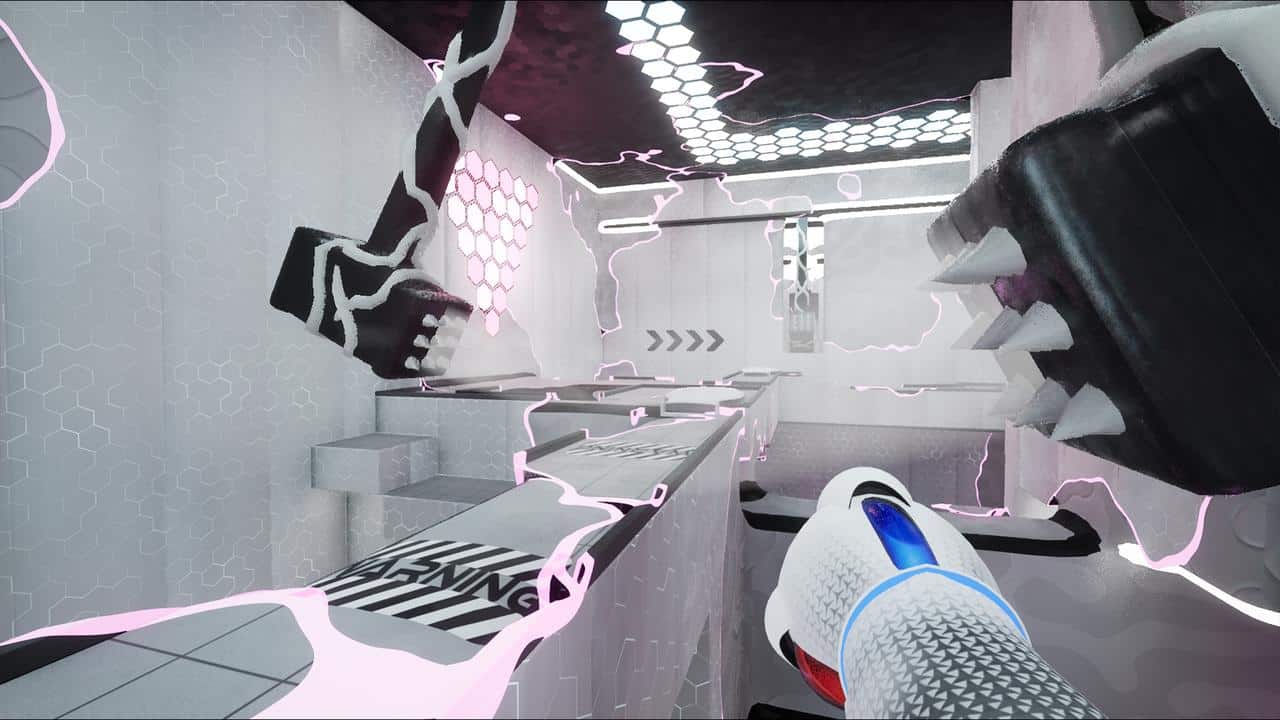
The game keeps throwing in new ideas as you move through different labs. One area focuses on basic WorkerDroid movement. Another introduces aggressive drones that chase you once you splash them with paint, forcing you to lure them past traps or into panels that hold them in place. Later chapters mix in vertical lifts, moving platforms, and layouts that stretch across several floors. You are not just clearing one chamber and walking forward. Some stages loop back on themselves, ask you to send a drone on a long tour of switches, then walk back through earlier rooms to see what changed. Optional golden ChromaGuns hide off the main path, usually behind a puzzle that twists the current idea a little further.
The difficulty curve grows over time but stays short of pure cruelty. Most puzzles can be chipped away through careful testing and watching how drones move after each shot. The tougher moments tend to come from details that are easy to miss, like a panel around a corner or a vent that looked like background dressing. There are also spots where timing starts to matter more than the early tutorial promises, with moving hazards or jumps that feel closer to platforming than relaxed puzzle solving. Those stretches can drag if you are already stuck on the logic side, but most of the campaign keeps the focus on thinking through colour setups and slowly tightening your control over each chamber.
Cracks in the Lab Walls Across Each Dimension
ChromaGun 2: Dye Hard keeps its presentation tied closely to the test labs you walk through. Early chambers stick with clean walls, simple panels, and WorkerDroids that float like company hardware. Colours stay clear at a glance. As you move into other dimensions, those labs start to break open into stone tunnels and cluttered corridors. Test rooms also look more unstable every time you push deeper into the facility.
The colour work stays clear even when the scenery changes. Paint waterfalls, glass tubes, and forcefields each have their own look. That makes it easier to follow where a shot went and which surfaces are safe to use. The accessibility option that adds symbols and patterns on top of colours is a smart extra. With that turned on, you can still match objects without relying only on shades. That matters a lot in a game built around colour rules.
Audio sells the tone just as much as the visuals. Richard and Mildred both get plenty of lines. They shift between fake warmth and sharp insults while you think through the next chamber. Their delivery gives each lab a slightly different mood. It also keeps story beats in your ear even when you are focused on puzzle steps. Sound effects stay clear and simple, from paint shots to sliding doors. You always know when something in the puzzle state has changed.

On the technical side, I hit more loading screens than expected. They even show up in short hallways between chambers. Auto saves tend to sit between bigger chunks of a puzzle instead of after every small adjustment. That can mean replaying a stretch if you stop mid-room. The same thing happens if you reset after a mistake.
ChromaGun 2: Dye Hard Builds Smart Puzzles Around a Simple Colour Gun
ChromaGun 2: Dye Hard comes across as a smart follow-up if you want another first person puzzle game that actually commits to a new trick. The colour rules are clear. The ChromaGun gives you plenty to do. Chambers keep adding new twists, which makes it hard to get bored. When a multi-room puzzle finally comes together, it is because you read the layout. You watch how WorkerDroids react and nudge each step into place. That part should feel right at home for anyone who likes Portal style puzzles.
Away from the colour puzzles, the rest of the package feels more mixed. The writing sometimes delivers a good joke. The way Richard and Mildred argue over how to run the lab gives the story a clearer arc. It goes beyond a simple “escape the test facility” setup. At the same time, constant commentary and long puzzles can be a tiring combination on a late night. The Portal overlap never really goes away. The technical side also pulls things down with frequent loads. Auto saves sit a little too far apart. You also get the odd chamber where timing and platforming matter more than the early tutorials suggest.
Even with those issues, I still came away feeling good about ChromaGun 2: Dye Hard. It deserves a spot on any puzzle shortlist. The colour gun rules are fun to poke at. The dimension hopping labs stay interesting. The best chambers give you that slow build from confusion to a clean door unlock. If you want something that lets you step away from shooters for a while, this fits the bill. It lets you think through puzzle rooms and play with colour in a way that actually matters, and that makes this lab worth dropping back into.
ChromaGun 2: Dye Hard
Summary
ChromaGun 2: Dye Hard is a first person colour puzzle game built around a tri-colour ChromaGun, Magnetoid Chromatism, and multiverse test labs where you pull WorkerDroids onto switches, pick apart long chambers, and hunt hidden golden guns through crumbling corridors. Frequent loading screens, spaced-out auto saves, chatty supervisors, and a few timing-heavy rooms drag the whole thing down, but if you like Portal style puzzles and want something smaller that plays with colour rules in its own way, this is still worth a look.
As always, remember to follow us on our social media platforms (e.g., Threads, X (Twitter), Bluesky, YouTube, and Facebook) to stay up-to-date with the latest news. This website contains affiliate links. We may receive a commission when you click on these links and make a purchase, at no extra cost to you. We are an independent site, and the opinions expressed here are our own.