


I went into Crimson Desert with my guard up. Pearl Abyss’s first single-player game has been turning heads for years, showing up at showcase after showcase looking almost too good to be true. Years of hype have a way of setting you up for a fall, and I’ve been there enough times to know better than to buy in completely. So I kept expectations in check going in. What I actually found is neither the game of the generation some expected, nor the embarrassing flop others had already decided it would be. That’s what this review is here to work out.
Pearl Abyss built Crimson Desert on their own BlackSpace engine, and you step into it as Kliff, the leader of a mercenary group called the Greymanes. It doesn’t take long for things to fall apart. A rival clan called the Black Bears ambushes them early, scatters the crew, and leaves Kliff for dead. He comes around in a strange floating world called the Abyss, makes his way back to the surface continent of Pywel, and the rest of the game is about rebuilding what was lost.

There’s no traditional XP system here. Progression runs through gear upgrades at the smithy (the camp’s weapon and gear upgrade station) and skill points called Abyss Artifacts, earned through combat, puzzles, and quests. It’s a different approach than most action-RPGs take, and it takes time to feel natural. Whether Crimson Desert earns that time depends almost entirely on what you bring to it. Come in ready for a complicated, open-ended experience and there’s plenty worth discovering. Come in wanting a focused, clear path and you’re going to run into some resistance early.
A World That Deserved a Better Lead
The story starts with real promise. The Greymanes are a tight-knit mercenary crew with real history between them. Kliff’s near-death, the scattering of his people, the mystery of the Abyss. It’s a strong foundation for a personal story about someone fighting to hold things together. For the first few hours, that’s what you get, and it works.
The problem is Kliff himself. He’s a good person who does the right thing, and that’s essentially his entire personality. He moves through conversations that should carry real weight without registering any of it. There’s a scene early on where something genuinely significant happens around him and he barely reacts at all. The voice acting around him is one of the game’s genuine strengths. Oongka and Damiane, the two other playable characters, both have actual personality and moments that hit. The game handles the antagonists well too. But Kliff sits at the centre of his own story like a placeholder, and you feel his absence every time the stakes rise.
The narrative takes around 20 hours to find its direction. Early missions follow the same pattern over and over: head somewhere, watch something happen, go back to camp. Once the larger political conflicts between Pywel’s factions take shape, things improve. Some later side quests hit harder than the main story beats.
Pywel’s history and political conflict are rich enough to support a great story. The cast gives it everything they have. But without a lead you actually connect with, the stakes stay at arm’s length for most of the game, and that’s a real cost for something asking this much of your time.
Combat and What Surrounds It
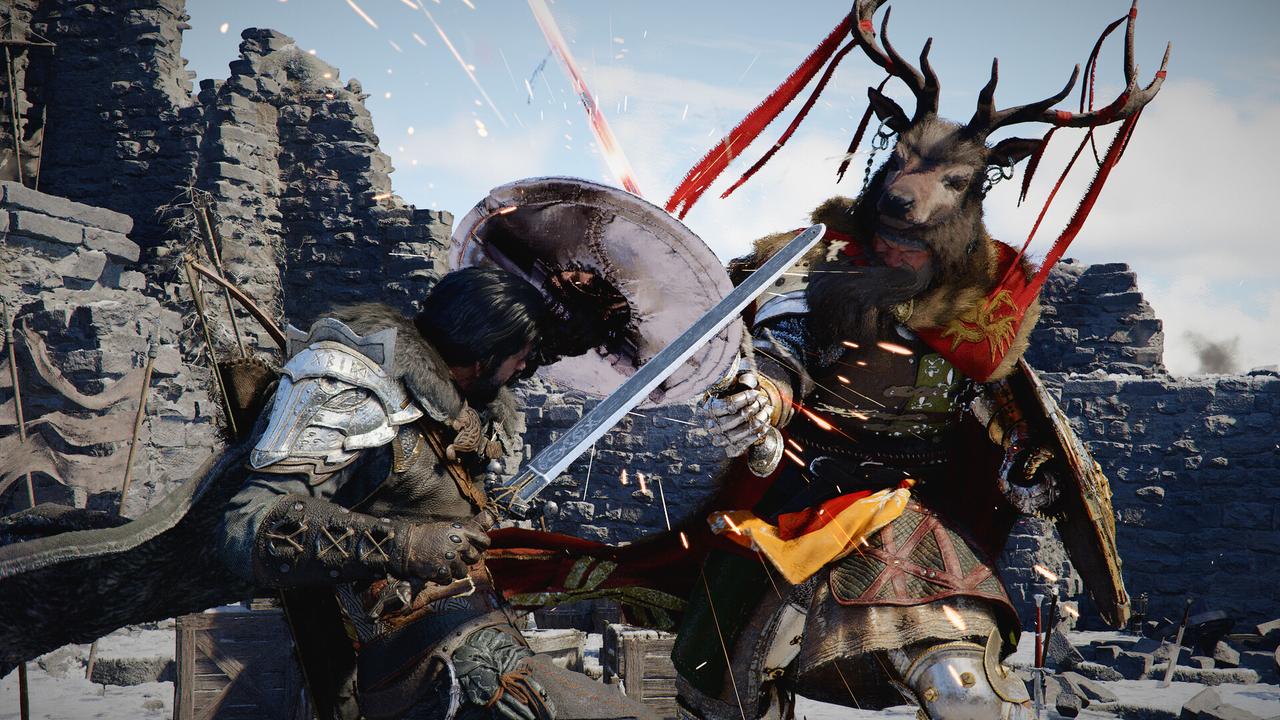
Kliff’s combat is unlike anything else in the action-RPG genre right now. He punches, kicks, throws, grapples, clotheslines, and suplexes his way through Pywel. Vaulting over enemies mid-combo is just as natural as charging through a group, launching someone off a ledge, and pivoting straight into a weapon strike. Most abilities use two-button combinations, which feels awkward at first and causes misfires constantly in the early hours. Push through it. Once things start connecting, the combat is exciting in ways few action games manage.
Pearl Abyss scatters more than 75 bosses across the world. They’re not waiting at dungeon exits but appearing on roads, in towns, and mid-quest without warning. Each operates on its own logic. Figuring out what actually works for each one is the best part of Crimson Desert. Anything you use on a failed attempt gets returned to you, which takes some of the sting out of the harder fights. Some of these encounters will push you across many attempts. The payoff is worth it every time.
The Abyss sections take you to floating islands above Pywel for puzzle-solving and platforming, and they’re the weakest part of the package. Some puzzles hold up. Others are unclear about which of Kliff’s many abilities they want from you, and the platforming demands more accuracy than the movement system consistently provides. Falling sends you back to the entrance to start again.
Beyond combat, Crimson Desert has an enormous number of side activities: cooking, crafting, bounty hunting, horse taming, fishing, gambling, and more. The camp-building system, which grows your Greymane base into a functioning settlement, works well. Pearl Abyss introduces many others and leaves them at their most basic form, and anything that isn’t combat or camp-building tends to show that pretty quickly.
Pywel Looks and Sounds the Part
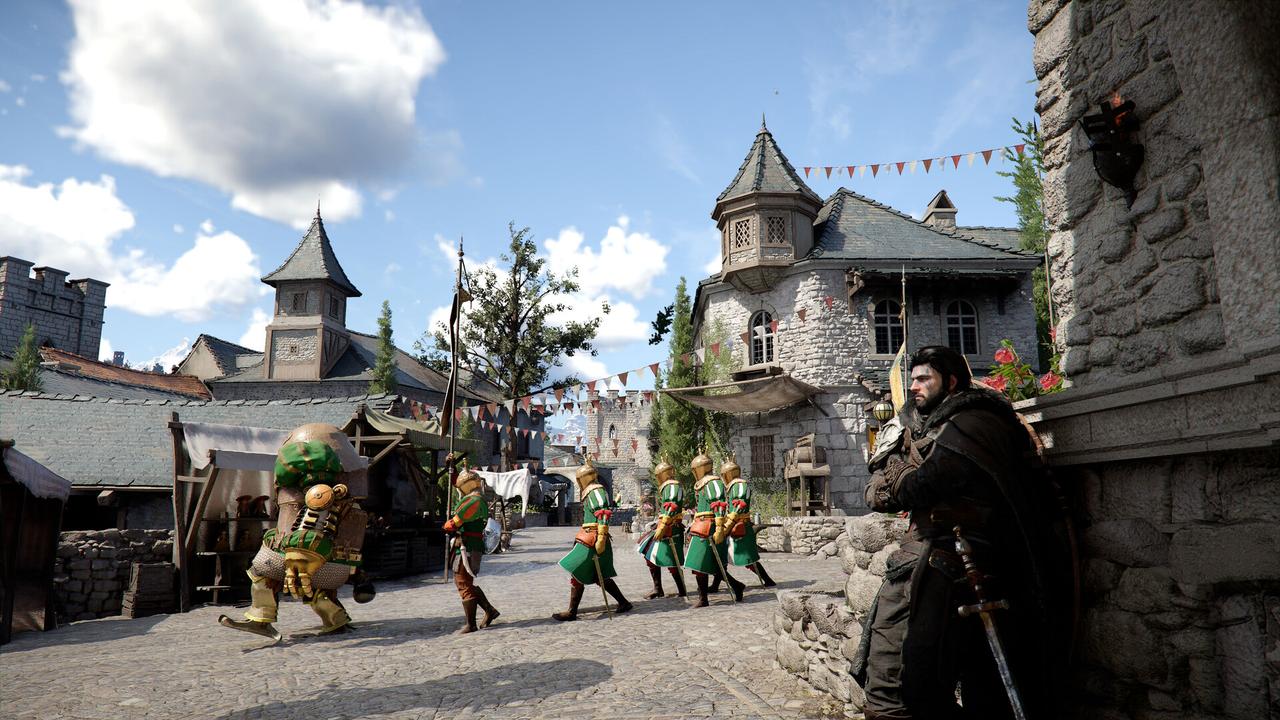
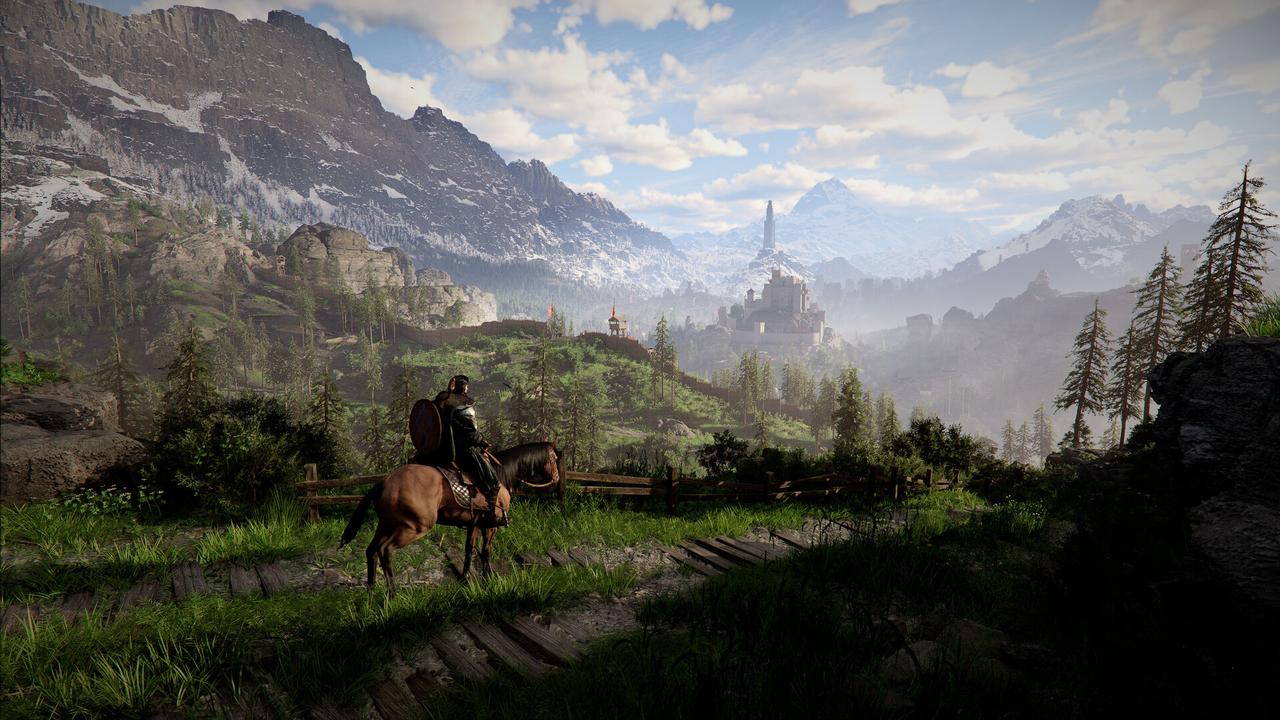
Crimson Desert is one of the best-looking games available right now. The BlackSpace engine handles foliage, water, and lighting in ways that consistently stop you mid-ride just to look. Rain doesn’t just fall. Wooden surfaces collect water, the ground turns to mud, and everything around you starts reflecting the sky back at you. It looks cold in a way most games never manage. Foliage moves with actual wind physics. Shadows shift with the time of day. The world is enormous, and the engine never cheats on what it shows you. Every distant tower or mountain range you spot from a hilltop is reachable.
Each of the five regions has a distinct visual identity. Hernand opens with rolling green hills that invite you to explore. Demeniss brings heavy fortifications and armoured architecture closer to medieval France than anything else in the game. Pailune is frozen and severe. Delesyia is full of strange mechanical structures that feel unlike anything else in the world. The titular Crimson Desert is exactly what its name suggests, and arriving there for the first time makes a real impression.
The audio is right there with the visuals, and it hit me pretty fast. The soundtrack moves between large orchestral arrangements and more understated regional themes with clear purpose. Voice acting is one of the game’s strongest areas. The cast makes the writing feel better than it often is. NPC repetition in cities becomes noticeable after extended play, but that’s a minor issue against the overall audio package.
For a game that looks this good, playing on PC it ran way better than I expected. I had no major issues on higher-end hardware. Bugs are real though, some of them progress-stopping, and that’s worth knowing going in. The good news is Pearl Abyss has a long track record of post-launch support with Black Desert Online, and they were already patching before launch day.
Crimson Desert Is One of the Year’s Most Impressive and Flawed Games
Crimson Desert is not the game the years of hype suggested it would be. It’s also not a disappointment. It’s something harder to place: a large-scale action-adventure that gets several important things very right while carrying real weaknesses alongside them.
What Pearl Abyss pulled off visually is genuinely hard to believe until you see it. The combat, once it opens up, is one-of-a-kind in the action-RPG space. Boss encounters are frequent, demanding, and every one of them means business. Pywel is full of things worth finding, and I never stopped wanting to see what was over the next hill. Pearl Abyss clearly put years of genuine effort into building this world, and that effort shows in every direction you look.
But the story needs a stronger lead. Kliff’s blankness at the centre of a story this large is a cost the game never fully absorbs. Too much of the side content feels like it was added to the list rather than built to be played. The Abyss sections get old long before the game wraps them up. Inventory management is a persistent headache even after the pre-launch patch.
Crimson Desert isn’t for everyone, and I think Pearl Abyss knows that. If you can deal with a game that’s brilliant in some areas and half-finished in others, you’re going to have a great time. If you can’t, the rough edges will drive you up the wall. Either way, Pearl Abyss will keep working on it. They always do.
Crimson Desert
Summary
Pearl Abyss built something massive with Crimson Desert, and the cracks show alongside the ambition. The visuals are the best I’ve seen in an open world, the combat is one-of-a-kind, and I never ran out of reasons to keep exploring. But the story lets the whole thing down, Kliff is too blank to carry a game this long, and a lot of the side content just doesn’t hold up. It’s worth playing, but go in with your eyes open.


As always, remember to follow us on our social media platforms (e.g., Threads, X (Twitter), Bluesky, YouTube, and Facebook) to stay up-to-date with the latest news. This website contains affiliate links. We may receive a commission when you click on these links and make a purchase, at no extra cost to you. We are an independent site, and the opinions expressed here are our own.