



Crisol: Theater of Idols goes after long-time horror fans, the ones who cut their teeth on Resident Evil and BioShock and are now looking for something stranger and more focused. Instead of another abandoned hospital, you get Tormentosa, a cursed Spanish island where religious statues tower over you and Easter processions never really ended. The whole game revolves around one simple idea. Every bullet you fire comes from your own blood.
Developed by Vermila Studios and published by Blumhouse Games, Crisol is a first-person survival horror shooter set in a twisted version of Spain called Hispania. You play as a blood-blessed soldier sent on a divine mission, moving through cathedrals, plazas, and a grim little fairground while religious idols hunt you down. The campaign sticks to a tighter ten to twelve-hour run instead of stretching into a huge open world, which fits the more focused horror tone.




What matters most here is the mix of blood-for-ammo combat and Spanish religious horror. When those two parts line up, Tormentosa turns into a place you want to escape and still keep exploring.
Faith, Obsession, and the Island of Tormentosa
You step into the role of Gabriel Escudero, a captain of the Order of the Sun. He wakes up with divine blood in his veins, a cathedral lodged in his dreams, and a mission from the Sun God to travel to Tormentosa, a cursed island that keeps the Sea God locked away behind a fragile seal.
Tormentosa sits at the centre of a brutal religious conflict. Statues meant to be carried through the streets now stand alone, their faces twisted and repainted into something closer to nightmares. Red phantom figures replay old events in front of you, showing sacrifices and rituals that pushed the island into its current state. You learn as much from those echoes and the props scattered around as you do from traditional cutscenes.
Crisol breaks its story into chapters, each tied to a different area and idol. You move from tight streets packed with religious floats to the island’s fairground, where cheerful stalls and rides turn into something much stranger. Between chapters, stylised interludes show the broader conflict between the Sun and Sea gods and keep the story rooted in sacrifice and ritual.
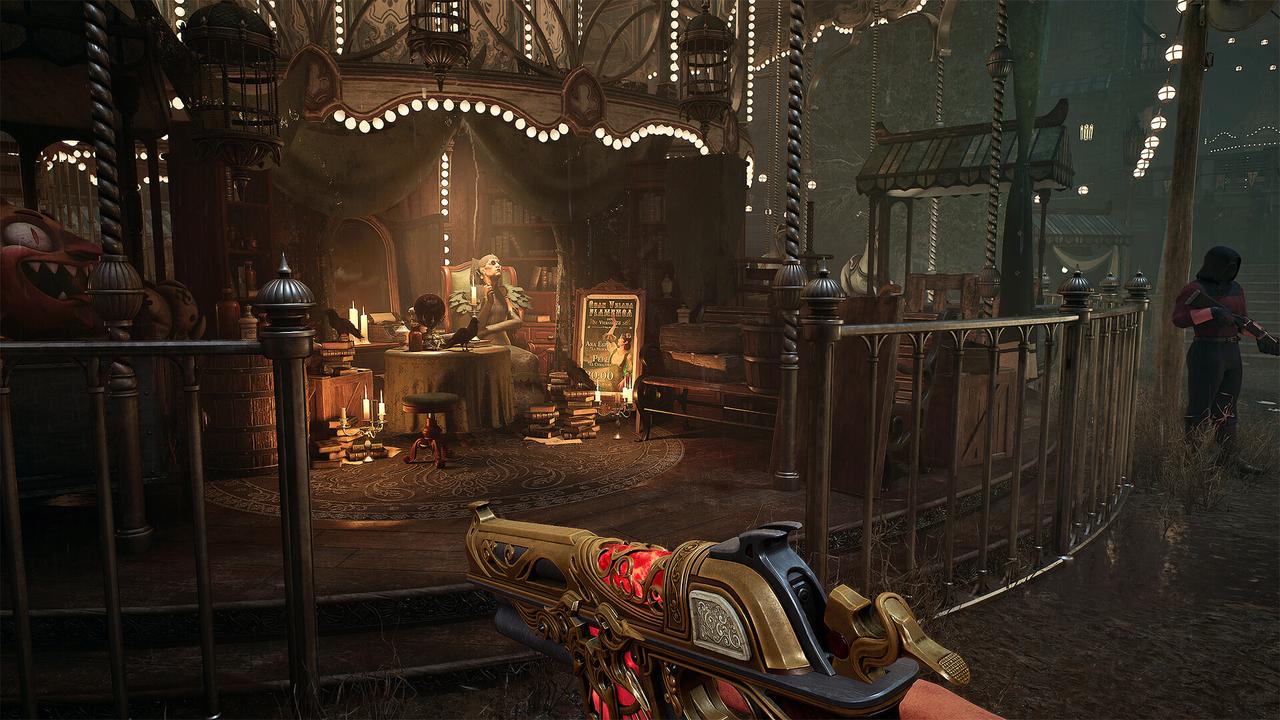
The characters around Gabriel help a lot. Mediodia, the voice on the radio, gives you context on the gods, cults, and Tormentosa’s history while poking at Gabriel’s beliefs. La Planidera, the mourning vendor at the fair, mixes grief, dark humour, and practical advice as she upgrades your gear. When Crisol lets those personalities collide with Gabriel’s devotion, the game comes across less as a lone wanderer tour and more as a nightmare that still has a social circle.

The writing slips now and then, with a few repeated lines and overdone speeches, but you always know why you are moving to the next district and why that idol matters.
Blood-Powered Combat and Slow Horror Exploration
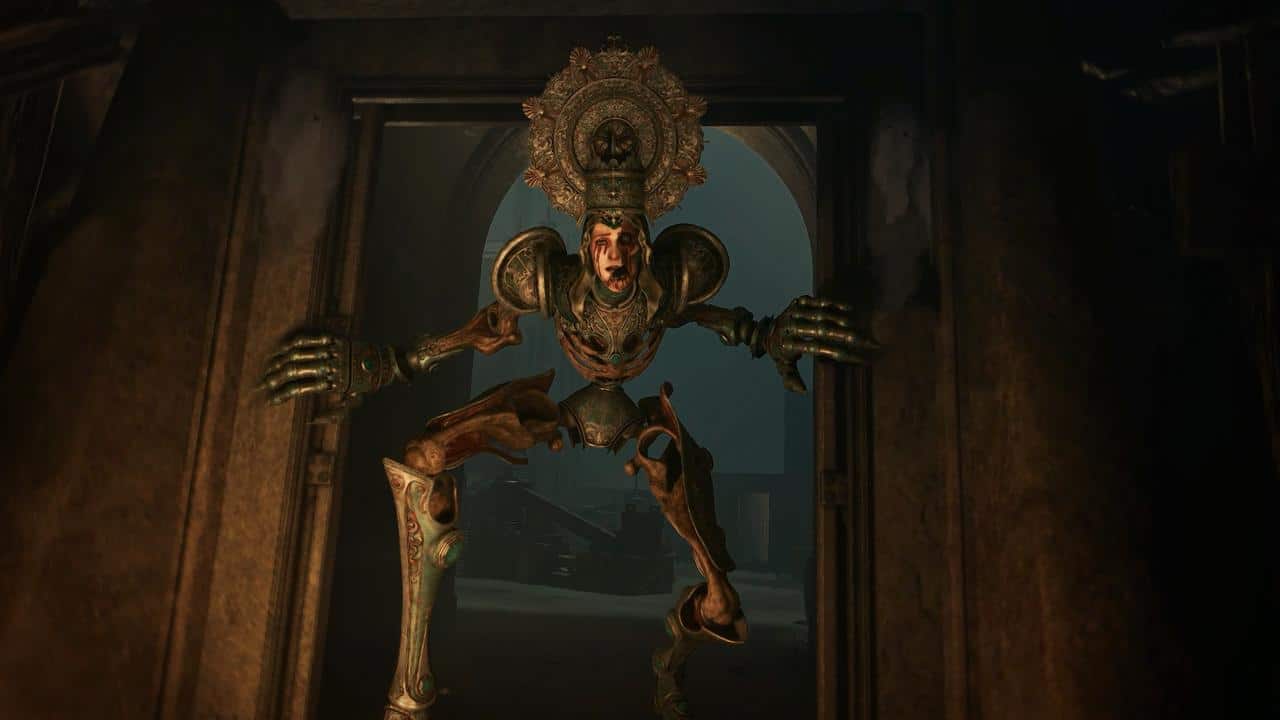
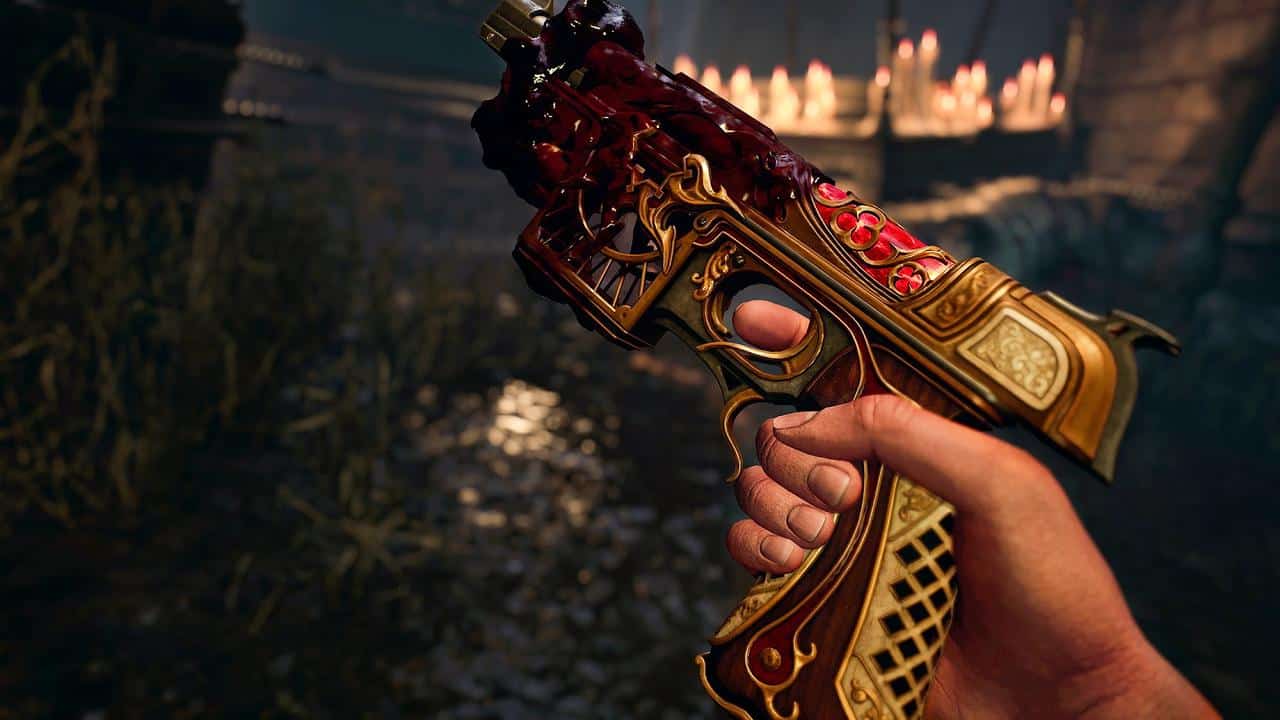
Crisol’s defining idea is simple. Your weapons run on your blood. Every time you refill ammo, you slice health off your own bar. Pistol shots cost a small amount. Shotgun shells, submachine gun magazines, and sniper rounds chew through your life much faster. There is no separate ammo pickup in the world. Your body is the ammo pool.
You heal in a few ways. Syringes act as instant medkits. More often you will walk up to dead bodies or animals and drain their blood into your vials. That process heals you and tops up your supply for future reloads. It fits the game’s theme well, because you are constantly asking how much of yourself you can spend to survive the next encounter.
Bleeding For Every Shot
Gunplay is deliberate. The pistol becomes your comfort option, weak but relatively cheap to refill. The shotgun and sniper rifle feel powerful and satisfying, but carrying them stocked means walking around half-drained. A later-game submachine gun lets you pour fire into aggressive enemies at the cost of a scary amount of health. Fights are not about clearing every room with style. They are about deciding when you absolutely must use a big tool and when you should back off, reposition, and rely on careful pistol shots instead.
Your knife matters too. You can block, parry, and finish staggered enemies without spending extra blood if your timing is good. That makes close-quarters play risky but rewarding. Some of the best moments come from managing a crowd by chipping away with the pistol, waiting for a stagger, then stepping in with the knife to save your life bar. When the game asks you to fight in tight spaces, this mix of tools creates real pressure.
Moving Through Tormentosa’s Districts
Exploration follows a familiar survival horror template and uses it well. Tormentosa’s districts are essentially compact sandboxes. You move through streets, chapels, and courtyards while unlocking shortcuts that loop back to safe spots, and you can always check a detailed map that marks visited rooms. Areas turn blue once cleared of items, so you know when it is worth searching an extra side room. The structure will feel very comfortable if you have played recent entries in the genre.
Progression runs through two main currencies. Raven Skulls act as skill points for Gabriel, letting you improve things like health capacity or how much blood you gain from corpses. Silver Bulls go into permanent weapon upgrades, so your pistol, shotgun, and other guns hit harder and give you a bit more value for each precious drop of blood. The upgrade paths are straightforward but they do their job. You feel stronger as you work through the island without losing the constant worry around ammunition and health.
Fairground Hub, Puzzles, and Weak Points
The Tormentosa Fair acts as a break between chapters. La Planidera turns valuables into stronger guns, extra syringes, and knife upgrades, and the fair attractions run as mini-games that hand out tickets you can cash in for rare gear. It ends up as a strange mix of carnival break and upgrade stop that you keep circling back to. It is a creepy but oddly comforting place to return to, especially after a long stretch of cathedrals and crypts.
Puzzles show up regularly as well. Some are as simple as matching symbols or finding keys. Others have more flavour, like adjusting the right mix of alcoholic drinks or tracing a series of pipes through a level to restore water. A few puzzle sequences linger longer than they should and slow down the story, yet most of them act as good breathers between combat runs.
There are a few weak points here. Some early enemies feel a little too spongy until you invest in upgrades, and crowded fights can turn messy when small dolls gang up on you in tight corridors. The aiming feels a bit stiff by default, although you can tune sensitivity. Even with those issues, the blood-for-ammo idea and the constant tradeoffs around health give Crisol a strong identity. It plays like a shooter that keeps pulling you back toward careful survival horror habits.
Statues, Hymns, and a Haunted Spanish Skyline
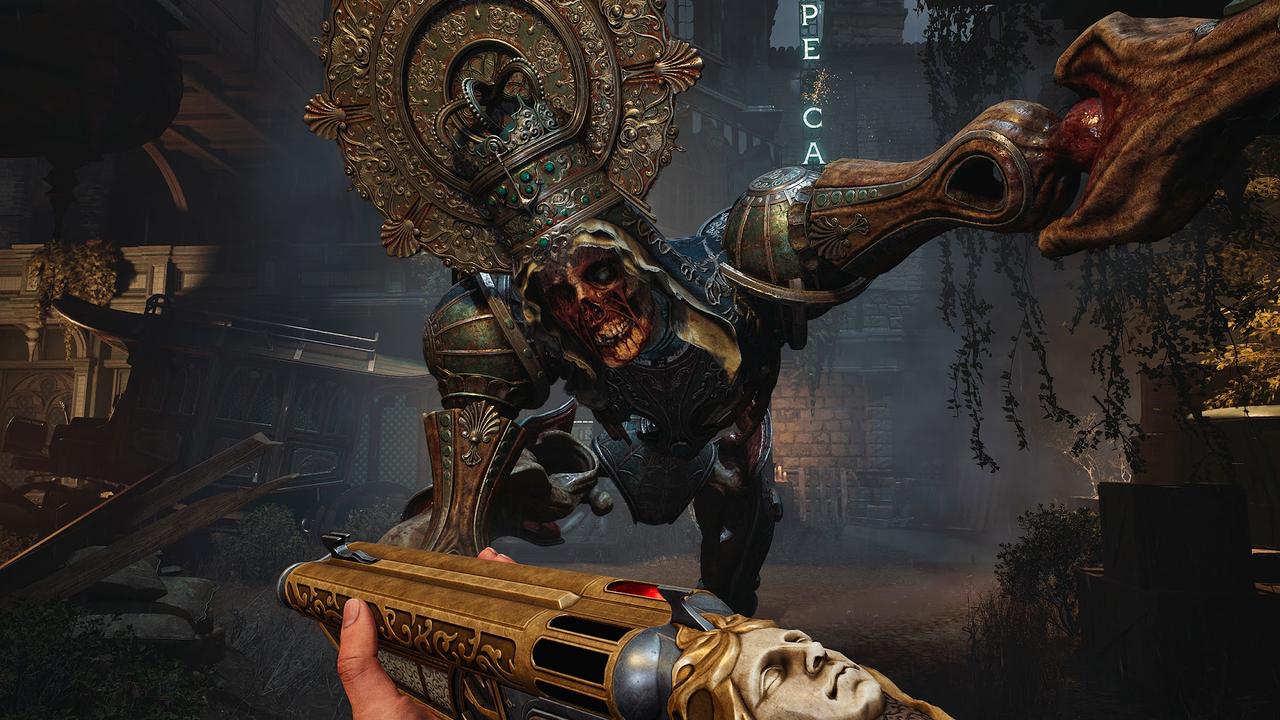
Crisol lives or dies on its presentation, and Tormentosa delivers a strong first impression. Streets are packed with religious posters, torn banners, and wooden floats you would normally see carried through Holy Week parades. Church interiors feel worn and lived in, with cracked tiles, dripping wax, and statues that look ready to move. The game rarely gives you a plain corridor. Most areas have at least one big landmark that helps you orient yourself, whether it is a looming cathedral tower or a ridiculous idol dominating the skyline.
Enemy designs build directly on those religious images. Many creatures twist familiar religious shapes into something far more unsettling. Dolores, a towering stalker inspired by Holy Week figures, turns every encounter into a scramble to get away. Smaller dolls squeak and shuffle down halls. Cherub-like creatures swoop in with unnerving faces. When the game lets these designs take centre stage, it ends up feeling very different from the usual zombie-focused horror.
Lighting plays a big role, with candlelit chapels glowing with warm light against deep shadows. Wet cobblestones reflect neon signs at the fair. Fog creeps in around graveyards. The blood effects when you reload guns deserve a mention too. Watching Gabriel pull blood from his arm or chest hurts to look at, which really sells the cost of every reload.
Audio ties the atmosphere together. The soundtrack uses processional drums, choral pieces, and hymns that fit the Spanish Catholic influence. Enemies give off distinct sounds, so you can often tell what is nearby before you see it. Directional audio does a good job of warning you about threats moving in from the sides, especially in headphones. Voice acting is solid, with Mediodia’s radio comments and La Planidera’s shop chatter carrying a lot of personality.
Crisol: Theater of Idols Turns Blood and Faith Into a Striking Horror Mix
Crisol: Theater of Idols is not trying to please everyone. It is a specific kind of horror game that puts Spanish religious imagery, deliberate combat, and the idea that your own body is the ammo pool right at the centre. If that pitch grabs you, Crisol largely delivers on it.
The blood-powered arsenal forces you to think about every reload. Upgrades add just enough headroom without removing that ongoing risk. Exploration follows a familiar survival horror structure, with compact districts full of secrets and a creepy fairground hub tying runs together. The island’s statues, processions, and idols combine into a setting that sticks with you long after credits.



At the same time, some enemy encounters drag, a few puzzle segments slow the pace, and the writing sometimes overplays its dramatic hand. This is not a perfectly smooth horror ride. It is a vivid one, built around a strong central idea and a location games rarely explore.
For now, if you like survival horror that asks you to bleed for each bullet, Crisol: Theater of Idols is well worth a visit to Tormentosa, even if some parts cut a little deeper than they should.
Crisol: Theater of Idols
Summary
Crisol: Theater of Idols is a first-person horror game where every shot drains your own blood, turning ammo management into the heart of each fight. Tormentosa’s twisted churches, frozen processions, and hostile idols give the story a strong Spanish religious horror hook, helped by characters like Mediodia and La Planidera. Some encounters run long and a few speeches go over the top, but the blood-for-ammo combat, compact districts, and fairground hub come together into a tight horror run that’s easy to recommend if you like deliberate, lore-heavy scares.
As always, remember to follow us on our social media platforms (e.g., Threads, X (Twitter), Bluesky, YouTube, and Facebook) to stay up-to-date with the latest news. This website contains affiliate links. We may receive a commission when you click on these links and make a purchase, at no extra cost to you. We are an independent site, and the opinions expressed here are our own.