


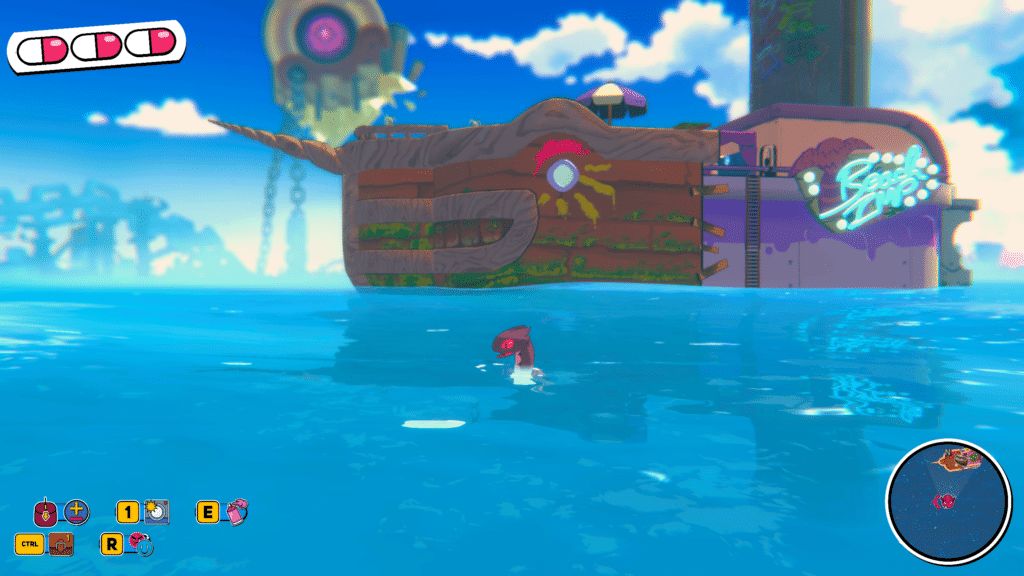
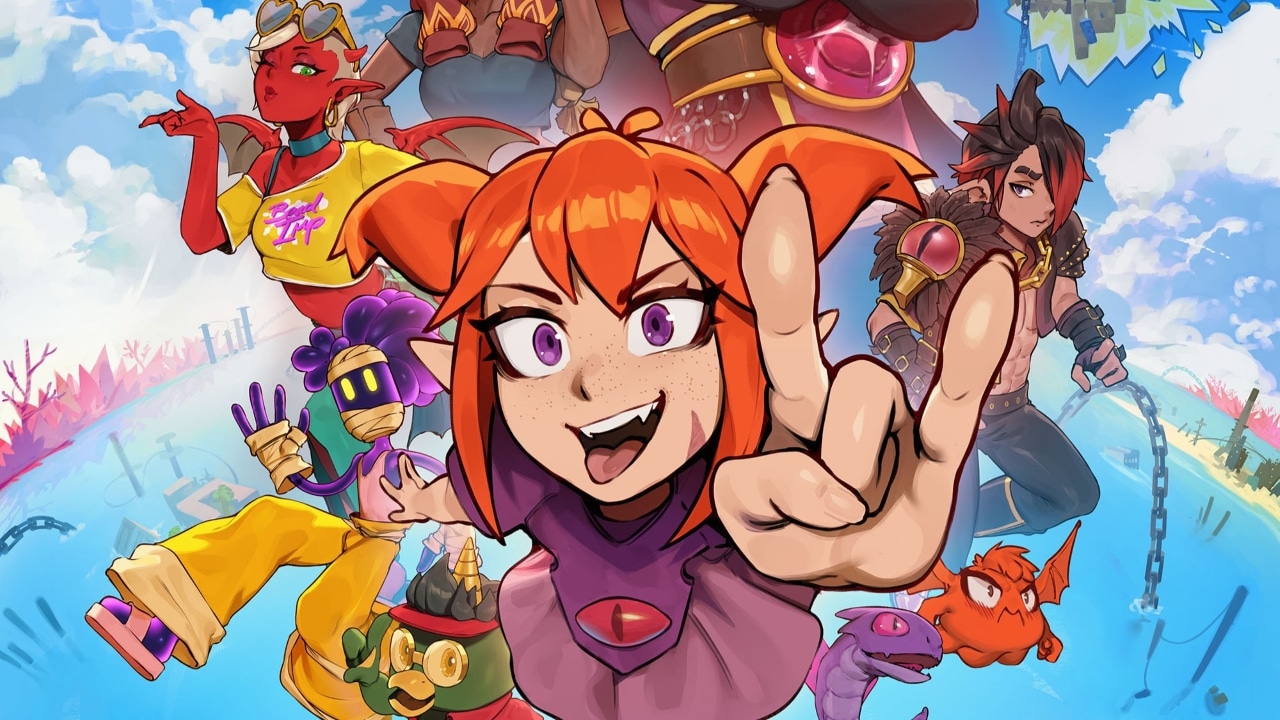
In the ever-evolving landscape of indie platformers, Fabraz has carved out a niche. Their latest title, Demon Tides, serves as a bold, open-world successor to the cult favorite Demon Turf. Released in early 2026, this sequel swaps linear stages for a vast oceanic archipelago known as Ragnar’s Rock. As Beebz, the thousand-year-old demon queen, players are thrust into a pirate-themed adventure that feels like a spiritual marriage between the movement of Mario Odyssey and the seafaring structure of The Wind Waker.
A Reunion with Rebels
The narrative follows Beebz after she receives a mysterious letter from Ragnar, the King of Ragnar’s Rock, who claims to be her long-lost father. Setting sail with her crew, Beebz discovers that her potential family leader is actually a tyrannical monarch who has abandoned his people to ruin. The tone strikes an interesting balance; while the world is vibrant and the characters are full of energy, the underlying themes are surprisingly dark. The dialogue, however, leans heavily into a ‘zoomer’ style that can feel a bit cringe-inducing at times, with characters frequently using modern slang. Despite the somewhat awkward script, the personal stakes of Beebz provide a compelling premise that kept me invested through the campaign. It is a linear progression through three distinct ocean zones, but the emotional beats deliver a narrative weight I didn’t expect.



The Joy of High-Speed Movement
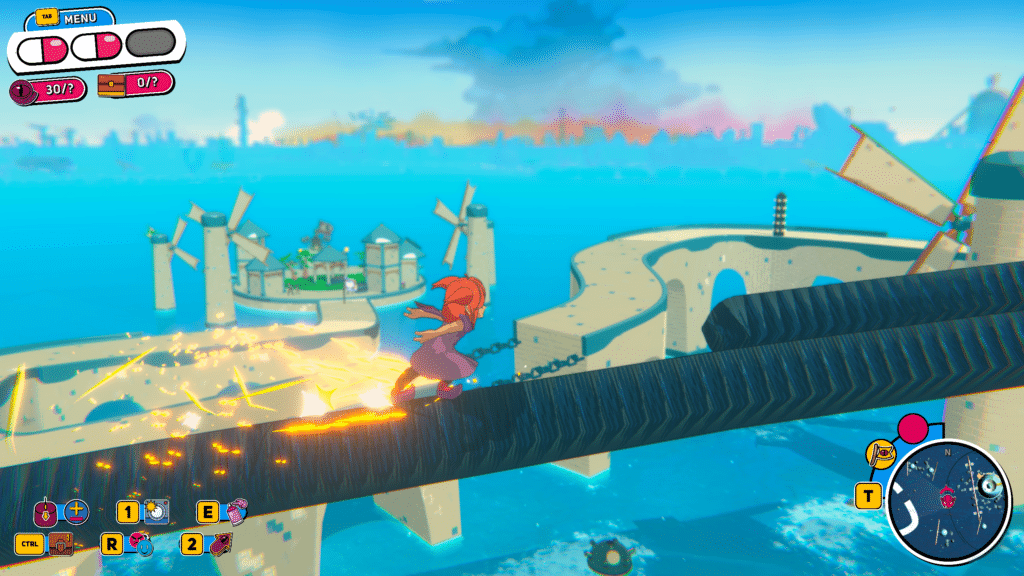
Gameplay is where Demon Tides truly shines. The core loop involves exploring vast waters to find islands, each containing ‘Golden Gears’ required to unlock the next region. Beebz’s moveset is a masterclass in fluidity, featuring a triple jump, wall runs, and three distinct transformations: a bat for verticality, a spinning top for gliding, and a snake for maximum speed on land or water. Chaining these together creates a rhythmic flow that speedrunners will absolutely adore.
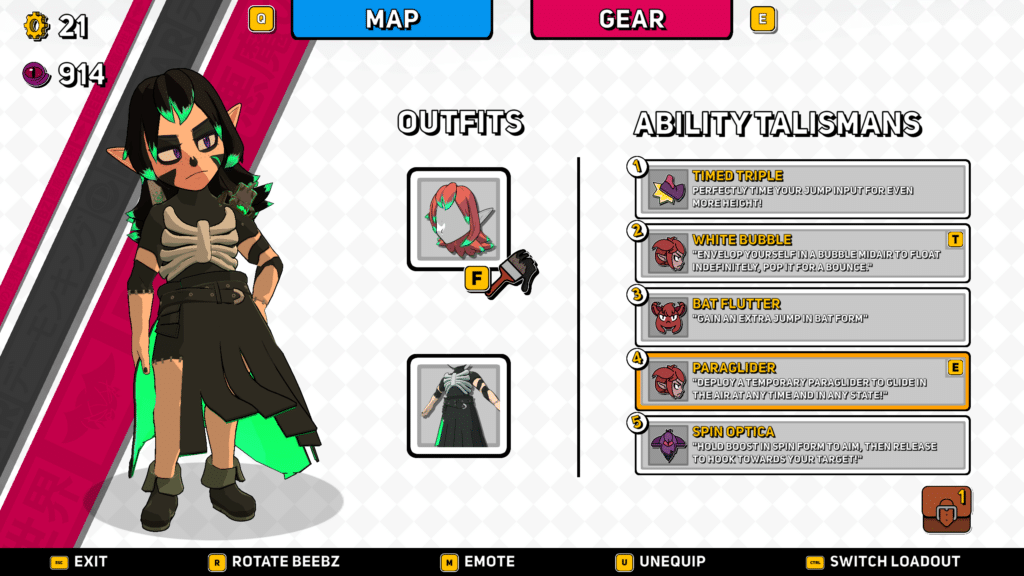
The addition of the ‘Talisman’ system allows you to further customize this movement, adding extra jumps or glides to preserve momentum. While the initial release suffered from some ‘jank,’ specifically a bug where the camera clips through walls during tight platforming and some minor stuttering when islands pop into view, the main mechanics are so tight that these technical hiccups rarely frustrated me. It captures that ‘just one more try’ magic perfectly.
A High-Saturation Oceanic Spectacle
Visually, the game is a feast for the eyes, ditching the 2D-on-3D aesthetic of the previous entry for a fully 3D, cel-shaded look that pops with saturated colors. Each biome has a distinct visual identity that feels purposefully designed. The art direction is complemented by a phenomenal, catchy soundtrack composed by Fat Bard and 2 Mello, blending funky lo-fi beats with high-energy tracks that make every successful move feel earned.
On the technical side, the performance is mostly solid on PC, though the pop-in of distant islands can be jarring when you’re traveling at high speeds in snake form. The camera is a bit of a throwback to the early 2000s; it’s manual and sometimes gets stuck behind geometry in tight corridors, which might irk players used to the automated perfection of modern triple-A titles. However, the sheer charm of the character designs goes a long way in masking the rougher technical edges.
Accessible Anarchy for Every Runner
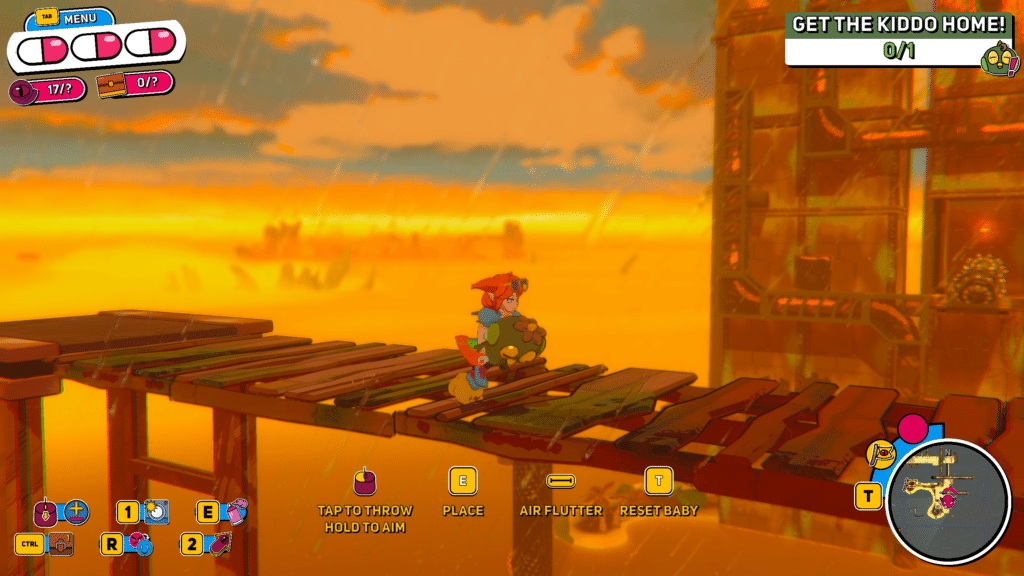
Fabraz has gone above and beyond to ensure the game’s challenge is customizable. Demon Tides features a robust set of accessibility options, including a toggle for screen shake, a first-person mode for those with depth perception issues, and the ability to slow down game speed for more precise moves. Most notably, the ‘Checkpoint Flag’ system returns, allowing you to plant your respawn point anywhere in the world. If you’re struggling with a specific platforming challenge, you can drop a flag every few steps to mitigate frustration. UI scaling and high-contrast outlines are also available, making the busy, vibrant landscapes easier to navigate. The talismans also act as a soft difficulty slider. It is refreshing to see a game that respects the player’s time while still offering a high skill ceiling for those who want to master its mechanics.

Demon Tides Raises the Platformer Goalpost
Demon Tides is a triumphant, if slightly unpolished, evolution of the 3D platformer. It successfully takes the precision movement that made its predecessor a hit and expands it into a world that rewards curiosity and technical skill in equal measure. While the dialogue might make you roll your eyes and the occasional technical glitch reminds you of its indie roots, the sheer joy of movement is undeniable. It’s a game built by people who clearly love the genre’s history but aren’t afraid to push it into more experimental, open-world territory. If you grew up hunting power stars or jiggies, this oceanic trip is a mandatory play.
It’s bold, loud, and occasionally a little chaotic, but it has more heart and mechanical depth than most big-budget titles released this year. Beebz has officially cemented her status as a platforming icon, and Demon Tides is the vibrant playground she deserves. Whether you’re a casual gamer or a frame-perfect speedrunner, there is a wealth of content here to keep you hooked.
Demon Tides
Summary
Demon Tides is an addictive open-world platformer that excels through its deep, expressive movement system and vibrant art style. While the corny dialogue and minor technical jank occasionally distract, the sheer freedom and charm make it a standout indie gem, that speedrunners won’t want to miss.
Played on PC.
As always, remember to follow us on our social media platforms (e.g., Threads, X (Twitter), Bluesky, YouTube, and Facebook) to stay up-to-date with the latest news. This website contains affiliate links. We may receive a commission when you click on these links and make a purchase, at no extra cost to you. We are an independent site, and the opinions expressed here are our own.