


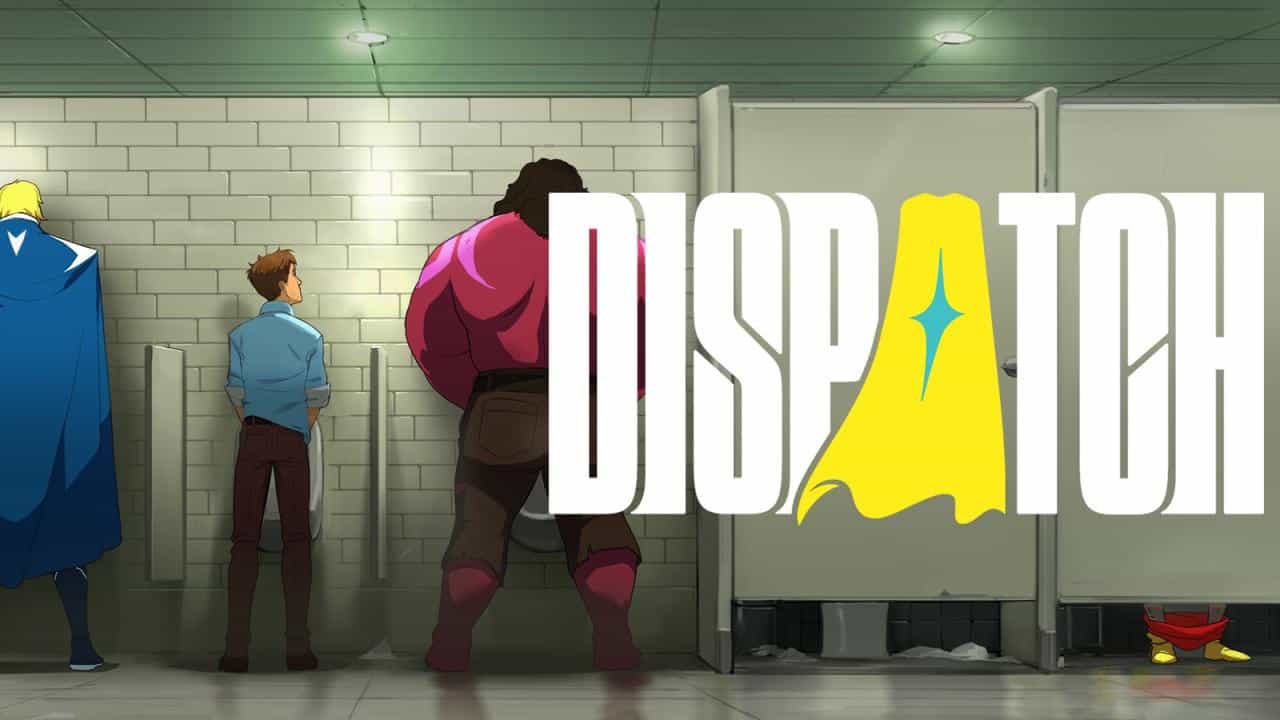
Dispatch is an episodic, story-driven game from AdHoc Studio that puts most of its attention on characters, dialogue, and long-term decisions rather than action. With all eight episodes now available, the full season can be played in one run, which helps the story’s pacing and character arcs come across more clearly.
You play as Robert Robertson III, a former superhero who now works as a dispatcher, managing a volatile team of heroes and ex-villains from behind a desk. Instead of direct combat, most of your time is spent making calls, handling conflicts, and dealing with the fallout from earlier decisions. The focus stays on relationships, workplace tension, and how those choices ripple forward across episodes.



After seeing the entire season, Dispatch comes across as a tightly focused narrative experience. Its strength comes from how consistently it develops its characters and situations across episodes, rather than relying on individual moments to carry the game on their own.
Running a Hero Team When Everything Keeps Going Wrong
Dispatch tells its story through the day-to-day pressures of running a superhero team that doesn’t quite work the way it’s supposed to. Robert Robertson III is no longer out saving the city himself. Instead, he’s managing the Z-Team, a group of former villains and unreliable heroes who are trying, with mixed results, to stay on the right side of the law. The setup keeps the focus on leadership, responsibility, and the consequences of putting the wrong people in the wrong situations.
Rather than chasing constant twists, the story builds gradually across its eight episodes. Conflicts tend to grow out of earlier decisions, strained relationships, and unresolved tensions within the team. Many scenes play out in conversations, disagreements, and moments where you’re asked to weigh personal loyalty against professional responsibility. The episodic structure works in the story’s favour, giving space for situations to evolve instead of rushing toward resolution.
Character relationships are where most of the story’s weight sits. How Robert handles internal disputes, romantic entanglements, and trust issues shapes the direction of the team over time. Some choices push the story in subtle ways, while others have more visible consequences later on. The game does a good job of letting these outcomes feel earned, even when they’re uncomfortable.
The larger plot that frames the season is more uneven. While it provides direction and stakes, it often takes a back seat to the internal drama of the team. That trade-off works well when the focus stays on character development, though it does leave parts of the broader conflict feeling less explored by the time the season wraps up. Even so, the story holds together thanks to its consistent tone and its commitment to following through on the relationships it builds from the opening episodes onward.

Making Calls Instead of Throwing Punches
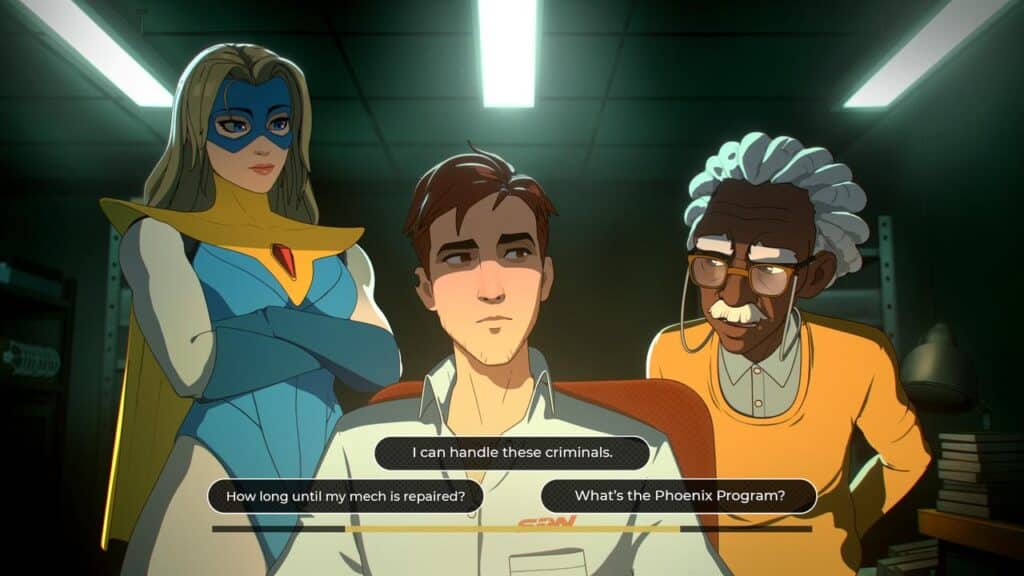
Gameplay in Dispatch stays centered on decision-making rather than direct control. You’re almost always working from Robert’s desk, reacting to calls as they come in and deciding which heroes are best suited to handle each situation. There’s no running around the city or jumping between action scenes. What you’re really managing is people, timing, and the fallout from earlier choices.
Dispatching Heroes and Dealing With the Fallout
The core loop revolves around dispatching your team. Each hero brings different strengths, weaknesses, and personality baggage, and those traits matter when assigning jobs. Picking the right combination improves your chances, while careless decisions can lead to injuries, failed calls, or more tension back at the office. As the season goes on, heroes level up, unlock new traits, and build synergy with specific teammates, which adds just enough planning to make those choices feel considered without turning things overly complex.
Outside of dispatching, most interaction comes through dialogue choices and quick-time events. Dialogue is where relationships shift and tone is set, while the quick-time events add light interaction during key moments. They’re simple and don’t require a lot of accuracy, and the option to turn them off is there if you’d rather keep things purely story-focused. Either way, they don’t drastically change outcomes, but they do affect how active those moments feel.
The hacking sequences offer a small change of pace. These sections ask you to map routes, avoid hazards, and react quickly, making them more engaging than the dispatch screen itself. They don’t appear often, and they don’t deepen much over time, but they help break up the rhythm without dragging things out.
Once you’ve settled into the flow, Dispatch’s gameplay becomes familiar. That familiarity can show over longer stretches, but it also keeps the focus where the game wants it to be. The mechanics exist to support the story, reinforce pressure, and give weight to your decisions, not to compete with the narrative for attention.
Built Like a Comic Panel, Framed Like a Desk Job
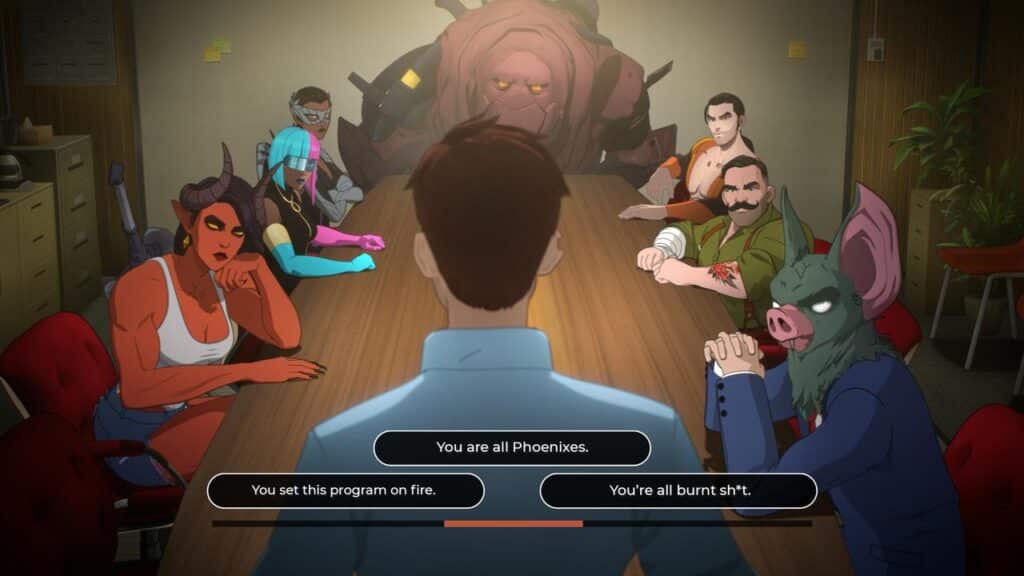
Dispatch has a strong visual identity that fits its superhero setting without getting in its own way. Since so much of the game takes place in offices and control rooms, the animation and character expressions end up doing most of the work. Small shifts in posture, reactions during conversations, and how characters respond to each other sell a lot of what’s happening without needing big scene changes.
The look stays consistent across all eight episodes, which helps when you play the season straight through. Action scenes have more movement, but most of the time you’re watching characters talk, argue, or push back against each other. The presentation keeps the focus on those moments instead of trying to distract you with visual tricks.
Voice acting is a big reason those scenes land. Conversations feel natural, especially when characters talk over each other or react to Robert’s decisions in real time. The sarcasm and frustration come through clearly, which helps the workplace setting feel believable. Even during longer conversations, the delivery keeps things from dragging.
I played on PS5 and the game ran smoothly from start to finish. Scene changes are quick, performance stays stable, and nothing pulls you out of what’s happening. The presentation does what it needs to do and stays out of the way, letting the story and characters carry the experience.
Dispatch Is at Its Best Over the Full Eight Episodes
Dispatch works best when you take it on its own terms. It’s a story-first game that puts relationships, decision-making, and long-running consequences ahead of mechanical depth. Playing through all eight episodes makes that focus clear, especially as earlier choices echo forward and shape how the team functions by the end.
The gameplay never tries to steal the spotlight, and that won’t work for everyone. Dispatching heroes, managing traits, and making dialogue choices stay fairly contained throughout the season. What carries the experience is how those systems tie back into the characters and the situations they create, even when the larger plot doesn’t always get the same level of attention.
If you’re looking for a narrative game that treats its characters seriously and lets situations play out over time, Dispatch delivers a complete and mostly satisfying season. It has limits, especially on the gameplay side, but it sticks to its lane and follows through on the story it sets up from the start.
Dispatch Review
Summary
Dispatch is at its best when you treat it like a full season instead of a series of individual episodes. The draw isn’t action, it’s the characters, the relationships between them, and how your decisions carry forward over time. Sending heroes out, dealing with the fallout, and managing team dynamics keeps things engaging, even when the gameplay itself stays fairly contained. If you’re in it for a story that develops steadily across its episodes, it’s a solid experience from start to finish.
As always, remember to follow us on our social media platforms (e.g., Threads, X (Twitter), Bluesky, YouTube, and Facebook) to stay up-to-date with the latest news. This website contains affiliate links. We may receive a commission when you click on these links and make a purchase, at no extra cost to you. We are an independent site, and the opinions expressed here are our own.