


EA Sports UFC 6 makes your fighter choice feel far more meaningful than it did in UFC 5, and that was one of the first things I noticed. You can still see familiar pieces from the last game, especially in the career structure around the fights, but the actual fight experience has more personality because individual athletes now push you toward different habits.
That’s enough to make EA Sports UFC 6 feel like a meaningful step forward for UFC fans, especially if you care about stand-up timing, fighter identity, and career progression. It isn’t a complete reset for the series. It builds on the current UFC style with Flow States, better learning tools, The Legacy, Hall of Legends, and The Gym doing more than a roster update.
Fighter Identity Changes How You Approach Each Matchup
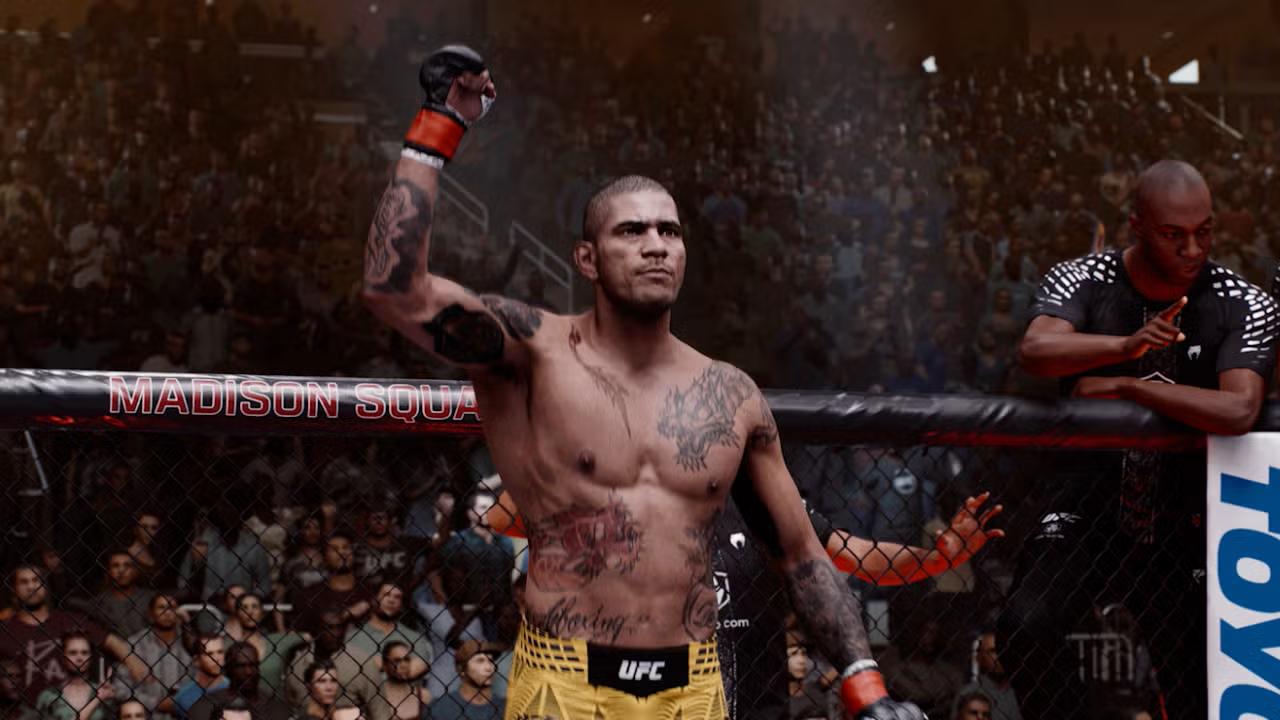
UFC 6 puts most of its energy into making real fighters act less interchangeable once the bell rings. EA Vancouver uses Markerless Capture, Sapien Technology, over 1,000 new animations, all-new bodies and skeletons, athlete-specific idle movement, Signature Strikes, and Signature Movement to make each athlete easier to identify in motion.
What became obvious quickly was the difference during stand-up exchanges. You aren’t just picking a name, rating, or division. You’re picking a fighter with specific habits, strengths, and defensive behaviour. The four Blocking Styles add more variety to how you protect yourself, and the 100+ signature strike variants make the striking feel less like every fighter is pulling from the same move list.
Real-Time Contact also changes the way hits register. Punches, kicks, and knockdowns have more physical reaction behind them, especially when the ragdoll physics catch a heavy shot at the right moment. It doesn’t always look perfect. Some animations still come across as familiar, and the physics can occasionally look odd after a finish. Most fights still benefit from the added contact detail because strikes have clearer consequence on screen.
The key is that UFC 6 connects fighter identity to the way you actually play. Pick a fighter known for constant forward pressure, and staying aggressive fits the athlete. Pick someone who thrives on counters, and waiting for openings becomes part of the plan. That connection between athlete choice and fight behaviour is the biggest reason UFC 6 has more personality than UFC 5.

Flow States Push You Toward Better Fighter Habits
Flow States make more sense when you check the fighter first and then build your approach around that athlete’s strengths. UFC 6 has 30 Flow States, with each one tied to how a specific athlete tends to win fights. You fill the meter by fighting in that athlete’s natural style, then the active bonus boosts part of their game for a short window.
Once you start checking those traits before a fight, the roster starts making more sense. Instead of treating every athlete like a blank character with different ratings, you’re pushed to read what that fighter is already good at. A pressure fighter benefits from keeping the pace high. A counter striker rewards patience and timing. That pushes you to learn the roster through behaviour, not just menu stats.
The Fighters Hub supports that by showing attributes and Flow States before you commit to a matchup. Checking those traits before a fight saves you from picking someone and then fighting completely against their strengths.
Flow States don’t turn UFC 6 into an arcade fighter. You still need to block, manage stamina, watch range, defend takedowns, and avoid getting reckless. They connect fighter knowledge and controller input more clearly. The more you understand the athlete, the more the fight opens up.

Learning Tools Make UFC 6 Easier To Pick Up And Play
UFC games have always had a learning curve because MMA itself has so many moving parts. You’re dealing with boxing, kickboxing, Muay Thai, wrestling, Brazilian Jiu-Jitsu, clinch work, ground defence, submissions, stamina, and damage all at once. UFC 6 handles that barrier better than past entries.
The First Time User Experience presets are the starting point. Contender is aimed at newcomers who want a simpler entry point, and Pro is the default recommendation for most returning fans. Those presets affect how the game introduces controls and fight situations, so you don’t have to dig through every setting before your first match.
Simplified Controls reduce the number of inputs you need to remember, especially for stand-up offense and defence. Time Dilation Assists and Slow Motion Gameplay make key moments easier to process by slowing the action during early learning situations. If you struggle with takedown defence or blocking windows, that extra fraction of time changes how quickly you recover from mistakes.
Those settings don’t have to be permanent. You can use Stand Up Offense / Defense Assists in offline modes, learn the basics, then turn pieces off as you improve. The Training Manual explains fight concepts with videos, images, and tips, and Practice Mode lets you drill specific situations, including Flow State behaviour. UFC 6 still takes effort to learn, but it creates a better path into the sport.
The Legacy Works Better As A Starting Point Than A Full Career Replacement
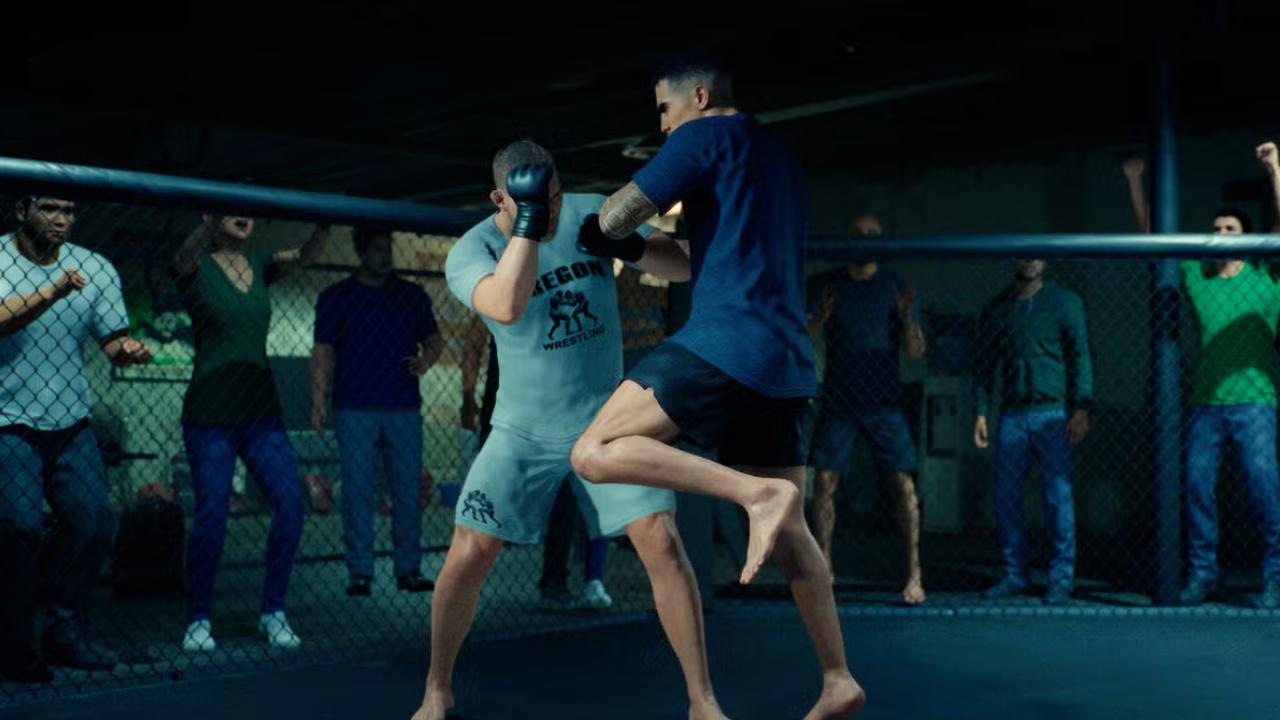
The Legacy comes before the main Career Mode path and follows Chris Carter, a college wrestler trying to reach UFC. The story follows three stages of his career, mixing fights with character drama and career decisions before handing you off to the broader Career Mode structure.
The Legacy works as a guided first step into UFC 6’s career path. Chris anchors the mode with a defined point of view, and the regional-to-UFC path adds context to your early fights before the full Career Mode opens up. It also teaches the career routine through training, preparation, and fight progression before you’re managing everything yourself.
The issue is that The Legacy and Career Mode share a lot of the same routine. Career Mode has been expanded with more choices than UFC 5, and those decisions have a wider impact on your path through the mode. Hype, Fitness, social media, text messages, and fight preparation all shape the way you build toward each match. The Learn a Move menu also makes skill growth easier to preview before you commit. You can earn and defend two belts at the same time, then push for the BMF belt, but the weekly routine of training, preparation, and promotion still becomes familiar after a while.
Career Mode is better when you treat it as a long-term fighter management path instead of expecting constant story movement. Spend early skill points carefully, focus training camps around what your fighter actually needs, and don’t ignore Fitness just to chase Hype. UFC 6 adds more career decisions, but the mode still runs on repetition. I enjoyed it most when I focused on gradually improving my fighter and watching those small upgrades pay off over time.
Hall Of Legends Turns UFC History Into Playable Challenges
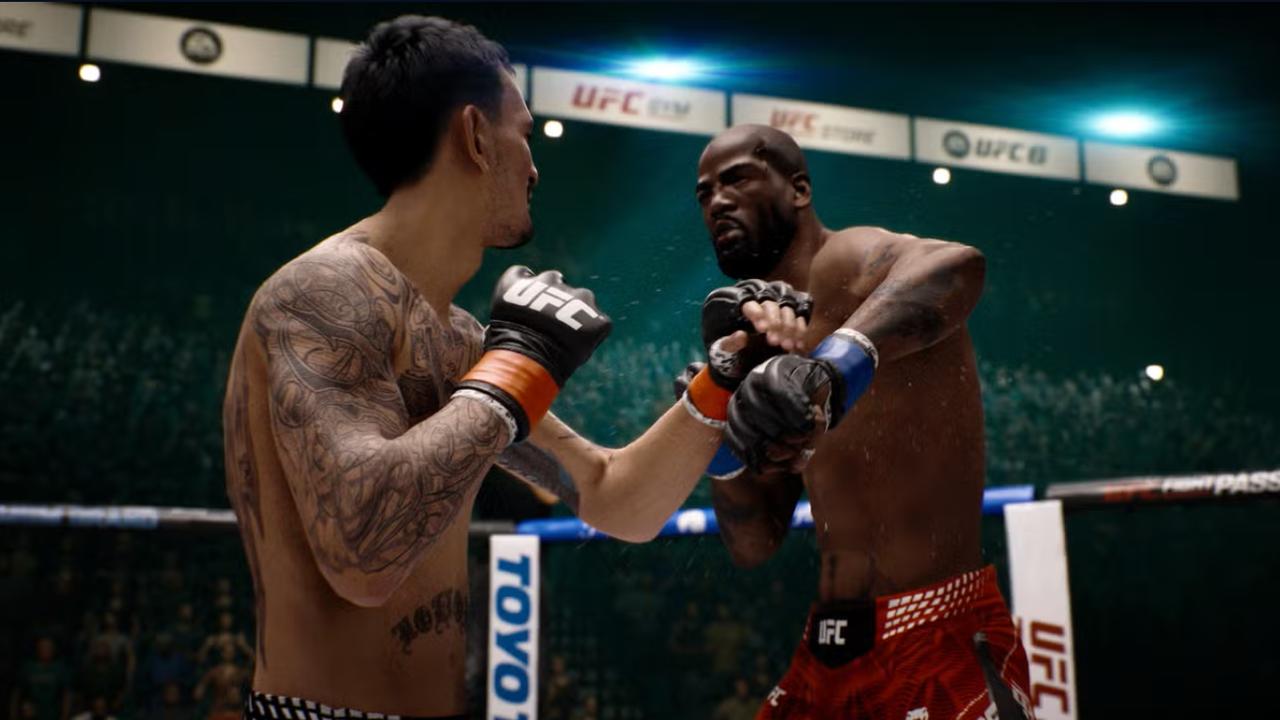
Hall of Legends is one of UFC 6’s better additions because it puts the sport’s history in its own mode instead of burying it inside menus. The mode starts with Max Holloway, Alex Pereira, and Zhang Weili. Instead of leaving UFC history to static menus, it lets you move through themed spaces, watch career clips, and take on classic fight challenges.
Hall of Legends is at its best when it connects real UFC history to something you actually do with the controller. You aren’t only reading about major fights or looking at career milestones. You move through spaces tied to each athlete, learn how each career changed UFC history, and step into classic fight challenges connected to those careers.
The mode felt smaller than I expected. Three athletes and their related challenges make Hall of Legends a good starting point, not a massive history mode. EA has room to expand Hall of Legends after launch, especially with Fighter Pass legends and post-launch drops already planned. For now, the focus is clear and the athletes chosen cover very different paths through UFC.
The Gym adds another reason to keep using your favourite fighters outside standard matches. You recruit and train UFC stars, build them through XP, and earn trainers, boosts, profile items, coins, and cosmetic rewards. It’s not the heart of UFC 6, but it ties repeated fights back into the rest of the game.
Crossplay Opens Up Online Fights
UFC 6 introduces crossplay, which is a major addition for online play. A shared online pool should make the online side healthier than a split console base, especially once launch week settles and the ranked crowd separates from more casual online matchups.
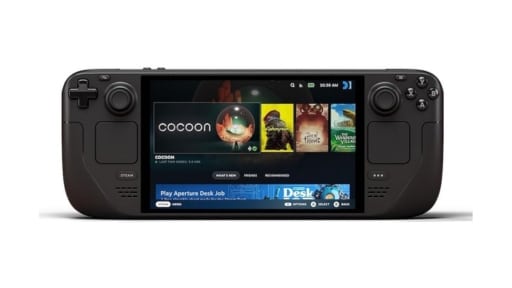
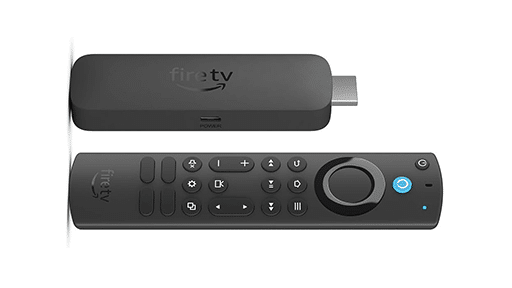
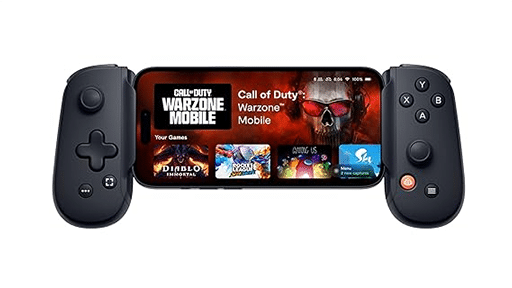

Quick matches, ranked play, and Online Career Mode cover the main competitive paths. Online Career Mode uses seasonal divisions, while Fight Week connects UFC 6 to real-world numbered events through challenges and rewards. That live-service structure is familiar for sports games, but it fits UFC better than most because the real sport already moves from event to event.
Contracts add another quick-fight option by presenting selected fights with specific challenges and currency rewards. Fight Now is still the easiest way to jump straight into a specific type of bout, with 3-round and 5-round fights plus Backyard, Kumite, Knockout, Stand & Bang, Competitive, and Simulation presets. If you just want a quick fight without career management, UFC 6 still has several ways to get there.

Fights Hit Harder Than The Menus
Menus were the only thing that kept pulling me out of UFC 6. Moving between career tasks, fighter management, rewards, and mode screens takes longer than it should. Once the bell rings, the game is in a much better place. Stand-up exchanges, grappling transitions, and submission attempts demand quick reads, and the fights rarely suffer from the menu slowdown around them.
UFC 6 gets a lot closer to the feel of a real UFC event too. Arenas sound larger thanks to 3D spatial crowd audio, and the venue-specific colour grading adds more identity to licensed locations. Walkouts, damage, crowd reactions, and broadcast camera work all push the fights closer to what you see on TV without slowing everything down.
Contact is the one area where I still caught the odd weird moment. A strike can miss the kind of connection I expected, or a heavy shot can send a body reaction in a direction that looks off. It wasn’t constant, and it didn’t ruin fights, but it’s noticeable because Real-Time Contact is such a major part of UFC 6’s pitch.
Even with those quirks, the improved impact still makes the fights more convincing. A clean shot has more bite behind it, knockdowns look more varied, and damage is easier to read as the fight goes on. UFC 6 is at its best when you’re actually fighting. It just needs the menus around those fights to move with the same urgency.

EA Sports UFC 6 Fits UFC Fans Who Want More Fighter Identity
EA Sports UFC 6 is for UFC fans who wanted the series to make individual fighters count for more. Flow States, Signature Strikes, Signature Movement, improved body tech, and the new blocking variety all push the actual fights in the right direction. You have more reason to learn athletes instead of treating them as rating sheets.
The career and history modes are more familiar than the fight model. The Legacy is a good introduction, Career Mode has more decisions, Hall of Legends puts UFC history in a dedicated mode, and The Gym adds progression across the package. None of those completely transform the series on their own. Together, they make UFC 6 feel more complete than UFC 5.
The weaker spots are clear. Menus drag, some animations are familiar, occasional contact issues remain, and The Legacy shares too much routine with Career Mode. If you only wanted a total reinvention, UFC 6 probably won’t hit that mark.
For everyone else, this is the most complete EA Sports UFC entry in years. It makes the real athletes matter more once the round starts, teaches better, and puts fighter individuality at the centre of each match. UFC 6 doesn’t throw out the old foundation. It makes the current one work harder.
EA Sports UFC 6
Summary
EA Sports UFC 6 is the most complete entry the series has had in years, especially once Flow States, Signature Movement, and Real-Time Contact start making individual fighters feel more distinct. The Legacy and Hall of Legends add useful structure around the fights, while the learning tools make UFC 6 easier to approach without stripping away the sport’s depth. Menus drag and Career Mode still repeats itself, but UFC fans who wanted athletes to feel more specific inside the Octagon have a lot to like here.
As always, remember to follow us on our social media platforms (e.g., Threads, X (Twitter), Bluesky, YouTube, and Facebook) to stay up-to-date with the latest news. This website contains affiliate links. We may receive a commission when you click on these links and make a purchase, at no extra cost to you. We are an independent site, and the opinions expressed here are our own.