



Escape from Ever After is one of those games that immediately lets you know what it’s about. Then keeps finding new ways to surprise you anyway. On the surface, it looks like a love letter to classic Paper Mario-style RPGs. Bright visuals, storybook characters, turn-based battles, and a lighthearted tone. But once you spend a little time with it, you realize there’s a lot more going on under the hood.
You start out expecting a familiar fairy tale setup. A knight, a dragon, a castle, the usual stuff. Then the game pulls the rug out. That dragon’s castle is now an office building. The fairy tale world has been bought out by a massive corporation. Instead of saving the land with a sword, you’re suddenly dealing with workplace rules and corporate doublespeak. The world treats stories like assets, and you’re stuck trying to navigate that system from the inside.



It sounds ridiculous, and it is, but in a way that works. Escape from Ever After takes a simple idea and makes it work. It never feels like it’s trying too hard to be clever, and it doesn’t overexplain the joke. The humour comes naturally from the situations, the writing, and the way the game constantly contrasts fairy tale logic with modern corporate nonsense.
What surprised me most is how well everything holds together. The story, the combat, the puzzles, and the world design all feed into each other instead of feeling like separate systems stitched together. It clearly draws inspiration from Paper Mario, but it doesn’t feel like a copy. It has its own tone, its own rhythm, and its own ideas about how a turn-based RPG should move.
By the time you’re a few hours in, it’s clear Escape from Ever After isn’t just leaning on nostalgia. It’s using that familiar foundation to tell a story that’s funny, self-aware, and surprisingly thoughtful, all while delivering a solid RPG underneath.
A Fairy Tale Turned Corporate Mess
Escape from Ever After wastes no time showing you what kind of story it wants to tell. You step into the role of Flynt, a would-be hero doing what heroes always do, storming a castle to take down a dragon. Except this time, the castle has been converted into an office complex, the dragon has been downsized both literally and figuratively, and the real power sits with a company called Ever After Inc.
That twist sets up the entire game. Fairy tales still exist, but they’ve been absorbed into a corporate system that treats stories like products and characters like employees. Instead of slaying evil, you are suddenly dealing with onboarding, middle management, and a workplace that values efficiency over meaning.

Flynt’s unlikely partner in all this is Tinder, the dragon he was supposed to defeat. She has been stripped of most of her power and fitted with a limiter that keeps her in check. The two don’t trust each other at first, but they share the same problem. Their world has been taken over, and the only way to fix it is from the inside.
When Fairy Tales Start Looking Familiar
What works well here is how naturally the game blends its humour with its themes. The writing pokes fun at corporate culture without feeling heavy handed. Office jargon, performance reviews, and company values are all twisted into fairy tale logic. It is funny in a low-key way, and the jokes land because the game never stops treating its world seriously, even when it is being absurd.
As the story opens up, you start jumping between different storybooks that have all been reshaped by Ever After Inc. Each one plays with a different tone and genre, from classic fairy tales to darker or stranger settings. The game does a good job of keeping things fresh by changing the mood and structure of each book while still tying everything back to the larger idea of corporate control.
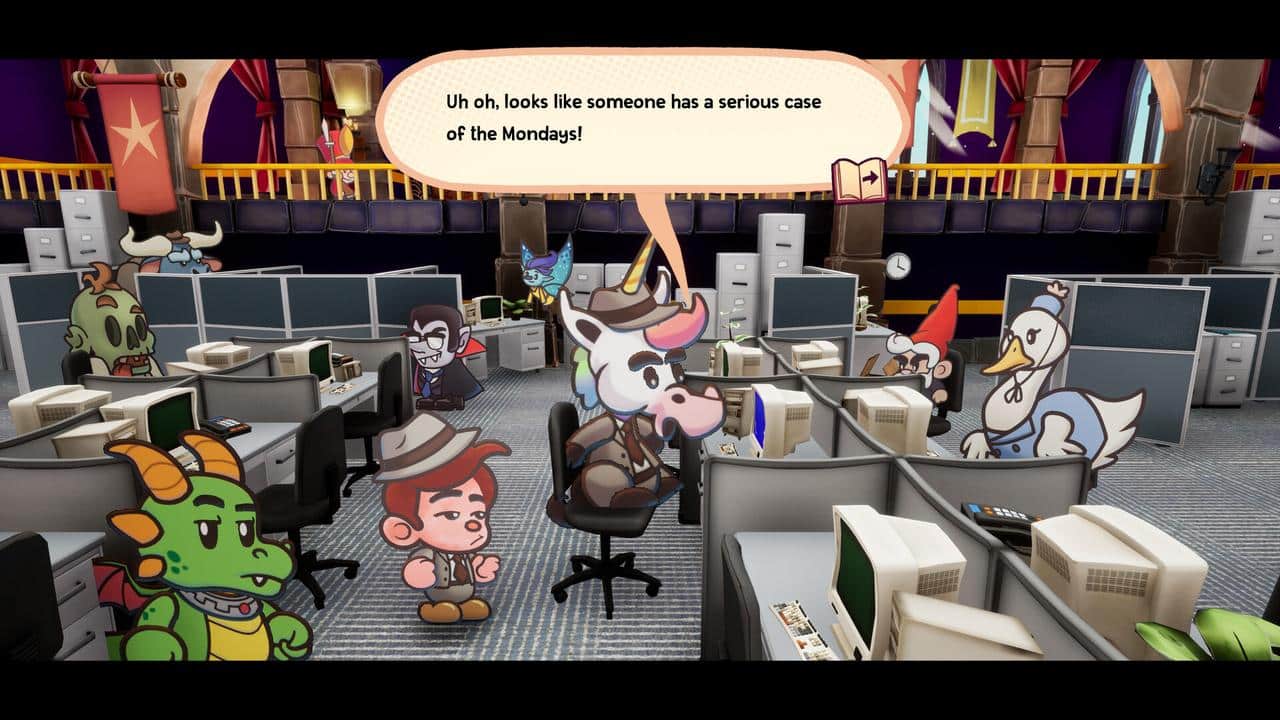
What stands out most is that the story does not rush itself. It lets the characters breathe. Conversations are paced well, and the humour comes from personality rather than punchlines. Even when the plot takes a back seat to gameplay, there is always a sense that you are working toward something bigger than just the next objective.
By the time the larger picture starts to come into focus, the story lands with more weight than you might expect. It is still playful and light on its feet, but there is a clear emotional thread running through it. Escape from Ever After ends up being less about saving a fantasy world and more about reclaiming it from something that never should have owned it in the first place.
Battles Built Around Timing and Teamwork
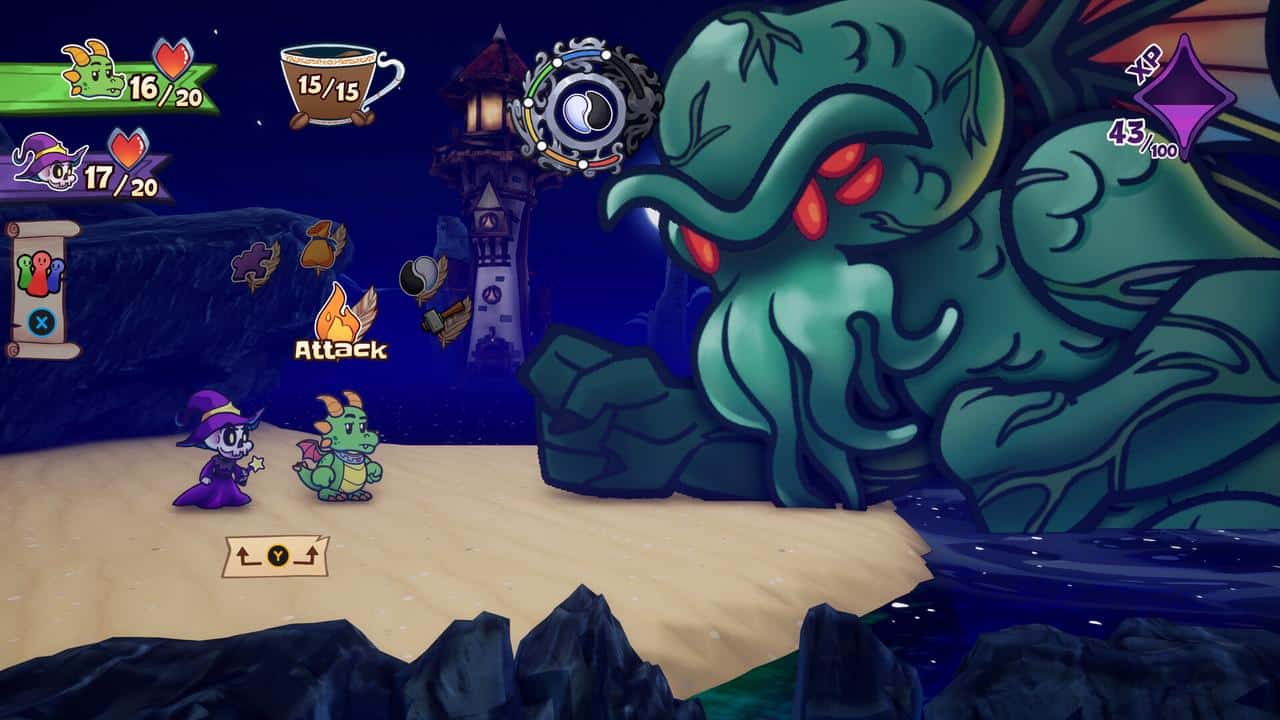
At its core, Escape from Ever After plays like a classic turn-based RPG. It adds just enough interaction to keep you engaged from fight to fight. Battles are built around timing, positioning, and understanding how your party works together. It’s less about picking the strongest move and more about paying attention to how everything fits together.
You control a party of two at a time, pulled from a growing cast of characters you meet along the way. Each one has a distinct role, and the game does a good job of making those differences matter. Flynt’s shield throws, Tinder’s fire-based attacks, and the abilities of later party members all behave differently. That variety helps keep combat from feeling flat.

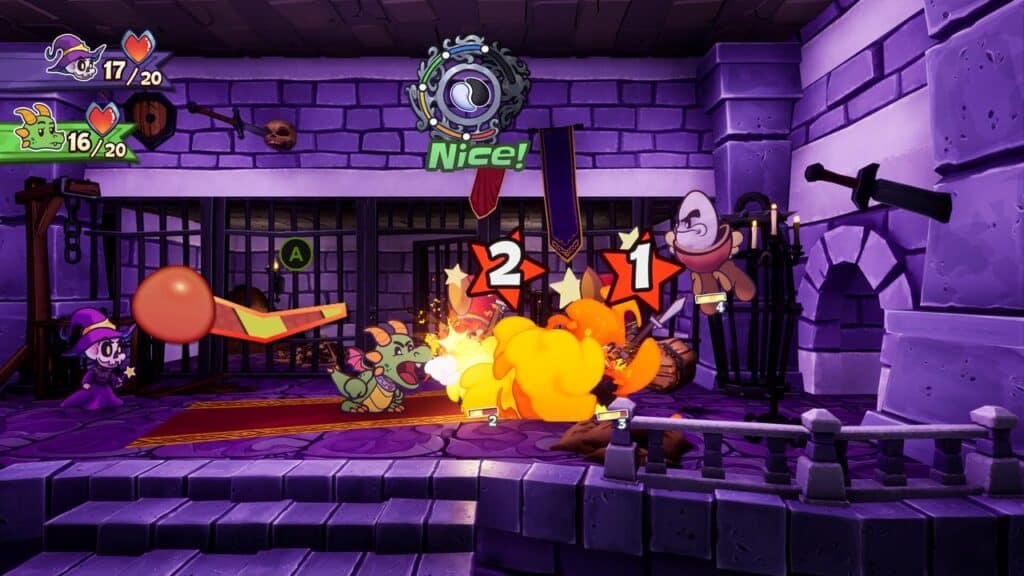
Attacks and defenses rely on timed inputs. Hitting a button at the right moment can extend an attack, increase damage, or reduce incoming hits. It’s simple to understand, but it asks you to stay focused. You can’t fully zone out during fights. This becomes even more noticeable once enemies start stacking shields, using status effects, or appearing in groups that require specific responses.
Where Strategy Starts to Matter
One of the more interesting parts of the gameplay is how abilities interact with enemy placement. Some attacks hit a single target, others affect rows, and certain enemies can only be dealt with effectively using specific party members. That makes swapping characters and planning turns feel important rather than optional.
The game also introduces a synergy system that builds as you land successful actions. When filled, it allows for stronger abilities that can turn the tide of tougher encounters. It adds a nice layer of decision-making without overcomplicating things, especially during longer fights where timing and resource management start to matter more.
Difficulty sits in a comfortable place for most of the experience, though it can spike at times. Enemies tend to have relatively low health totals, but so do you, which means mistakes add up quickly. Some encounters lean more toward endurance than challenge, especially later on, but the mechanics themselves stay engaging enough to carry things forward.
There are accessibility options that can soften the timing requirements, which is a smart inclusion. Some of the windows for perfect blocks or follow-up attacks can feel tight, and having the option to adjust that makes the game more approachable without removing the core mechanics.
Overall, combat in Escape from Ever After feels deliberate. It doesn’t try to reinvent turn-based RPGs. But it builds on familiar ideas in a way that stays interesting over time. The systems work together well, and by the time new party members and abilities are introduced, the rhythm of battle feels natural rather than forced.
A Storybook Look With a Sharp Edge
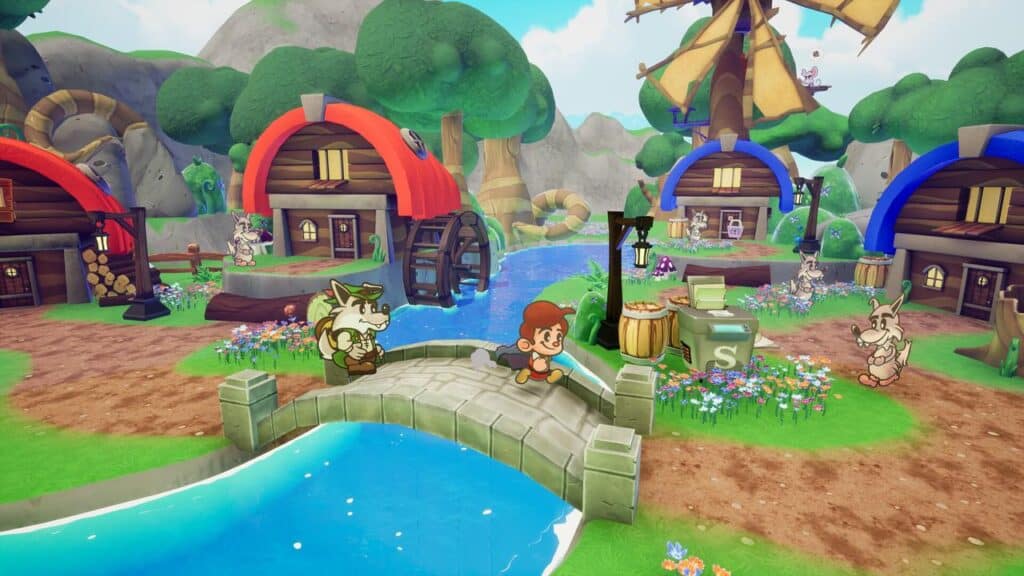
Escape from Ever After commits fully to its storybook presentation, and it shows right away. Characters look like they’ve been lifted from a pop-up book, with flat, paper-style designs placed inside fully three-dimensional environments. It’s a familiar look if you’ve played Paper Mario before, but it still feels fresh thanks to how confidently the game uses it.
The contrast works in the game’s favour. Bright colours, thick outlines, and expressive character art give everything a playful feel, while the environments themselves carry more detail than you might expect. Office cubicles sit inside medieval castles. Fairy tale forests hide corporate signage. The visual design constantly reinforces the idea that this world is caught between fantasy and bureaucracy, and it does so without needing to explain itself.
A Style That Carries the Tone
Character animations help sell the tone. Reactions are clear and expressive without being exaggerated, and small visual touches make conversations feel lively even when nothing major is happening. It helps the cast feel present, especially during longer stretches of dialogue or exploration.



The soundtrack fits the game well. The jazz-inspired music shifts naturally between light, relaxed tracks and more energetic themes depending on where you are. Whether you’re moving through an office floor, exploring a twisted fairy tale, or heading into a boss fight, the music supports the mood without pulling focus. A few tracks repeat over time, but the overall quality keeps things from feeling stale.
Sound design stays simple and clean. Attacks have clear audio cues, menus are easy to read, and nothing competes for attention. There’s no voice acting, but the writing carries enough personality that it never feels like something is missing. Expressions and timing do most of the work, and they do it well.
Overall, the presentation feels cohesive from start to finish. The art style, music, and animation all serve the same purpose, giving the game a strong identity and making its world enjoyable to spend time in.
Escape from Ever After Is a Smart, Self-Aware RPG With Heart
Escape from Ever After ends up being more than just a clever spin on familiar ideas. It feels like a game that knows what it wants to be and commits to it all the way through. The story lands its jokes without overdoing it. The combat stays interesting thanks to the timing-based gameplay. And, the world itself has a personality that’s easy to get invested in after a few hours.
What helps is that everything works together. The writing, the battles, and the presentation all feel like they’re pulling in the same direction. Even when the game slows down or asks a bit more focus from you, there’s usually something around the corner that makes it worth sticking with. That might be a new character, a fun twist on a familiar idea, or a fight that makes you rethink your approach.
There are a few rough spots along the way. Some fights can drag on a bit. A few gameplay mechanics take longer than they should to fully click. And, the difficulty can jump if you’re not paying attention to how everything works together. But none of that ever feels like it derails the experience. It comes across more like the kind of bumps you get in a game that’s trying something a little different and mostly pulling it off.
By the time the credits roll, Escape from Ever After leaves a really good impression. It’s funny without forcing it, thoughtful without turning heavy, and engaging without piling on unnecessary systems. If you enjoy story-driven RPGs with personality, or just like seeing familiar ideas handled in a fresh way, this one’s easy to recommend spending time with.
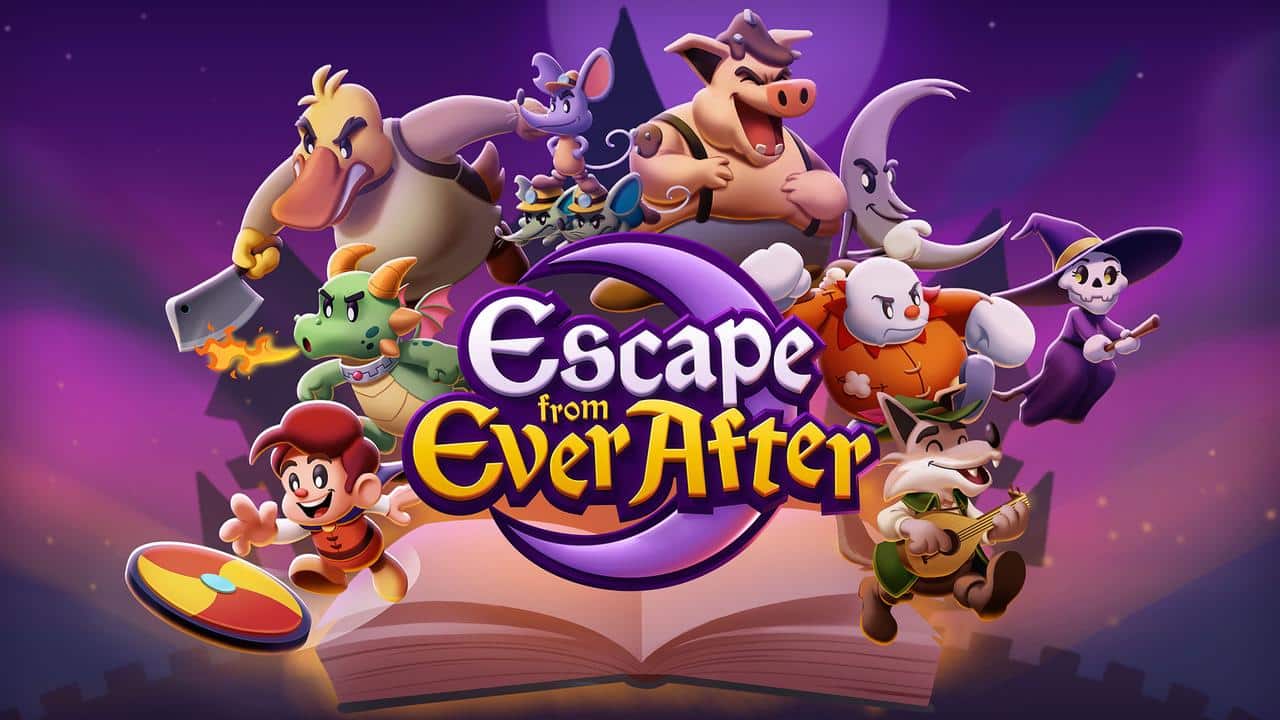
Escape from Ever After
Summary
Escape from Ever After feels like a game that knows what it’s trying to do and sticks the landing. It takes familiar turn-based RPG ideas and gives them a fun twist, with a story that’s self-aware without trying too hard to be clever. The combat stays interesting thanks to the timing-based mechanics, and the world has enough personality to keep you invested as you move through it. It’s not perfect, but the rough spots never get in the way of the experience, making it an easy recommendation if you’re into story-driven RPGs with some charm behind them.
As always, remember to follow us on our social media platforms (e.g., Threads, X (Twitter), Bluesky, YouTube, and Facebook) to stay up-to-date with the latest news. This website contains affiliate links. We may receive a commission when you click on these links and make a purchase, at no extra cost to you. We are an independent site, and the opinions expressed here are our own.