


Fighting Force Collection brings together two late-1990s games that share a name but don’t really play the same way at all. You’re getting the original Fighting Force from 1997 and Fighting Force 2 from 1999, presented largely unchanged, with small quality-of-life additions to make them playable on current hardware.
This isn’t a remake or a full remaster. It’s closer to pulling these games off the shelf and plugging them back in. A few quality-of-life tools are here to make things easier to manage, but the core design, pacing, and rough edges are all intact. That approach sets expectations early.
One game sticks closely to arcade-style brawling and commits to it. The other heads in a completely different direction. That split reflects a time when developers were still working out how 3D action games should function.
Story Takes a Back Seat in Very Different Ways
Neither game in Fighting Force Collection puts much weight on story, but they use it differently, and that difference matters more than you might expect.
The original Fighting Force keeps things straightforward. A villain named Dr. Zeng is causing trouble across the city, and a small group of fighters steps in to shut him down. That’s it. The game doesn’t slow you down with cutscenes or dialogue, and it rarely asks you to think about motivation. The story exists to explain why you’re moving from streets to subways to indoor spaces, punching through waves of enemies along the way. It works because it stays out of the way. You’re never pulled out of the action, and the loose setup fits the arcade-style structure.
Fighting Force 2 takes a more serious approach. You play as Hawk Manson, now positioned as a government agent investigating a corporate cloning operation. Missions revolve around infiltrating facilities, uncovering information, and stopping a larger conspiracy. There’s more context between levels, and the game clearly wants you to take the plot more seriously than the first one ever did.
That shift in tone changes how the story plays out. The sequel doesn’t just set things up and move on, it keeps stopping to remind you it has something to say. It ends up working against the gameplay instead of supporting it, slowing things down and putting a spotlight on the game’s rougher moments.

The contrast is easy to see. One game treats story as something that stays out of the way and keeps things moving. The other tries to make it part of the experience. The simpler approach fits the series more naturally.
Two Games, One Name, Very Different Feel
Fighting Force Collection pairs two games that share a title but play very differently, and that split shows up almost immediately.
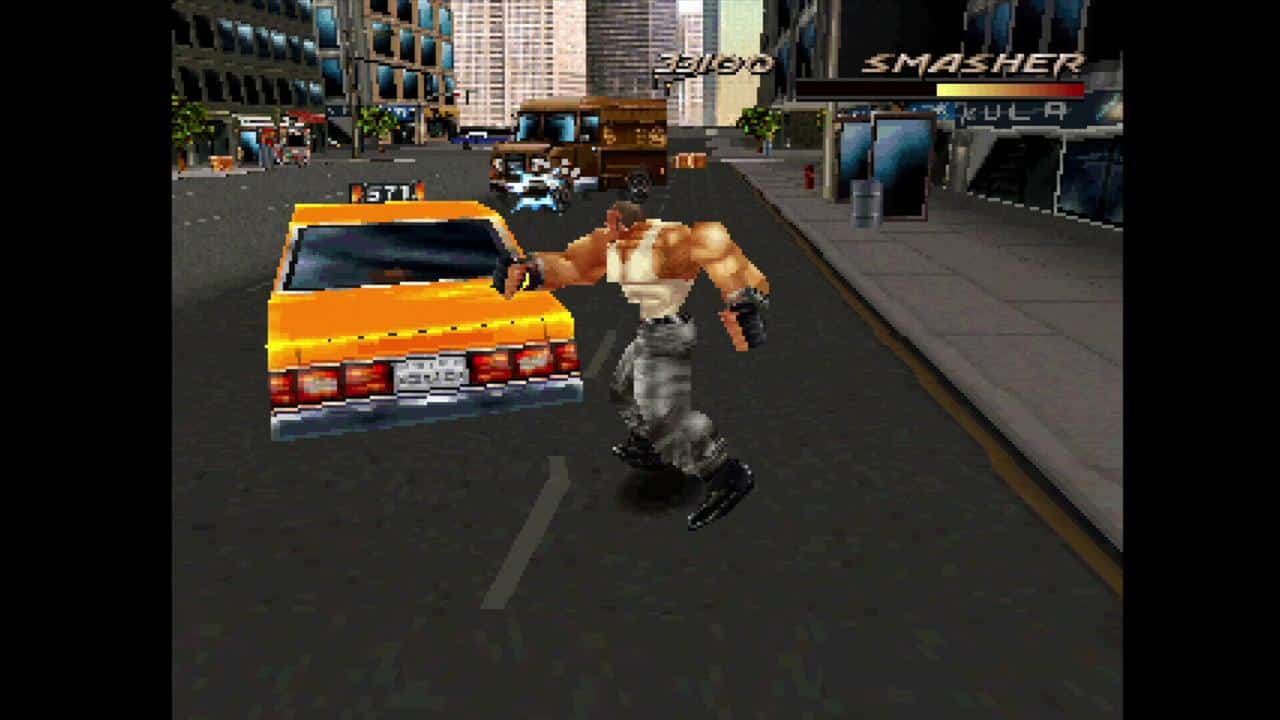
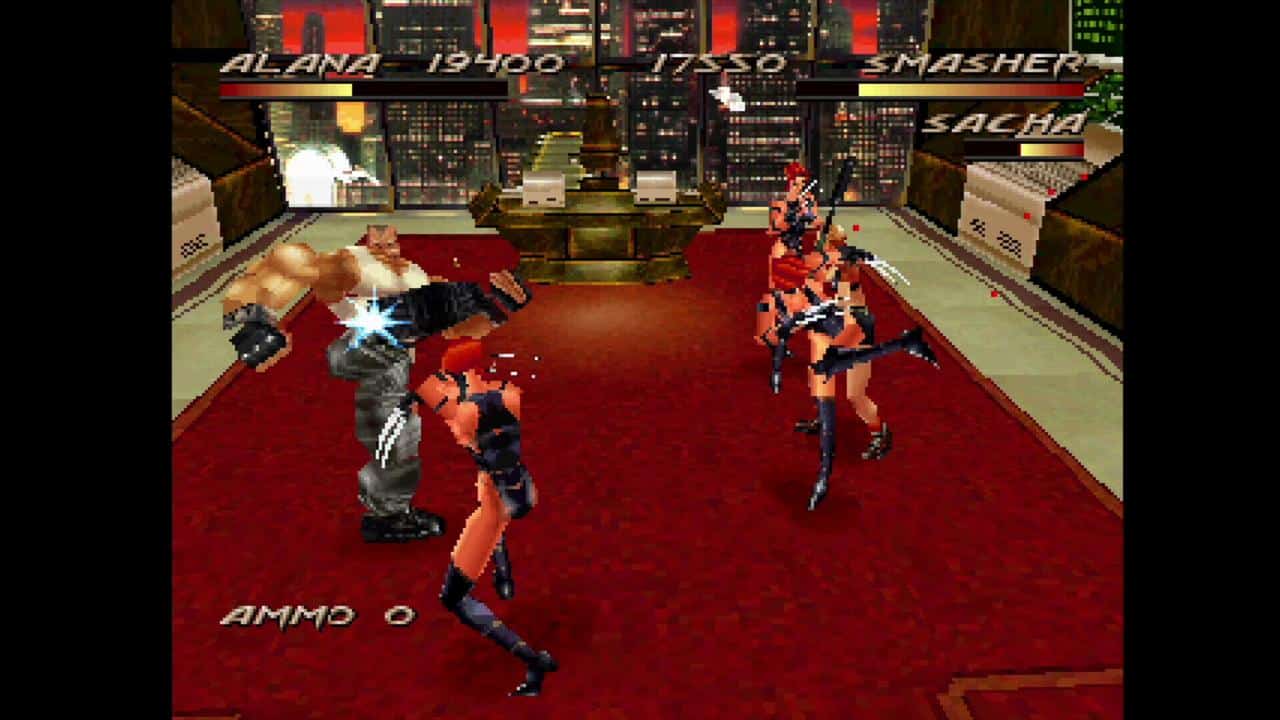
The original Fighting Force is built around moving forward and dealing with crowds. You push through wide areas, clear enemies, then keep going. Everyone punches, kicks, grabs, throws, and uses a special attack that costs health. There’s no deep move list to learn. What matters is where you’re standing, who’s around you, and what you can grab before things pile up.
The environment does a lot of the work here. Pipes, knives, guns, and larger objects are everywhere, and most of them can be picked up and used on the fly. Weapons don’t last long, which keeps fights moving and pushes you to stay flexible. Enemies overwhelm through numbers, not clever behaviour, so grabbing someone for a brief breather or using a weapon to thin the group becomes part of how you survive. Co-op makes a big difference. With a second player, it’s easier to control space, recover from mistakes, and keep fights from spiralling.
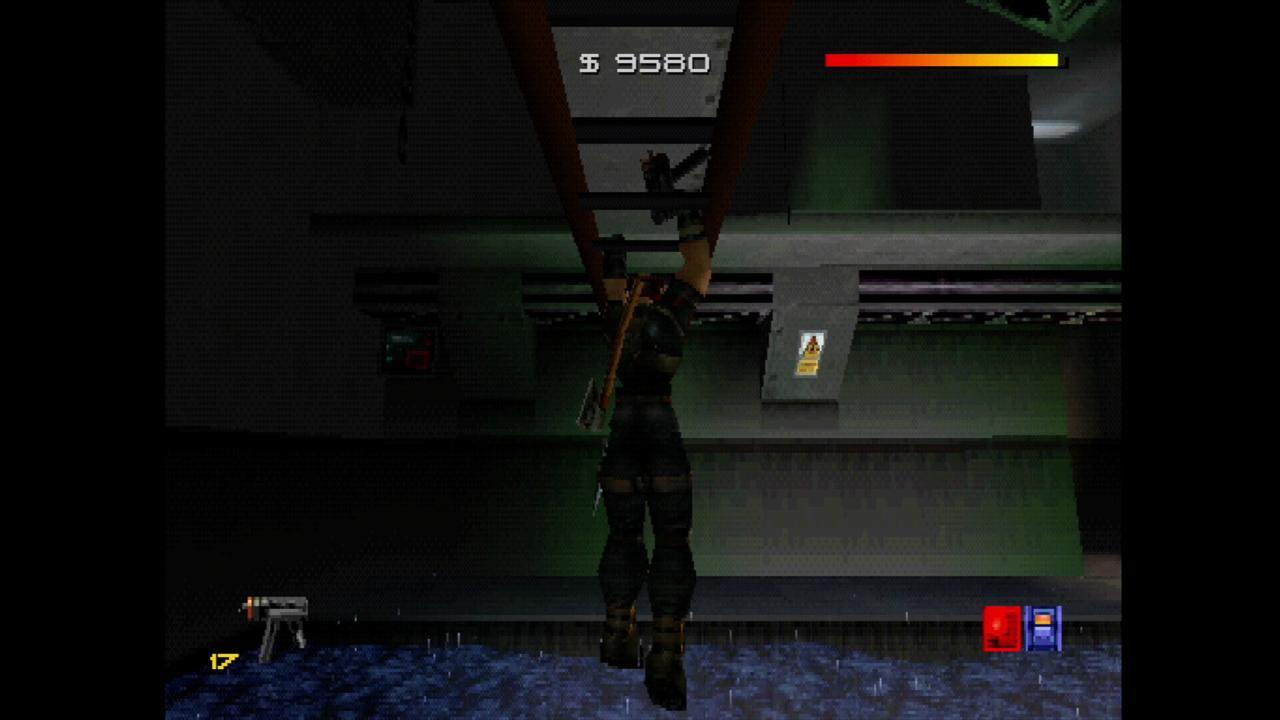
Fighting Force 2 takes a very different route. Levels are tighter, movement is slower, and combat shifts toward firearms. You play as a single character, working through rooms one at a time instead of open spaces. Melee attacks are still there, but most encounters revolve around aiming, managing ammo, and clearing enemies carefully before moving on.
That change affects the feel of every fight. Movement and aiming are more deliberate, and mistakes cost more. Without co-op, there’s less room to recover once things go wrong. Environmental interaction matters far less here, which strips out one of the first game’s most enjoyable elements. Even with smoother performance in this collection, fights often feel drawn out rather than satisfying.
Fighting Force stays fun by letting you improvise and keep moving. Fighting Force 2 slows everything down and narrows your options, and it never quite finds the same rhythm.

Old-School 3D Left Intact, for Better and Worse
Visually, Fighting Force Collection looks exactly like what it is: two late-1990s 3D games presented with minimal touch-ups. Character models are blocky, environments rely on simple geometry, and textures are rough in ways that will be familiar if you’ve played games from that era. Nothing here tries to hide that history.
The collection gives you a handful of visual options to play around with. You can switch on CRT-style filters, tweak the scaling, or leave things mostly as they are. None of it changes how these games fundamentally look, but it does let you soften the sharp edges a bit. On bigger screens especially, a few small adjustments can make characters and environments easier to read without washing everything out.
Animation is still very stiff in both games. Characters snap between movements, enemies don’t react much when they’re hit, and attacks can look choppy from one action to the next. You notice it most when fights get crowded in the first game and when lining up shots in the second. Those rough edges come straight from the original releases and haven’t been cleaned up here.
Audio follows the same approach. Music loops frequently, sound effects are simple, and voice work is limited. The mix is clear enough, but nothing stands out in a modern sense. It does its job, giving feedback for hits, weapon use, and enemy reactions without adding much personality.
Menus and interface elements are straightforward. Save states, rewind options, and display settings are easy to access, and nothing gets in the way once you’re playing. The interface feels functional rather than styled, which fits the rest of the package.
Overall, the presentation sticks closely to the original games. What you see and hear now is very close to how they looked and sounded back then, just made easier to deal with on modern screens and systems. If you’re fine with early 3D visuals and straightforward audio, everything comes across clearly enough. If you’re hoping for updated visuals or a more modern look, this collection doesn’t go in that direction.
Fighting Force Collection Is Easy to Appreciate Once Expectations Are Set
Fighting Force Collection works as a preserved slice of a very specific era. It brings both games forward without reshaping them, and that choice makes their strengths and weaknesses clear very quickly. The original Fighting Force still delivers a physical beat ’em up built around movement, environmental interaction, and loose structure. With a second person, it remains easy to enjoy in short bursts.
Fighting Force 2 doesn’t hold together as well. Its slower pace, tighter spaces, and heavier focus on firearms strip away much of what made the first game engaging. Even with modern conveniences helping it run more smoothly, the underlying design has a hard time sustaining interest.
As a collection, this release does exactly what it sets out to do. Both games are preserved cleanly, supported by small quality-of-life tools, and presented without reworking their foundations. If you’re coming back for the original Fighting Force, there’s still a good reason to spend some time here. Just don’t expect both games to leave the same impression.
Fighting Force Collection
Summary
Fighting Force Collection brings two late-1990s games back mostly as they were, with a few modern touches to keep them playable now. The original Fighting Force still has a solid brawler gameplay loop, especially with co-op and a tolerance for its older design quirks. Fighting Force 2 slows things down and never finds the same pull, which makes the difference between the two hard to ignore. This collection makes the most sense if the first game is the main reason you’re here.
As always, remember to follow us on our social media platforms (e.g., Threads, X (Twitter), Bluesky, YouTube, and Facebook) to stay up-to-date with the latest news. This website contains affiliate links. We may receive a commission when you click on these links and make a purchase, at no extra cost to you. We are an independent site, and the opinions expressed here are our own.