


Kratos has worn a lot of faces over the years. Back on PlayStation 2, he was a furious Spartan tearing through Greek gods. In the later Norse games, he slows down and wrestles with parenthood instead. God of War: Sons of Sparta rolls the clock back even further. You step into the sandals of a teenage Kratos and his younger brother Deimos, training in the Spartan agoge long before the Blades of Chaos ever touch his skin.
Instead of a big over-the-shoulder brawler, Sons of Sparta turns that history into a 2D Metroidvania set across Laconia. You move through camps, villages, and monster-filled ruins. Each upgrade you unlock opens blocked routes and pushes you deeper into Spartan territory. The whole adventure is told as a story adult Kratos shares with Calliope. T.C. Carson returns as Kratos, and his delivery feels softer and more reflective than in the older Greek trilogy.
What you get is a smaller God of War project that still pulls in familiar enemies, brutal finishers, and boss fights that still feel big even from a side-on view. All of it is packed into a side-scrolling layout. It doesn’t chase the same scale as the mainline games. Instead, Sons of Sparta uses that tighter scope to revisit the series’ roots and give you a different angle on who Kratos was before his life comes apart.
Kratos And Deimos Before Everything Breaks
God of War: Sons of Sparta treats the whole adventure as a campfire story. You hear adult Kratos, voiced by T.C. Carson, telling Calliope about the days before he became the Ghost of Sparta. The game keeps cutting between that quiet present and his training years. You watch a younger Kratos push through drills at the agoge while the older version explains why those years still sit with him.
Most of the story circles around Kratos and his younger brother Deimos. Kratos falls in line with Spartan rules and god worship, convinced that duty and discipline are the only way forward. Deimos pushes back. He questions orders, cracks jokes, and refuses to treat every command as sacred. Their talks on patrol and in camp carry a lot of the character work. You see where their bond is strong and where it starts to strain long before later games tear them apart.
The main plot hook is simple and works well. A trainee named Vasilis goes missing on a field exercise, and the brothers refuse to accept how relaxed their superiors seem about it. Following his trail pulls you out of the training grounds and into wider Laconia, from outposts and villages to ruins Spartans would rather you never see. Short scenes with Kratos and Calliope drop in between stretches of play, so the bedtime-story angle never fades for long.
Sons of Sparta keeps its focus tight. It doesn’t try to tell a full origin saga or rewrite anything you already know from the Greek trilogy. Instead it fills in a gap. You get a clearer sense of how much Kratos buys into Spartan ideals at thirteen, how Deimos challenges that view, and why this older Kratos chooses to share that chapter with his daughter at all.
Combat, Exploration, And The Spartan Training Loop
Sons of Sparta plays like a Metroidvania that still remembers its action roots. You spend most of your time cutting through monsters, watching for colour cues, and using new tools to push deeper into Laconia. The agoge works as your anchor, with paths that stretch out into villages, temples, caves, and sewers, then loop back toward camp once you unlock the right ability.
Combat With Spear, Shield, And Spartan Tricks
Kratos fights with a spear and shield, and the whole kit feels tight. Light and heavy strings cover a wide arc in front of you. Air pokes and downward stabs help you control crowded platforms or pick off enemies on lower ledges. The spear has a quick start-up, so you can jab, hop, and drop back in before a slower swing lands.
Defence sits on three clear options. You can block simple strings, roll through wide swings, or tap a parry for a bigger payout. Enemies signal each threat with distinct colours that stand out from the background. One shade tells you to hold the shield. Another tells you to time a parry. A third warns you to move right away. After a few rooms that colour language starts to make sense, and from there you read incoming attacks as much as you react to them.
Stun and finishers sit on top of that base. Regular hits fill a separate gauge that powers a Spartan Spirit strike. That move focuses on building stun instead of raw damage. When an enemy’s stun bar fills, you trigger a finisher that clears space and drops a pile of orbs. The animations are cleaner than the old Greek games, but chaining parries, rolls, and finishers together still feels great when you take a tough room apart without losing control.
Builds come from spear parts and shields you find across Laconia. New spear tips add fire, range, or critical bonuses. New shafts adjust stats and combo routes. Shields add different payoffs when you block, parry, or trigger certain moves. You spend blood orbs and materials at camp to rank each piece up. A simple skill tree adds extra swings and air options on top. In practice, you can rely on a small set of favourites for most of the story, but swapping parts to see how a new spear head changes a boss or arena still keeps combat interesting.
Difficulty sits in a safe middle. Regular encounters punish sloppy inputs if you ignore colour cues or mistime rolls, but they rarely stop your run outright. Boss fights hit harder and throw more layered patterns at you, mixing ground swipes, grabs, and platform hazards. Once you learn when to roll through a pattern and when to trust your shield, you can keep Kratos alive without grinding levels for hours.
Exploration, Backtracking, And Map Flow
Outside of fights, Sons of Sparta follows a familiar Metroidvania structure. The agoge sits near the centre of the map, with routes leading out to wineries, cliff paths, shrines, and underground tunnels. The map screen shows rooms as clean blocks, with lines between them and icons for chests, doors, and points of interest. It gives you a clear picture of where you’ve been and where the gaps still sit.
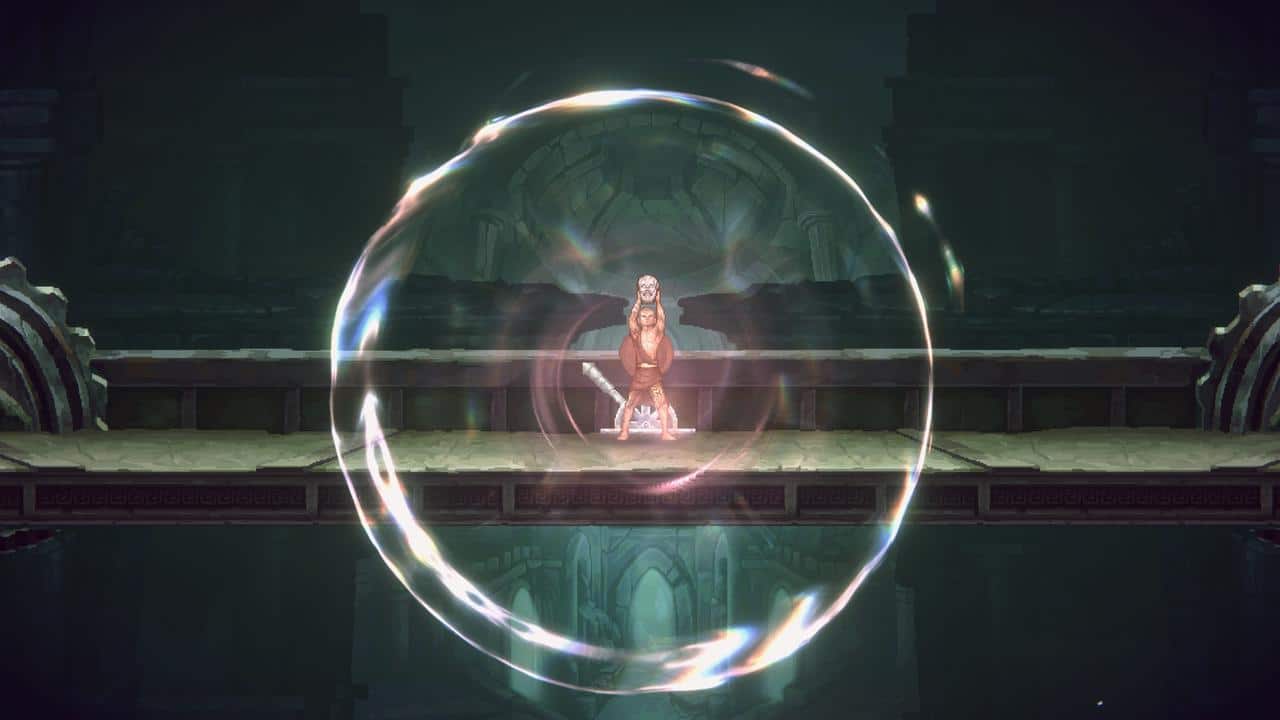
New tools change how you move through all of this. Early on, you pick up a marble bust that reveals hidden routes marked with carved eyes. Later items let you burn away thorny growth, reach higher ledges, or light up hazards that were hard to read before. Each upgrade opens a couple of gates on your current path and quietly points back to older rooms that might be worth another look. When it works, you get that familiar rush of finally cracking a shortcut or room you noticed hours ago.
Backtracking can still drag at times. Kratos doesn’t move very fast, and fast travel points sit just far enough apart that a long trek across the map wears thin if you guess wrong on a route. A few paths also stack locks. You head back with a new tool, open a blocked route, grab an item, then hit another barrier that needs something you don’t have yet. Over time that pushes you toward following the main route until your kit is more complete, then circling back later to clean up side rooms and secrets.
Once you settle into that approach, there’s a lot to chase. Optional rooms hide side objectives, tougher arena fights, and gear pieces that tilt your build in new directions. Short challenge stretches test specific skills, like careful platforming over hazards or tight crowd control in small arenas. Beating the story also unlocks an extra mode built around harsh boss rematches, which gives you a focused place to push the combat tools harder if you still want more.
A Retro God Of War Style That Fits The Story
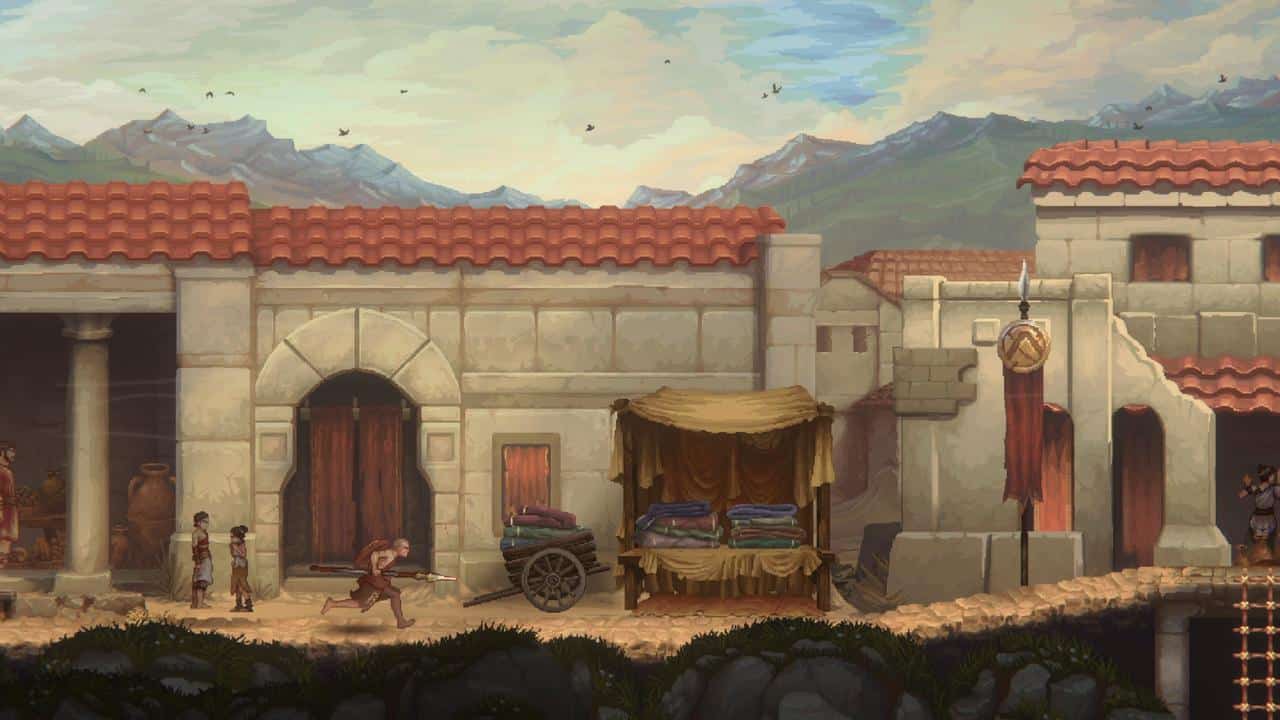
God of War: Sons of Sparta goes for a retro look without feeling like a cheap throwback. Sprites are sharp and expressive, and animation work keeps Kratos, Deimos, and enemies easy to read. When a minotaur lowers its head or a harpy raises a claw, you can see the hit coming and react in time. Movement looks smooth, so fights stay clear even when the screen fills up.
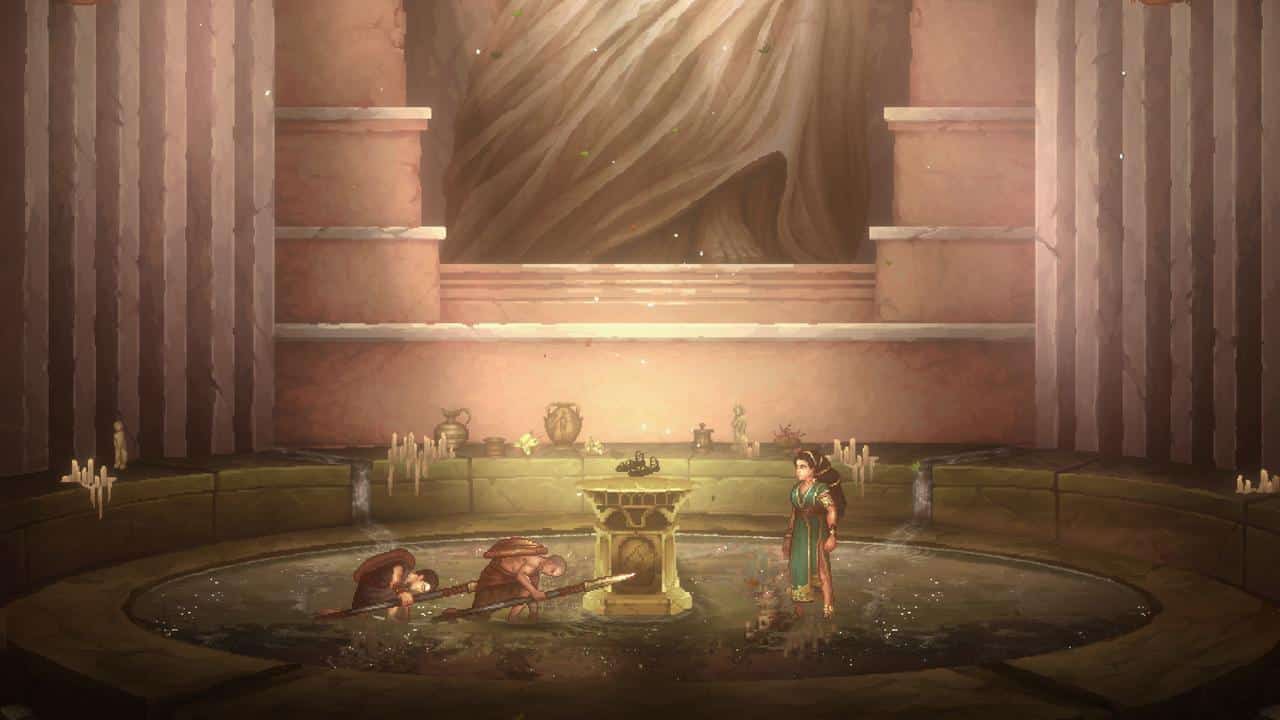
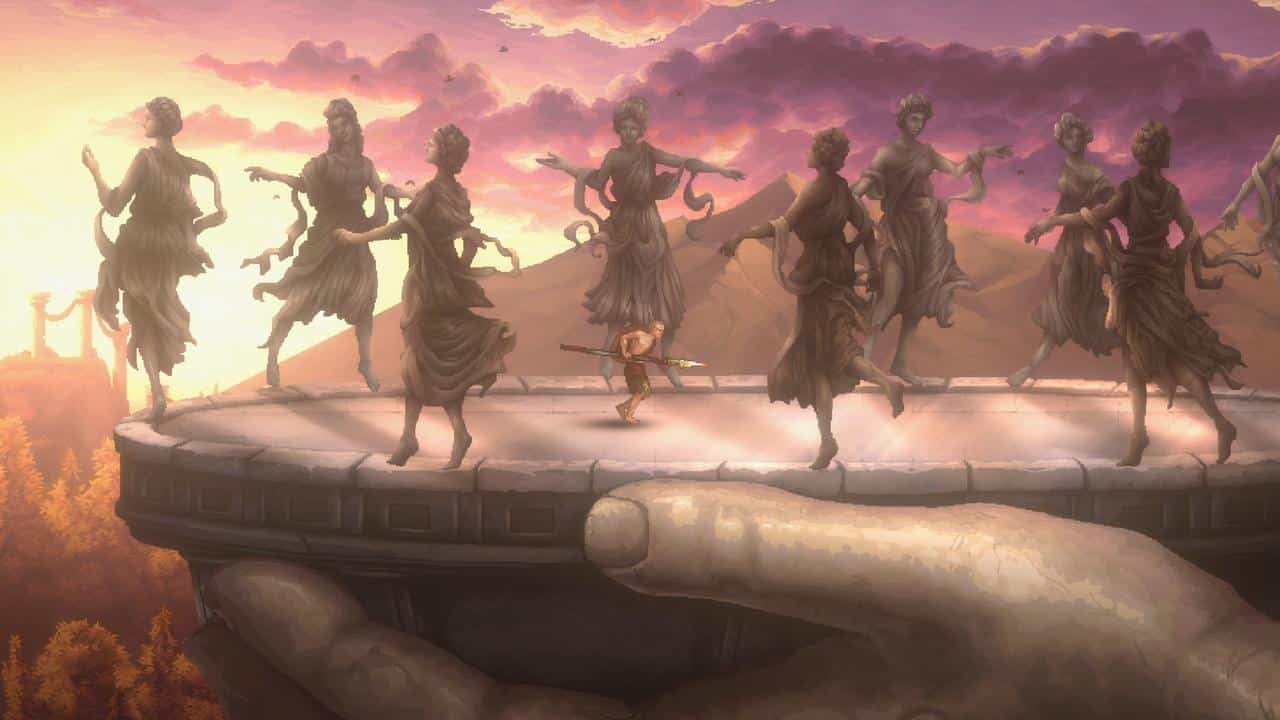
Backgrounds use a painted style that gives each area its own feel. Training yards are packed with props and tight walls. Wineries mix broken barrels, hanging ropes, and distant hills. Snowy paths and temple interiors stack statues, banners, and pillars around the main route. The mix of pixel characters and more detailed scenes can clash a little, but moving from camp to caves and shrines still gives Laconia a strong sense of place.
Camera work helps sell that scale. In larger arenas the view pulls back to show platforms, hazards, and weak spots before a fight starts. Regular rooms keep a closer angle so you can track smaller enemies. Colour outlines for attacks sit cleanly over sprites and backgrounds. Most of the time you can see whether you should block, parry, or roll without fighting the art.
The soundtrack backs that look with a chiptune take on God of War’s usual mood. Calm routes get simple loops that sit under exploration. Boss tracks hit harder and help big fights feel more intense. Voice work is strongest with the main cast. T.C. Carson gives older Kratos a rough tone with a bit more warmth when he talks to Calliope. Young Kratos and Deimos play off each other in a way that fits the training camp setup. The DualSense controller’s haptics respond to hits, landings, and finishers. Loads stay short between areas, so you spend more time playing than waiting.
God Of War: Sons Of Sparta Is A Worthwhile Metroidvania Detour For God Of War Fans
God of War: Sons of Sparta sits in a clear place. As a 2D Metroidvania, it isn’t going to dethrone the best of the genre, but it nails the basics and wraps them in a world that already has a strong identity. As a God of War side story, it gives you a better look at Kratos and Deimos before everything falls apart, without rewriting anything you know from the Greek trilogy or the Norse arc.
The story setup works well. Hearing older Kratos talk Calliope through his time at the agoge gives this adventure a smaller, more personal frame. Marches across Laconia, drills in camp, and the search for Vasilis all feed into the push and pull between duty and doubt. If you’re already into this universe, watching that relationship grow and strain is enough reason to see the story through.

On the gameplay side, spear and shield combat feels sharp, with colour cues and enemy patterns that reward you for reading what’s happening instead of just mashing. Boss fights are a clear step up from regular encounters and make good use of arenas and platform layouts. Exploration hits most of the right notes too, with a map full of side rooms, shortcuts, and upgrades to chase once your kit opens up, even if the backtracking can drag when fast travel and movement speed fall behind your curiosity.
Presentation sits in that same “good but not top tier” lane. The sprite work, camera pulls, and chiptune score give Sons of Sparta its own flavour, even if some backgrounds and side voices are less exciting. In the end, this is a smaller God of War project that comes across as a complete, focused package. If you want a dependable Metroidvania with a Greek-era Kratos angle, and you’re fine with a safer take on both, Sons of Sparta is easy to recommend.
God Of War: Sons Of Sparta
Summary
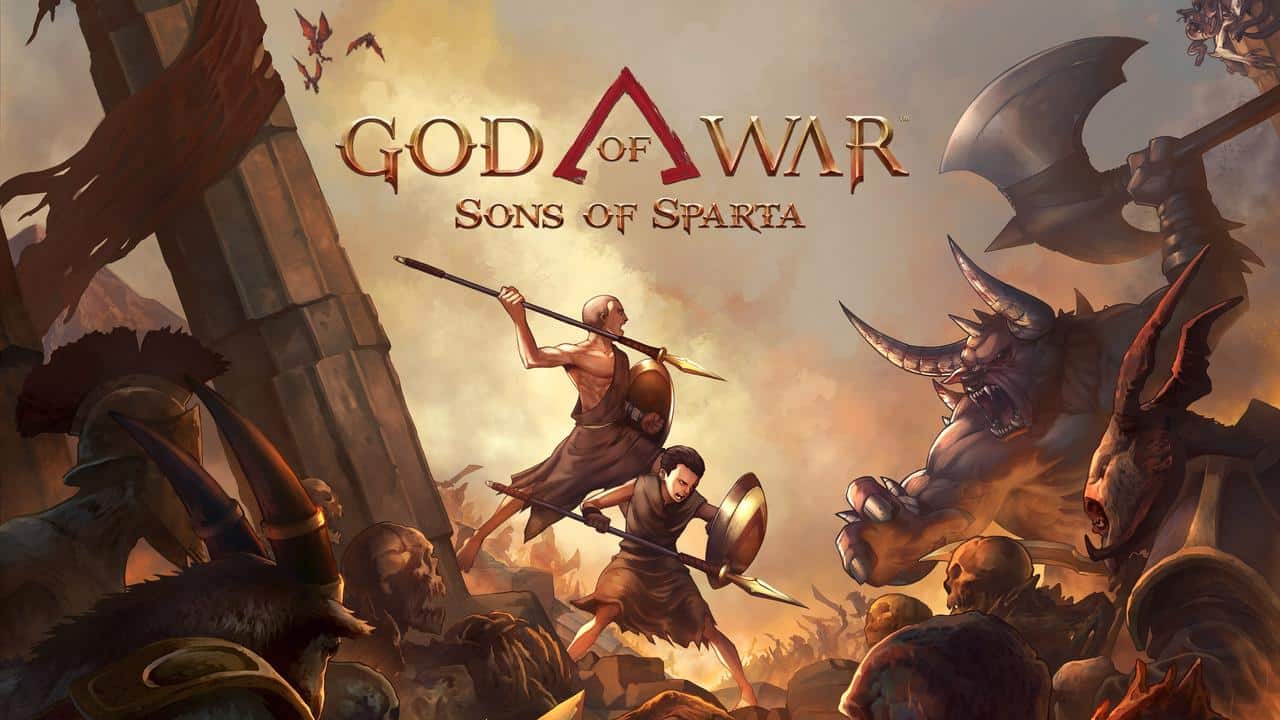
God of War: Sons of Sparta turns Kratos and Deimos into the leads of a side-scrolling Metroidvania set during their Spartan training days. You move through camps, villages, and ruins with a spear-and-shield kit that rewards clean blocks, rolls, and stun finishers, then branch into different spear heads and shields to tweak how fights play out. New tools open hidden routes and shortcuts across Laconia, although slow movement and spaced-out fast travel points can turn deeper backtracking into a bit of a slog. The pixel art, camera pullbacks, chiptune score, and T.C. Carson’s narration give this prequel a strong Greek-era identity without trying to copy the main games outright. If you’re already into God of War and like 2D Metroidvania games, Sons of Sparta is worth making room for in your backlog.
As always, remember to follow us on our social media platforms (e.g., Threads, X (Twitter), Bluesky, YouTube, and Facebook) to stay up-to-date with the latest news. This website contains affiliate links. We may receive a commission when you click on these links and make a purchase, at no extra cost to you. We are an independent site, and the opinions expressed here are our own.