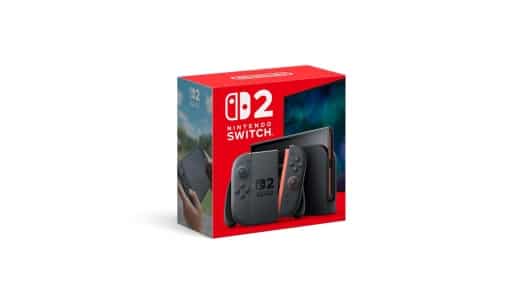


Hades 2 v1.0 is finally here, and I’ve been glued to my Nintendo Switch 2 for the last week and a half playing. After sinking countless hours into the original, I couldn’t wait to see how Supergiant Games would follow it up. The first game set a new standard for roguelites, and the sequel doesn’t waste time showing that it can go even further.
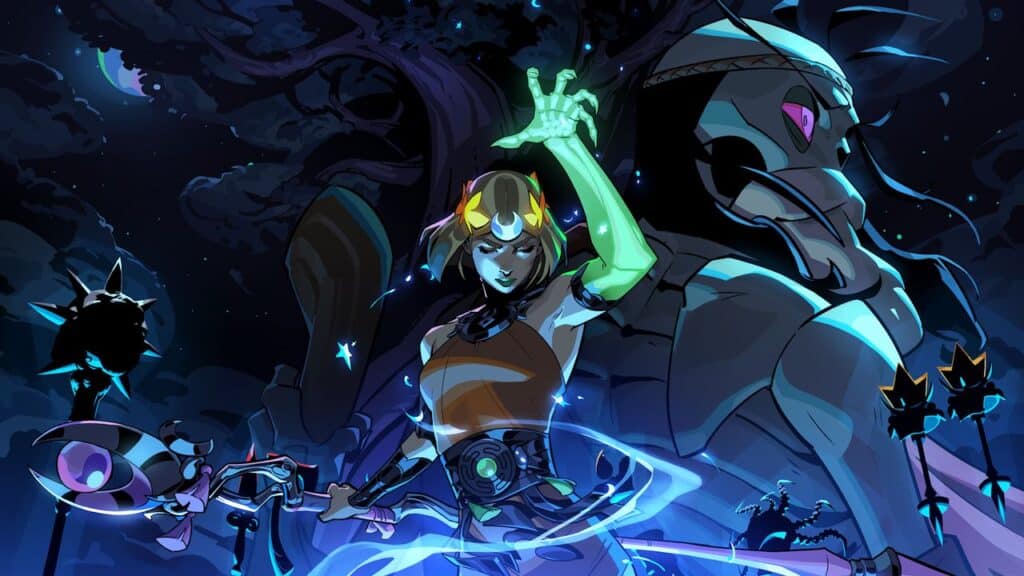
This time you play as Melinoë, Zagreus’ sister. Her goal? Take down Chronos, the Titan of Time. The scale’s bigger, the tone darker, but it still feels rooted in what made Hades click. My first run set the tone fast. The pace was quicker, the danger sharper, and I knew right away this sequel wasn’t messing around. The mix of combat, choices, and story hooks kept dragging me back in.

One of my early runs ended in disaster, but it didn’t feel wasted. I stumbled onto a god I hadn’t seen before, grabbed a new boon, and came back to the Crossroads with more than just bruises. That’s when I realized Hades 2 has the same magic as the first game. It makes losing part of the fun.
The Story of Melinoë
In Hades II you step into Melinoë’s role, Zagreus’ sister. Her burden is heavier than anything Zag faced. Chronos, the Titan of Time, breaks free from his prison and takes over the House of Hades. Olympus and the Underworld both get thrown into chaos. This fight feels way bigger than Zagreus’ escape in the first game, and the urgency hits harder right from the start.
The way the story unfolds feels just as important as the destination. Conversations shift after each run, gods comment on your progress, and side characters reflect on your journey in ways that make the world feel alive. It never feels like wasted time. Even when I failed, I came back to the Crossroads and found someone waiting with new dialogue, a new perspective, or a reminder that Melinoë isn’t carrying this fight alone.
What hit me right away is how different Melinoë feels compared to Zagreus. Zag had that rebellious streak and constant sarcasm. Melinoë isn’t like that. She’s calmer, more focused, and it shows in her conversations. The way others talk to her makes it feel new, not recycled.
Honestly, I didn’t think she could hold the spotlight after Zagreus. She proved me wrong real quick. Her exchanges with both friends and enemies give her a voice of her own, not just “Zag’s sister.” Hades 2 doesn’t just pick up where the first left off. The myth feels bigger here, and a lot more personal.
Gameplay That Pushes You Forward
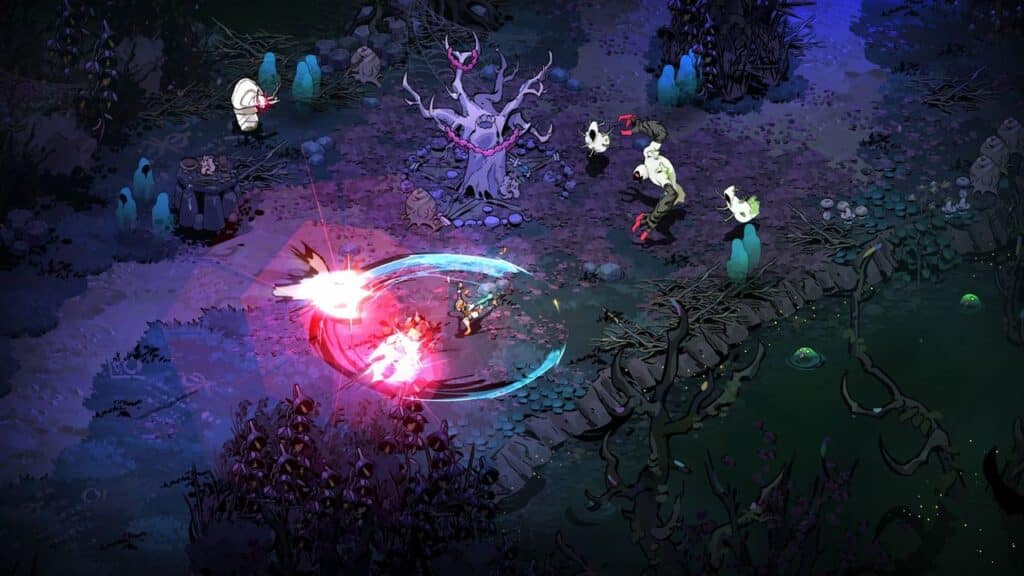
Hades 2 keeps the roguelite structure intact, but Melinoë’s approach makes each run feel fresh. Combat is fast, flexible, and built around mixing weapons with Magick. Instead of Zagreus’ Bloodstones, Melinoë uses a Magick bar that powers up Omega moves, charged attacks that can flip a fight in seconds. Hold an attack and the blast fills the screen. Add the right boon and it feels even stronger.
Her movement also changes the pace. Unlike Zagreus, she can sprint, giving you a quick way to reposition or escape danger. It feels different from Zag’s dash-heavy style, and at first, I had to unlearn some habits from the first game. Boons can modify both her sprint and dash, letting you experiment until you find a rhythm that clicks.
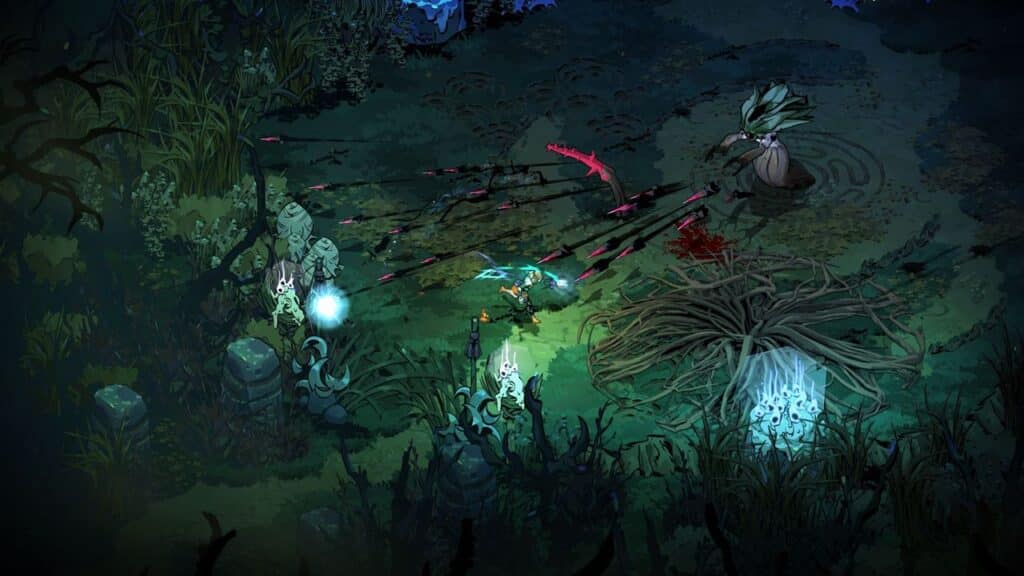
Weapons range from the Sister Blades for close combat to heavier options like the Moonstone Axe or Argent Skull. I had one run where I paired the Skull with Apollo’s dash boon, leaving trails of Daze while dropping explosive shots. It was messy, chaotic, and exactly the kind of run that kept me coming back.
Progression outside of combat is just as important. Arcana Cards give passive bonuses, familiars can support you in battle, and Incantations provide long-term upgrades that make future attempts more manageable. Even when a run ends, you’re building toward something. New story beats, stronger tools, or just a better handle on Melinoë’s kit.
Short-term choices, long-term growth. Hades II nails both. That’s what makes it satisfying. Every run teaches you something new, and every failure still feels like progress.
Art, Sound, and Performance All Dialed Up
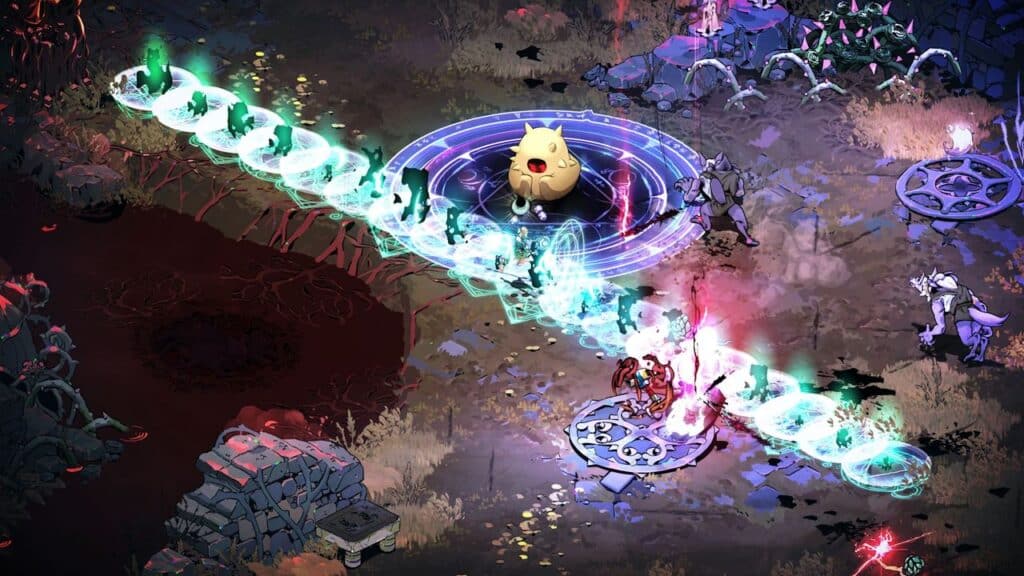
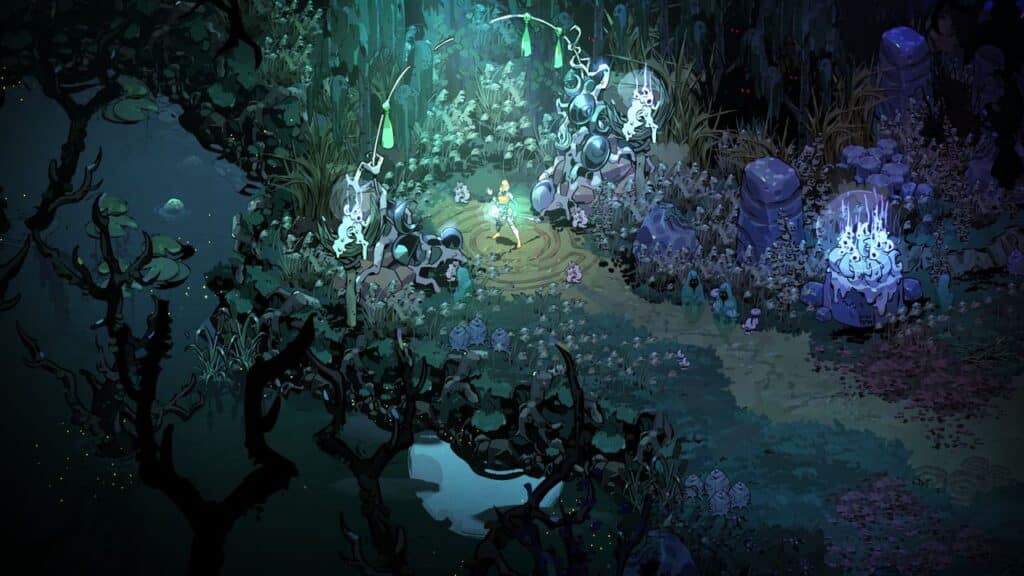
Visually, Hades 2 is just as sharp as the first game but with more variety in its locations and characters. The comic-inspired art style returns, and every god portrait bursts with personality. Seeing Apollo’s radiant glow or Selene’s cool, pale tones makes each encounter feel distinct. Animations during combat also stand out. Melinoë’s Omega moves fill the screen with flair, while enemy attacks are clear enough to read even in the chaos. Compared to Hades, there’s more detail in backgrounds and a wider range of environments, from the depths of Tartarus to the peaks of Olympus.
On the audio side, Supergiant once again delivers. Darren Korb’s soundtrack blends heavy guitar riffs with haunting orchestral tones, and it somehow works perfectly. One fight even threw in a saxophone solo that had me grinning mid-battle. The voice acting matches that energy. Logan Cunningham is back with his trademark range, and the cast around him adds weight to every conversation. Even casual banter in the Crossroads feels like part of a living world.
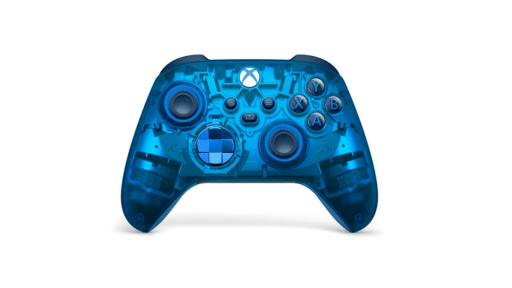
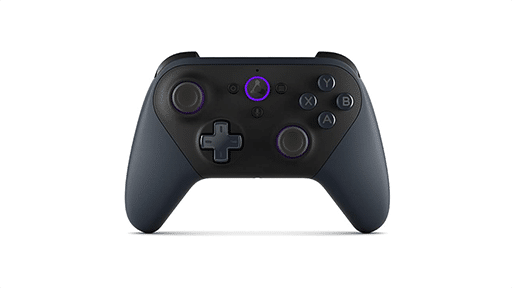
I played on the Nintendo Switch 2 and was impressed with its performance. In handheld mode, the game runs at a smooth 60fps at 1080p. Docked play pushes things even further, reaching 120fps for smooth combat and cleaner animations. HD Rumble 2 support on both the Joy-Con 2 and the Pro Controller gives subtle feedback during battles, whether you’re casting spells or landing heavy strikes. Compared to the first game, it’s a step up. Visually and technically.
Hades 2 Blends Challenge and Growth Perfectly in One of This Year’s Best Games
Hades 2 builds on everything that made the first game memorable and pushes further with new ideas. The roguelite loop is still the foundation, but progression feels deeper thanks to additions like Arcana Cards, Incantations, and familiars. These give you more reasons to return after each failed run, making progress feel steady even when Chronos knocks you down again. Post-game options like the Testament of Night and Chaos Trials layer even more challenges, so the endgame doesn’t start to feel old.
That said, the experience isn’t without its rough spots. The Magick system takes time to fully understand, and early on it can feel limiting until the right boons show up. Resource gathering is important for upgrades, but sometimes it slows the pace, especially when you’re on a run focused on combat. Menu navigation can also get messy when you’re juggling Arcana setups or Incantations, breaking the momentum a bit before diving back in.
Even with those frustrations, the highs far outweigh the lows. Runs always feel unpredictable, keeping things exciting. Mixing weapons, boons, and Omega moves into chaotic builds that never play out the same way twice. The storytelling remains sharp, blending Greek myth with personal character arcs that reveal more the deeper you go.
For me, Hades II brings back that “just one more run” pull from the first game. It also feels more ambitious this time. The combat is faster, progression runs deeper, and Melinoë makes the journey feel fresh. It’s not just repeating what worked before. It respects your time. It pushes your reflexes. And it pays off when you stick with it.
Hades 2
Summary
Hades 2 takes everything great about the first game and dials it up. Combat feels faster, progression runs deeper, and Melinoë proves herself as a strong lead with her own voice and style. The mix of flashy Omega moves, meaningful upgrades, and story beats keeps every run interesting, even when you crash out early. Add in killer art, a wild soundtrack, and smooth performance, and you’ve got a roguelite that’s tough to put down. There are a few rough spots with Magick and menus, but nothing that stops this from being one of this year’s best games.
As always, remember to follow us on our social media platforms (e.g., Threads, X (Twitter), Bluesky, YouTube, and Facebook) to stay up-to-date with the latest news. This website contains affiliate links. We may receive a commission when you click on these links and make a purchase, at no extra cost to you. We are an independent site, and the opinions expressed here are our own.