


High On Life 2 throws you back into the same warped sci-fi bounty hunter life you left behind. You come home to a living room full of alien freeloaders, step outside into crowded offworld streets, and pick up a new contract before you’ve even caught your breath. Your living guns are still arguing with you, still mocking every bad jump and missed shot, and now they have more company.
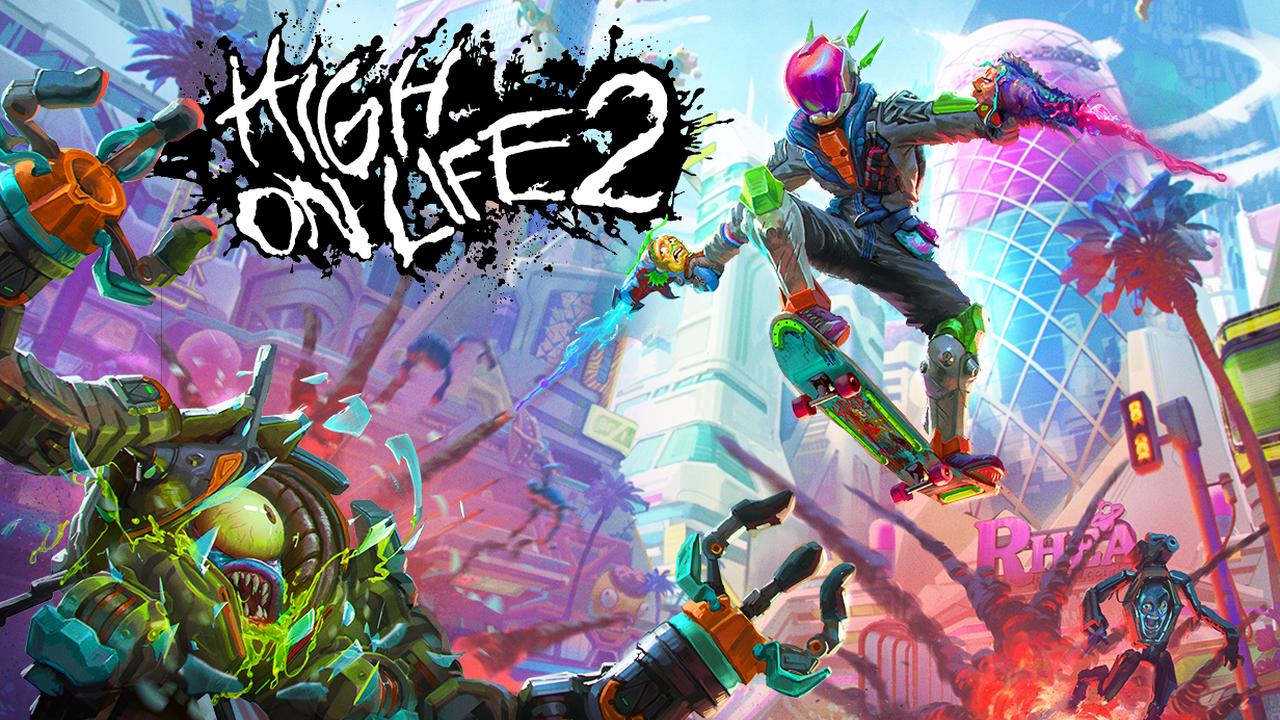
The big change this time is scale. Cities stretch higher and wider, with rails, ramps, and side routes that turn each hub into a playground instead of a hallway between fights. A new skateboard sits at the centre of that idea, letting you grind above traffic, launch off coloured ramps, and weave through arenas instead of just sprinting from cover to cover. Between bounties you can drift off into races, odd jobs, and side routes that hide chests, upgrades, and stranger distractions.

Under all the sarcasm and alien gore, High On Life 2 also pushes harder on its story. You’re no longer just cleaning up the mess left by one cartel. A pharma giant treats humans as raw material and dresses it up as business as usual, pulling your family, your home base, and your chatty weapons into something larger that keeps pulling you back out of the house and into trouble.
Corporate Trouble Follows You Home
High On Life 2 picks up after your first showdown with the G3 cartel, and you are not some unknown bounty hunter anymore. Your living room has turned into a crash pad for strange guests, your earlier exploits are treated like legend, and that reputation pulls in the wrong kind of attention. A problem from your past comes knocking, and before long your family is in danger again, pulling you back into a job you thought you had already finished.
The new threat circles around Rhea Pharma, a giant drug company that treats humans as ingredients and hides it behind corporate jargon and smiling ads. You are not just knocking off colourful bosses for a quick payday. You are picking apart who profits from this mess, who looks the other way, and how far that rot spreads through politicians, rich backers, and out-of-touch elites. The satire stays clear and direct. It gives the campaign a clearer villain than the last game and a stronger thread to follow from bounty to bounty.
Pharma Deals And Family Fallout
Your home life and your crew do more work this time too. Your sister is not just background chatter, and your mother’s choices feed into a few of the stranger story turns. Gatlians argue about more than just combat, and some of them carry their own arcs across the campaign, changing how they talk to you once key scenes play out. Side missions often tie into that web. A small choice in a hub, or a favour you decide to pick up, can show up later in throwaway lines, altered scenes, or even an ending tucked behind a seemingly ordinary building.
The trade-off is that High On Life 2 almost never slows down. Jokes, arguments, and asides are stacked on top of the pharma plot, so quiet moments are rare. The story covers more ground and has more to say about the world than the original. Key moments sometimes get buried under constant chatter and busy hubs that keep pushing you toward the next big scene before anything has time to sink in.

Skate Lines, Bounties, And Gunplay
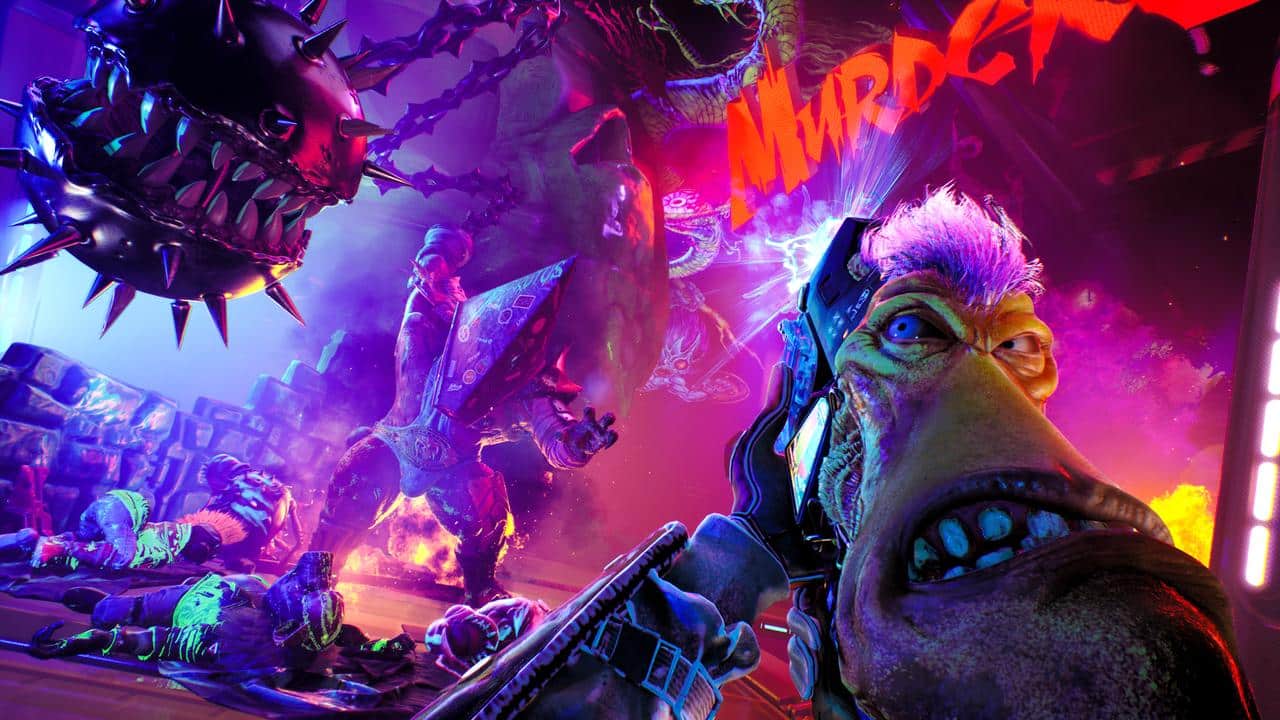
High On Life 2 is still built around first-person shooting. This time it throws in more toys and moving parts on top. You swap between Gatlians that each have a regular shot, an alternate trick, and a utility skill. Your loadout covers crowd control, precision, and gadget-style tricks. One shotgun pushes enemies back. One rifle drills through cover. Another tool freezes enemies in place so you can line up cleaner follow-ups. The idea sounds flexible. Once upgrades start to stack up, you move closer to that feeling of skating through arenas while juggling targets in midair.
The first stretch doesn’t hit that standard. Early fights are full of spongy enemies, modest damage, and weak alternate shots that do not give you much reason to swap often. Encounters blur together, and some arenas feel like you are just cleaning up waves rather than dealing with interesting setups. Later missions do a better job of pairing enemy types with tighter layouts and giving stronger tools like a second pistol or bow-style weapon that finally make quick work of tougher targets. The problem is that this gear arrives late. A big chunk of the campaign never really pushes you to use everything the way the late bounties try to.
Skateboard Movement Changes The Routine
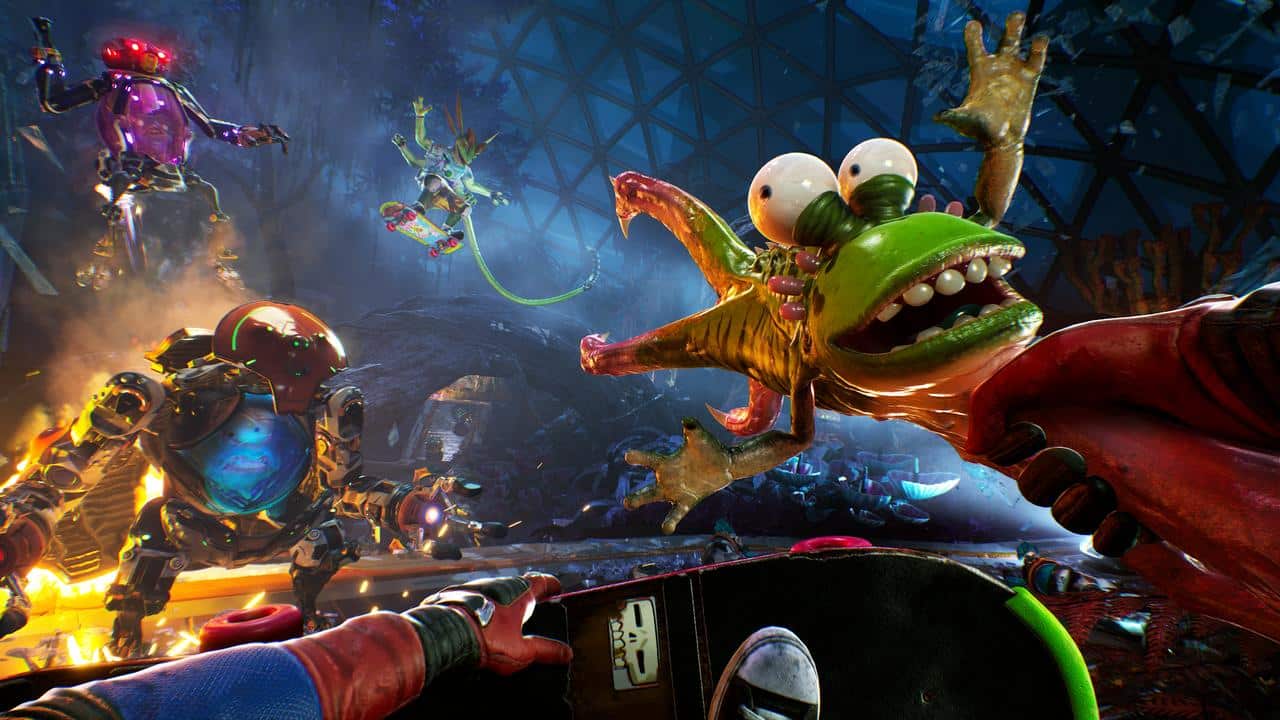
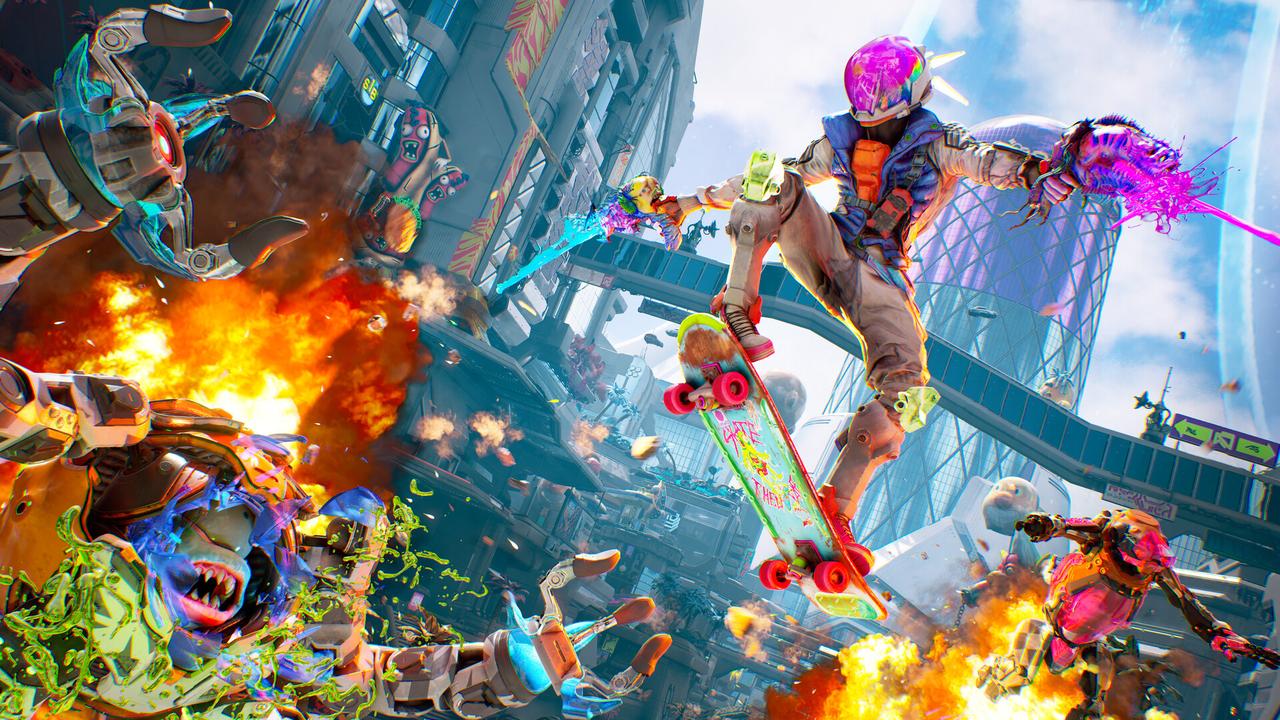
Movement is where High On Life 2 tries to change your routine the most. The skateboard replaces sprinting almost completely, so you are almost always sliding, grinding, or hopping on and off rails. When arenas and streets are built to support that, you get a rush of carving around corners, chaining grapples, and slamming into alien grunts before flipping back to a shotgun blast. Those sections show how well the board, grapples, and gun tricks can blend. Other times, narrow walkways, cramped interiors, and scattered platforms turn that same board into a clumsy plank you are fighting more than using. Being knocked out of bounds by certain enemies or sliding off geometry because a rail does not hook quite right undercuts the best moments.
Bigger Hubs And Side Jobs
Outside straight combat, bounties and hub work have more structure. Each target now starts with a short stretch of investigating and hunting for clues. You follow leads, then drop into a more typical arena run.
Between contracts you can sign up for races or tackle skateboard challenges. You can poke around side alleys for glowing chests or humour odd jobs that mostly exist to set up a joke or two. There is even a fishing side activity with its own running gag. Some of these trips off the main line give you useful upgrades, suit mods, or new board parts. A few hide entire endings or extended scenes for players who want to dig deeper.
The flip side is that High On Life 2 often struggles to guide you cleanly through those larger spaces. Hubs are packed with rails, ramps, and side paths. Clear routes are not always obvious. Objectives sometimes stall because a trigger does not fire or an enemy gets stuck behind a wall.
A murder mystery stretch should be a big change of pace. It never builds up real deduction and ends up feeling like a short detour rather than a full showcase. When everything works, skating through cities, swapping between Gatlians, and picking off bounties has a scrappy energy that is hard to find elsewhere. When scripts fail, markers do not update, or a key door stays shut until you reload a checkpoint, the loop turns choppy and the game’s best ideas have to fight through avoidable headaches.
Neon Streets And Talking Guns
High On Life 2 goes hard on colour from the moment you step outside your front door. Alien cities are crammed with signs, goo, and background gags. Rhea’s offices and labs use clean surfaces and cold lighting that make the more gruesome details harder to ignore. Rails and ramps thread through streets and rooftops. You are often spotting a new line you can ride, even if you are just heading back to a vendor. Fights can look busy, but enemy silhouettes are usually clear enough that you can track targets while skating past them.
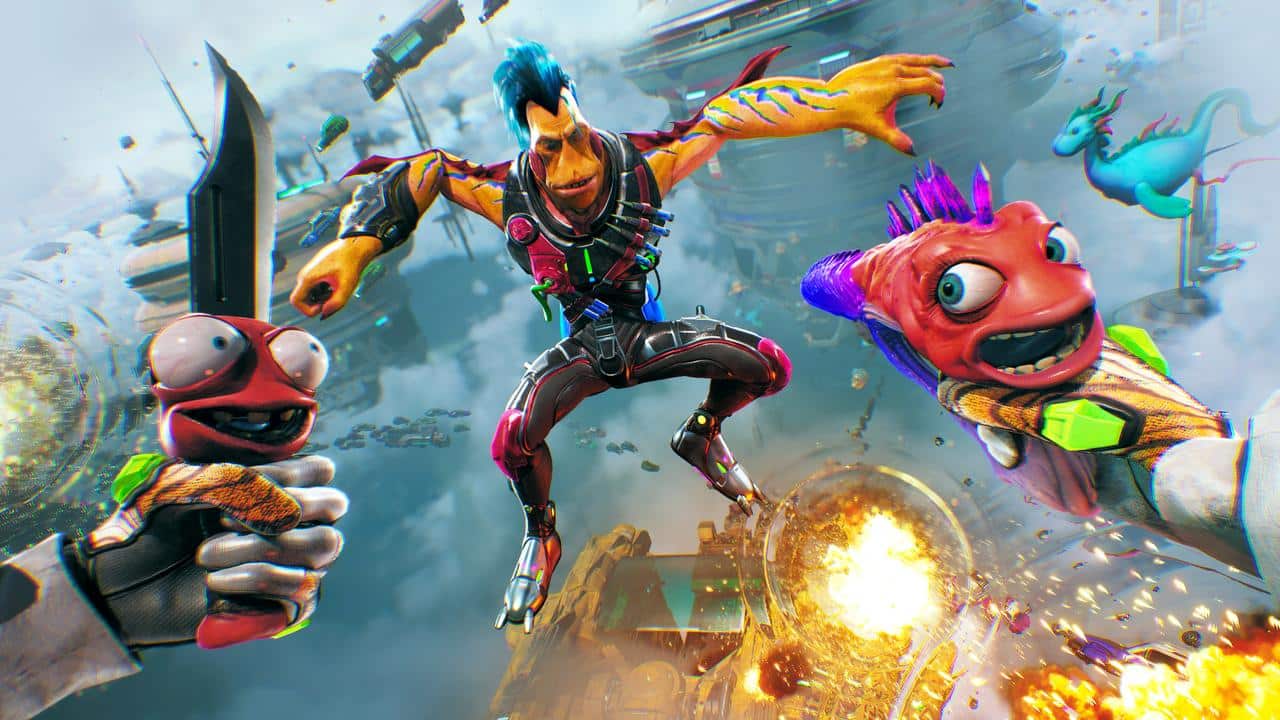
The Gatlians themselves are a big part of the look. Each one has its own odd design and expression, from droopy eyes to twitchy mouths. Those little reactions change with the scene. When a gun is annoyed, worried, or proud of something you pulled off, you see it on the model as much as you hear it. Smaller touches around your home base, like clutter piling up or new objects showing up after key missions, help sell the idea that your life is changing between contracts.
Voices, Music, And Glitches
Audio is where High On Life 2 is most split. Voice work is consistently strong. Some of the funniest material comes from delivery rather than the line on its own. Guns bicker, locals ramble, and your crew chimes in so often that you almost never move through a quiet corridor. That can work when a joke lands, but it also means weaker lines have nowhere to hide. Music is more hit and miss. Combat tracks sometimes kick in late or do not start at all. Leaving you skating through large fights with almost no backing, which takes the energy out of what should be big moments.
Technical performance is similarly mixed. Texture pop-in, short hitches during busy fights, and the occasional crash all show up during longer play. More disruptive are the bugs tied to scripting and level flow. Doors that stay shut until you reload, objectives that refuse to update, enemies slipping through geometry, and vehicles or key characters not appearing until you restart from a checkpoint. Autosaves cut down on lost progress. Though reloads stack up over time and pull you out of the otherwise wild, colourful world the game is trying to build.
High On Life 2 Brings More Mayhem And Less Polish
High On Life 2 gives you more of almost everything that made the first game a cult favourite. You get Gatlians that talk more, hit better punchlines, and feel more tuned to the sequel’s pharma story. The pharma plot actually says something. The skateboard can turn the right arena into a ridiculous playground.
When a bounty comes together, you carve through alien streets while swapping between guns. The cast bounces off each other in ways that feel sharper than the original.
The trouble is how often that sense of flow drops off. Early gunfights drag before better tools show up. Some hubs feel confusing instead of inviting. Technical problems break up long stretches that should be building steam. Bugs can lock objectives, hide enemies, or break scripted scenes. They pull focus from the jokes. It becomes hard to stay in the groove the game is trying to build.
If you mainly want more time with talking guns and Squanch’s brand of sci-fi nonsense, you are covered here. There are plenty of strong lines, clever ideas, and setpieces that fully embrace the weirdness. You just have to accept frequent reloads and a slow start for combat. The campaign rarely gives you quiet space to breathe between gags. High On Life 2 is a fun return to this world when everything is working. You need a fair bit of patience. Technical and pacing issues keep cutting into its best moments.
High On Life 2


Summary
High On Life 2 pulls you back into sci-fi bounty hunting with bigger alien hubs, a skateboard that replaces sprinting, and a pharma story that drags your family and chatty guns into something larger than last time. You spend your time swapping between Gatlians, riding rails through cities, and tackling bounties that mix short investigations, arena runs, races, odd jobs, and side routes that can lead to extra scenes or endings if you chase them down. Frequent reloads, gunfights that feel oddly flat when music fails to kick in, and hubs that are easy to get turned around in hold it back, but when everything behaves, the mix of talking weapons, colourful streets, and sharper pharma satire still works well if you want to dive back into this world.
As always, remember to follow us on our social media platforms (e.g., Threads, X (Twitter), Bluesky, YouTube, and Facebook) to stay up-to-date with the latest news. This website contains affiliate links. We may receive a commission when you click on these links and make a purchase, at no extra cost to you. We are an independent site, and the opinions expressed here are our own.