


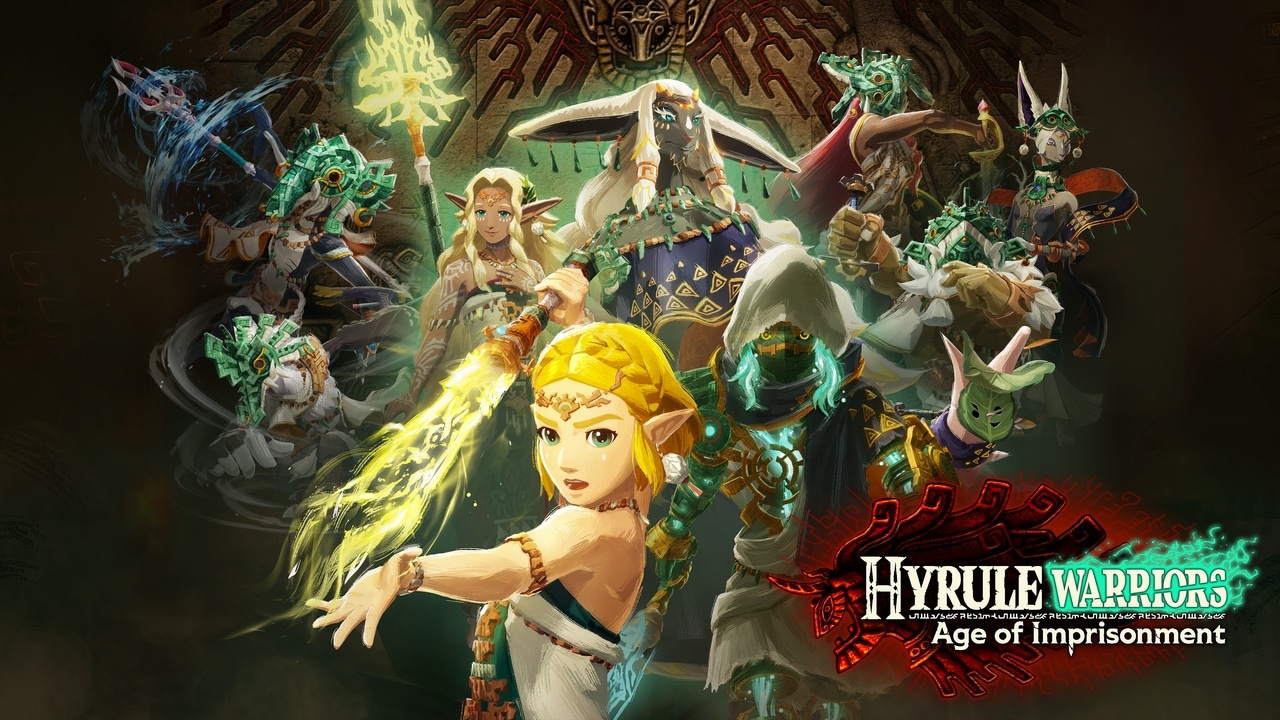
Hyrule Warriors: Age of Imprisonment carves its own space within Nintendo’s Switch 2 lineup this fall, showing how much the Musou formula can evolve when handled with care. It’s confident, fast, and focused, pulling you into massive battles without losing sight of what makes The Legend of Zelda special.
This isn’t about revisiting old stories or playing with timelines. It’s about watching Zelda step into a role that feels fully her own. The game builds around her strength and leadership, shaping every battle and decision with purpose. It’s a smart move that gives the series new energy and helps it stand tall on its own terms.




After years of experimenting with the formula, Koei Tecmo and Nintendo seem to have found their rhythm here. Age of Imprisonment feels more cohesive, less like a spin-off and more like a proper chapter in Hyrule’s ongoing saga.
Echoes of an Ancient War
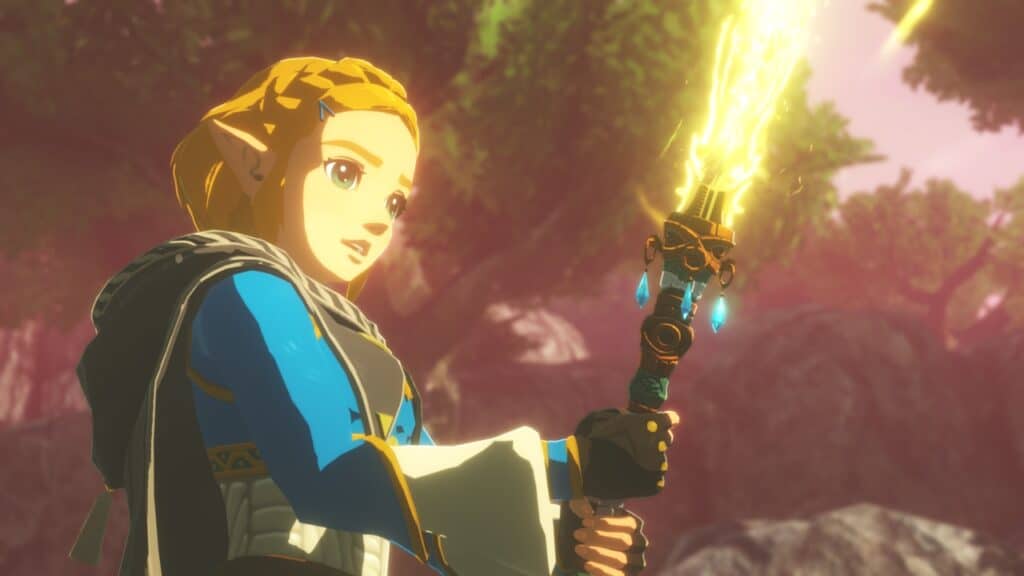
The story in Hyrule Warriors: Age of Imprisonment feels more deliberate than its predecessor. It looks backward to the earliest days of Hyrule, when kingdoms were still forming and the world’s balance hung by a thread. Zelda’s arrival in this era sets off a chain of events that tie every region, hero, and legend together.
It’s less about saving the world and more about understanding it. Through Rauru and Sonia, you see what it took to build the Hyrule that generations would later defend. Ganondorf’s rise isn’t just a looming threat; it’s a gradual shift that seeps into every victory and every uneasy alliance. You can feel the weight of it even in quieter moments.
Each supporting character adds something meaningful. Mineru’s calm precision, Calamo’s bursts of humour, and the bonds between the different races make the world feel alive. Their exchanges with Zelda are simple but effective, grounding the story between the chaos of war.
More than once, I let a cutscene roll without skipping, just soaking it in. The writing doesn’t try too hard, and that works in its favour. It gives Zelda room to lead, doubt, and adapt without turning her into something she’s not. It’s the kind of story that sticks because it earns every step, one battle at a time.

The Fight for Hyrule
Combat in Hyrule Warriors: Age of Imprisonment finds that rhythm between button-mashing madness and real strategy. You still take on hundreds of enemies at once, but everything feels more deliberate this time. Attacks land with weight, and switching between characters during a fight flows smoother than ever.
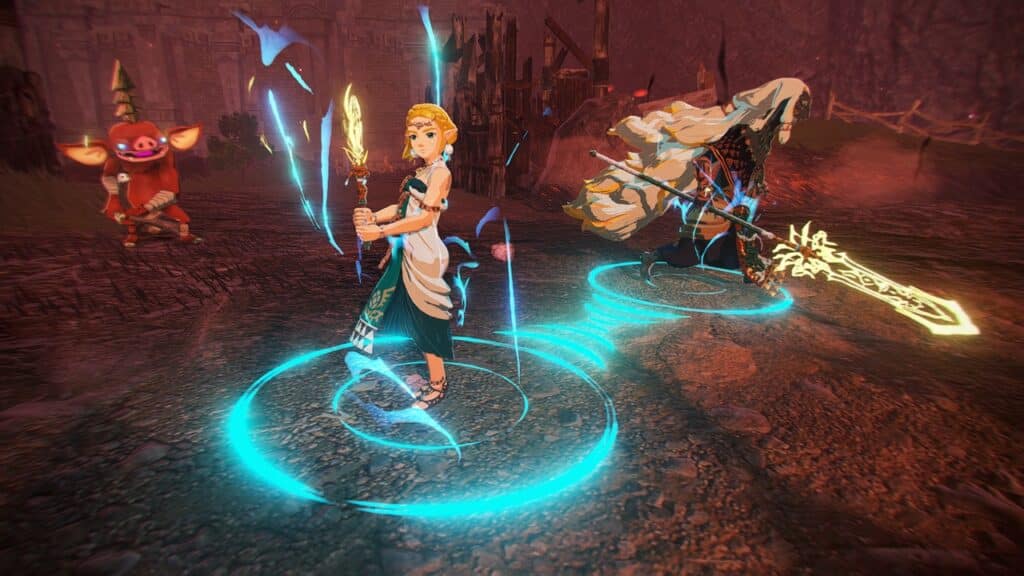
Zelda’s new light-based abilities set the tone. She’s fast, responsive, and just plain fun to use, able to clear groups in seconds while still feeling distinct from the rest of the cast. Mineru’s Constructs bring strategy into play, letting you control heavy machines or unleash area attacks that reshape the battlefield. Each hero has a clear identity, and mastering their styles is a big part of the fun.
The Sync Strike system changes how you approach every encounter. Keeping allies close pays off, allowing you to trigger powerful team attacks that can flip a losing fight in seconds. It pushes you to think about spacing and timing instead of just mashing through fights. Zonai gear adds even more flexibility, from Shock Emitters that stun enemies to flamethrowers that burn through shields. Managing your battery between tools gives each battle a rhythm that’s easy to pick up but hard to master.
I’ll never forget the mission where Zelda and Rauru held their ground against endless waves closing in from all sides. I swapped between both characters constantly, juggling defence points and setting traps with Zonai gadgets. When the final wave hit, a perfectly timed Sync Strike cleared the courtyard in one flash of light. It was hectic, but it never felt unfair. Just satisfying.
Progression ties all of this together. Side missions feed into upgrades, unlocking new combos and equipment while strengthening Hyrule’s regions through the contribution system. It gives your progress context and purpose beyond grinding levels. You can jump in for quick fights or spend hours improving your favourite heroes, and both feel equally rewarding.
Lighting Up the Battlefield
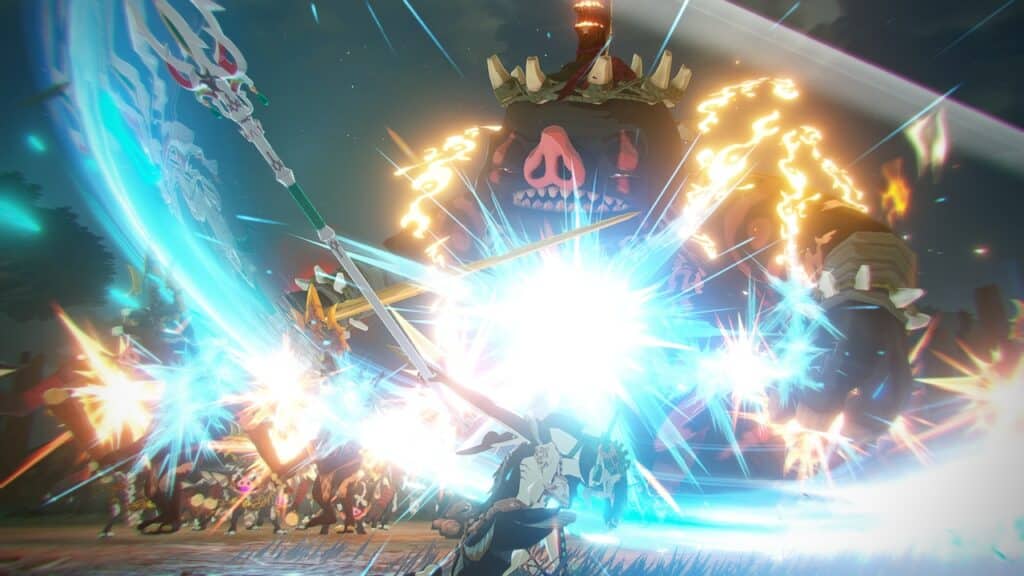
Hyrule Warriors: Age of Imprisonment looks the best this series ever has. The Nintendo Switch 2 gives it the boost it always needed, letting the action stay steady even when the screen’s flooded with enemies. The difference is immediate. Everything moves cleaner, sharper, and smoother from the first fight onward.
The visuals pop more than I expected. Lighting plays a big role, making each battlefield feel alive without being overwhelming. Zelda’s light attacks look incredible, cutting through dark skies or underground caverns with bursts of gold and white. Even smaller effects like smoke and debris feel tuned to the action instead of fighting for attention.

Character animations are a big step up too. Zelda moves with precision, Rauru hits like a truck, and even minor characters look more expressive during victory poses. Switching between them feels seamless, and every motion flows in a way that just feels right. The camera’s also better behaved this time, sticking close enough to keep things readable but flexible when the chaos hits.
I found myself rewatching replay clips just to see the little details. Light reflecting off armour, dust trails behind a dodge roll, sparks when a Construct lands a heavy hit. It’s the kind of polish that makes you notice how far the series has come.
Team Up and Take Over
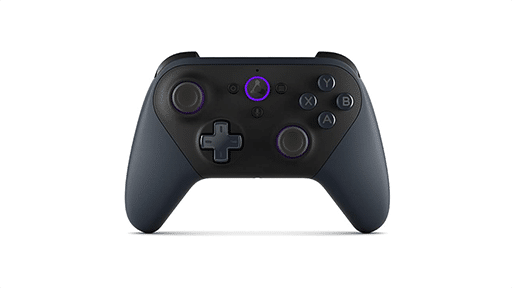
Hyrule Warriors: Age of Imprisonment doesn’t make you fight the controls to have fun. You can tweak just about everything, from button layouts to combo length. It’s perfect for those nights when you just want to kick back and clear a few maps.
You can also choose how tough you want things to be. Four difficulty settings range from Easy to Very Hard, and each feels balanced enough to test your skills without feeling unfair. It’s nice having that freedom right from the start, instead of having to unlock it later.
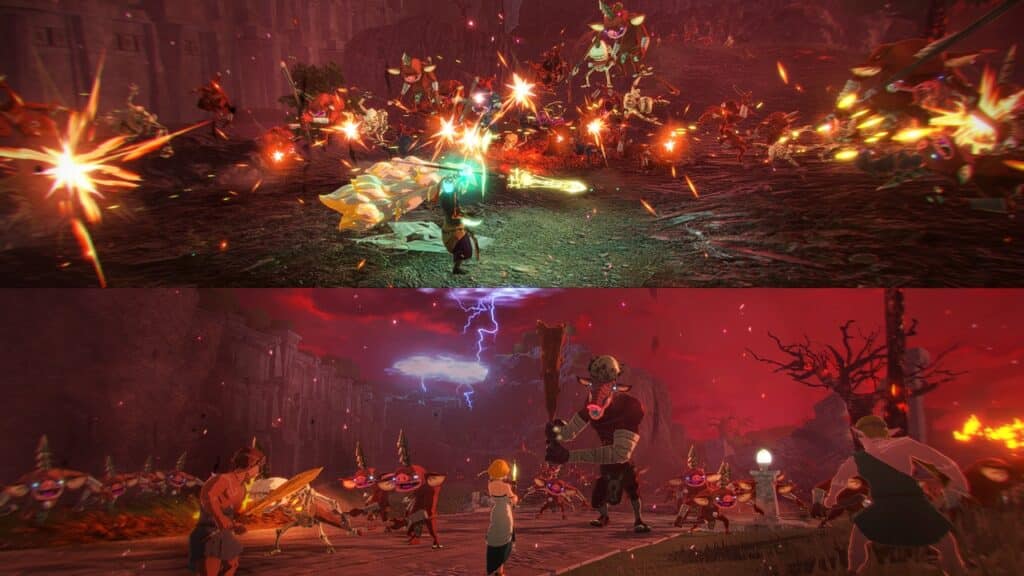
Co-op is where the game really comes alive. Local Gameshare on the Nintendo Switch 2 works great. You just link two systems, jump into the same fight, and everything runs smoothly. It’s fast to set up, and both players get the same solid performance. Split-screen is back too, and it feels way smoother than before.
I ran a few missions with a friend using Local Gameshare, and it was a blast. Sync Strikes hit harder when you’re coordinating in real time, and we were laughing half the time at the chaos unfolding on screen. It’s the kind of co-op that reminds you why couch gaming still matters. Between its flexible options and easy setup, it’s one of the most accessible and social entries in the series.
Hyrule Warriors: Age of Imprisonment finds its own rhythm without changing the beat
Hyrule Warriors: Age of Imprisonment feels like a confident step forward. It doesn’t try to reinvent anything, but it knows exactly what it wants to be. The tighter pacing, sharper combat, and focus on Zelda’s perspective give it more weight than expected. You feel her struggle and growth throughout the campaign, and it ties everything together in a way that feels earned.
What I liked most was how steady everything feels. It hits a sweet spot between total chaos and real control, making every big fight feel grounded. The new features like Sync Strikes and Zonai tools keep the action varied without slowing it down. It’s the kind of game that hooks you with its rhythm. One mission turns into three before you even notice.
Even after finishing the main story, there’s plenty left to chase. Side missions, upgrades, and higher difficulties all give you reasons to return. And with how smooth it runs on Nintendo Switch 2, it’s easier than ever to jump back in for another round. Hyrule Warriors: Age of Imprisonment doesn’t change the series’ foundation, but it makes a strong case for why this approach still works.


Hyrule Warriors: Age of Imprisonment
Summary
Hyrule Warriors: Age of Imprisonment builds on what worked before, blending fast action with a story that finally gives Zelda her moment. Combat feels smooth and responsive, and the Nintendo Switch 2 hardware helps it all run better than ever. Even with some repetitive moments, it’s a strong and satisfying evolution of the series.
As always, remember to follow us on our social media platforms (e.g., Threads, X (Twitter), Bluesky, YouTube, and Facebook) to stay up-to-date with the latest news. This website contains affiliate links. We may receive a commission when you click on these links and make a purchase, at no extra cost to you. We are an independent site, and the opinions expressed here are our own.