



You can usually spot a Double Fine game the second it starts moving. The colours, the rhythm, the weird confidence in letting things just exist, it’s unmistakable. Keeper fits that mould immediately. It’s quieter than Psychonauts or Brütal Legend, but it still carries that same spark of odd charm that makes you stop for a second and go, “Yeah, this is definitely Double Fine.”
The first few minutes had me trying to figure out what I was controlling and why it was so strangely endearing. A few minutes in, it’s clear Keeper isn’t trying to be loud or over the top. It’s more about curiosity. The kind of game that doesn’t shout at you but nudges you forward, letting you figure things out at your own pace.




Double Fine’s worlds have always been full of personality, but this one feels different. It’s alive in a calmer way with less dialogue and more space to breathe. That shift works well. The studio’s creativity hasn’t gone anywhere; it’s just slower and more deliberate this time. By the time the first bit of movement clicked, I was back in that comfortable Double Fine headspace, not quite sure what’s happening but ready to find out.
Finding Meaning in Silence
Keeper tells its story without saying a single word, and somehow, that makes it feel more personal. You wake up this strange, creaky being that shouldn’t be alive, and from that moment, the game trusts you to understand what’s happening through movement and quiet observation. There’s no hand-holding, no long cutscenes. Just light, sound, and rhythm guiding you forward.
It’s a strange feeling at first, like you’re walking through someone’s dream and trying not to disturb it. But the bond between the lighthouse and Twig grows fast. Even without dialogue, you feel it through every small gesture and shared moment. When Twig flutters ahead, waiting for you to catch up, there’s warmth there. When the light flickers, you feel concern. The game never tells you what to think, it just lets you feel it.
The further you go, the more Keeper reveals about growth. Early on, you stumble and learn, mirroring the lighthouse’s awkward steps. Later, you move with confidence, solving puzzles that once felt impossible. That steady sense of progress hits harder than I expected.
More than once, I stopped just to watch everything settle into place. There’s something honest about how Keeper handles companionship and change. It never leans on melodrama or big story twists. It’s about two unlikely beings finding purpose together, one small step at a time. And that quiet simplicity is exactly what makes it stick with you.


Guided by Curiosity
Keeper builds everything around light. It’s not just decoration; it’s the way you interact with the world. You shine your beam to grow plants, power machinery, and clear paths covered in creeping growth. It sounds simple, and it is, but that’s what makes it work. Each action feels deliberate. You’re not juggling complicated controls, just learning how far that light can reach and what it can awaken next.
Twig isn’t just along for the ride either. She becomes a genuine partner, flying off to pull levers or hold switches while you focus your light elsewhere. Some moments rely on timing between you both, which gives the puzzles a nice rhythm. When I finally got one of those multi-step setups to click, I smiled. It’s not about difficulty; it’s about flow.
Movement starts slow and clunky, which fits the idea of a newborn structure learning to walk. Over time, you gain more control and the environments open up, turning simple paths into playful stretches. It’s satisfying to feel the pace shift without the game ever rushing you.
None of the puzzles are hard, but that seems intentional. Keeper wants you to move forward, not get stuck. The design keeps curiosity alive by rewarding small experiments with light or positioning. It’s less about being tested and more about feeling in sync with the world around you, and that approach ends up feeling quietly rewarding.
Worlds Painted in Light
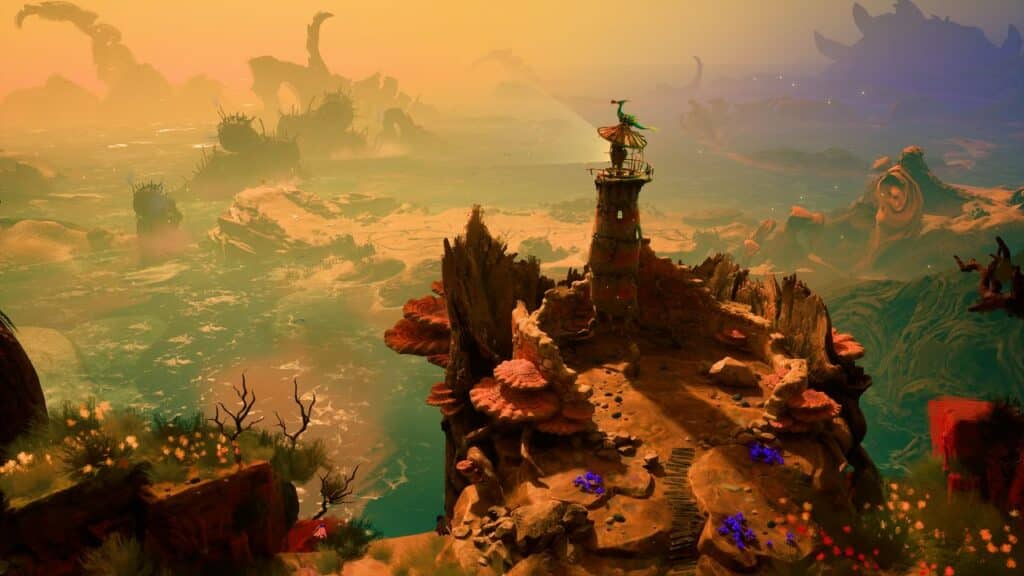
Every part of Keeper feels hand-painted, like the brush never left the canvas. The colours are bold without being loud, fading from warm coastal shades to cool twilight blues. Each area stands apart, not just in tone but in how it feels to move through. You start among quiet rock and sand, then wander into coral fields glowing with life, and later, forests that shift under soft mist. The game rarely repeats itself, and even small spaces feel designed with care.
Lighting does most of the storytelling here. Watching your beam sweep across a cliff or spark life in a forgotten ruin never gets old. The game’s name suddenly makes sense the longer you play, it’s as much about keeping the light alive as it is about using it. The visual rhythm keeps you grounded, even when the world around you turns strange.
The animation sells the mood too. The lighthouse’s careful steps, the way Twig perches nearby, the tilt of the camera as the world bends, it all blends together naturally. The art style hides a surprising amount of motion beneath its simplicity.

Performance stays smooth from start to finish. Load times are short, and zones blend together without any awkward pauses. The music and sound don’t fight for attention, they sit in the background, giving space for the visuals to speak. Keeper knows when to stay quiet, and that restraint makes every moment feel calm.
Keeper Finds Meaning in Simplicity
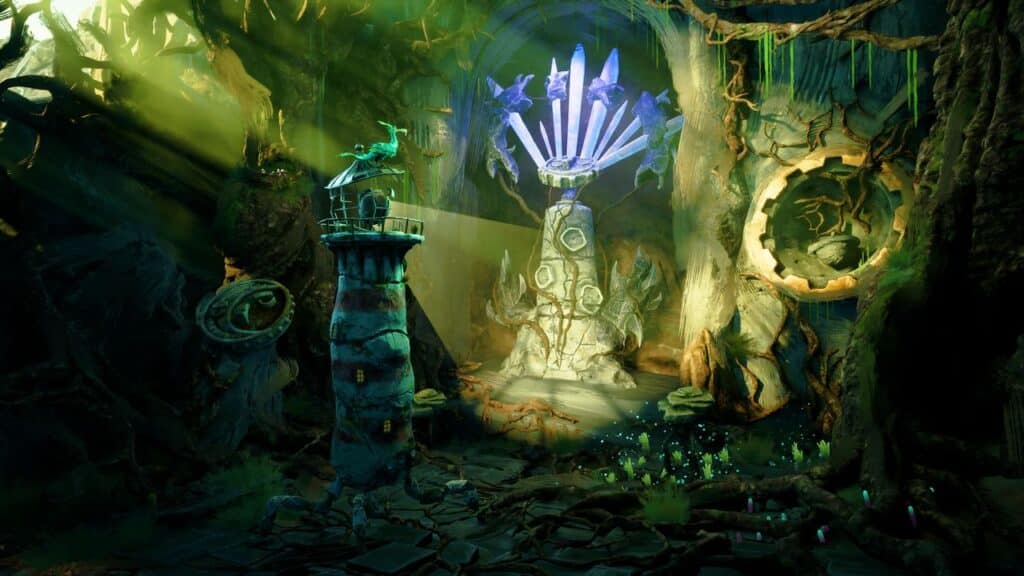
Keeper is one of those games that sneaks up on you. It starts simple, almost too simple, and then quietly grows into something meaningful. There’s no rush or pressure to perform. You just move forward, light guiding the way, and before you realize it, you’ve spent hours completely absorbed.
What stuck with me most wasn’t a single moment, but the mood the game builds. Every step feels intentional. It’s not about solving puzzles for the sake of it; it’s about learning how to move through a space that reacts to you. I didn’t expect to care this much about a walking lighthouse and a bird, but somewhere along the climb, I did. That says a lot about how well the game’s small details work together.
It’s fair to say Keeper won’t click for everyone. The pacing is slow, and the puzzles rarely push back. But if you’re in the right headspace, it’s oddly refreshing. You can sit back, explore, and just enjoy the feeling of progress without stress.
Double Fine has built something thoughtful here, small, polished, and sincere. It’s a reminder that not every game has to shout to be memorable. Sometimes it’s enough to build a world that moves with you, lets you breathe, and leaves you thinking long after the credits roll.
Keeper
Summary
Keeper delivers a calm, reflective journey built around light, movement, and quiet discovery. Its wordless storytelling and thoughtful pacing create something personal and memorable. The puzzles stay simple, but the atmosphere, visuals, and sense of growth make up for it. Double Fine’s focus on restraint pays off, turning a small, six-hour adventure into something that lingers long after it ends.



As always, remember to follow us on our social media platforms (e.g., Threads, X (Twitter), Bluesky, YouTube, and Facebook) to stay up-to-date with the latest news. This website contains affiliate links. We may receive a commission when you click on these links and make a purchase, at no extra cost to you. We are an independent site, and the opinions expressed here are our own.