



The first few hours of LumenTale: Memories of Trey made one thing clear. This isn’t a simple catch-and-battle routine. Catching Animon, managing SP, using the Holoken in the field, and learning how Talea is split between Logos and Mythos all brought more personality than I expected.
If you already enjoy creature collectors, LumenTale: Memories of Trey has the team-building depth and battle ideas to keep you engaged. You just need to be ready for a game that doesn’t explain itself as well as it should. The Nintendo Switch version I played also has loading and performance issues that interrupt the flow.




LumenTale does enough differently to avoid blending in with other creature collectors. Between the 4v4 battles, expressive Animon designs, and Holoken field tools, there’s enough here to separate it from a basic monster-taming RPG. The trouble is that the early teaching, small interface text, and Nintendo Switch performance issues can get between you and the parts that work. It’s easy to appreciate if you love the genre, but it’s also rough enough that it won’t click with everyone.
Trey’s Missing Past Shapes The Journey
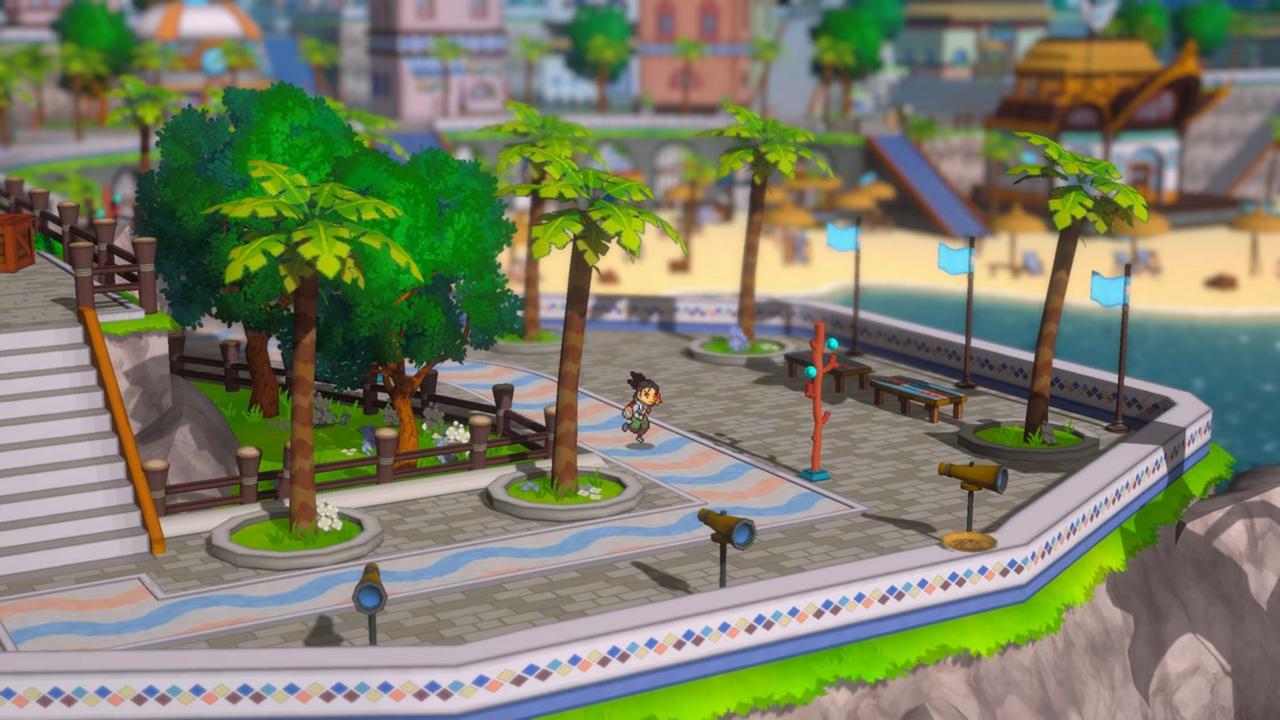
Talea is the first part of LumenTale that pulled me in. The world is split between Logos and Mythos, two regions built around different views of technology and tradition. That divide keeps the adventure from becoming a straight line of monster areas and trainer fights. You’re moving through a region with towns, natural landmarks, trainer-controlled areas, and different local attitudes shaping what’s happening around you.
Trey’s memory loss works because he isn’t chasing a title or badge-style goal. He’s trying to understand who he is while travelling through Talea under the guidance of Professor Kapan, with Ales joining the trip. Legendary Animon are also reemerging across the land, so the party keeps moving from one problem area to the next.
The story keeps the adventure moving through Talea, but combat and exploration left the bigger impression on me. Trey’s amnesia lets the game explain its world piece by piece, but it also makes some of the mystery easier to predict. I enjoyed the smaller details around the journey, including Ales tagging along, Kapan pushing the investigation forward, and the way legendary Animon create problems across Talea.
I wouldn’t play LumenTale for the story alone. It still connects the towns, Lumen, and Animon problems you run into along the way. The writing is lighter in tone than some of its heavier ideas suggest, which makes the experience approachable even when the world hints at bigger conflicts underneath.

4v4 Battles Put Team Building First
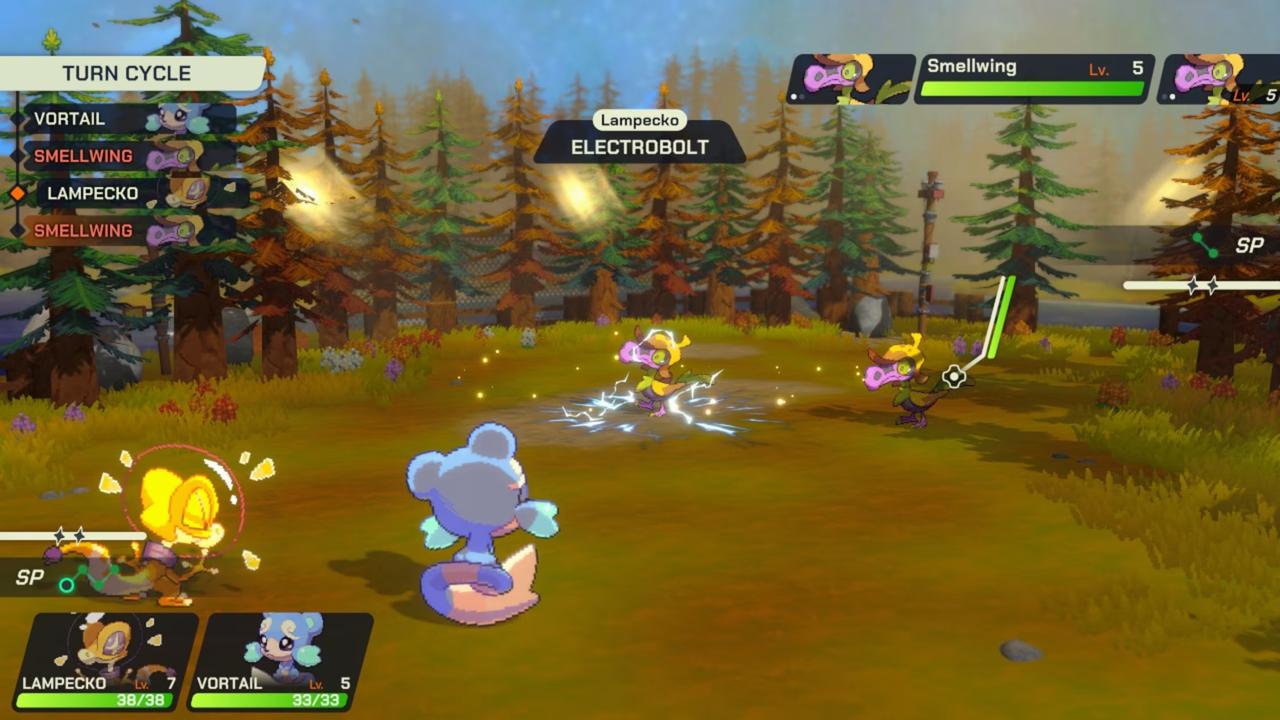
Combat is where LumenTale shows its sharpest design work. Each turn is about more than picking the highest-damage move available. You’re deciding which Animon should act, how much SP you can afford to spend, and whether chasing a TP Action is worth the risk. That makes team building more important than simply picking a favourite creature and overpowering everything in front of you.
Battles can involve up to four Animon on your side at once, and SP is shared across that active team. A heavy attack might hit hard, but using it can limit what the rest of your team does next. Critical hits and weakness targeting build toward an extra action, which can turn a close fight if you’ve built your team around coverage and timing.
The type and Attribute rules add more to think about. Hidden Types, variants, and creature traits create room for different builds, and the Stat Management side lets you shape Animon beyond basic levelling. That’s exciting if you enjoy the planning side of creature collectors. It means two Animon of the same species don’t always play the same role once stats, traits, and typing differences start to shape your team.
The downside is how slowly the game explains some of this. Important information can arrive too late, or sit inside menus when you need it during battle. That makes the early hours harder than they need to be. I liked learning the combat through use, but LumenTale sometimes confuses discovery with underexplaining. There’s a difference between trusting you and leaving you to guess.
Holoken Tools Make Exploration More Active
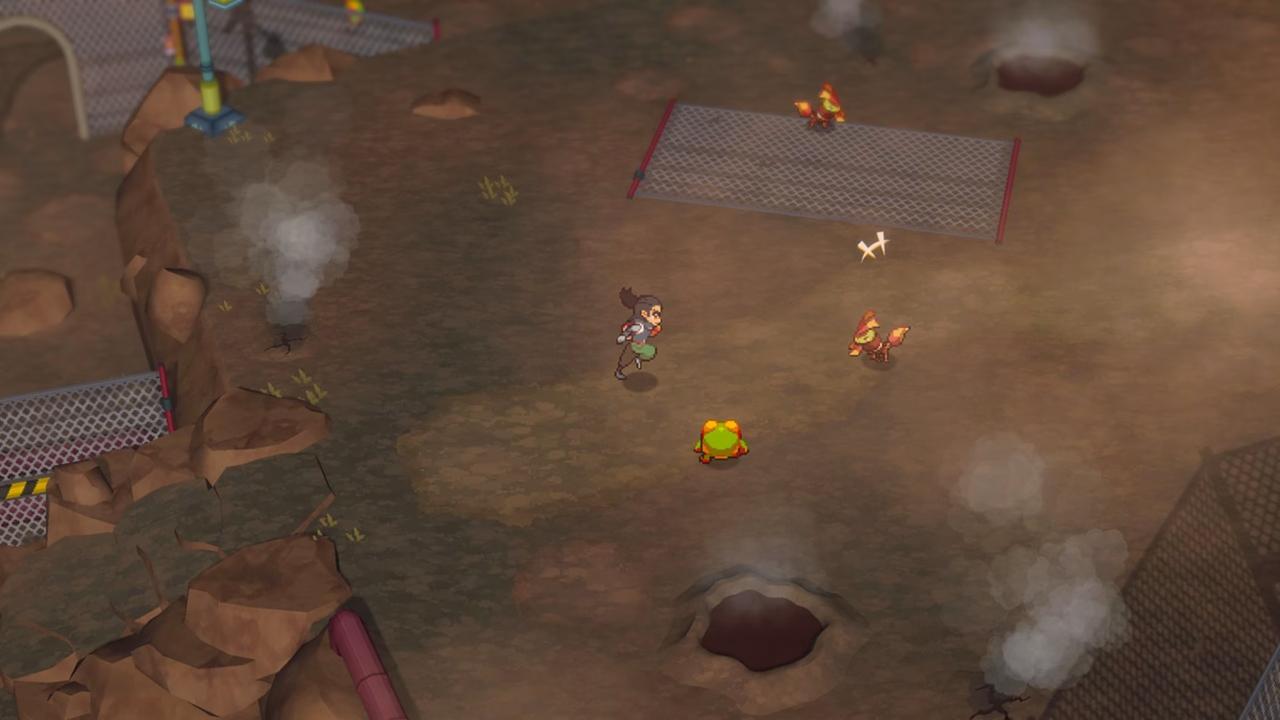
The Holoken is one of LumenTale’s better gameplay mechanics because it connects your Animon to the world around them. It isn’t only a catching tool. It also works as a field tool for hitting wild Animon from a distance, gathering rewards from weaker creatures, and opening new paths as more abilities become available.
Holoken Abilities are the more interesting part of that system. Different Animon types can assist with traversal, including breaking obstacles or crossing gaps. That creates a reason to revisit spaces and check corners instead of rushing along the main path. It also ties exploration back to your team, which is exactly the kind of connection a monster-taming RPG should use more often.
The field use also improves pacing. Wild Animon don’t always need to interrupt you with a full battle, and lower-level Animon are easier to raise when you can gather XP and resources through field actions. That cause-and-effect loop works well because it makes your team useful outside combat without reducing exploration to a set of locked doors.
Several extra gameplay mechanics sit on top of that loop. Crafting, materials, cards, challenges, Aniverse storage, training, and Animon scanning all add more to manage. Some of it adds useful scope to the adventure. Some of it feels underexplained. The Dex-style information tracking is a good example. Having to scan Animon multiple times to unlock more information fits the research theme, but it can also make basic knowledge feel withheld for too long.
The World Has Charm But The Flow Takes A Hit
LumenTale has a colourful look that suits its creature-collector roots without copying one older series too closely. Talea uses 2D characters against 3D environments, and the camera angles make towns, forests, and battle spaces look larger than they are. The Animon are the real appeal here. The better designs are easy to recognize at a glance, and many of them communicate their type or role through shape, colour, and animation.
The audio does its job without taking over the experience. Battle sounds, Animon cries, and environmental effects bring Talea to life. The music fits exploration and combat, although it could use more variety across long stretches. It isn’t distracting, but it also doesn’t carry the same personality as the creature designs.
The Nintendo Switch version of LumenTale: Memories of Trey has some serious problems. Loading is frequent enough to break the flow, especially when moving between rooms, areas, and battles. Combat pauses and menu delays hurt more because LumenTale already has a lot of rules to track. When the game needs you to check information, manage Animon, scan creatures, and plan turns, every hitch in the interface becomes more noticeable.
Readability is also a problem, especially in handheld mode. Some attribute text is small, and light text on certain backgrounds can be hard to parse. In a game built around type knowledge, team coverage, and quick recognition, that readability issue gets in the way fast. If you’re playing handheld on Nintendo Switch, those UI problems are harder to ignore than they are on a TV.

LumenTale Is Built For Patient Creature Collector Fans
LumenTale: Memories of Trey is a good creature collector with too many barriers between you and its combat, exploration, and team-building strengths. Shared SP, TP Actions, Animon traits, Hidden Types, and field tools all keep it from becoming simple imitation. When those pieces come together, the game has a clear identity.
The problem is that LumenTale often hides its strengths behind late tutorials, unclear information, and too many side activities introduced before everything has room to breathe. I like that it respects genre fans enough to build something more demanding. I don’t like how often it turns basic understanding into extra homework.
On Nintendo Switch, loading, UI quirks, and performance interruptions make LumenTale: Memories of Trey harder to settle into, even when the combat and exploration are working well. That doesn’t erase what Beehive Studios gets right.
If you love creature collectors and want something with more team planning than the usual one-on-one format, LumenTale has plenty to offer. There’s a worthwhile monster-taming RPG here, especially once the battle system opens up and your Animon roster allows more experimentation. Just be ready for slow explanations and a lot of gameplay systems to keep track of. On Nintendo Switch, loading and performance issues interrupt the flow more often than they should.


LumenTale: Memories of Trey
Summary
LumenTale: Memories of Trey adds smart 4v4 battles, Animon field tools, and team-building depth to a familiar creature-collector setup. Slow explanations, UI readability, and Nintendo Switch performance issues hold it back, but patient genre fans will find a monster-taming RPG with plenty to dig into.
As always, remember to follow us on our social media platforms (e.g., Threads, X (Twitter), Bluesky, YouTube, and Facebook) to stay up-to-date with the latest news. This website contains affiliate links. We may receive a commission when you click on these links and make a purchase, at no extra cost to you. We are an independent site, and the opinions expressed here are our own.