


I had a great time with MARVEL Tōkon: Fighting Souls. A lot of that comes from how Arc System Works handles its 4v4 fighting. You build a four-character Marvel team and face another squad, but your full group isn’t available from the opening seconds. More teammates enter as the fight develops, keeping the opening easy to follow before your options expand.
MARVEL Tōkon is approachable without flattening what you can do in a fight. You can start with straightforward attacks and Quick Skills, then bring assists and traditional commands into your game as you get more comfortable. By the time full teams are active, there is much more to track and react to. That learning curve is part of why I enjoyed it so much.
Marvel Storytelling Has More Personality Than Its Premise
The story revolves around The Champion, a cosmic being searching for someone capable of giving him a worthy fight. If a world can’t produce that opponent, he destroys it. That premise brings several Marvel teams into the conflict. It creates a simple reason for heroes and villains to keep throwing down.
The basic structure isn’t especially complicated, and it repeats as different teams work toward confronting The Champion. What kept me interested was the Marvel personality surrounding it. The motion-comic presentation suits the game extremely well, and each group gets room to establish its identity before the fighting takes over again.
I also like that the story introduces the roster through actual battles instead of separating the characters from the rest of the game. Trying different team combinations makes the story useful even when the larger plot is fairly predictable. You also get a clearer sense of how different characters behave in a fight before moving into the other modes.
If you’re coming primarily for an elaborate Marvel story, this isn’t that kind of game. The story is there to frame the fights and show off the cast. Its comic-book presentation, writing, and character personality make that framework enjoyable. I still wanted to see each team’s route through to The Champion.

The 4v4 Combat Grows More Complex as Fights Develop
The 4v4 format is where MARVEL Tōkon feels most distinct. Your squad shares a life bar, and you don’t have access to every teammate when a match begins. More teammates become available as the fight develops, steadily expanding the ways you can extend pressure or cover an attack.
That gradual expansion made the combat easier for me to process. Early on, I could concentrate on the character in front of me and learn the basic flow of a fight. Later rounds bring more assists and team interactions into play, so the same match becomes more demanding without dumping every option on you immediately.
Marvel vs. Capcom is an obvious reference point for a Marvel tag fighter, but MARVEL Tōkon feels different once a match starts. Its four-character teams share health, and your options expand as more teammates become available. That changes how you think about momentum because the fight becomes more complex as your squad grows.
Team construction matters because your other characters aren’t simply waiting off-screen for their turn. An assist can extend an attack or cover space that your active character can’t easily control. Choosing four characters becomes partly about how their strengths complement one another instead of just collecting four Marvel favourites.
The simplified commands are another important part of that accessibility. Quick Skills let you reach useful attacks without memorizing every traditional command immediately. Learning the standard commands pays off because they can increase damage and build your Skill Gauge faster. I like that split because it creates a clear path from getting comfortable to seeing how much more control you can develop.

There Is Plenty to Learn Beyond the Basics
MARVEL Tōkon doesn’t pretend that approachable controls make the entire game simple. As full teams arrive, an attack you could respond to early in the match may now be covered by an assist. Your attention has to widen beyond the active character, and that raises the challenge without changing the basic rules you started with.
The onboarding tools make that learning curve easier to tackle. Character-focused lessons break down how individual fighters operate, and Training lets you practise attacks without match pressure. That structure works because you can focus on one part of a character before trying to coordinate an entire team.
The combat never felt shallow just because I could start doing useful things quickly. Someone newer to fighting games can get comfortable with the basics, but there is still a lot to learn about how four characters work together. The game opens the door without pretending the later parts of a fight stay simple.
All Star Arena and Arcadia Rumble Add Variety
MARVEL Tōkon has plenty to do away from standard versus matches. All Star Arena is the mode I found more interesting. It takes your custom team through branching tournament routes, adding structure around repeated fights and making experimentation with another squad feel more purposeful.
Arcadia Rumble goes in a lighter direction. It mixes movement around an area with items and fights, creating a break from the usual match structure. I can see the appeal if you want something less focused on straight competition. It didn’t grab me like the core fighting or All Star Arena.
Online play covers the competitive basics without overcomplicating how you get into a fight. Ranked and Casual Matches are there when you want to face other people, and private Room Matches cover games with friends. Cross-play connects PS5 and PC, which matters if your regular group isn’t on the same platform.
I like that the additional modes never pull MARVEL Tōkon away from its fighting. They create different reasons to use the roster and test new team combinations. All Star Arena fits especially well because it encourages experimentation without changing what makes the combat enjoyable.

Comic-Book Presentation Fits the Fighting
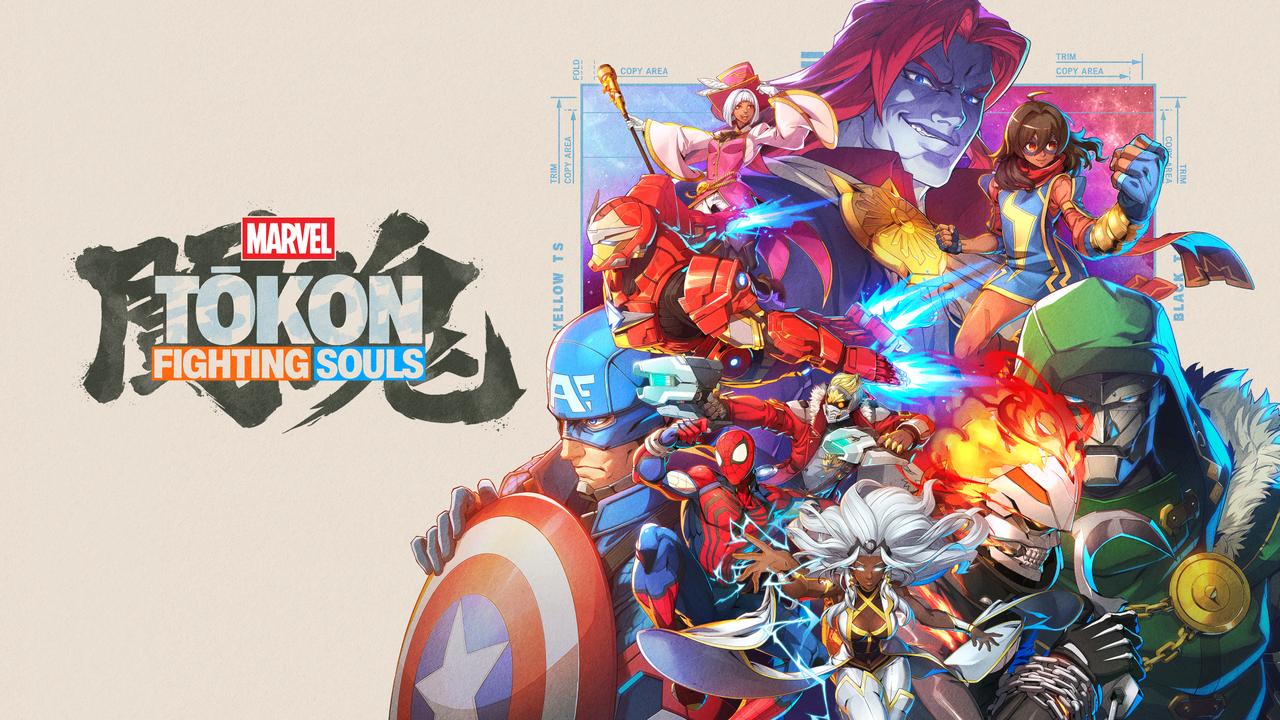
Arc System Works has created a Marvel roster that looks immediately connected to this game. The characters draw from their comic roots, with anime influence running through their designs and animation. I really like the result because the cast looks familiar without resembling standard Marvel models dropped into another fighter.
Combat is especially impressive once larger attacks start filling the screen. Ultimate attacks shift into elaborate animation, and heavy strikes can briefly take on a storyboard-like presentation. Stage transitions move the fight into another part of the environment and reinforce the comic-book feel without stopping the action for long.
There is a downside to all that visual energy. Full-team fights can take extra effort to follow once multiple characters, assists, and effects overlap. I could usually stay on top of the action, but the busiest exchanges still demand more attention than the opening rounds.
The stages themselves are detailed and packed with Marvel references, but I wanted more of them. The existing environments make a strong impression, so seeing the same ones repeatedly becomes more noticeable. On PS5, I didn’t run into performance problems that distracted from the action.

MARVEL Tōkon: Fighting Souls Is Easy to Start and Rewarding to Learn
MARVEL Tōkon: Fighting Souls succeeds because Arc System Works found a smart way to introduce a complicated team fighter. The start of a match is easy enough to follow, then the fight expands as more teammates and options become available. That progression kept me learning without burying me in every team option at once.
If you already play fighting games, team building leaves plenty to explore because assists and traditional commands change how you extend pressure and manage your squad. Marvel fans who don’t regularly play the genre also have a realistic way in. Quick Skills and the training tools make those first steps less intimidating, so you don’t need to understand everything immediately to start having fun.
I would’ve liked more stages. Full 4v4 fights can also become harder to follow once characters and effects overlap. Arcadia Rumble feels secondary beside the core combat and All Star Arena. None of those issues changed how much I enjoyed learning teams and finding new options as each fight developed.
If building and learning a four-character Marvel team sounds appealing, MARVEL Tōkon: Fighting Souls has the combat to keep that process interesting. Its controls let you get started quickly, and the team play gets more demanding as you learn how each character supports the rest. If you prefer a simpler fighter with fewer overlapping team options, the later rounds may be more than you want to manage.
MARVEL Tōkon: Fighting Souls
Summary
MARVEL Tōkon: Fighting Souls surrounds its 4v4 team battles with story content, training tools, alternate modes, and online play. Its biggest strength is how quickly the combat becomes understandable before assists, team building, and traditional commands add more to learn. Full-team fights can become harder to follow, and I would’ve liked more stages. If you want a Marvel fighter that lets you start having fun quickly and then rewards the time you spend learning a four-character squad, this is a great one to dig into.
As always, remember to follow us on our social media platforms (e.g., Threads, X (Twitter), Bluesky, YouTube, and Facebook) to stay up-to-date with the latest news. This website contains affiliate links. We may receive a commission when you click on these links and make a purchase, at no extra cost to you. We are an independent site, and the opinions expressed here are our own.