


I always play the hero. I’m completely used to kicking down the dungeon doors and claiming the loot. It never really crossed my mind how frustrating it must be for the monsters waiting inside. Artificer decided to flip that script. In Minos, you aren’t the brave adventurer. You’re the final boss. Those greedy loot-hunters have it coming.
I’ve grown entirely accustomed to dungeon crawlers feeding me a steady diet of easy victories over giant beasts. Minos throws that entire power fantasy in reverse. You play as Asterion, the cursed minotaur, and Daedalus, the labyrinth architect. Instead of dodging spike pits, you place them. Instead of getting lost in a maze, you drag the walls into place to make sure the invaders never find their way out.


The game asks you to protect your sanctuary from waves of heavily armed intruders looking for glory. Defending your home requires a massive amount of planning, patience, and a healthy appreciation for cartoon violence. I quickly learned to love watching a fully armoured knight walk right into my carefully placed buzzsaw.
This reverse approach works because the game commits to the bit completely. It never lets you forget that you’re the villain of someone else’s story. The developers got the comedic timing exactly right, but they also built a genuine tactical challenge underneath the jokes. You have to think like an evil mastermind to survive.
A Darkly Comedic Take on Greek Mythology
What happens when a mythical monster gets tired of being a target practice dummy? Minos answers that question with a genuinely funny premise. The narrative treats the endless waves of Greek heroes like a severe pest infestation. You’re sentenced to the ever-changing Labyrinth, and these intruders want nothing more than to chop you to bits for a reward. Daedalus is there to help you rig the place.
There’s a massive amount of dark comedy here. The dialogue carries a distinct Monty Python energy that kept me laughing during the breaks between waves. The banter between the monsters grounds the game in a strange, comedic reality. The dynamic between Asterion and Daedalus anchors the plot. Daedalus acts as the brains of the operation. He wants the minotaur to rest undisturbed in the centre of the maze. Asterion acts as the brawn, waiting to clean up any heroes who manage to survive the traps.
The writing stays completely out of your way when you just want to get to the action. Slowing down to read the exchanges is completely worth the extra time, though. The game reveals why Daedalus agreed to build such a horrible place through quick, punchy conversations rather than massive text dumps. By the time Theseus finally shows up, the writing has successfully turned a silly premise into something that actually makes you root for the monster. He just wants to be left alone in his home. The invaders are the actual villains pushing their way into his sanctuary. Daedalus provides the historical context for the maze, explaining the exact reasons why each stone block was placed. It grounds the ridiculous traps in actual mythology without ever taking itself too seriously.

Building the Perfect Deathtrap
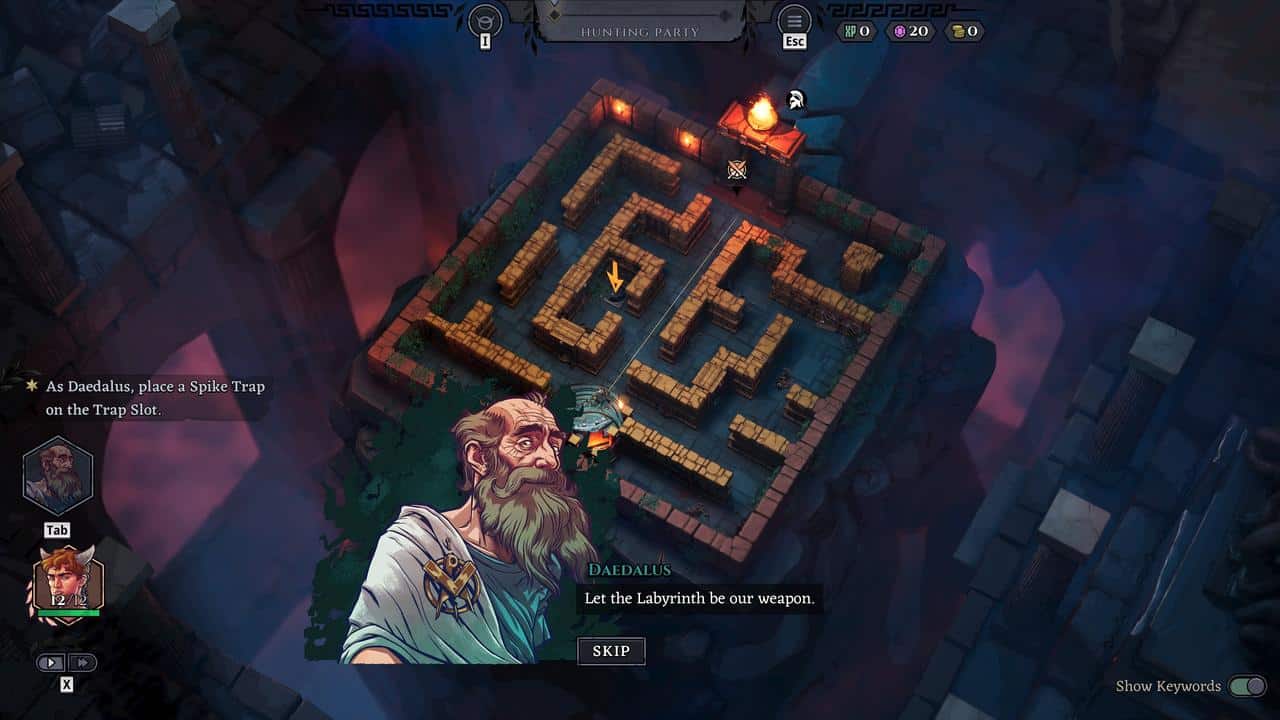
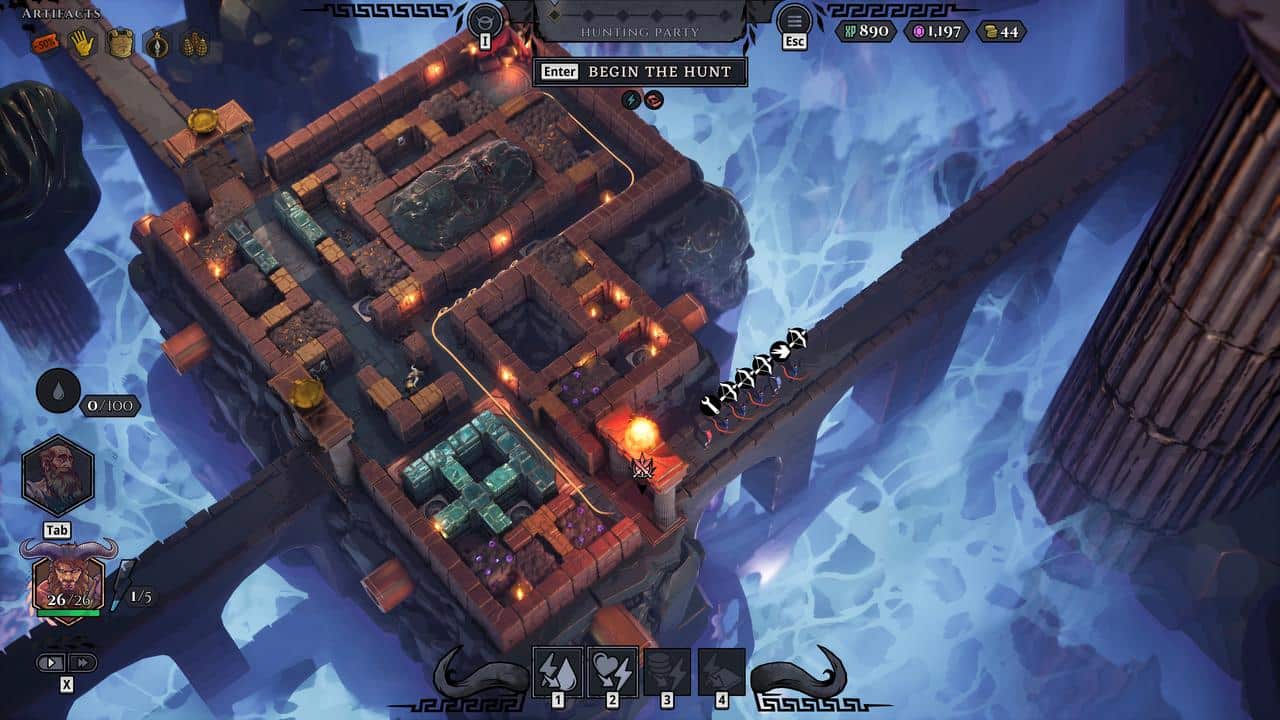
You start each attempt looking at a blank canvas of dirt and walls. The goal is simple. Stop the waves from reaching Asterion. You dig paths to funnel the invaders the long way around. Once you have a route established, you pack that corridor with as much pain as possible. You drag walls, gates, and corridors into place before the timer runs out.
You place flame spouts, ballistae, and floor spikes strategically to create brutal chain reactions. A lure pulls an armoured knight into a dead end. A backbiter panel snaps shut on a rogue a second later. You want the labyrinth to do the actual killing. Asterion stays near the core to clean up the leftovers. I devoted hours just to tweaking my choke points. I wanted to see how many Greeks I could wipe out with a single well-placed boulder. Watching a perfect setup go off flawlessly is incredibly entertaining.
Upgrading the Slaughterhouse
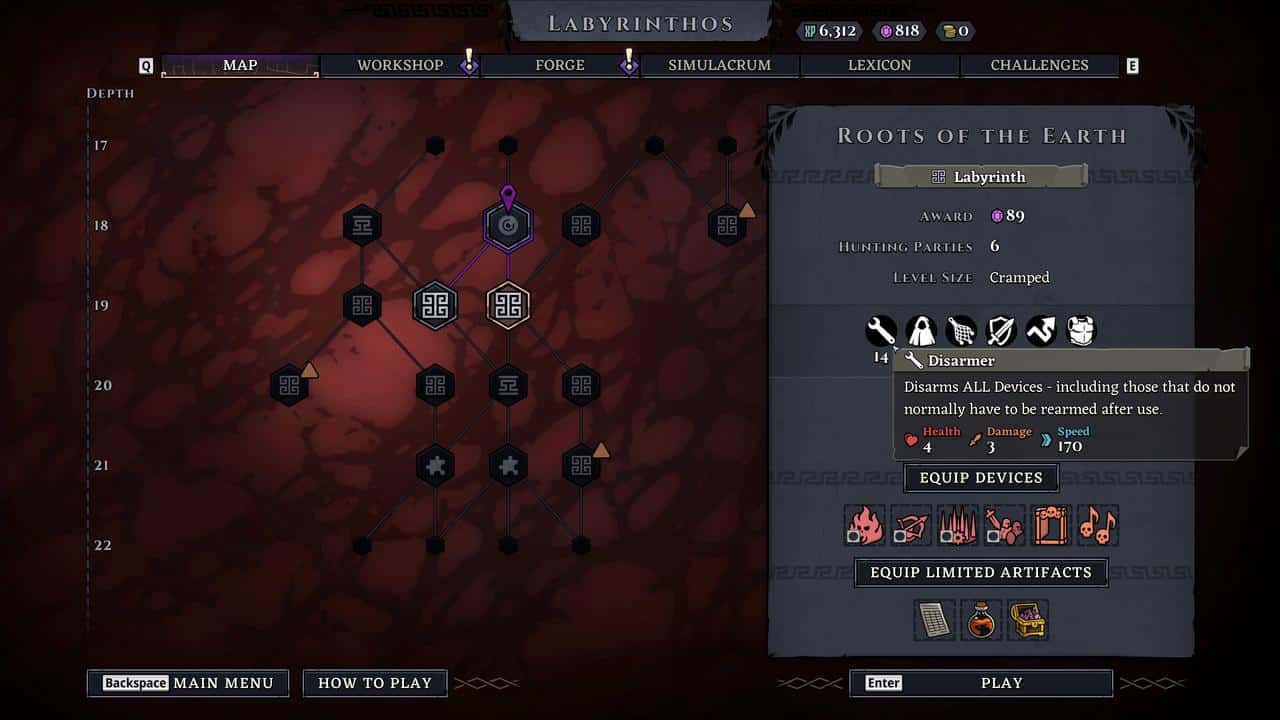
Blood acts as your primary currency. You use it between attempts to unlock permanent upgrades and nastier traps. Harvesting fallen heroes fuels your progress. You really need to think about how you build your choke points. You herd the enemy AI into narrow corridors to maximize your damage output. One wrong wall placement ruins an entire defence strategy. I learned that the hard way when I left my core wide open to a squad of archers. They burned my health bar down in seconds.
The enemy variety forces you to constantly adapt. A firepit roasts a standard swordsman instantly. That same firepit barely singes a shielded archer. You have to layer your traps to account for different resistances. The calculations become incredibly complex during the later waves. I had to guess if a burning attacker would survive long enough to walk over my next trap. You tear up your defences and rethink your layout constantly. The sheer variety of tools keeps your brain working.
Cartoon Violence Meets Ancient Greece
The art style embraces cartoon violence entirely. It carries a heavy Wile E Coyote energy. When a trap triggers, the feedback is instant. A loud crunch and a comical scream follow every successful hit. The audio cues are exactly right. It makes every successful kill incredibly fun to watch. You hear the distinct clank of armour hitting the floor when an adventurer falls. The visual cues help you track exactly what trap went off across a massive map.
Minos’ performance held up beautifully. Even when the screen filled with fire, blood, and a dozen dying adventurers, the frame rate never flinched. The action on screen gets intense during the later waves, but the engine handles it without dropping frames. I encountered a minor pathing bug where an archer got stuck on a wall corner. I simply had Asterion walk over and smash him. Nothing game-breaking. I never experienced any input delay when rushing to place a wall block at the last second.
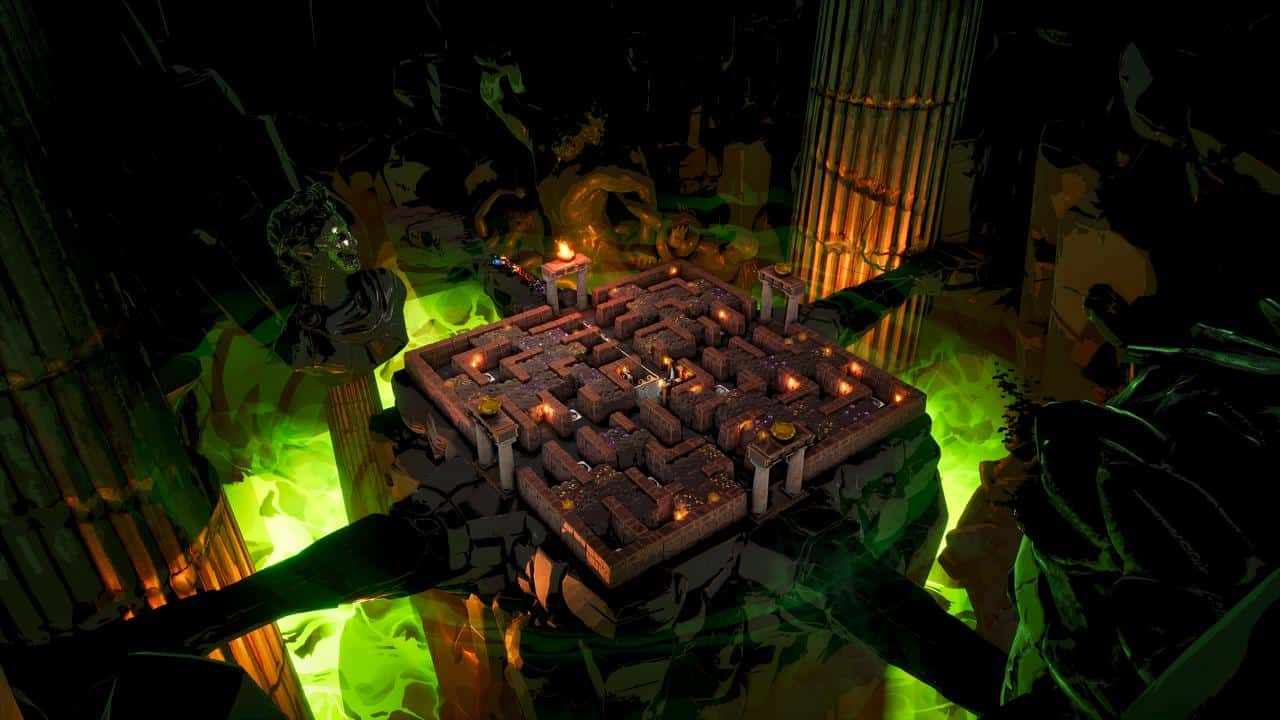
The game uses a top-down isometric view that gives you a perfect vantage point over the carnage. You zoom in to see the panic on an invader’s face. You zoom out to manage the entire maze at once. The user interface is clean and intuitive. Selecting and placing traps requires only a few quick clicks. I never struggled to find the information I needed during a wave. I never had to fight with the inventory screen when I just wanted to drop a buzzsaw. The soundtrack matches the ancient Greek setting. It uses heavy drums and chanting to build excitement as the invaders march towards your core. The music kicks into high gear when a massive chain reaction goes off. You hear the snapping of traps cleanly layered over the orchestral score.
Minos Flips the Dungeon Crawler Formula and Never Looks Back
Artificer took a massive risk by turning a standard action concept completely inside out. Letting you play as the monster defending the maze could easily be a short-lived gimmick. Instead, the developers built an incredibly demanding strategy game that constantly forces you to adapt. Setting traps and funnelling greedy adventurers into dead ends stays consistently fun. The dark comedy works because the writing stays sharp. It treats the legendary heroes of Greek mythology like heavily armed pests ruining your quiet afternoon. You actually end up rooting for Asterion to get some peace.
Unlocking Nastier Traps
The sheer variety of tools you get to use makes every single attempt entirely different. You’re always learning new ways to combine spike pits with ballistae, or finding cruel new places to hide a buzzsaw. I found myself obsessing over the layout of my corridors. I wanted to maximize the destruction before the minotaur even had to lift his axe. The progression stays steady. You unlock nastier traps at a pace that always gives you a new toy to test on the next wave of invaders. When you finally figure out how to wipe out a full squad of archers with a single rolling boulder, you look like an absolute genius.
I never had any trouble tracking the action, even when the screen was completely covered in fire and dying knights. If you want a break from being the brave chosen one, this game gives you the exact opposite experience. You get to be the villain, the architect, and the executioner all at once. Put the shiny armour away and embrace the cartoon violence. Minos gives you the keys to the labyrinth, and watching the so-called heroes fail to navigate it is ridiculously fun.
Minos
Summary
Minos successfully flips the dungeon crawler formula by letting you play as the monster defending the maze. The tactical trap placement demands careful planning, and the Wile E. Coyote-style cartoon violence makes the slaughter incredibly fun to watch. The calculations get mathematically complex during the later waves, but the Monty Python-inspired writing and sheer variety of tools make this a ridiculously entertaining reverse power fantasy. If you want a break from being the chosen hero, Asterion has plenty of room in his labyrinth.
As always, remember to follow us on our social media platforms (e.g., Threads, X (Twitter), Bluesky, YouTube, and Facebook) to stay up-to-date with the latest news. This website contains affiliate links. We may receive a commission when you click on these links and make a purchase, at no extra cost to you. We are an independent site, and the opinions expressed here are our own.