


Every year I tell myself I’m going to actually learn the pitching side of MLB The Show properly. And every year I default to what I know. MLB The Show 26 is the first entry that made me feel like I was actually being punished for that habit. The strategic layer here is thicker than anything the series has done before, and it shows up in the first real game you play.
MLB The Show 26 is developed by San Diego Studio and published by Sony Interactive Entertainment alongside MLB Advanced Media. It doesn’t reinvent what this series does. What it does instead is build strategy into almost every part of the on-field experience. No previous entry has managed that quite as well. The on-field changes are the most meaningful the series has introduced in years, even if the rest of the package is more refinement than reinvention.
On-Field Strategy Has Never Been This Deep
The biggest story this year isn’t any one feature. It’s the way several changes stack on top of each other to make every at-bat, every pitching decision, and every defensive alignment matter more than they ever have.
Bear Down Pitching Adds a New Decision to the Mound
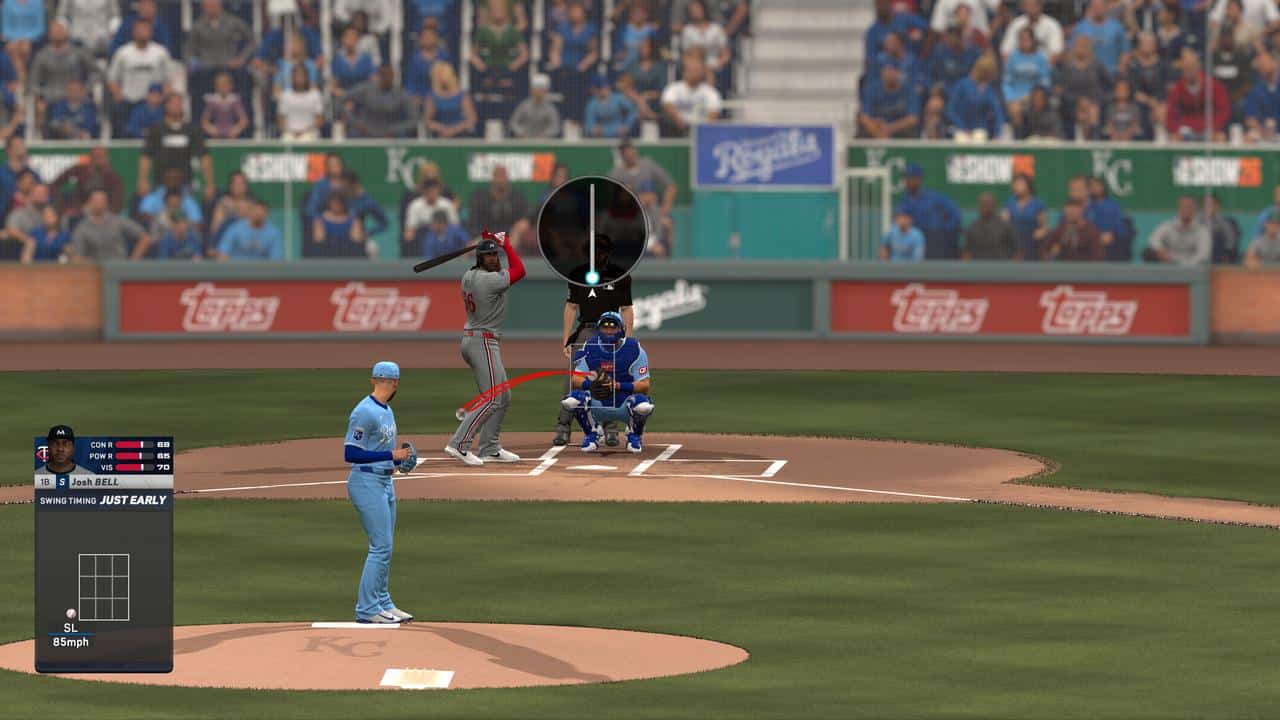
Bear Down Pitching is the new tool pitchers carry into crucial moments. You’ve got a limited focus resource that, when activated, gives your pitch extra velocity and tighter control. It isn’t a cheat code. A bad input is still a bad input. But using it at the right moment, when you’re in a full count with runners on base and need to dot the corner, adds a real decision to every game. Knowing when to use it is a genuine strategic question that comes up in almost every outing.
Hitting Gets More Options Than Any Previous Entry
Hitting got a major addition in Big Zone Hitting, which simplifies swing placement by giving you a larger contact area to work with. You won’t be landing perfect-perfect contact with it, so it isn’t going to take over competitive play. But for anyone who has struggled to get comfortable with the exact demands of traditional zone hitting, it’s a far better starting point than directional hitting ever was. PCI Sensitivity is the other hitting addition worth knowing about. The PCI, or Point of Contact Indicator, is the targeting reticle you move around the strike zone to line up your swing. You can now control exactly how fast or slow it moves, which gives you a real tuning option mid-slump when your timing is off and nothing feels right.
The change that matters most for competitive play is the removal of PCI shrinkage on pitches down and away. If you’ve played the past few years, you know how punishing same-handed matchups could be. Taking it out opens up lineup diversity in a big way. The online meta is going to look genuinely different because of it. The new pitcher handedness splits add to that. Hits allowed and strikeouts per nine innings are now tracked separately versus lefties and righties. You’re suddenly making real platoon decisions rather than just stacking the best cards you can find.
Defensive Strategy Gets a Real Upgrade
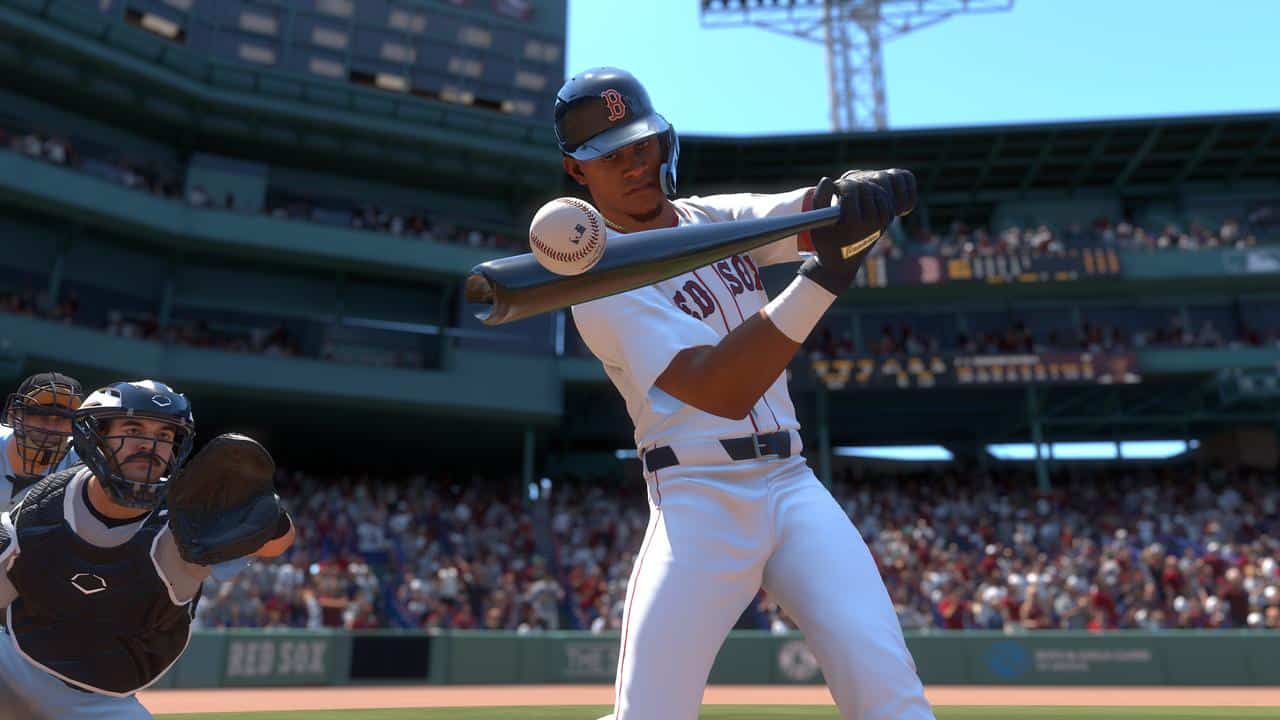
Fielding has been one of the areas the series needed to address, and the directional split system is the most significant defensive change in years. Instead of one reaction rating for fielders, you now have four: forward, backward, left, right. If your shortstop has a weak rating going left, you’re going to see that weakness show up in games, and you’ll want a second baseman who compensates by moving well to his right. This kind of chess match at the roster construction level makes building your defence as interesting as building your lineup.

Catcher pop time is now its own separate rating, and you feel the difference immediately. Get an elite catcher behind the plate and the running game shuts down fast. Put a weak one out there and you’ll be watching stolen bases pile up. It’s a small addition that pays off in a big way during close games.
Road to the Show Grows Up
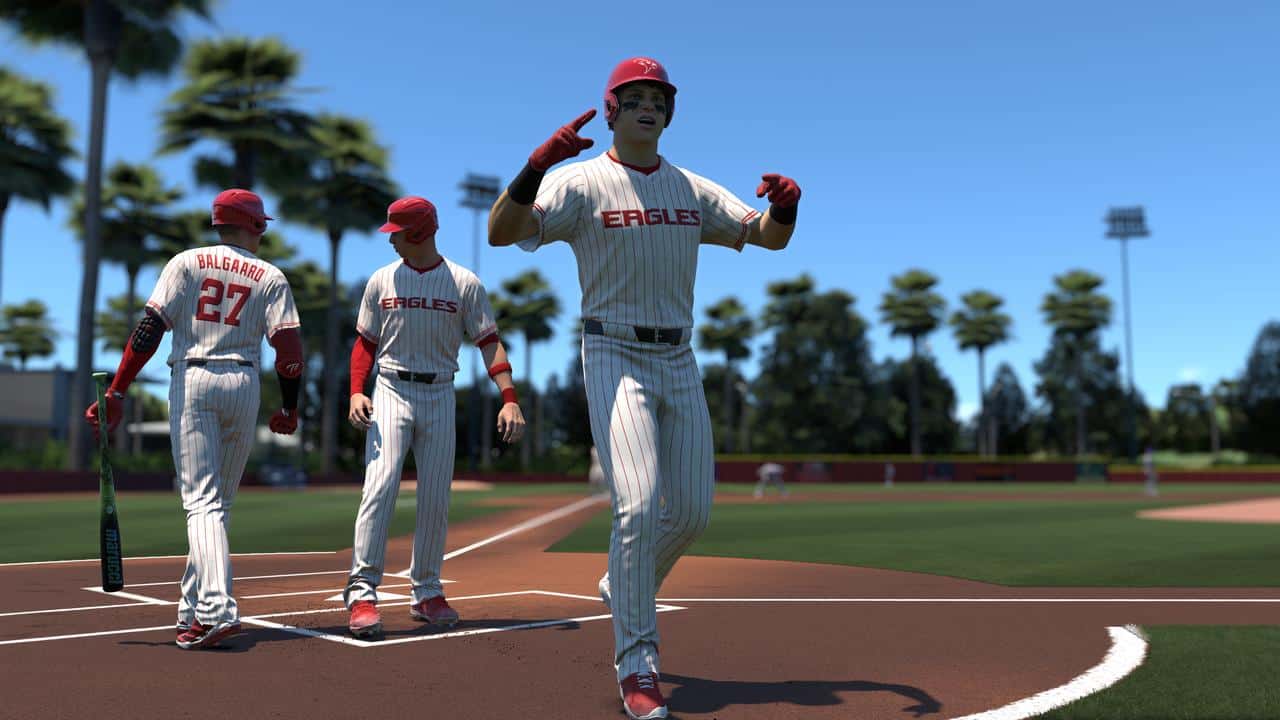
Road to the Show has always been the mode that pulls you in for hours, and this year’s version is the most fleshed out it has ever been. You now start your career in high school, move through college, compete in the fully licensed NCAA College World Series, and work through the MLB Draft Combine before you ever put on a professional uniform.
The College World Series in particular is something I didn’t expect to enjoy as much as I did. Charles Schwab Field in Omaha is reproduced well. The atmosphere is noticeably livelier than what you’d find in a standard minor league game. The whole amateur arc finally gives you a reason to care about your player before they reach the pros. The Road to Cooperstown system adds a legacy tracking element worth paying attention to. Your early decisions tie directly into your long-term Hall of Fame case. Even the early games carry stakes they haven’t had before.
The professional side of the career still has room to grow. Once you make the majors, the narrative loses some of the texture that the amateur years build up. But the gap between where Road to the Show started and where it is now is significant, and the foundation being laid here is the strongest it’s ever been.
Franchise Mode Finally Gets Serious
Franchise Mode has been patient enough to warrant a real update, and this year comes through. The Trade HUB is the centrepiece. It’s a dedicated interface where you can track rumours, monitor negotiations, and pursue deals across the league. Those deals now take time to develop. Teams have evaluation periods. Chasing the biggest names on the market takes real work rather than just finding the right loophole. You can position yourself as a buyer or a seller depending on where your team is in its window. That context shapes how the trade market treats you.
Custom Game Entry lets you jump directly into the key games of your season without grinding through every low-stakes matchup in April. It’s a practical addition that keeps a long franchise season from turning into a chore.
Diamond Dynasty Has Its Most Ambitious Launch
If you play Diamond Dynasty, this year’s launch is the most stacked the mode has ever been from day one. The World Baseball Classic integration alone brings over 130 cards, full tournament play from the pool stage through to the championship, and the option to bring your Diamond Dynasty squad in to represent a nation. Red Diamond cards introduce a new elite rarity tier at the top of the card hierarchy. Parallel Mods let you specialize your cards with contact, power, fielding, or speed upgrades as you parallel them up, which means every new card drop becomes a new puzzle to solve around your roster.
Team Affinity is better organized than it was last year. Every team starts with a hitter captain and a pitcher captain available from launch, which was not the case in MLB The Show 25 where some teams waited until midseason. Removing non-impactful stats like durability from cards means the overall rating on a card now actually tells you what you need to know at a glance.
The grind is still the grind. If card collecting and progression aren’t your thing, nothing here is going to change that. But for anyone who plays Diamond Dynasty seriously, this is the most content the mode has ever offered at the start of a year.
The Same Look With a Few New Touches
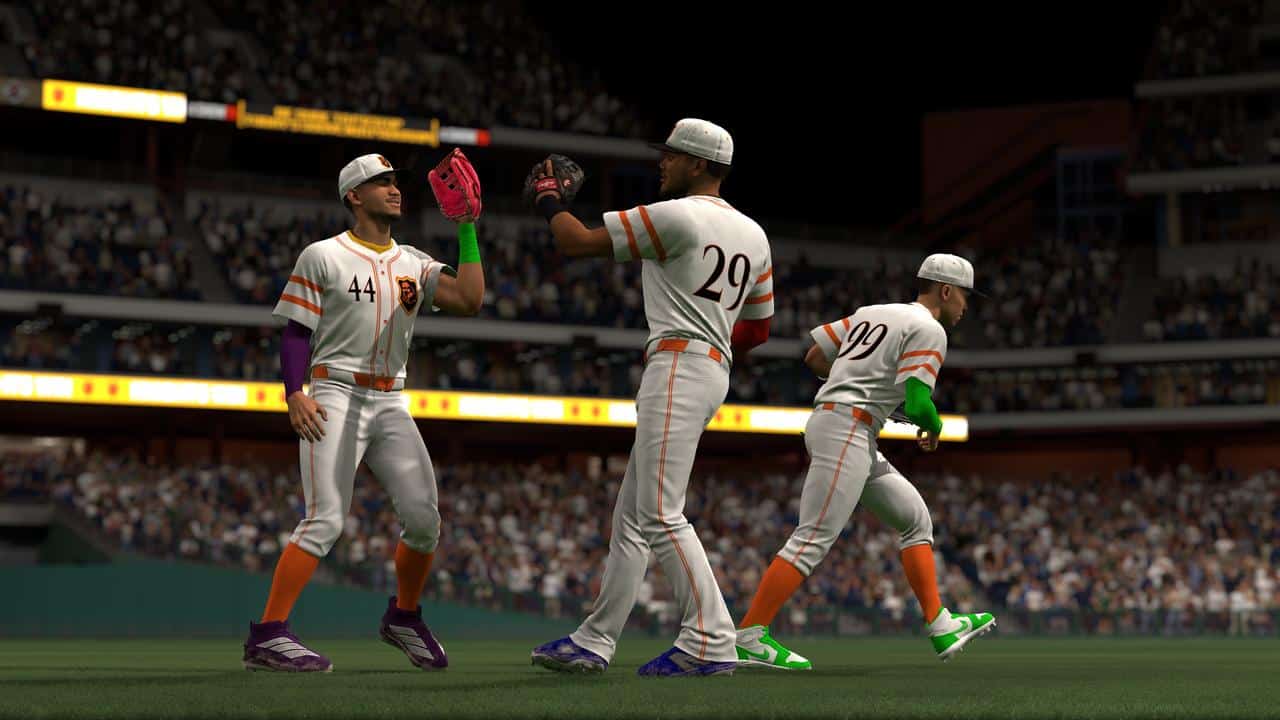
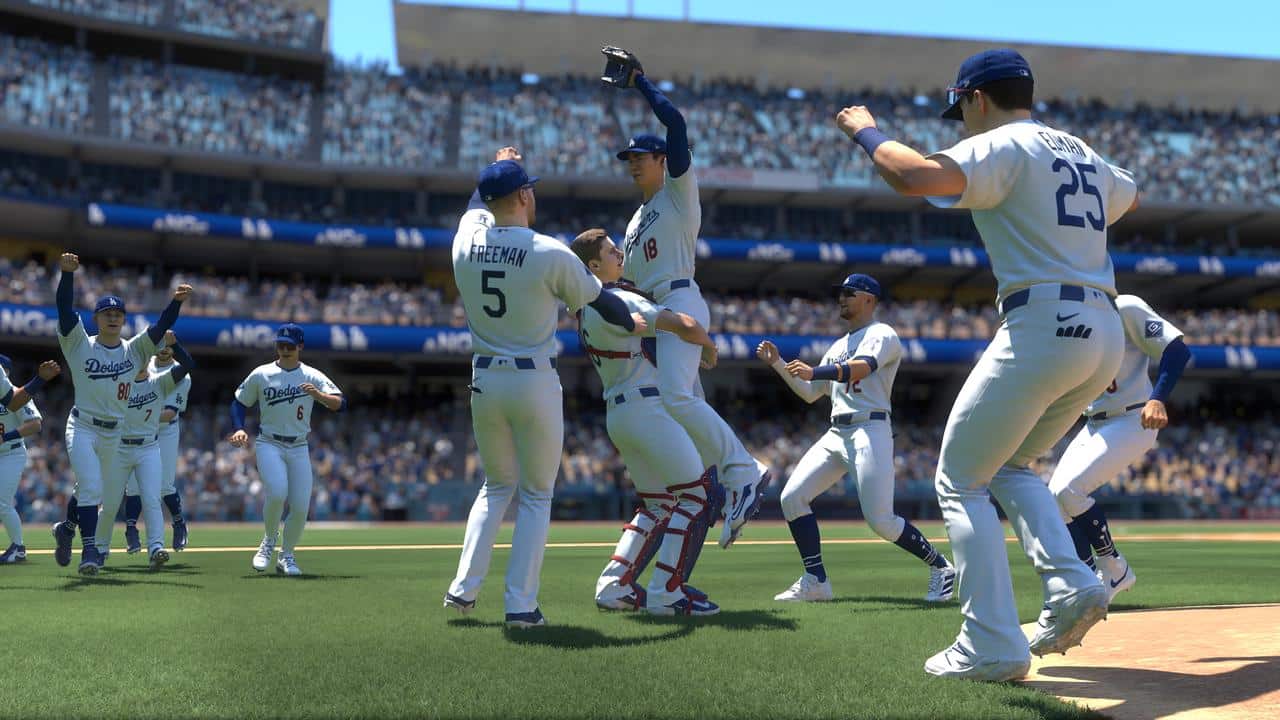
MLB The Show 26 targets 4K 60fps on PlayStation 5 with HDR support, and it looks good. Player models are detailed, stadium environments are well reproduced, and the jersey physics are a nice new touch. But this is largely the same visual package the series has been presenting for a couple of years now. Aliasing on edges is still visible, crowd detail still lags behind what you’d expect from a current-generation title, and there are no PlayStation 5 Pro enhancements to speak of, which is a strange omission for a first-party PlayStation release.
Commentary has been refined with more contextual dialogue, and Robert Flores handling some mode-specific commentary adds variety. The authentic pitch call audio that plays through the controller is a feature I turned off within the first fifteen minutes. It came across as clutter rather than atmosphere to me, though I can see some people warming to it over time.
There’s a launch bug worth knowing about: foul balls occasionally register as home runs. It’s the kind of thing that will almost certainly be patched, but it’s there, and it will get you the first time it happens.
MLB The Show 26 Is the Best the Series Has Felt in Years
MLB The Show 26 doesn’t look like a new game. The visuals are largely where they were last year, the core game is the same baseball simulation it has always been, and if you’re coming in hoping for a visual overhaul, you won’t find one. But underneath the familiar surface is a version of this game that demands more from you, rewards you for thinking deeper, and gives you more reason to stay than any entry in recent memory.
The on-field strategy changes stack in ways that make every decision matter more. Road to the Show is the most complete career mode the series has produced. Franchise Mode finally has the trade infrastructure it needed. And Diamond Dynasty is launching with the most content it has ever had on day one.
I loaded up the Blue Jays in my first game, the same way I do every year. This time, the decisions I was making felt different. That’s the best thing I can say about MLB The Show 26.
MLB The Show 26

Summary
MLB The Show 26 is the same game on the surface and a noticeably different one underneath. The on-field strategy changes are the most meaningful the series has introduced in years, Road to the Show finally has an amateur arc worth caring about, and Diamond Dynasty is launching with more content than it ever has before. The visuals haven’t moved and the grind is still the grind. But if you play this series for the baseball, this is the best it has felt in a long time.
As always, remember to follow us on our social media platforms (e.g., Threads, X (Twitter), Bluesky, YouTube, and Facebook) to stay up-to-date with the latest news. This website contains affiliate links. We may receive a commission when you click on these links and make a purchase, at no extra cost to you. We are an independent site, and the opinions expressed here are our own.