


Monopoly: Star Wars Heroes vs. Villains doesn’t really play like the Monopoly I expected. I thought the Star Wars part would be the easy sell, but the bigger shift is how much the game moves away from slowly draining everyone’s money. It keeps the board, the properties, and the dice, but the match starts to revolve around team control instead.
That’s the make-or-break point here. This isn’t regular Monopoly with Darth Vader and Luke Skywalker dropped onto the board. It’s a team board game that borrows Monopoly’s layout, property buying, and dice movement, then changes the win condition around a points race. The team play is what kept me interested. I was less sold when dice-heavy GO Events took over too much of the result.
Team Play Changes Monopoly More Than The Star Wars Skin
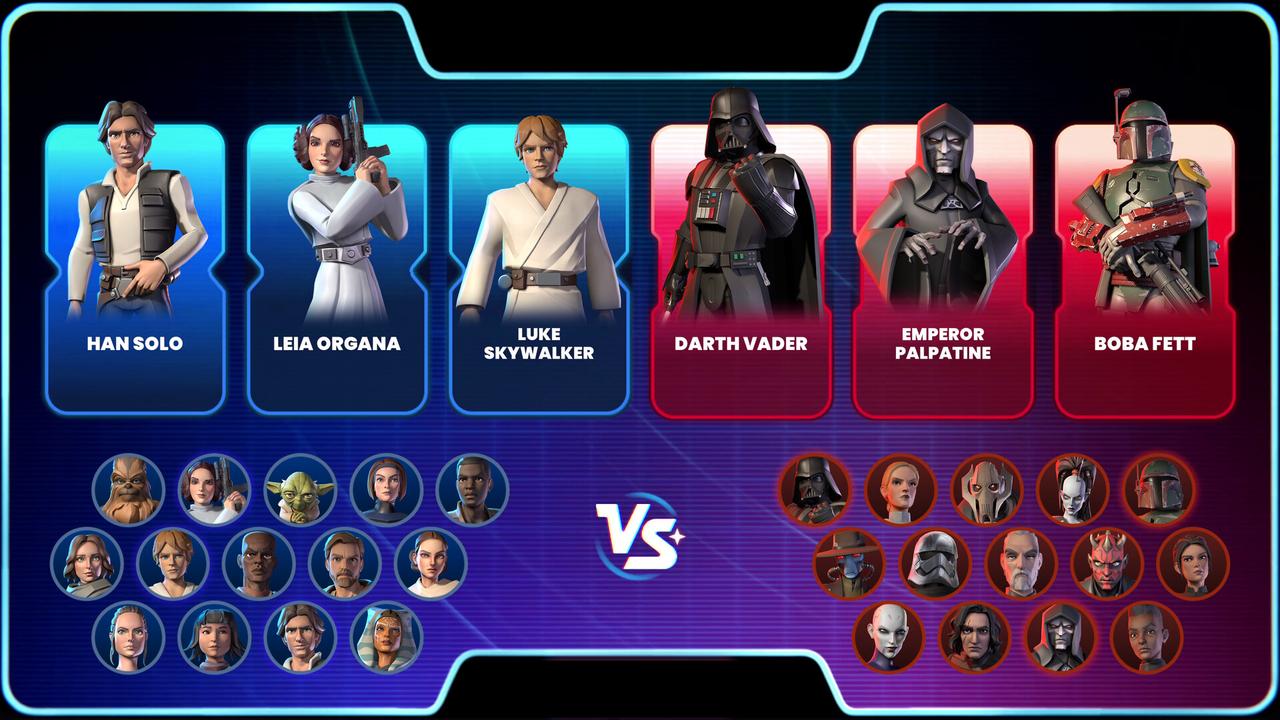
Team format changes the game immediately. Monopoly: Star Wars Heroes vs. Villains uses Team vs. Team play, with 2v2 and 3v3 matches. You pick the Heroes or the Villains, build a team, and share Credits across that side of the board. Up to six people can play, and AI can fill open spots locally or online.
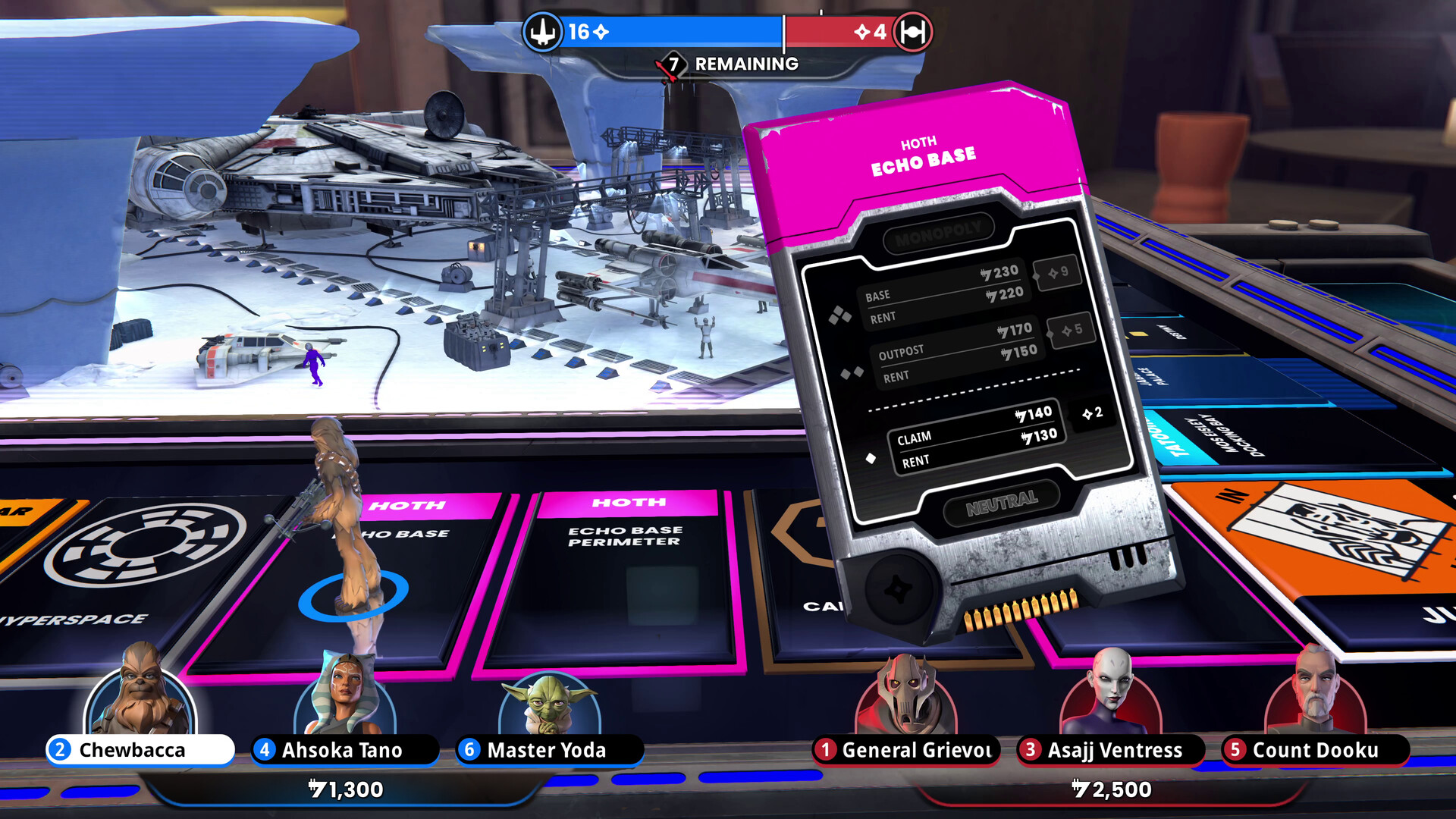
That team structure immediately changes how Monopoly usually works. Credits aren’t just your own pile of money anymore. They’re a shared resource used to buy properties, upgrade locations, downgrade enemy properties, and take over spaces from the other side. There’s also no normal bankruptcy. A team can go into negative Credits, so running out of money isn’t the end by itself.
The real win condition is Influence Points. You earn Influence Points by buying and upgrading locations, controlling planets, winning battles, and completing GO Events. The team with the most Influence Points after the final GO Event wins the match. I like that change in theory. It means a match has a clearer end point than traditional Monopoly, which can drag long past the point where everyone knows who’s probably going to win. It also makes the game easier to play with a family or group that doesn’t want a board game to eat an entire night.
This also changes what smart play looks like. Buying a property is still useful, but owning the board doesn’t carry the same kind of control when an opponent can flip a location, downgrade it, or catch up through a GO Event. That may also lose anyone who wanted classic Monopoly with Star Wars characters and locations added to it.
GO Events Speed Up Matches And Swing Too Much
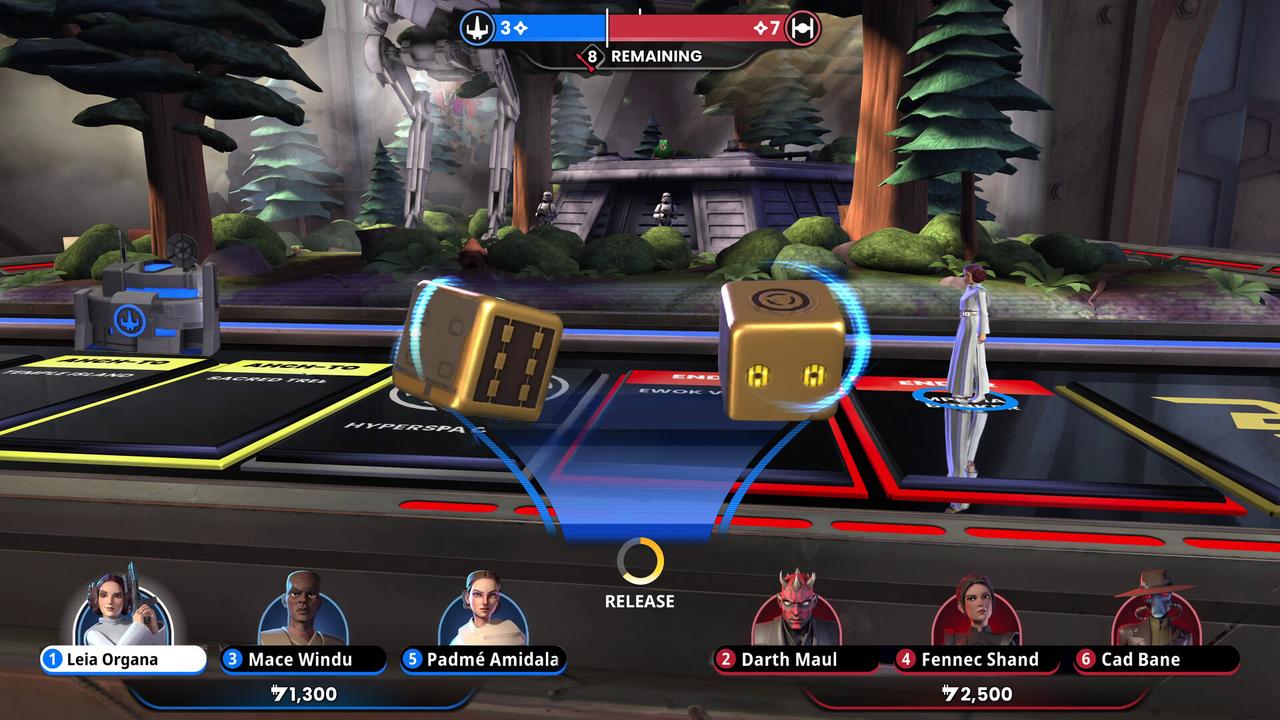
GO Events are where Monopoly: Star Wars Heroes vs. Villains moves farthest from standard Monopoly. Passing GO triggers a team dice challenge tied to a Star Wars event, and winning can award a large number of Influence Points or activate a major board effect. At the full setting, matches can run up to eight GO Events and sit around the 60 to 80 minute range. You can lower that number for shorter matches, which is a smart call. Monopoly needs pacing control in digital form, and having a defined end point makes the whole thing less exhausting.
GO Events also create the game’s main balance problem. They can protect locations, change Influence totals, damage the other side’s board position, or erase a lot of careful planning in one shot. That can be exciting when your team is behind and still has a way back. It can also make property planning feel less important than getting around the board and winning the next dice challenge. That’s the part that pulled me back a bit. I don’t mind luck in Monopoly. Luck is baked into the whole idea. Here, though, the biggest events can decide too much, especially when the board strategy underneath them has less room to breathe.
Battles soften that problem. When opposing characters stop on the same tile, a battle starts in the centre of the board. The defender rolls first, the attacker rolls second, and the attacker can try to hit the defender’s dice to change the final number. The higher score wins. If the attacker wins, they can flip a location and steal Influence Points. If the defender wins, they can steal Credits. That small layer of interaction makes contested tiles matter more than a normal rent payment. It doesn’t remove the luck, but it does make property fights feel more active.
Character Abilities Add Real Team Decisions
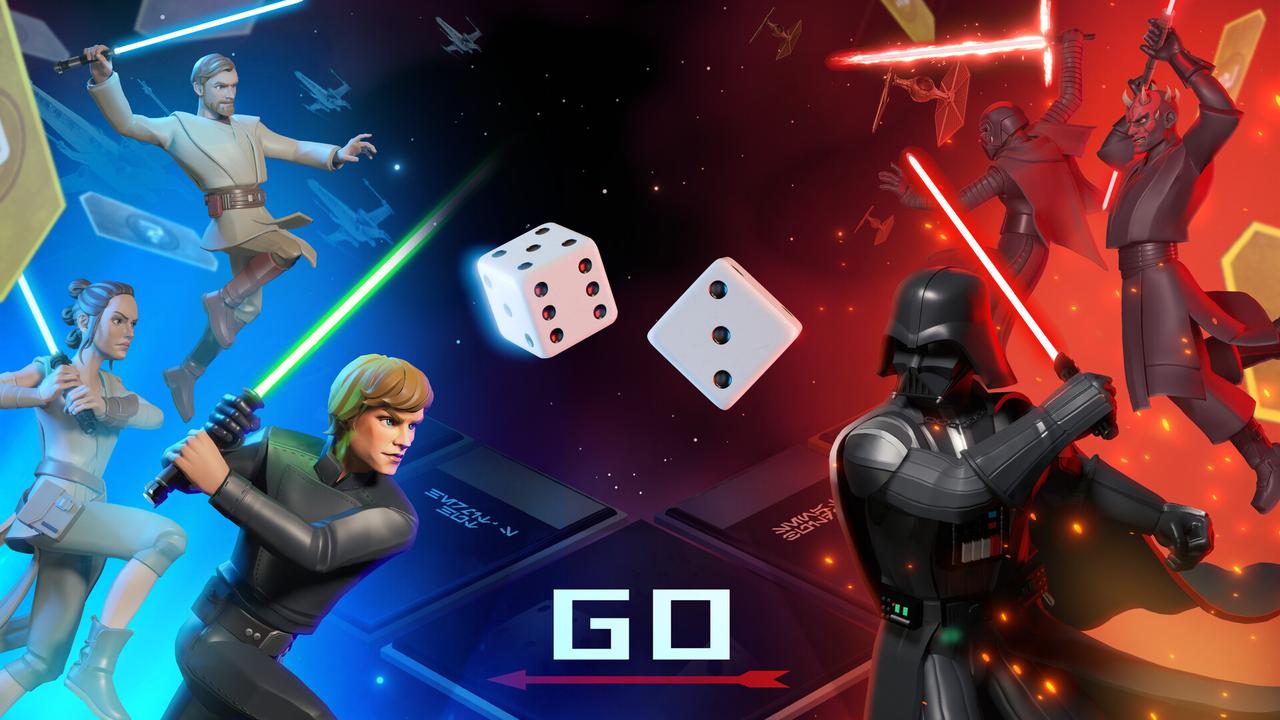
The Heroes vs. Villains split makes the most sense through the character roster. There are 28 characters split across both sides, and each character has either an Active or Passive ability. Those abilities can affect movement, battles, GO Events, property costs, rerolls, extra dice, jail, and Credit stealing.
Team choice isn’t just cosmetic. Some characters improve combat rolls, some make movement easier., some support GO Events. And, some make it cheaper to claim locations. I started paying more attention to team choice once I saw how much abilities could change movement, battles, and GO Events.
The balance approach is also smart. Abilities have mirrored effects across Heroes and Villains, so one side doesn’t seem built to crush the other by default. You still need to think about team composition, but you’re not picking a side because it has the obvious overpowered answer. The downside is that not every ability carries the same excitement. Some are clearly easier to understand or more fun to use than others. That’s always going to happen in a roster this size. The issue is that some teams can look more interesting before the match than they are once the board starts moving.
I also would’ve liked more freedom in team creation. The Heroes vs. Villains split makes sense for the licence and the rules, but it also blocks the sillier Star Wars team-ups that a casual board game could’ve had fun with. Strange custom teams would’ve fit the party-game side of it.
Star Wars Locations And Commentary Repeat Quickly
The Cantina, familiar planets, and droid commentary carry a lot of the early appeal. R2-D2 and C-3PO fit naturally as hosts, and the animated dioramas add personality to locations that would otherwise be plain property tiles.
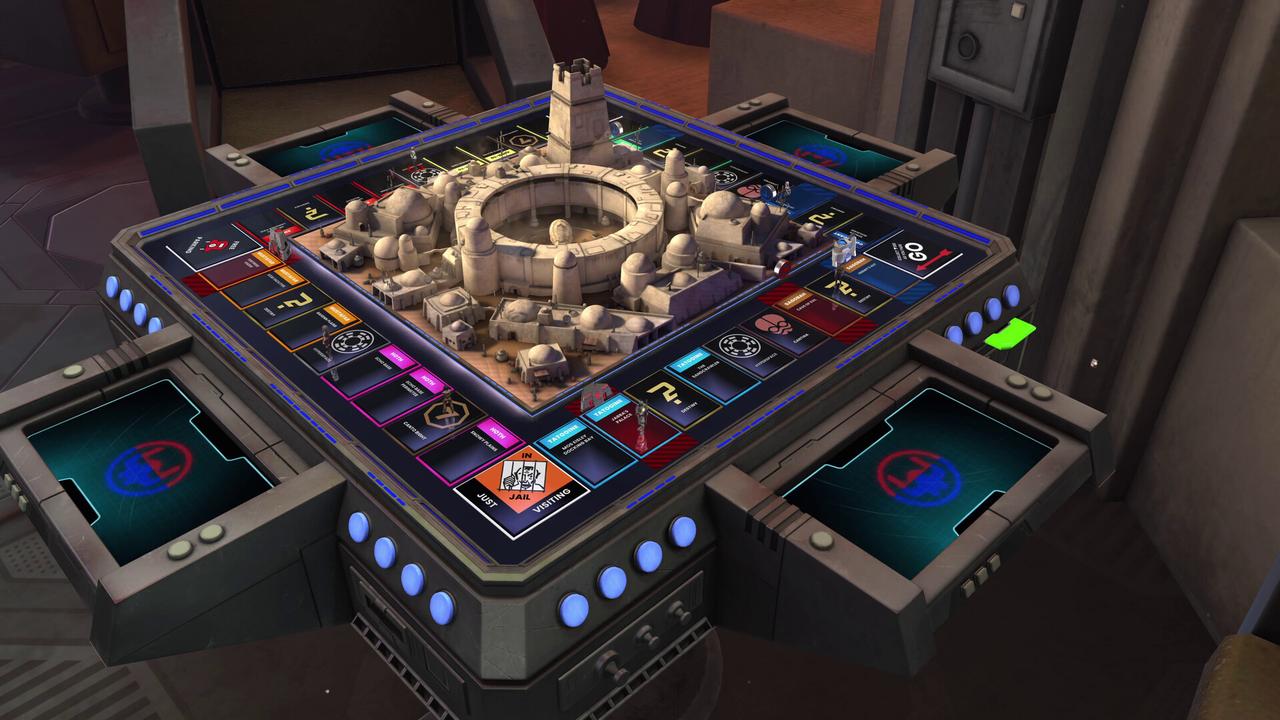
The board itself uses 22 Star Wars locations, with planets and properties replacing the usual Monopoly spaces. Outposts and Bases replace the classic house and hotel idea, with locations upgrading through Standard, Outpost, and Base tiers. Special tiles also get Star Wars replacements, including Hyperspace, Cantina, Canto Bight, and Destiny. That leaves the board with enough Star Wars flavour without needing a story mode. This isn’t a campaign or a narrative game. It’s a themed board game where the Star Wars side comes through locations, characters, event scenes, ships, dice skins, costumes, music, and commentary.
The first few matches benefit from that. Seeing familiar Star Wars moments turned into GO Events makes the board feel less static. Character entrances and animated dioramas add more life than a flat digital board could. Repetition still creeps in. Commentary lines repeat, event scenes become familiar, and the Star Wars references are more about recognition than surprise. The Star Wars side also sticks closest to the most recognizable parts of the franchise.
The unlocks add a little extra reason to return. Missions can unlock character costumes, dice skins, and battle ships, so there’s something to chase beyond winning one match. Still, cosmetics can only carry the replay value so far when the only core format is Team vs. Team.
Local And Online Play Make The Most Sense With A Group
Monopoly: Star Wars Heroes vs. Villains makes the most sense as a shared board-game night. Local play supports up to six people, online play is included, and the game also supports mixed local and online play. AI can fill empty spots, so you don’t need a full group every time.
This isn’t the kind of game I’d suggest to someone playing alone for long stretches. You can play with AI, and that’s useful for learning the rules or filling a team, but the real fun happens when you are playing with others sitting beside you on the couch or playing online. Where you play matters less than who you’re playing with.
The game has several pre-match choices, character selections, AI settings, match-length options, and rule adjustments. When a digital board game has that many small choices before the match begins, button prompts and clean menus matter. Any confusion there stands out more because the actual game is supposed to be easy to start with a group.
As a group game, it covers the basics well. Shorter matches are possible, AI can fill seats, and Team vs. Team is easy to understand once the first match gets going. The first few turns take some adjustment because Influence Points, Credits, GO Events, and battles change the usual Monopoly habits. After that, the board starts to make sense.
Monopoly: Star Wars Heroes vs. Villains Reworks Monopoly Around Team Play
I went into Monopoly: Star Wars Heroes vs. Villains expecting something closer to classic Monopoly, but I came away seeing it more as a Star Wars team board game. The team format, shared Credits, Influence Points, battles, and character abilities create a more active match than standard Monopoly. GO Events also create a clearer ending, which matters a lot for a digital board game.
Those same changes are also why I wouldn’t recommend this game if you want a classic Monopoly experience. GO Events can swing the board harder than I’d like, and repeated matches can expose the limits of having only one core mode. For the right group, though, there’s fun here. Star Wars fans get a recognizable cast, familiar locations, themed events, and a board where Heroes vs. Villains affects the rules instead of sitting on top as decoration. Families and casual groups get local play, online play, AI support, and shorter match settings.
Monopoly: Star Wars Heroes vs. Villains is a good fit for Star Wars fans who want a digital board-game night with more team play than regular Monopoly. This version has enough smart changes to be enjoyable, but its dice swings and repetition keep it from going much higher.
Monopoly: Star Wars Heroes vs. Villains
Summary
Monopoly: Star Wars Heroes vs. Villains takes Monopoly’s board, properties, and dice and rebuilds them around Team vs. Team play, shared Credits, Influence Points, battles, GO Events, and Star Wars locations. I came away seeing it more as a Star Wars team board game than a classic Monopoly update, which makes group play more active and the match easier to finish. The main problem is that GO Events can swing too much of the board. Repeated commentary and event scenes also wear thin after a few matches. Star Wars fans looking for a couch or online board-game night should get more from it than someone who mainly wants the original Monopoly rules.
As always, remember to follow us on our social media platforms (e.g., Threads, X (Twitter), Bluesky, YouTube, and Facebook) to stay up-to-date with the latest news. This website contains affiliate links. We may receive a commission when you click on these links and make a purchase, at no extra cost to you. We are an independent site, and the opinions expressed here are our own.