


The first thing I noticed when I played Mortal Kombat: Legacy Kollection was how little it tried to impress me right away. No big cinematic push. No modern framing trying to sell the past. Just menus, options, and that familiar Mortal Kombat presence sitting there, waiting. It felt closer to turning on an old cabinet than loading up a modern collection.
That feeling carries through the entire package. This is not a collection that tries to smooth over Mortal Kombat’s history or reshape it into something cleaner. Instead, it puts the early games in front of you as they were, while giving you tools to actually live with them today. Digital Eclipse brings together a wide stretch of the series’ early years, including arcade originals, console versions, handheld releases, and a few side paths that are harder to revisit elsewhere.


Some of these games respond cleanly the moment you start moving. Attacks come out when you expect them to, spacing still matters, and simple exchanges can turn tense fast. Others show their age almost immediately, with stiff movement, uneven pacing, or computer opponents that react in ways a human never could. That contrast becomes part of the experience. Rather than hiding the rough spots, the collection gives you options to work around them. Save states, rewind, training tools, and adjustable settings make it possible to explore without turning every session into a test of patience.
Early on, I noticed how much space the collection gives to understanding, not just playing. Move lists, manuals, and background material sit close at hand, making it easy to see how these games were built and why they behaved the way they did.
Mortal Kombat: Legacy Kollection is less about polish and more about access. It gives you room to revisit, experiment, and decide what still holds up on your own terms.
How Mortal Kombat Still Feels Once the Fights Start
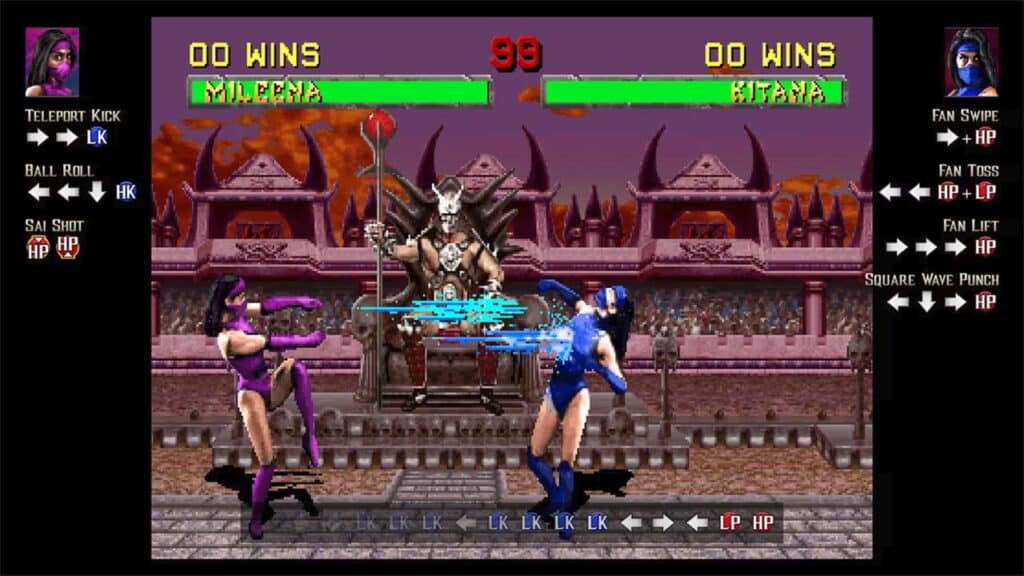
Jumping into Mortal Kombat: Legacy Kollection, it does not take long to feel how straightforward these games are. You feel it right away when you start moving. Every button press counts. If you throw something out, you’re stuck with it, so you have to mean it. Spacing matters more than chasing long combo strings, especially in the earlier games. When everything clicks, one well-timed uppercut or sweep can turn a round around fast. That moment still hits the same way it always did.
At the same time, the age shows fast. Computer opponents react instantly, block with perfect timing, and punish mistakes in ways that feel less like mind games and more like pattern recognition. You notice it most during ladder runs, where a match can swing from controlled to overwhelming in seconds. That friction is part of Mortal Kombat’s arcade roots, but it can wear you down quickly.

This is where the collection’s modern tools matter. Rewind and save states turn trial-and-error into learning instead of repetition. You can test spacing, retry a bad read, or experiment with risky moves without restarting entire runs. Training modes and on-screen move lists help too, especially when jumping between versions that handle slightly differently. Being able to pin moves to the screen keeps the focus on timing and positioning instead of memorization.
The mix of versions also changes how matches feel. Arcade releases tend to be faster and harsher. Console ports slow things down, sometimes for better, sometimes not. Handheld entries often feel compromised, though they remain interesting to poke at in short bursts. Moving between them highlights just how much presentation and input response shaped each release.
Playing locally with someone else still brings out the best side of these games. The unfair edges fade, replaced by reads, reactions, and simple mind games. With the added options layered on top, the collection makes it easier to meet these classics halfway. You feel their limits, but you are no longer trapped by them.
Playing Through Mortal Kombat’s History
The interactive documentary ends up being one of the most rewarding parts of Mortal Kombat: Legacy Kollection, even if you do not plan to watch everything in one sitting. Instead of feeling like a bonus menu tucked away in the background, it works more like a place you keep coming back to between matches.
The timeline walks through Mortal Kombat’s early years in a way that feels easy to follow. You move from early concepts and technical challenges into the arcade releases, home ports, and the strange side projects that followed. Video clips, photos, documents, and interviews are mixed together without overwhelming you. It never feels like homework. You can jump in, watch a segment, then jump back into a game with a better sense of why it plays the way it does.
What helps is how personal the material feels. Hearing developers talk through decisions, limitations, and experiments gives real weight to moments you might otherwise shrug off. Seeing early motion capture footage or rough assets adds context to the stiffness or quirks you still feel when playing today. It makes frustration easier to understand, and successes more satisfying.
The documentary spends most of its time on the arcade era, which makes sense given how much ground those early games covered. Later entries and spin-offs receive less attention, but they are still placed within the broader timeline. That balance keeps the focus clear without pretending every release carried the same importance.
In the end, the documentary reframes the collection. You are not just cycling through old games. You are stepping through a playable archive, where matches and history constantly inform each other. It is easy to dip into, hard to ignore, and surprisingly absorbing once you start clicking around.

Seeing These Games as They Were
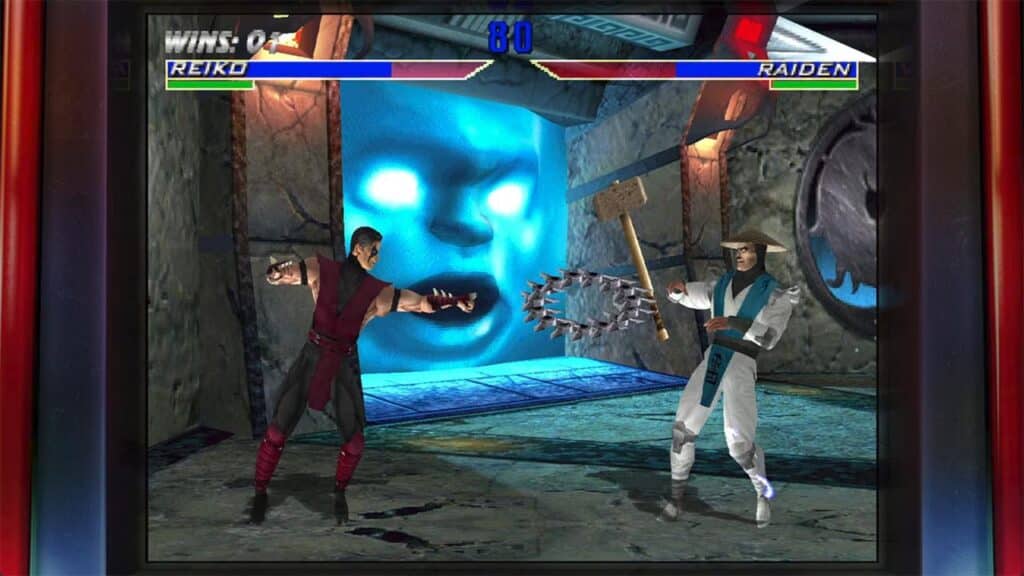
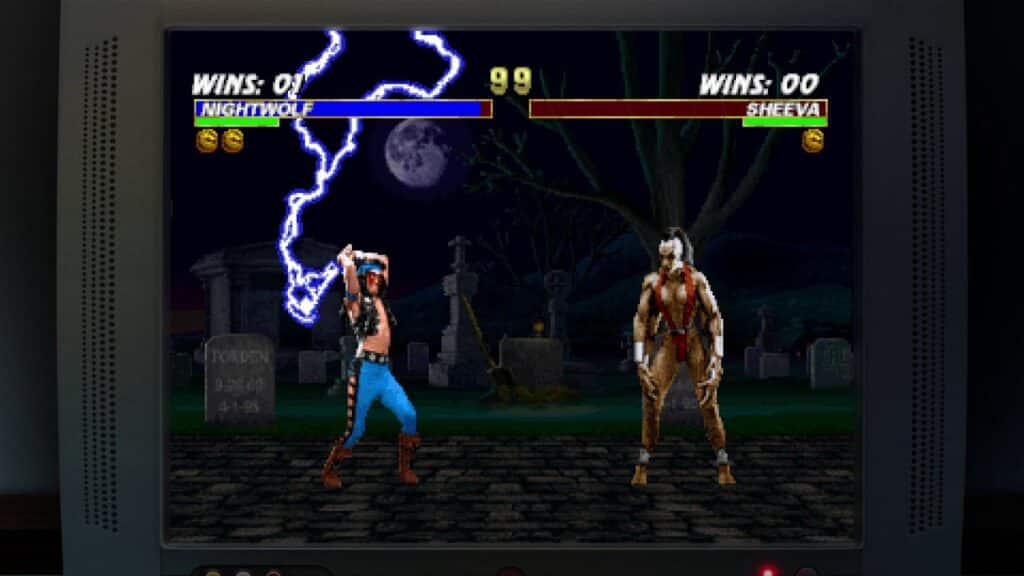
Visually, Mortal Kombat: Legacy Kollection does not try to dress these games up or smooth them over. What you see is close to how they looked back then, just with enough options to make them easier on modern screens. You can tweak the display, borders, and filters until it feels right for how you want to play, without feeling pushed in one direction.
The arcade games benefit the most from this approach. Sprites remain sharp and readable, and animation still carries a surprising amount of personality. You can see the intent behind each pose and strike, even when movement feels stiff by modern standards. Console and handheld versions vary more, especially when jumping between platforms, but the collection does not try to disguise those differences. You see the compromises clearly.
Getting around the menus feels quick and painless. You can bounce between games, modes, and extras without waiting on slow transitions or digging through clutter. Important information sits close to where you need it, whether that is move lists, manuals, or control layouts. Nothing feels buried, which matters when you are jumping around a collection this packed.
The audio does its job. Hits still sound solid, and familiar effects come through clearly during a match. Music loops stay true to each version, and you start to notice the repetition during longer sessions. It feels very much of its time, which works for some games more than others.
One small frustration comes from how settings are handled. Visual and gameplay options are often adjusted on a per-game basis rather than globally. If you have strong preferences, you may find yourself repeating the same changes more often than you would like. In practice, the presentation rarely pulls attention away from the games themselves. It lets you focus on playing, not tweaking settings every few minutes. You see these games clearly for what they are, quirks included, without feeling pushed toward a specific way to experience them.
Mortal Kombat Works Best When Playing With Others
Playing Mortal Kombat: Legacy Kollection with someone else changes the feel of these games almost immediately. Many of the frustrations that show up when playing against the computer fade once you are facing another human. Matches become about reads, spacing, and timing instead of surviving relentless reactions. That is where the older entries still shine the most.
Local play is straightforward and easy to set up. Versus modes load quickly, character select stays snappy, and the added options help smooth things out. Being able to adjust settings, toggle secrets, or jump straight back into a rematch keeps sessions moving. It feels well suited for quick couch sessions or longer sets without unnecessary interruptions.
Online play works, but it feels more limited. Matches are supported by rollback netcode, and when connections are stable, fights play out cleanly enough to stay readable. You can focus on the match instead of fighting input delay. That said, the structure around online play is fairly bare. You are mostly jumping into direct matches rather than spending time in larger social spaces.


Because each game version queues separately, the experience can feel fragmented. Switching between different entries often means starting fresh rather than carrying momentum forward. It is functional, but it does not always feel lively, especially outside of peak hours.
Even with those limits, online play still adds value. It gives you a way to test skills against real opponents without needing someone nearby. More importantly, it highlights how well these games work when both sides are bound by the same rules. The collection does not reinvent multiplayer for classic Mortal Kombat, but it keeps it accessible and playable, which matters more than flashy extras.
Mortal Kombat: Legacy Kollection Shows Its History Without Hiding the Rough Edges
Mortal Kombat: Legacy Kollection succeeds because it does not try to flatten the series into a greatest hits reel. It leaves the rough edges visible. Some games still feel punishing. Others feel surprisingly playable once you settle into their pace. That honesty ends up being one of the collection’s biggest strengths.
What kept pulling me back was the balance between play and understanding. You can load up a match, get frustrated, rewind, and try again. Then you can step away and dig into why the game behaves the way it does. That back-and-forth makes the older design choices easier to accept, even when they still push back harder than expected.
Not everything here works evenly. A few entries remain difficult to enjoy beyond curiosity, even with modern tools helping smooth things out. Online play works, but it feels restrained compared to how lively these games feel locally. You notice those limits more once the novelty wears off.
Still, the care put into preserving options, versions, and context carries real weight. The documentary content gives meaning to the games beyond nostalgia, while the quality-of-life tools make experimenting possible without burning out. You are not being told how to feel about Mortal Kombat’s past. You are given space to explore it and form your own take.
This collection will mean the most to anyone curious about where Mortal Kombat came from and how those early ideas shaped the series. It rewards patience more than speed and curiosity more than mastery. If you are willing to meet it halfway, Mortal Kombat: Legacy Kollection offers a thoughtful way to revisit these games without pretending they were ever perfect.
Mortal Kombat: Legacy Kollection
Summary
Mortal Kombat: Legacy Kollection brings together the series’ early years with a focus on preservation, context, and player choice. Some games still feel tough and dated, but modern tools like rewind, training modes, and flexible settings make exploring them far more approachable. The interactive documentary adds meaningful background that helps explain both the highs and the frustrations. It is a collection that respects Mortal Kombat’s past without pretending it was ever flawless.
As always, remember to follow us on our social media platforms (e.g., Threads, X (Twitter), Bluesky, YouTube, and Facebook) to stay up-to-date with the latest news. This website contains affiliate links. We may receive a commission when you click on these links and make a purchase, at no extra cost to you. We are an independent site, and the opinions expressed here are our own.