


My Hero Academia: All’s Justice arrives as the third entry in Bandai Namco’s arena fighter series, picking up where the earlier games left off and focusing squarely on the closing stretch of the anime. This time, the scope is narrower and more specific. Instead of retelling the series from the beginning, All’s Justice concentrates on the final conflict, bringing together a large roster and a set of modes built around that conclusion.
Structurally, this is still a 3D arena fighter built around fast exchanges, exaggerated abilities, and team-based battles. What changes here is how much time the game asks you to spend outside straight versus matches. Alongside the core fighting systems, All’s Justice introduces a hub-based setup, side activities, and character-focused content that aims to stretch the experience beyond isolated fights.


That approach shapes the entire game. Combat remains the foundation, but progression, story delivery, and extra modes all play a larger role in how your time is divided. How well that balance works comes down to how these pieces hold together across the full experience.
The Final Arc Told in Fragments and Key Moments
The story mode in All’s Justice focuses entirely on the last stretch of the anime, covering the closing conflict rather than retracing earlier seasons. It opens right as the plan to split the League of Villains is already in motion, dropping you into key confrontations without much buildup. If you’re coming in with the anime or manga fresh in mind, the context is there. If not, the game expects you to already understand how these events connect.
Story progression moves between three presentation styles. Some moments use fully animated cutscenes, blending anime footage with in-engine scenes to recreate major battles. Others rely on still images pulled from the show, presented with light camera movement and voice work layered on top. The rest of the story plays out through fights themselves, with short recaps setting the scene before dialogue continues during combat.
That mix creates a stop-and-start rhythm. The animated sequences do a good job of conveying scale and stakes, especially during headline confrontations. The still-image segments, by comparison, play more like summaries than scenes, moving the plot forward without giving events much room to settle. Battles help bridge that gap by letting dialogue unfold as you fight, but they can’t always fill in what’s missing between major beats.
There’s also the question of what isn’t here. Seasons five and six are largely missing from the main story flow, which leaves noticeable gaps between earlier games and this finale. The game tries to address that through optional modes that revisit select moments, but those additions function more as reminders than full narrative bridges. As a result, the story mode works best as a companion to the anime’s ending rather than a complete retelling on its own.

Combat Comes First
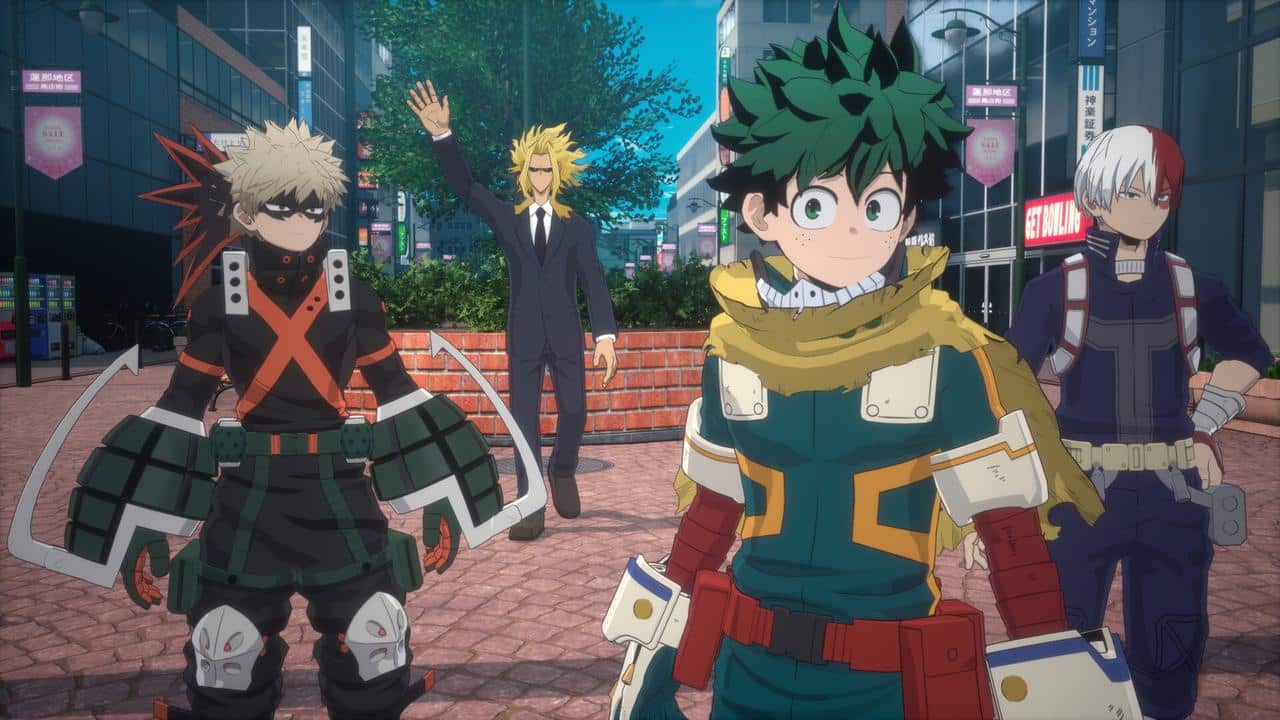
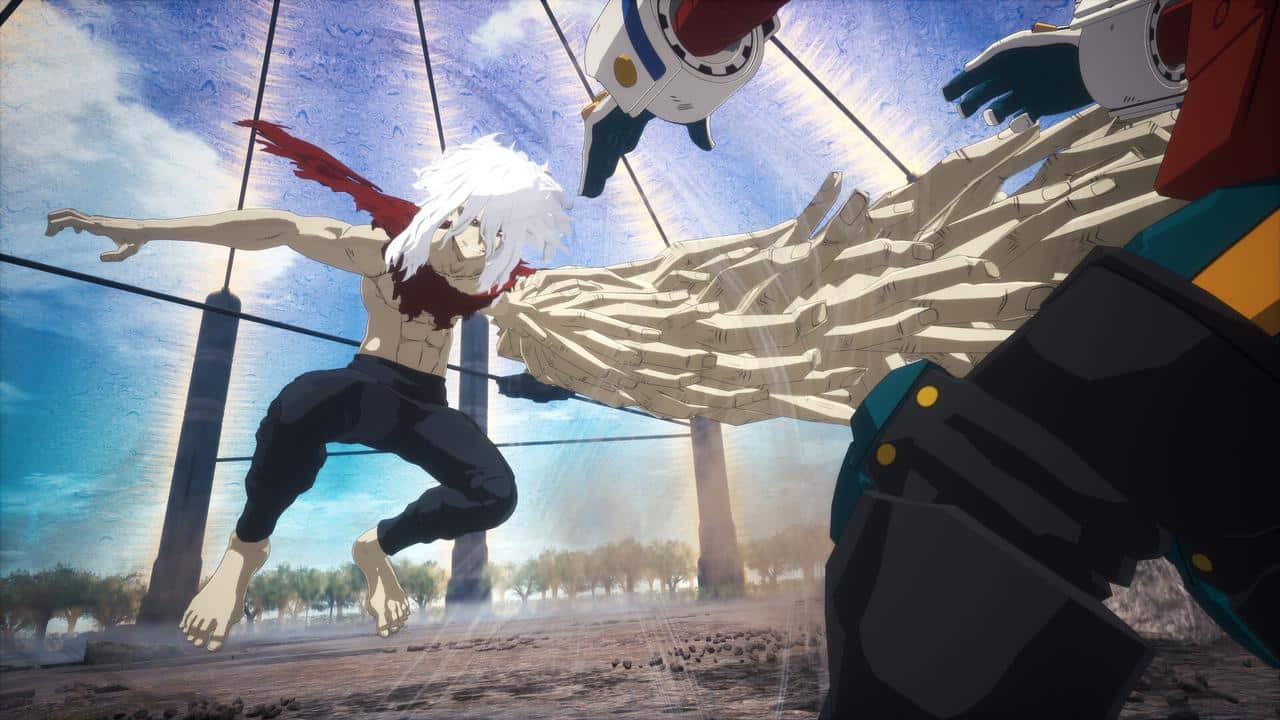
Gameplay in All’s Justice centres on fast 3D arena battles built around teams of three. Each fight keeps you focused on positioning, timing, and switching between characters rather than managing long rounds or layered systems. Matches move quickly, and the emphasis stays on chaining attacks, reacting to pressure, and knowing when to bring a partner into the fight.
You choose between two control styles at the start. One option simplifies inputs, letting combos and character switches flow with minimal setup. The other gives you direct control over attacks and timing. Starting with the simplified option makes it easier to read how characters behave early on, while the manual setup rewards familiarity with spacing and counters once you settle into the rhythm. Both approaches share the same core layout, so switching between them feels more like a change in precision than a change in design.
Teams, Counters, and Match Flow
Combat itself follows a clear hierarchy. Basic attack strings, counters, and unblockable strikes interact in a predictable way, which keeps exchanges readable even when the screen fills up. Each character brings a distinct set of abilities tied to their quirk, with variations depending on movement and input timing. That variety matters more than raw damage output. Team composition shapes how fights unfold, since partners are full participants rather than passive assists. Choosing who you bring affects coverage, recovery options, and how you extend pressure during longer encounters.
Outside straight versus battles, the game asks you to engage with a hub-based setup that feeds back into fighting. Team-Up Missions place you in a virtual city where battles, side objectives, and traversal are tied together. Movement abilities differ by character, so swapping team members changes how you reach objectives and navigate space. Some characters handle vertical movement with ease, while others are better suited to ground-level routes. Progress carries across modes, unlocking characters and cosmetic rewards as you go.
That structure gives you more to do between fights, but it also changes pacing. Combat remains the most consistent part of the experience, while traversal and side objectives act as connective tissue rather than centrepieces. If you enjoy spending time learning how different characters handle and experimenting with team setups, the loop supports that. If you’re looking purely for tightly focused battles, the surrounding structure can feel like extra steps before getting back into the arena.
The Look and Sound of the Series
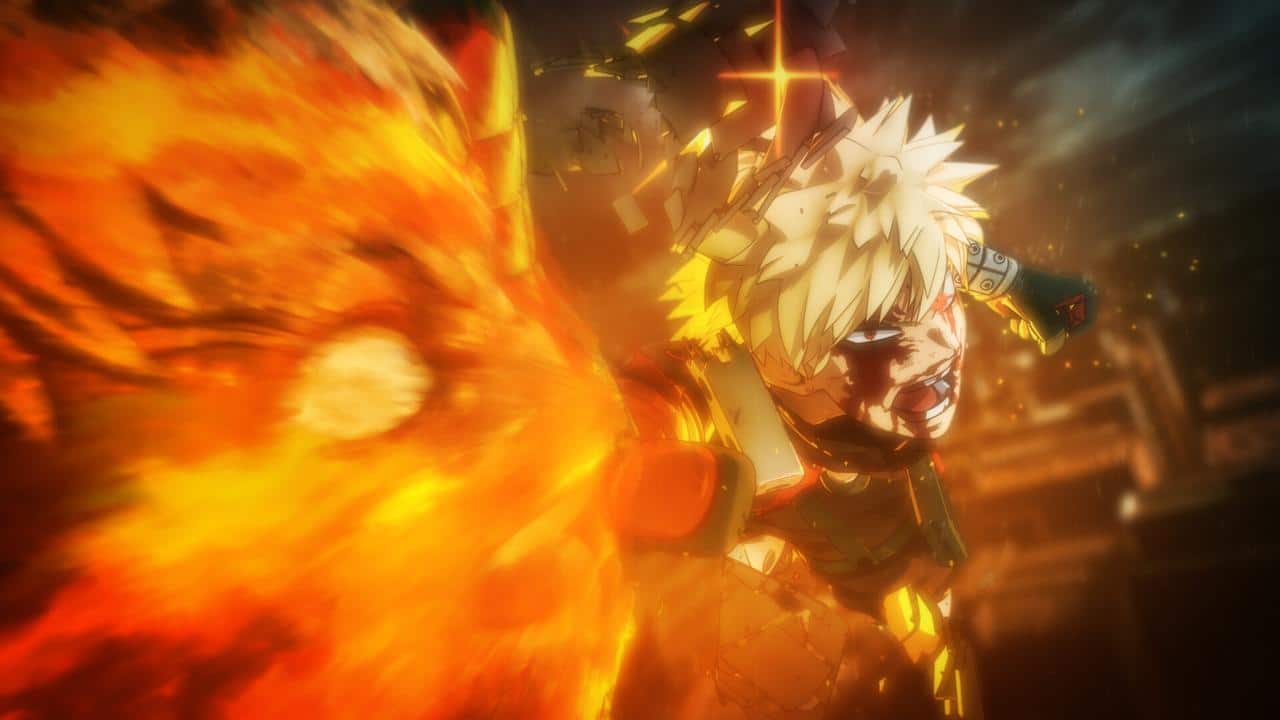
Visually, All’s Justice stays close to the style set by the earlier games. Character models match their anime counterparts well, with bold outlines and expressive animations that sell each attack. During fights, the screen fills with colour and effects without becoming hard to read, even when multiple characters are active at once. In motion, it looks like My Hero Academia.
Cutscenes are where presentation becomes less consistent. Fully animated sequences handle major moments well, using a mix of in-engine animation and anime footage to give key scenes some weight. Other sections rely on still images from the show, paired with light camera movement and voice acting. These moments move the story forward, but they come across more like quick recaps than fully played-out scenes, which can break the flow between animated sequences.
Audio work is solid overall. Both Japanese and English voice tracks are available, and most of the main cast is present. During battles, voice lines help sell the exchanges, though repetition becomes noticeable over longer stretches, especially in modes built around frequent encounters. The music supports the action with familiar heroic themes without overpowering what’s happening on screen.
From a performance perspective, combat holds up well. Fights remain responsive and readable, even when effects stack up. The hub areas are more demanding, with movement and camera behaviour that can feel less precise than during matches. Those moments don’t derail the experience, but they make the contrast between combat and exploration more apparent.
Overall, the presentation works best when the game stays focused on fights and animated story moments. That’s where it feels closest to the anime and most put together.
My Hero Academia: All’s Justice Nails the Fighting, With Some Trade-Offs
When you’re in a fight, My Hero Academia: All’s Justice does what you’d expect from the series and does it well. The combat is quick to read, team switching matters, and the roster gives you plenty of room to mess around with different combinations. If you enjoy learning how characters fit together and figuring out your own rhythm in battles, that part clicks quickly.
Everything around the fighting is less consistent. The story hits harder during animated scenes and major showdowns, but the jumps between moments can feel abrupt. Some arcs are brushed past, and the game often assumes you already know why a battle matters. The extra modes give you more excuses to spend time with the cast, but they don’t always feel as focused or polished as the core combat.
If you’ve been following the anime through to the end, this plays well as a way to revisit the finale and spend more time with a huge lineup of characters. If you haven’t, it can feel like you’re being dropped into the middle of things and asked to keep up. Stick with it for the fights, and there’s a lot to enjoy there, even if the rest of the package doesn’t always keep the same pace.
My Hero Academia: All’s Justice
Summary



My Hero Academia: All’s Justice delivers its best moments in combat, where fast team-based fights and a large roster give you plenty to explore. Animated story scenes add weight to the finale, but heavy summarization and skipped arcs make the narrative less complete on its own. Extra modes add time with the cast, though they don’t always match the strength of the core battles. If you’re invested in the series and want a solid arena fighter, there’s a lot here to enjoy.
As always, remember to follow us on our social media platforms (e.g., Threads, X (Twitter), Bluesky, YouTube, and Facebook) to stay up-to-date with the latest news. This website contains affiliate links. We may receive a commission when you click on these links and make a purchase, at no extra cost to you. We are an independent site, and the opinions expressed here are our own.