


Neon Inferno puts you right into the action and expects you to keep up. Bullets are always on the move, enemies come in fast, and you quickly learn that staying mobile matters more than playing it safe. It’s a 2D shooter that asks you to pay attention and react quickly, especially as things start getting busier on screen.
You play as Angelo Morano or Mariana Vitti in a neon-lit New York that has fallen apart. The story mostly sets the scene and then steps aside, letting the shooting do the talking. Right away, everything feels responsive. Jumping, dodging, and firing all stay tight even when enemies are attacking from different angles, including straight out of the background.




Neon Inferno is built with arcade habits in mind. You replay stages, learn where threats come from, and slowly clean up your runs. Whether you play on your own or with a second player in local co-op, the focus stays on movement, timing, and getting better each time you hit restart.
A City Past the Point of Fixing
Neon Inferno is set in a future version of New York where crime and corruption have completely taken over. The city is divided between rival factions, with gangs, crooked police, and criminal families all fighting for control. It is not a story that asks you to keep track of complex alliances or long backstories. Instead, it exists to give the action a clear place and tone.
You play as Angelo Morano or Mariana Vitti, two enforcers cutting a path through the city one mission at a time. The game keeps their motivations simple and largely in the background, which works well for this kind of experience. Cutscenes are short, and the focus stays on moving from one location to the next without slowing things down.
The setting does most of the storytelling. Neon-lit streets, industrial rooftops, and underground spaces all reinforce the sense of a city that has slipped beyond control. Neon Inferno uses its world to frame the action rather than interrupt it, letting the shooting and movement stay front and centre.

Running, Gunning, and Keeping Track of Everything
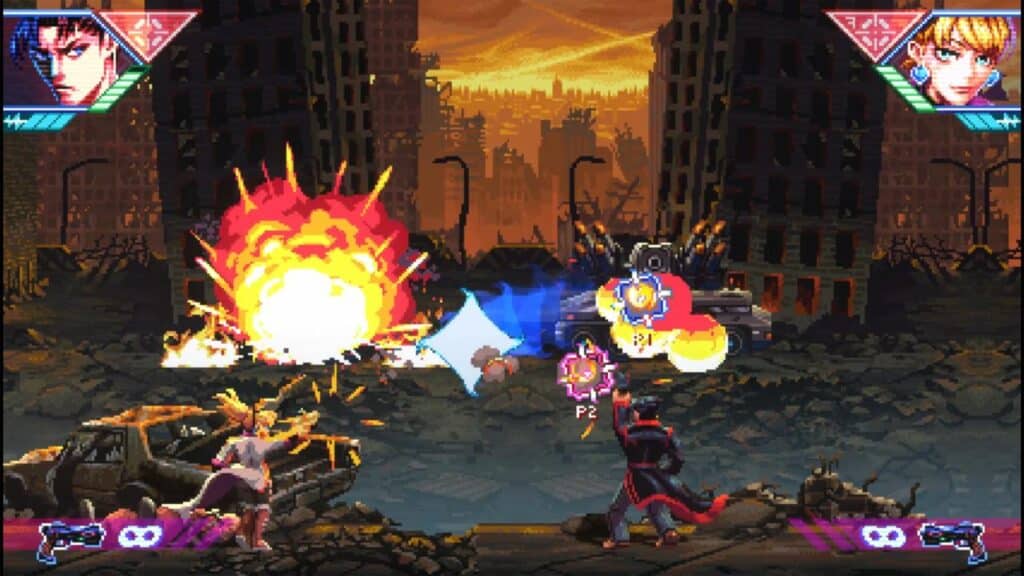
At its core, Neon Inferno plays like a classic run-and-gun, but it asks more of you than just shooting what’s directly in front of you. You are moving, jumping, dodging, and firing almost constantly, while also keeping an eye on enemies that sit deeper in the background. That constant split in attention is where the game sets itself apart, and it quickly becomes part of how you read each encounter.

Movement feels fast but controlled. When you jump or change direction, the character goes exactly where you expect, and the dodge is there to save you when you mistime something without letting you bail out for free. Shooting stays tight even when a lot is happening at once, which really matters once enemies and bullets start piling up on screen.
The background targeting is what really changes how you approach fights. Instead of feeling like a separate mode, it blends into the core controls and asks you to decide where your focus needs to be in the moment. The game does a good job of keeping those situations readable, even as more threats start stacking up.
Combat has a solid sense of weight to it. Enemies react clearly when you land hits, and tools like melee strikes and bullet deflection give you more options than just holding down the fire button. Neon Inferno feels strongest when you stay active, move with purpose, and respond to what the screen is throwing at you.
How Combat Builds and Holds Pressure
Neon Inferno does a good job of pushing you without overwhelming you all at once. Early stages give you space to learn enemy patterns and get comfortable juggling foreground and background threats. As you move deeper into the game, encounters start layering more enemies, tighter timing windows, and fewer safe spots to stand still.
Boss fights are where that pressure really comes together. Each one asks you to read patterns, react quickly, and stay calm while the screen fills with movement. Fights tend to evolve instead of dragging on, which keeps them engaging without feeling exhausting. You are rarely just unloading shots and waiting for the fight to end.
Stage flow also helps keep things moving. Neon Inferno mixes straight-ahead action with short shifts in pace, whether that’s a change in enemy behaviour or a sudden spike in incoming fire. The result is a game that stays demanding but fair, especially once you start understanding how each level wants you to move and where it wants your attention.

Neon Lights, Loud Guns, and No Guesswork
Neon Inferno looks great in motion. The neon-heavy city, chunky sprites, and constant movement give it that classic arcade feel right away, but it never feels flat or dull. There’s always something happening on screen, whether it’s background animation, enemies moving into position, or small details that make each area feel alive.

Even when things get busy, the game usually stays readable. Enemies that matter stand out, and you can tell at a glance where the real danger is coming from. There are moments where the screen fills up fast, especially later on, but it feels intentional. You’re meant to stay alert, not squint and guess what hit you.
The music does a lot of quiet work here. It keeps pushing you forward without demanding attention, which is exactly what you want in a game this fast. Tracks hit hard during fights, then fade into the background once you lock in. Sound effects help sell the action too. Shots feel punchy, hits land with weight, and enemy attacks give you enough audio feedback to react without overwhelming everything else.
Taken together, the presentation backs up the gameplay instead of getting in its way. Everything looks sharp, sounds great, and keeps the focus where it belongs, on staying alive and pushing forward.

Neon Inferno Delivers Fast Arcade Action That Rewards Practice
Neon Inferno is the kind of game that asks you to stay locked in from start to finish. Your hands are always busy, your eyes are tracking multiple threats, and once it all comes together, the action starts to feel really satisfying in motion.
The experience holds together well the longer you play. Controls stay responsive, combat keeps nudging you to clean up your mistakes, and the presentation supports what’s happening on screen without pulling attention away from it. When you go down, it usually feels like something you can learn from, which makes jumping back into a stage feel natural instead of frustrating.
If you enjoy arcade-style shooters that reward practice and focus, Neon Inferno is an easy one to recommend. It doesn’t overreach or pretend to be something it isn’t. It sticks to its strengths and gives you plenty of reasons to come back and try for a cleaner run.
Neon Inferno Review
Summary



Neon Inferno keeps things focused on fast action and tight controls. The mix of run-and-gun shooting and background targeting stays engaging, and the visuals and sound fit the action well. The story stays light, but the real pull is learning the stages and improving your runs. If you enjoy arcade-style shooters that reward practice, Neon Inferno is easy to recommend.
As always, remember to follow us on our social media platforms (e.g., Threads, X (Twitter), Bluesky, YouTube, and Facebook) to stay up-to-date with the latest news. This website contains affiliate links. We may receive a commission when you click on these links and make a purchase, at no extra cost to you. We are an independent site, and the opinions expressed here are our own.