



I’ve always had a massive soft spot for games that let you pack up a vehicle and drive directly into the unknown, whether it’s managing a station wagon in Pacific Drive or coaxing a junker down the road in Jalopy. When Square Glade Games first announced Outbound, the concept of a modular electric camper van acting as a rolling base caught my eye right away. Outbound sets itself apart from the competition by shifting your entire survival strategy onto four wheels. Cruising around the map in a mobile home base adds an entirely distinct perspective to a survival genre that usually keeps you completely anchored to a single plot of dirt.
You start by adjusting your survivor in a character creator that you look at through the camper window. From there, you get a choice of three starting campers, each offering distinct building space, weight limits, and handling attributes. It forces you to think about how you want to expand your mobile home right from the drop. Choosing a heavier van gives you more room to grow your build over time, though the differences between all three are smaller than they first appear. Once you clear that initial choice, Outbound pushes you out into the wild to hunt for basic resources and trash.




Core gameplay focuses on a continuous circle of scavenging, crafting, exploring, and driving across the map. Your rolling house isn’t just a temporary gimmick. You’re constantly adjusting how you manage space inside the chassis. You can craft everything from a basic campfire grill to a full rain catcher assembly inside your personal workshop in the van trunk or at built-in crafting stations. It creates a distinct pacing that handles base building differently than most games in the genre, though the driving itself takes a back seat to the constant search for garbage. When you’re managing space inside a tight vehicle interior, every single decorative chair or processing station layout choice matters immensely.
Busted infrastructure guides your road trip through an empty landscape
Outbound doesn’t rely on screens of text or long cinematic sequences to tell you why you’re out in the wilderness. Instead, the experience relies on environmental storytelling and occasional self-narration lines that trigger based on specific events. When you drive into a new area or find an old structure, your character blurts out a quick observation. It keeps you connected to the isolated world without forcing you to sit through dry lore dumps. The progression feels entirely driven by your own curiosity as you discover landmarks scattered across the landscape.
Your main overarching goals come from helping the world regain its footing through small repair tasks. The map hits you with a steady stream of busted droids, dead windmills, and collapsed bridges that completely block the road until you get your hands dirty fixing them. Mending a lighthouse lamp or rebuilding a collapsed bridge gives the open road a clear shape. In my time with Outbound, restarting a broken droid gave me a clear sense of purpose that pushed me to explore further down the road. You aren’t saving the planet from an alien threat, but patching up a bridge or poking around one of the abandoned lodges scattered across the map gives the exploration an organic direction.
Finding map campfires also acts as a secondary goal. These spots function as tracking collectibles, usually hiding adjacent loot chests next to non-interactive tents. I highly recommend stopping your camper at every single campfire you spot immediately to crack those chests. It saves you from running out of materials when trying to build new camper parts later. These spots flesh out the sense of an abandoned world that you’re slowly bringing back to life, block by block, as you drive your van through the wilderness. It gives you a great excuse to poke around every corner.

Modular rooftop additions automatically vanish when you hit the gas
Building multi-floored houses directly on top of your van roof is an absolute blast. The customization layout lets you place processing machines, furniture, a library, and a bedroom inside, on top of, and around your camper. Outbound includes a clever architectural detail where your sprawling rooftop extensions fold away completely the second you pull out of park. They pop right back up the moment you shift into park. You must install engine modifications to increase your weight capacity limits and driving speed. Your camper steers with a loose, drifting feel that takes some getting used to, and clipping a tree or a rock never costs you anything since the van takes no structural damage at all.

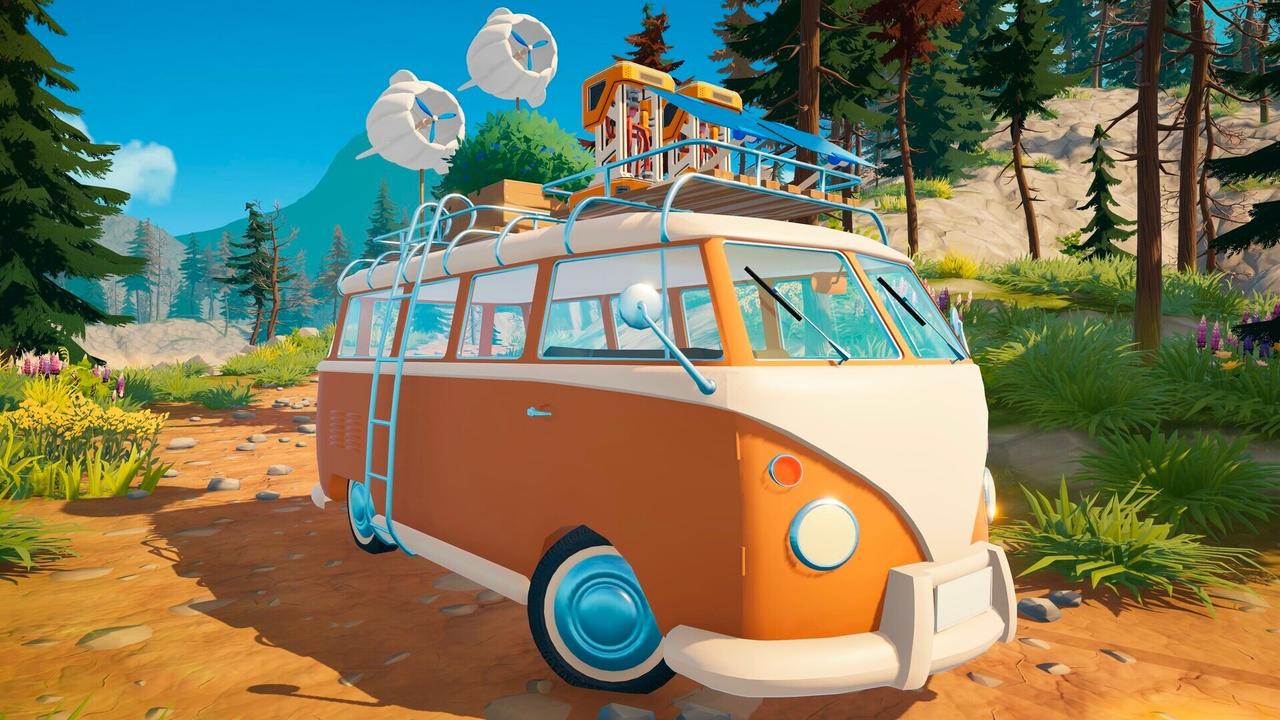
Scavenging the terrain requires tracking down rocks, fruit, litter, wood, and fibres. You can’t just tear through the woods with basic gear. Upgrading to Axe 2 lets you chop down a sturdy red oak tree. Similarly, using a Sickle or Pickaxe 2 clears advanced resource nodes to fill your personal workshop in the van trunk. Blueprints don’t unlock automatically through traditional leveling. you must gather scattered litter and run it through a recycling station to earn the tickets that power your blueprint searches. Activating radio towers or computers with these tickets lets you pick one blueprint from up to three random options.
Powering your portable factory requires a steady green energy configuration. You can build wind turbines, rain catchers, and solar panels that pull power from whatever the sky is doing at any given moment. If you want some assistance with your daily chores, you can adopt a pup. Your dog companion follows you around on foot, rides along in the van, and makes the whole isolated setup feel a lot less lonely. When you bring up to four people together in online cooperative play, the resource collection routine turns into a highly coordinated group project.
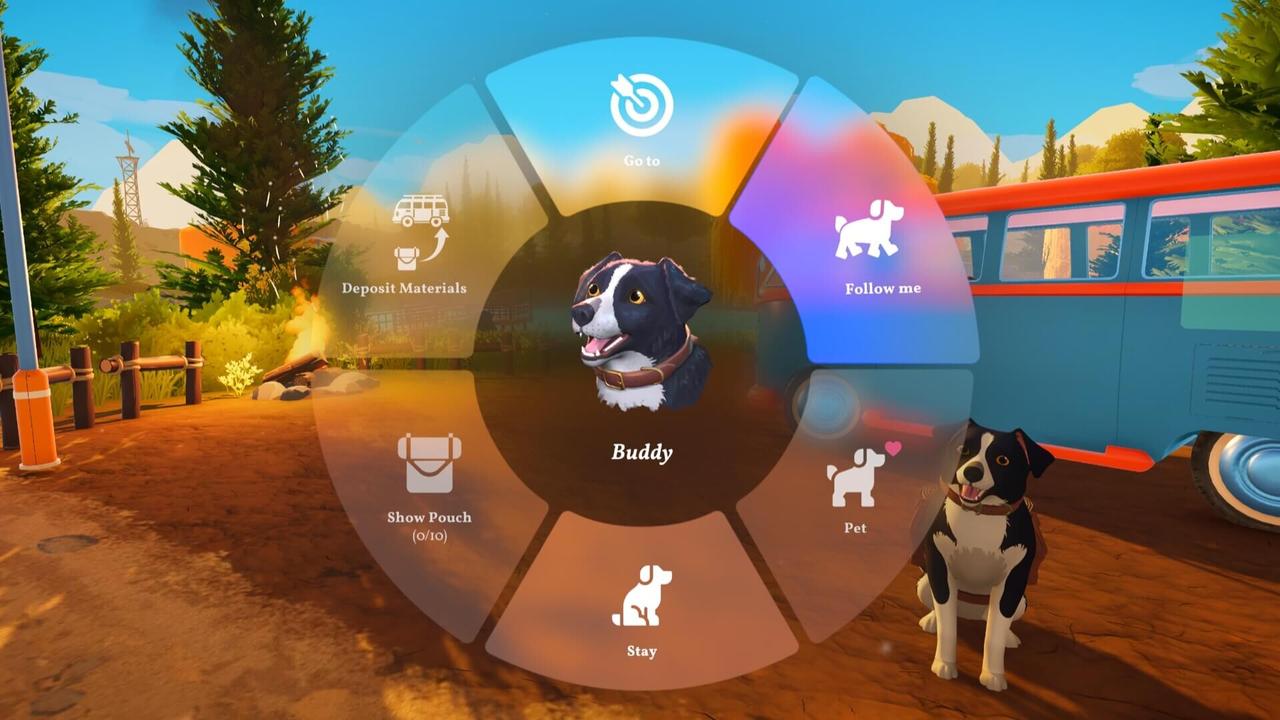
Sluggish dark restrictions choke your evening scavenging runs
Cruising across the map requires exploring four distinct areas. Including a hidden farm, a mountain waterfall, and a scenic beach cove. Every territory introduces specific material variations, but navigation functions suffer from some incredibly frustrating design choices. Outbound completely disables map interaction when you are behind the wheel. And the interface completely lacks tracking markers for resource nodes. You have to rely entirely on your personal visual memory. Even when you’ve cluttered your dashboard with tons of decorations, the menus look completely clean and the action doesn’t stutter or chug.
The UI tracks your physical capabilities through four distinct vital meters: hunger, stamina, health, and camper energy. You manage your diet by cultivating custom gardens to grow plants and mushrooms, which you mix at campfires to cook hearty meals. Looking closely at your camper, you can clearly see your custom character working inside through the glass panels. This adds an excellent touch of detail to your mobile home base.
Once the sun goes down, Outbound hits you with a bizarre restriction that disables running entirely. The second the sun goes down, your survivor is locked to a crawl with no override in sight, full health or not. To bypass this artificial speed restriction, you have to find and equip specialized night gear called homing boots. These boots grant a noticeable speed increase, but the speed boost only activates when you are facing directly toward your camper van. Walking away from your base in the dark still keeps you at a sluggish crawl, making late-night scavenging feel like a chore. It forces a strict strategic boundary where you must plan your day trips tightly before nightfall cuts your mobility in half.
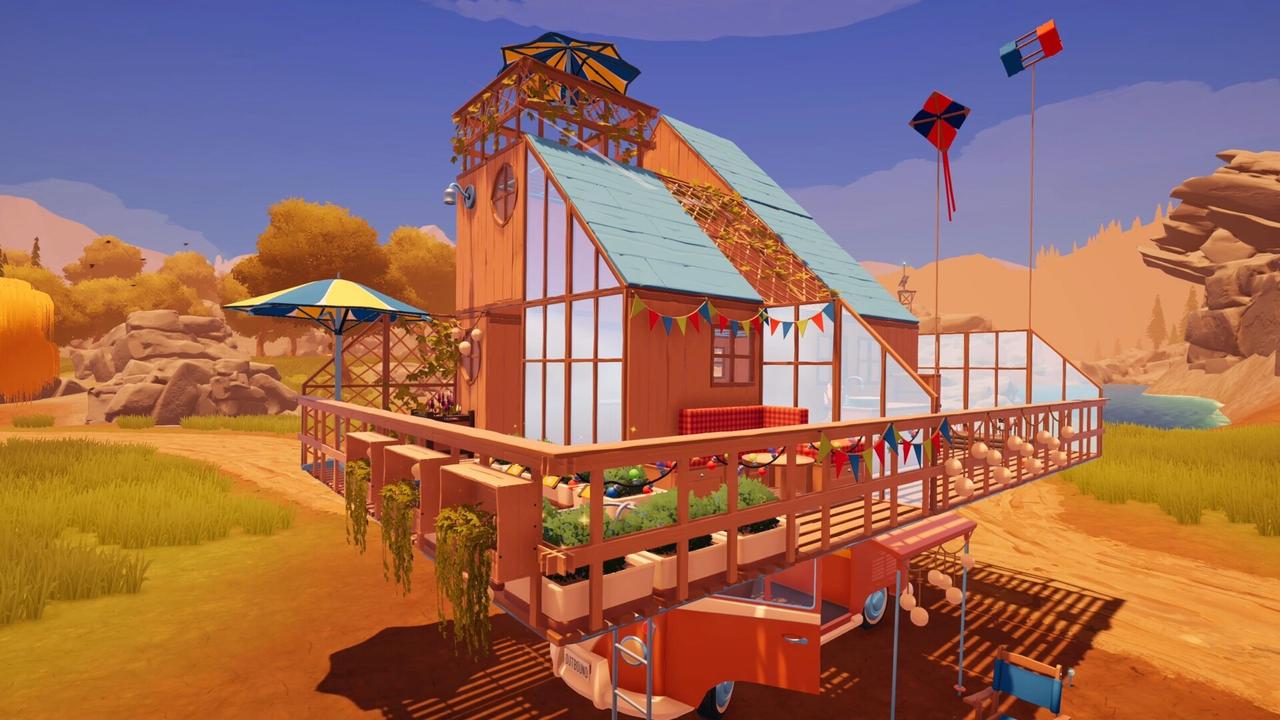
Outbound delivers a clever rolling homestead setup stalled by a slow recycling grind
Square Glade Games deserves a lot of credit for trying something genuinely different with Outbound in a crowded genre. They do this by combining open-road driving with deep resource gathering. Shifting base building into an electric camper van creates a fun dynamic. You are constantly calculating weight capacity limits against your desire to build a rolling castle. Parking your home next to a remote mountain waterfall lets you watch your solar panels juice up your crafting tables. It delivers a great road trip vibe. The option for four-player online cooperative play keeps the labour distribution light. This allows your crew to divide duties between fixing windmills, processing lumber, and training a dog companion.
The issue is that the progression framework hitches badly on a repetitive trash collection cycle. Forcing you to clear litter constantly just to secure the coupons needed for random radio tower blueprints. This makes the pacing drag by the third hour. You combine that slow progression circle with floaty driving handling and darkness rules that strip away your ability to run. Exploration loses its momentum. The total lack of resource map markers adds unnecessary confusion to your scavenging runs. This forces you to hunt blindly for basic items.

If you love cozy crafting experiences and want to build a custom vehicle complete with rain catchers, wind turbines, and a bobblehead nook, there’s some distinct enjoyment tucked inside this camper. You just have to accept that you’re signing up for a heavy garbage collection routine alongside your scenic vacation. Ultimately, Outbound stands as a decent crafting game because its best ideas stay locked behind a slow recycling structure, making it a road trip that requires serious patience from start to finish.
Outbound
Summary
Outbound delivers a unique spin on survival exploration by turning an electric camper van into a fully customizable mobile base. Driving through scenic biomes and modifying your rooftop homestead is incredibly charming, and it works wonderfully as a cooperative experience. However, Outbound unnecessarily anchors its blueprint progression behind a slow, repetitive recycling grind that forces you to hunt constantly for garbage. If you have the patience to dig through piles of litter for resource coupons, there is a cozy road trip worth taking here.
As always, remember to follow us on our social media platforms (e.g., Threads, X (Twitter), Bluesky, YouTube, and Facebook) to stay up-to-date with the latest news. This website contains affiliate links. We may receive a commission when you click on these links and make a purchase, at no extra cost to you. We are an independent site, and the opinions expressed here are our own.