


I picked up the original Pokémon games back in 1998 when they first came out. That first battle in Pallet Town turned into hundreds of hours across Red, Blue, Gold, Silver, and everything that came after. Years later, Animal Crossing: New Leaf pulled me into a different kind of loop entirely. The kind where you pick up your 3DS for twenty minutes and look up two hours later wondering where the evening went. When Pokémon Pokopia was announced, combining that same slow, satisfying build with the Pokémon world I’ve been in since the nineties, it felt like it was made for people like me.
The concept sounds almost too specific to work. You play as a Ditto who’s taken the shape of their missing trainer, dropped into a world where both humans and Pokémon have vanished, and tasked with rebuilding it from nothing. No gym badges, no rival, and no Pokémon League. Just a world that needs putting back together, one habitat at a time. Omega Force and The Pokémon Company had every opportunity to coast on that premise and deliver something forgettable. They didn’t. What they made is one of the most surprising Nintendo Switch 2 games available right now.



The World Pokémon Left Behind
Pokémon Pokopia doesn’t spell out its story. You piece it together yourself. Professor Tangrowth gets you started, but the real texture of the world comes from what you find as you explore. Journal entries, environmental details, and landmarks that longtime fans will recognize all build a picture of what this place used to be. Walking into that first empty region and realizing you’re the only one there is genuinely affecting in a way that sneaks up on you. The game never stops to explain everything. It trusts you to do that work.
Playing as Ditto is where the setup earns its cleverness. Your character’s entire reason for being here is tied to a trainer who’s no longer around. That gives you a reason to care about what you’re restoring without a single cutscene spelling it out. This was somebody’s world. Now it’s yours to bring back. That motivation ends up carrying the whole experience.
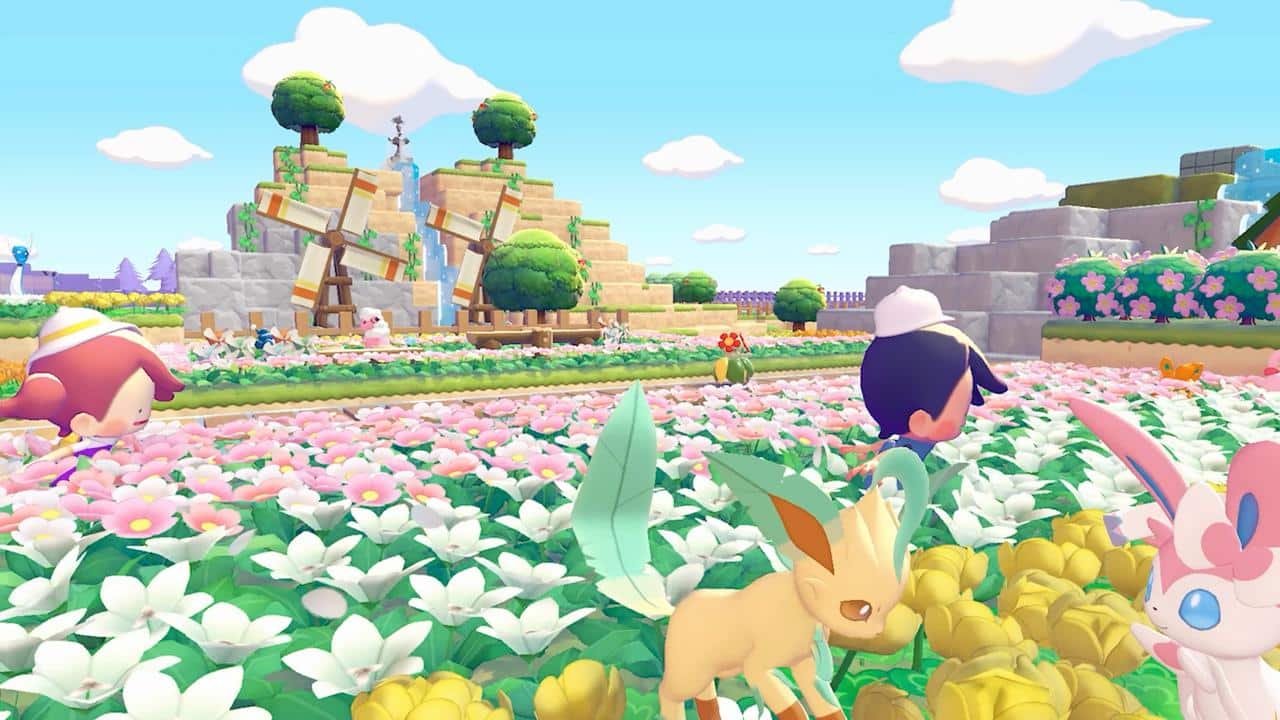
This is technically a post-human world, but Pokémon Pokopia keeps it feeling hopeful rather than bleak. As Pokémon return to the habitats you build, they go about their days, chat with each other, and make the world feel genuinely inhabited. Younger audiences won’t find anything here that feels out of place for the franchise. Longtime fans will keep running into small details that reward years of paying attention.
Ditto’s Toolkit and the Gameplay Loop That Keeps Building
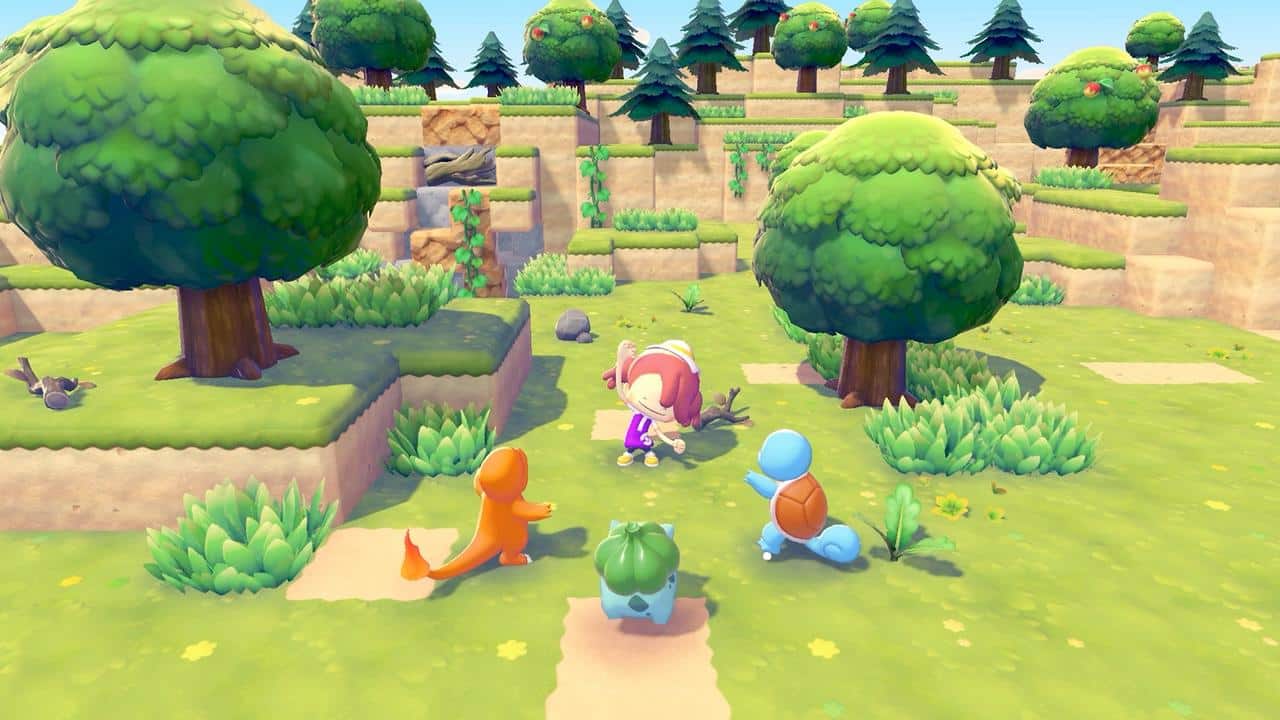
The gameplay loop starts simply. You copy moves from Pokémon you encounter and use them to reshape terrain. Squirtle’s Water Gun waters dry soil. Bulbasaur’s Leafage grows thick grass. Scyther teaches you Cut. Hitmonchan gives you Rock Smash. Within the first hour you’ve got a working toolkit, and new abilities keep arriving as you push into new regions. There’s a real satisfaction to that first moment when your toolkit is full enough to look at a blocked path and know exactly what to do with it.
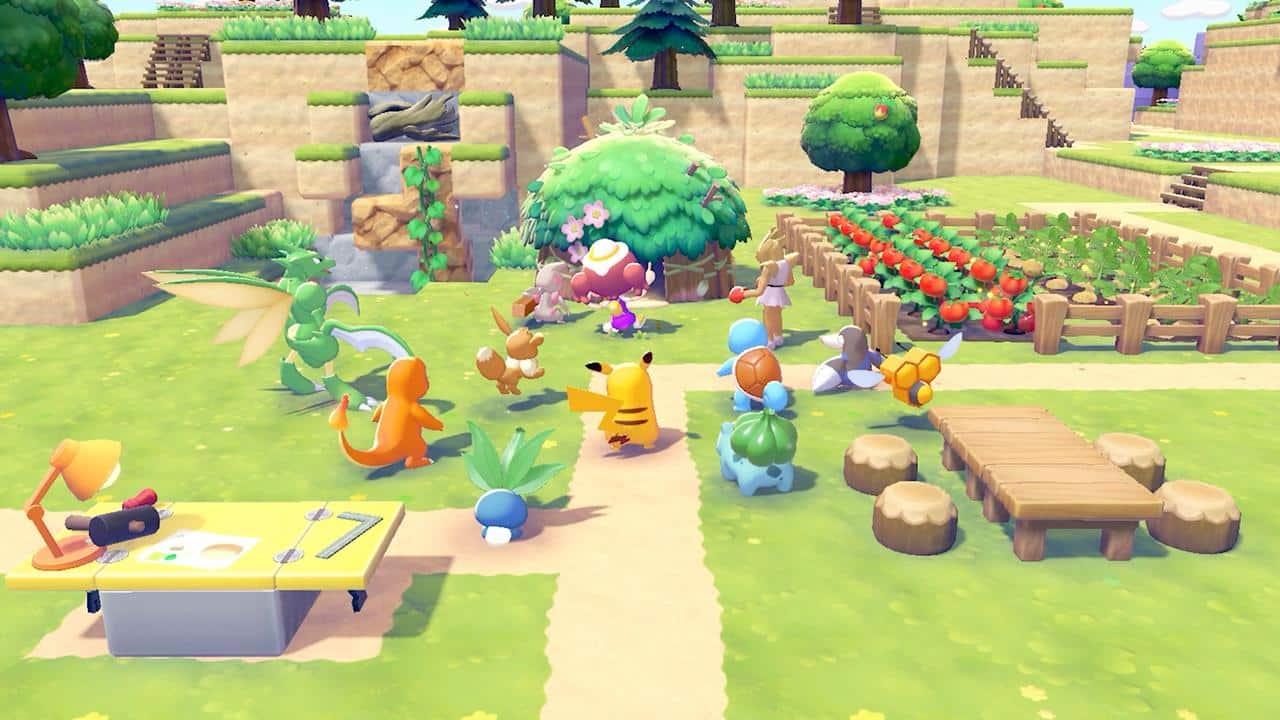
Each region has a set of habitats to restore. Sparkling cues in the environment tell you what kind of terrain a habitat needs. You shape the terrain to match, and Pokémon start showing up. Once they’re there, they don’t just stand around. They wander, maintain routines, and interact with the environment you built. Ask one to follow you and their abilities become practical. A fire-type lights a furnace. A grass-type tends a planted tree. Some help you locate Pokémon you’re still looking for. The follow mechanic never gets old because there’s always a reason to bring different partners along.

The game runs on real time, which adds more than you might expect. Some Pokémon only turn up during certain hours, so the time you play genuinely affects who you encounter. Construction takes real-world time too, anywhere from a short wait to coming back the next morning for larger projects. In most games that kind of pacing would kill the momentum. Here there’s always something else to do while you wait, so it rarely bothers you.
Regions That Keep Surprising You
Pokémon Pokopia has seven distinct regions, and each one arrives with a different theme, a different pool of Pokémon, and new wrinkles to the gameplay loop. A seaside area focused on building a small settlement plays differently from a mountainous zone with its own ecosystem and puzzles. The game introduces new ideas at a pace that never overwhelms, and each region manages to feel like a distinct place rather than a reskin of the one before.
Longtime fans will keep finding things to grin at. References to classic regions, familiar landmarks in unexpected contexts, and nods to the broader franchise history are hidden throughout. None of them are announced. Part of the fun is stumbling across them yourself.
That said, a few things genuinely got under my skin. Water Gun drops moisture in a fixed plus pattern, five squares at a time. Covering a wide area means going back over the same ground repeatedly, nudging the cursor into position for each pass. Rock Smash is less predictable. The number of blocks it breaks shifts depending on where you’re standing and how the camera is sitting, and getting it to hit exactly what you need takes trial and error every time.
Tracking down a specific Pokémon when you need one is harder than it needs to be too. Every Pokémon has unique abilities, and there are tasks that require a particular one. The filtering tools in the Pokédex help, but the interface doesn’t make it obvious enough how to use them. More than once a Pokémon that was definitely around earlier had simply wandered off with no clear way to find it quickly.
Inventory management gets unwieldy as the game opens up as well. Storage is scattered across regions, and keeping track of which materials are where becomes genuinely tricky once you’ve got several regions on the go at once. None of these are dealbreakers, but they’re real and they add up.
Every Region Looks Like Somewhere Worth Visiting
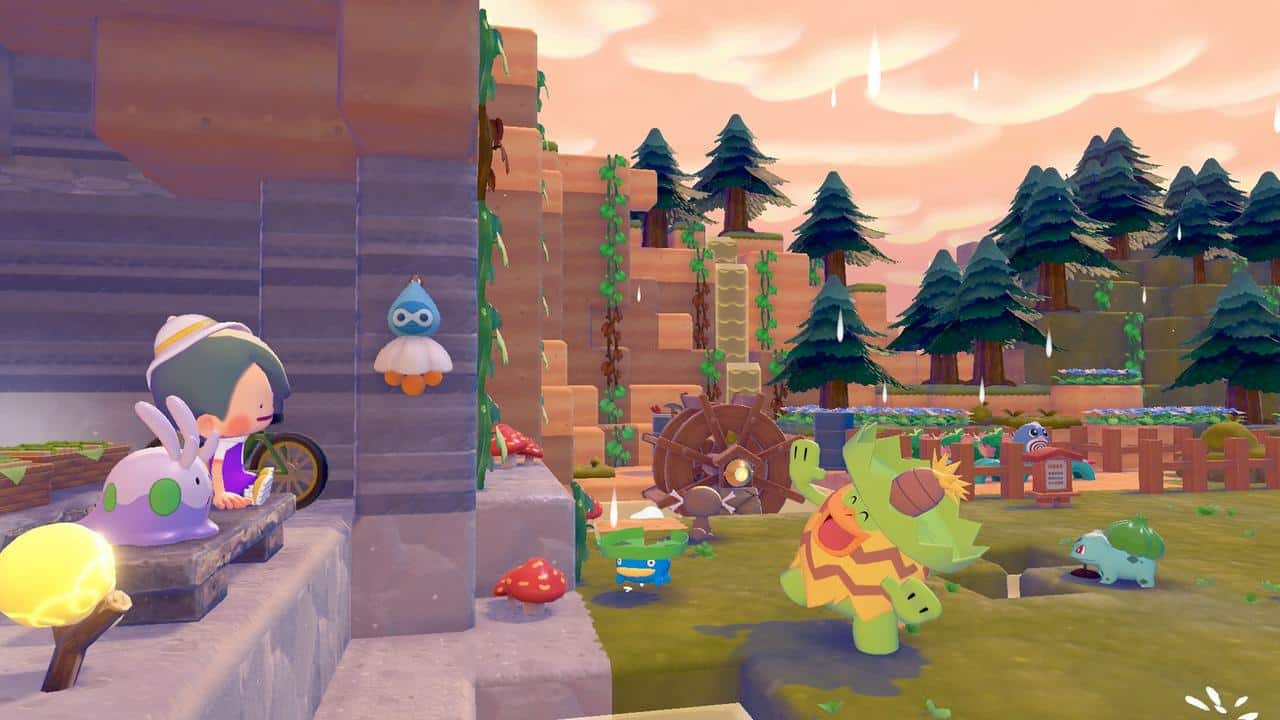
The visual approach sits somewhere between the bold colours of the mainline series and the gentler palette you’d expect from a life sim. Rather than clashing, the two styles complement each other. Every region looks distinct. Coastal areas are wide and sun-bleached. Mountain zones close in and go darker. Moving from one to the next never gets repetitive.
The Pokémon animations are where the presentation does its best work. Every Pokémon you bring into your world moves and reacts like it’s got somewhere to be. Watching them interact with the habitats you built, going about their own routines, responding to each other, is the kind of detail that makes the whole project feel worth doing. Environmental details scattered through each region reward slowing down rather than rushing ahead.
None of it slows the Nintendo Switch 2 down for a second. A full habitat with a dozen Pokémon going about their routines, ongoing build timers ticking in the background, and new arrivals wandering in at the same time, the whole thing stays smooth. The game held up across the entire playthrough without a single crash or technical hiccup.
The music settles into whatever region you’re in without drawing attention to itself, which is exactly what a game like this needs. The Pokémon sound effects are the best part of it though. If you’ve been with the series long enough, hearing a familiar cry pop up in a habitat you just restored hits differently than you’d expect.
Pokémon Pokopia Is One of the Best Reasons to Own a Nintendo Switch 2
Pokémon Pokopia isn’t a perfect game. The aiming needs work. Tracking down a specific Pokémon when you need one is more trouble than it should be. Inventory management loses the plot as the game grows. These are real criticisms and they belong in the conversation.
But none of them made the game less worth playing. The habitat gameplay loop is genuinely satisfying from the first hour through the last. New regions keep arriving with ideas you haven’t seen yet. The Pokémon in Pokopia have more life in them than in most entries in the main series. The world is genuinely worth building. And the Nintendo Switch 2 gives it the room it needs to do everything it wants to do without compromise.
If you’ve been with Pokémon since the beginning, Pokopia feels built for you. If the Animal Crossing-style loop of checking in daily and watching something grow has ever pulled you in, this is one of the best reasons to own a Nintendo Switch 2 right now. You’ll probably finish your first region and immediately want to know what the next one looks like. That’s exactly the kind of pull this game has, and it doesn’t let go.
Pokémon Pokopia
Summary
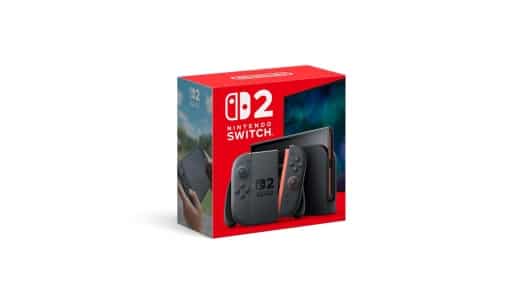
Omega Force and The Pokémon Company built something genuinely unexpected here. Seven distinct regions, a gameplay loop that keeps adding new wrinkles, Pokémon that feel like actual companions rather than decorations, and a world that rewards you for taking your time with it. The aiming on certain abilities is loose, tracking down specific Pokémon when you need them is harder than it should be, and inventory management gets messy as the game grows. But none of that stopped me from coming back. If you’ve been with Pokémon since the beginning, or if the idea of checking in daily to watch something you built slowly come to life sounds like your kind of game, Pokémon Pokopia is one of the best reasons to own a Nintendo Switch 2 right now.
As always, remember to follow us on our social media platforms (e.g., Threads, X (Twitter), Bluesky, YouTube, and Facebook) to stay up-to-date with the latest news. This website contains affiliate links. We may receive a commission when you click on these links and make a purchase, at no extra cost to you. We are an independent site, and the opinions expressed here are our own.