



I died repeatedly on an alien planet over the last several days. Housemarque is back with Saros for the PlayStation 5. As someone who played Returnal until my thumbs blistered, I knew I was walking into a meat grinder. I wanted to know if this new release would just recycle that punishing formula or do something completely different. My first ten attempts ended in a chaotic blur of neon projectiles and quick deaths. I distinctly remember getting cornered by a sentinel in the first biome. I thought I had lost everything.
Does the new permanent progression actually make the difficulty more manageable? The short answer is yes. By letting you keep Lucenite to upgrade your armour matrix after every death, Housemarque smoothed out the brutal learning curve. You don’t just bash your head against a wall hoping for better weapon drops. You actively build a stronger character. I found myself pushing further into the alien ruins simply because I knew my next attempt would start with a slight advantage.




Permanent Progression Changes the Rogue-like Formula
The Second Chance ability revives you instantly on your first death. It gets you straight back into the action without losing your momentum. Fast reflexes are still mandatory to survive the bullet hell combat. But now, even a failed twenty-minute excursion yields enough Lucenite and rare Halcyons to boost your core stats. This pivot makes the whole shooter far more approachable for anyone who usually avoids challenging action games. It bridges the gap between frustration and meaningful progress perfectly.
That change completely shifts how you approach each attempt. You step into the boots of Arjun Devraj, an enforcer for the Soltari corporation. Your job is to figure out why three previous waves of colonists vanished on the planet Carcosa. Things go wrong immediately. Your team crashes. Eclipses constantly reshape the world around you. You are trapped in a cycle of death and rebirth. This narrative hook keeps the tension high even when you are just farming resources for your next major run.
Paranoia and Eclipses Keep Carcosa Interesting
Carcosa is an actively hostile place. The missing colonists from the first three echelons left behind scattered clues. Your own crew, Echelon IV, is barely holding together after the crash. Every time you die and return to the Passage hub area, the mood sours. Paranoia creeps in. Hallucinations start to plague the survivors. I really enjoyed talking to everyone between excursions, watching their minds fray as the strange eclipses distort physical spaces and their memories. The storytelling happens through a mix of direct cutscenes, radio chatter with another enforcer, and text logs you find out in the wild.
Arjun is an interesting protagonist. Rahul Kohli portrays him with a constant sense of exhaustion and quiet determination. I caught myself piecing together the timeline just from the stray comments Arjun makes when discovering ancient alien technology. The Soltari corporation clearly sent these people into a highly dangerous situation without full disclosure. You have to figure out the true cost of Arjun’s powers. The game provides enough breadcrumbs to keep you guessing without burying you in heavy lore dumps. Respecting your intelligence is a clear priority here.
Reaching specific milestones naturally pushes the plot forward. Optional conversations with the crew are scattered throughout to flesh out those strained relationships. Some background dialogue piles up if you ignore the Passage for too long. This leads to a few awkward moments where character lines played back-to-back without enough breathing room. But the core mystery of the lost colony stays strong all the way through to the end. The eclipse itself acts as a major plot device, mutating the environment and the enemies whenever you trigger it. I wanted to uncover every secret Carcosa had to hide. The narrative pacing generally keeps up with the frantic gameplay loop without feeling intrusive.

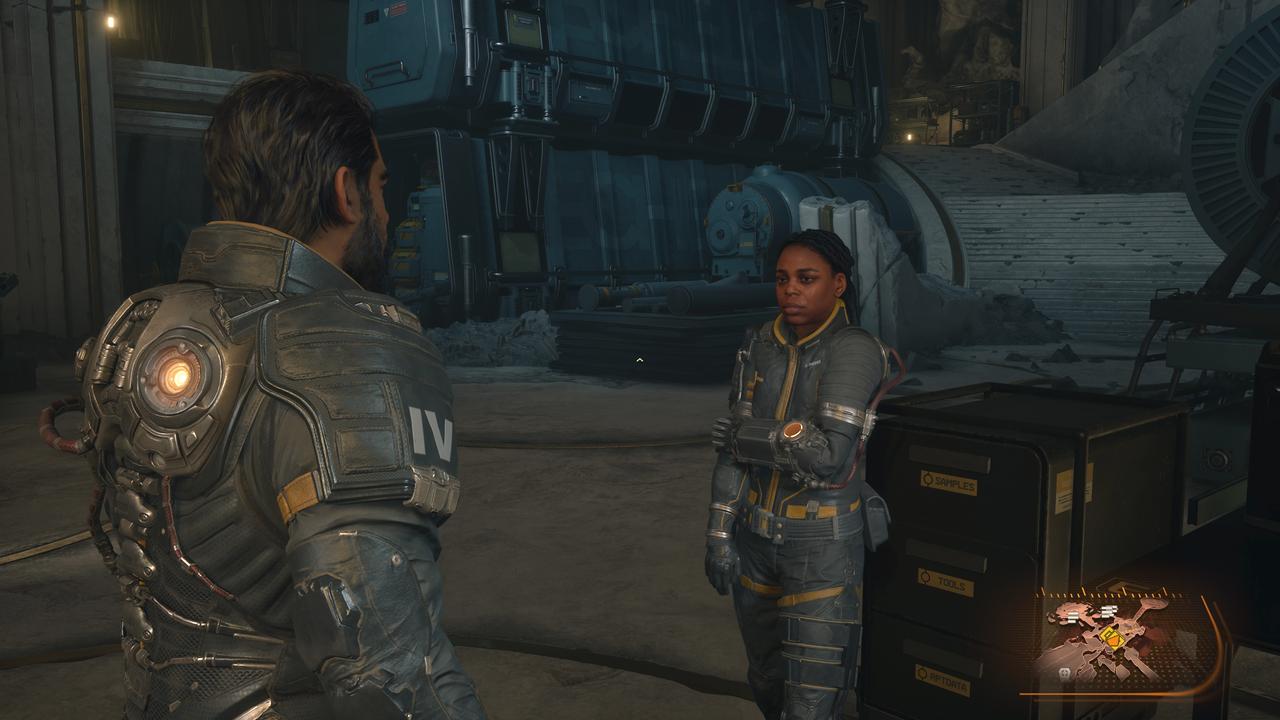
The Soltari Shield Completely Changes Combat Flow
Turning our attention to the combat, Saros pushes you the hardest during its “bullet ballet” sequences. You face waves of alien creatures that fill the screen with glowing projectiles. You only carry one gun at a time. The ammo is infinite. You rely on an active reload routine to keep firing. Hitting the reload button at the exact right time gives you a damage boost. I found the timing a bit forgiving. Stringing reloads together during a chaotic firefight requires total concentration. Every weapon features an alternate fire mode and a powerful ultimate ability. You have to balance aggression with evasion. You dodge, jump, and dash through expanding walls of energy.
The biggest change is the Soltari Shield. You can bring up a barrier to block standard attacks. I highly recommend jumping into the menu immediately to remap the alt-fire to a separate button; it saves you from accidentally firing your ultimate during a chaotic fight. Holding R1 absorbs blue projectiles and instantly converts them into energy for your Power Weapon meter. I learned very quickly that playing defensively gets you killed. You have to push forward into the danger to gather energy. I used the shield to eat specific attacks and then instantly fired a massive laser back at a boss. It makes every encounter feel like a high-stakes puzzle.
Upgrade Your Armour Matrix to Survive Carcosa
The permanent progression cycle ties directly into this combat. You spend collected Lucenite to increase your health or unlock extra artifact slots. I also found permanent traversal upgrades like grapple points and jump pads. These tools let you reach new areas in earlier zones. The Carcosan Modifiers eventually open up. You can tweak the difficulty by balancing positive and negative traits.
I adjusted the settings to add more enemies but increase Lucenite and Halcyon drops. This let me farm materials faster. The whole structure rewards experimentation instead of punishing you for making a mistake. It keeps the loop fresh for hours on end, even when you face the same early-game biomes.
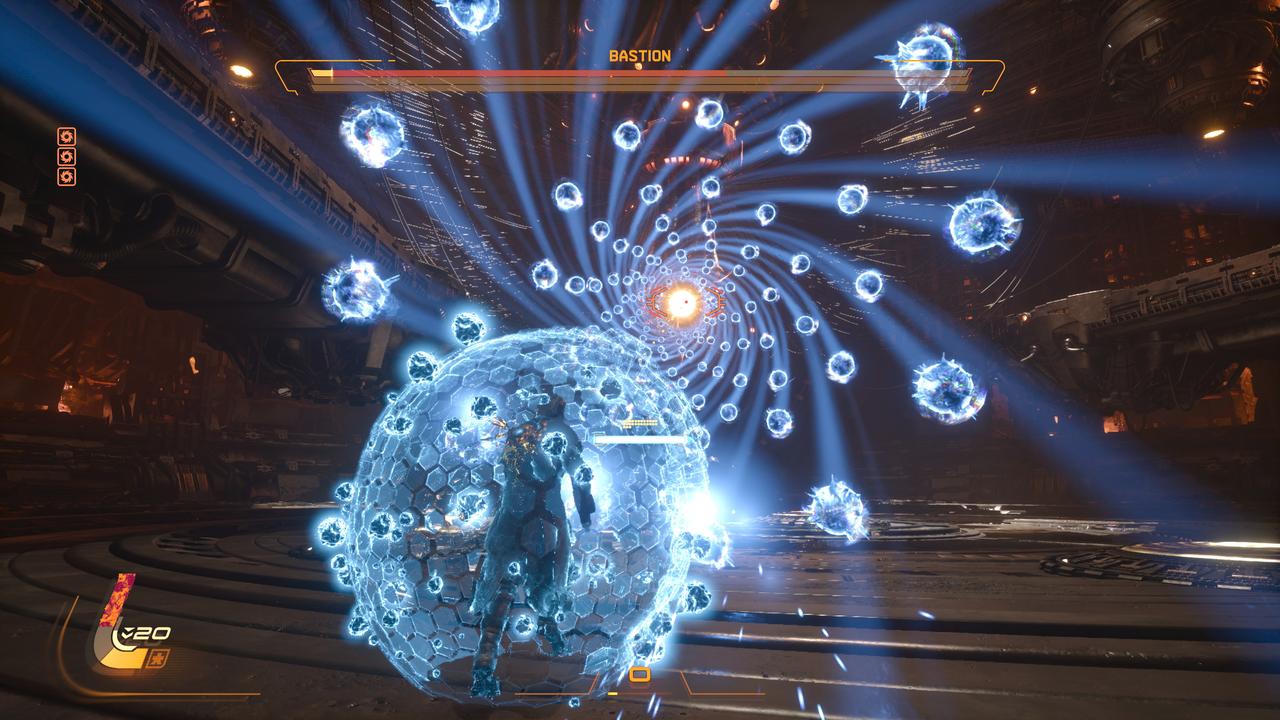
Unreal Engine 5 Brings Alien Ruins to Life
When you actually get your hands on the controls, Carcosa looks incredible. The transition to Unreal Engine 5 allows the developers to create massive, shifting landscapes. The game throws thousands of particles on screen at once without dropping a single frame. Total technical mastery. You explore desolate ruins, overgrown alien jungles, and strange industrial complexes. The art direction uses colour to telegraph danger. When an eclipse triggers, the sky turns into a black sun ringed with fire. Enemies start firing yellow corruption projectiles. Writhing tentacles sprout from the machinery. This real-time change alters the mood of the area instantly.
The lighting does a fantastic job of casting long, terrifying shadows across the combat arenas. The audio design does an incredible amount of work here. Sam Slater composed the soundtrack. It mixes heavy electronic beats with droning metal guitars. The music pulses in time with the combat. When you clear a room, the audio pulls back to an eerie silence. Popping on a headset for the 3D audio mix is a total game-changer. You can hear projectiles moving past your head. You know exactly where an enemy is spawning just by the sound of their screech. It provides a level of immersion that most shooters fail to reach.
Feel the Weight of Every Shot Through the DualSense
The haptic feedback on the DualSense controller is equally detailed. You can feel heavy thud of every footstep. The adaptive triggers resist your fingers when you charge up a secondary fire mode. I found myself relying on the controller vibrations to time my dodges when the screen got too busy. The haptics provide crucial information instead of just acting as a gimmick.

The entire audio and visual package works together to keep you completely focused on the fight. Housemarque clearly pushing the PS5 to its limit to ensure the adventure feels as “next-gen” as possible.
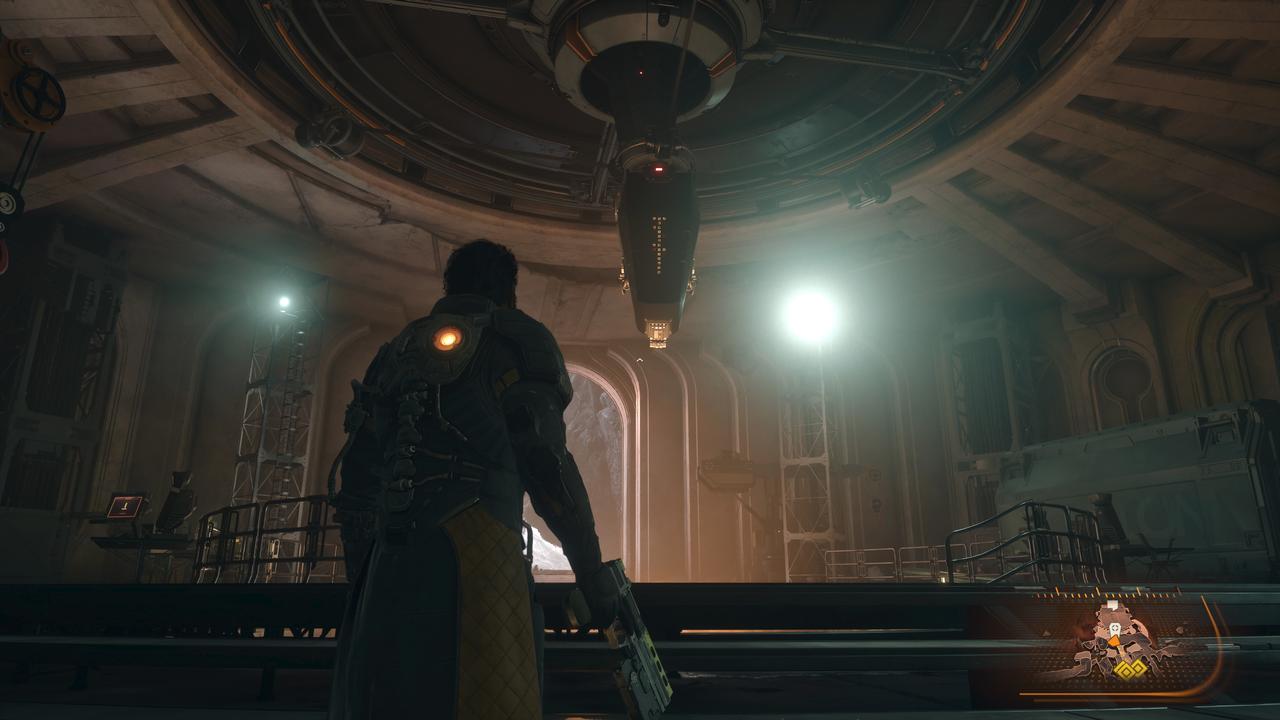
Saros Successfully Evolves Housemarque’s Hardcore Formula
I went into Saros expecting another punishing shooter that would test my patience. Housemarque simply doesn’t miss. I walked away with a refined action game that doesn’t make you feel like you’ve thrown your afternoon in a dumpster after a bad run. Surviving the bullet ballet requires constant, twitchy movement; standing still is a death sentence.
But the permanent progression upgrades ensure you never walk away empty-handed. I loved the way the Soltari Shield changes the flow of combat. You actively seek out danger to charge your most devastating attacks. The Second Chance ability removes the sting of a cheap death. You get to jump right back into the fight and finish what you started. The sense of accomplishment when finally clearing a biome is unmatched.
The mystery of Carcosa held my attention from the opening cutscene. Arjun Devraj is a great anchor for the story. The creeping paranoia among the Echelon IV crew makes the Passage hub area feel just as dangerous as the alien ruins. I ran into a few minor issues with the dialogue queuing up awkwardly. These small flaws never ruined the adventure. The PlayStation 5 handles the massive particle effects and shifting environments perfectly. The haptic feedback and 3D audio give you all the tools you need to survive the onslaught. I tweaked the Carcosan Modifiers for hours to find the exact right challenge level.
A Fair Fight for the Hardcore and the Curious
Housemarque built a shooter that welcomes new players without abandoning the hardcore crowd. The decision to include auto-aim options on early weapons also helps you learn the frantic pace. You can study the enemy attack patterns before you have to worry about perfect accuracy. I really appreciate how many options they give you to customize the adventure.
You actively build your enforcer into an unstoppable machine. The cycle of death and rebirth finally feels fair. If you enjoy fast-paced action and exploring mysterious alien worlds, you need to play this. It is a bold step forward for the genre and a definitive reason to own a PS5.
Saros
Summary



Housemarque took a massive swing with the permanent progression in Saros and absolutely nailed the execution. Grinding for Lucenite and rare Halcyons takes the frustrating sting out of the studio’s notoriously brutal combat, even if the background dialogue at The Passage queues up awkwardly between excursions. The Soltari Shield revitalizes the flow of battle by forcing you to play aggressively to survive. If you love high-intensity action and building an unstoppable character, Saros is worth every penny.
As always, remember to follow us on our social media platforms (e.g., Threads, X (Twitter), Bluesky, YouTube, and Facebook) to stay up-to-date with the latest news. This website contains affiliate links. We may receive a commission when you click on these links and make a purchase, at no extra cost to you. We are an independent site, and the opinions expressed here are our own.