



Schrödinger’s Call makes more sense when you realize its choices aren’t there to rewrite the story. This is a focused visual novel from Acrobatic Chirimenjako and Shueisha Games about Mary, a girl with no memory, a black cat named Hamlet, and a telephone that connects her to people caught in their final moments. You’re not here to chase alternate endings. You’re here to listen, pick through broken memories, and decide which words Mary needs to say next.
The appeal depends on what you want from a visual novel. If you want branching paths, major consequence screens, or big endings shaped by dialogue decisions, this isn’t built for that. If you’re open to a linear story that uses phone calls, notes, and surreal imagery to explore grief, regret, family, and acceptance, the story has a lot to absorb.




Mary’s Calls Turn The End Of The World Into Something Personal
Mary wakes up with no memory of who she is, and Hamlet quickly places her in a role she doesn’t fully understand. The moon is about to crash into Earth, and Mary becomes the world’s last Confidant, answering calls from people caught between life and death. That premise sounds enormous, but the story keeps everything personal. Most of your time is spent in a dark room, listening to voices on the other end of the line.
Each caller brings fractured memories and unresolved pain. Some don’t remember what happened. Some avoid the truth. And, some need Mary to connect details they can’t face on their own. The structure follows a clear pattern without making every section feel identical. You answer calls, gather details, return to Mary’s notes, and slowly understand what happened before each final conversation was cut off.
Mary’s own missing past sits underneath all of this. The more she learns about the people calling her, the more the game points back toward her own identity. The story doesn’t treat every call as a separate short story disconnected from the larger mystery. Each one feeds into Mary’s understanding of herself and why she was placed in this position.
The story deals with difficult emotions, especially around family, guilt, loneliness, and the memories people struggle to let go of. Schrödinger’s Call doesn’t use those subjects for shock value, but it also doesn’t soften them into something easy to digest. You should know that going in. This is the kind of visual novel that benefits from breaks, especially if one of its stories brushes against something personal.
Phone Calls And Mary’s Notes Keep The Story Moving
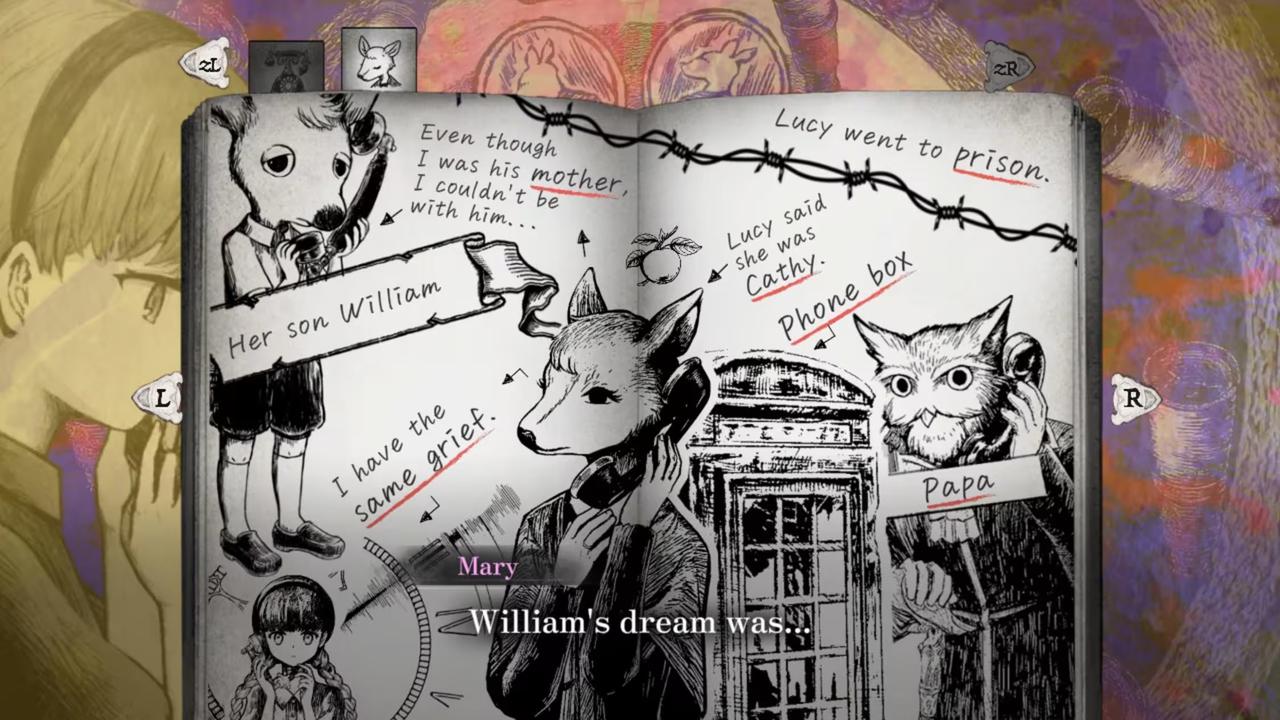
Schrödinger’s Call is a visual novel first, but it avoids becoming a plain text box marathon by turning conversation into investigation. Mary listens to callers, collects details in her notes, and later uses that information as dialogue prompts. The cause and effect structure is simple. Hear something important, store it, then bring it back when a caller needs the right push.

Mary’s notes are the most important tool she has besides the phone. They store phone numbers, drawings, names, and bits of information from earlier conversations. That means you aren’t memorizing numbers or trying to keep every relationship straight in your head. When a call starts circling around a buried memory, the notes become a practical way to test what Mary has learned.
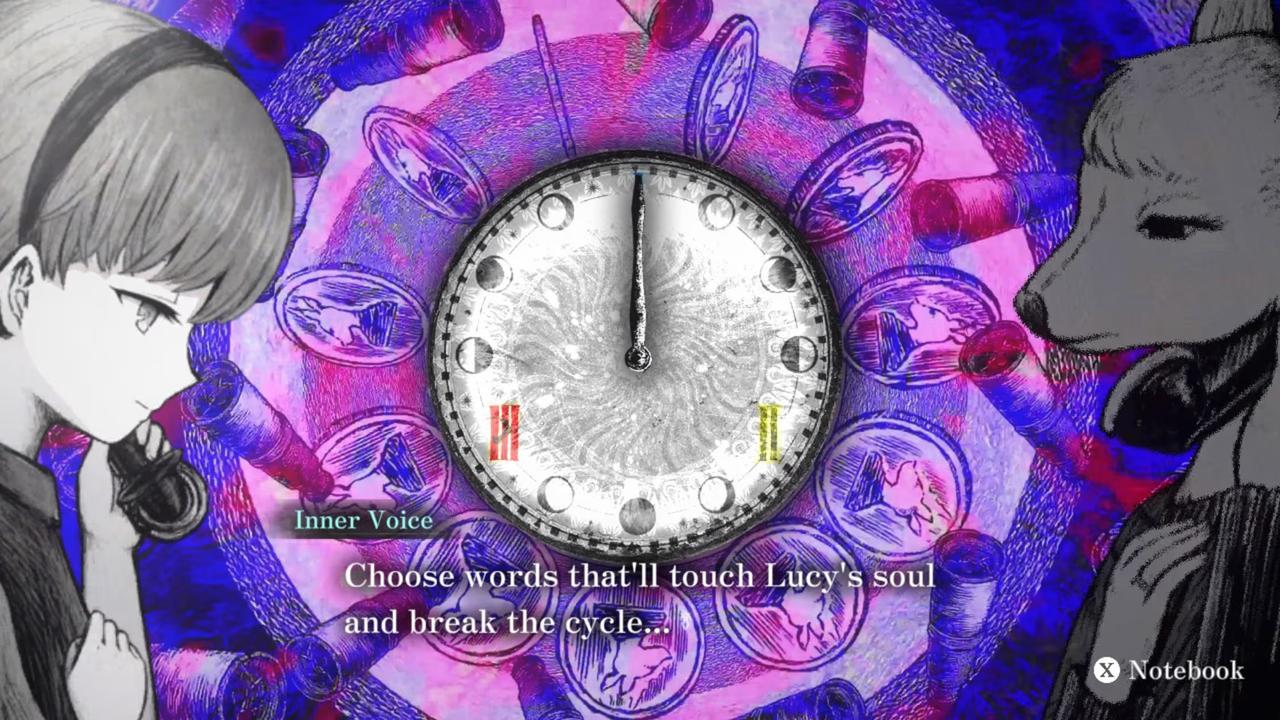
Choices don’t carry the kind of consequence some visual novel fans expect. Picking the wrong response usually changes a few lines, closes off that direction, or nudges you back toward the intended answer. In that sense, Schrödinger’s Call is more guided than reactive. The story follows one main path, with minimal branching and no alternate-ending chase.
I don’t think that limited structure breaks the game. It changes the expectation. The choices are less about control and more about paying attention. Did you understand the caller? Did you connect the right memory to the right moment? And, did you pick the line that lets Mary reach someone who doesn’t fully understand their own pain yet? When the answer is yes, the phone-call format has a steady pull. When the answer feels forced, the script becomes more visible than it should.
Repeated Flashbacks Slow The Pacing Down
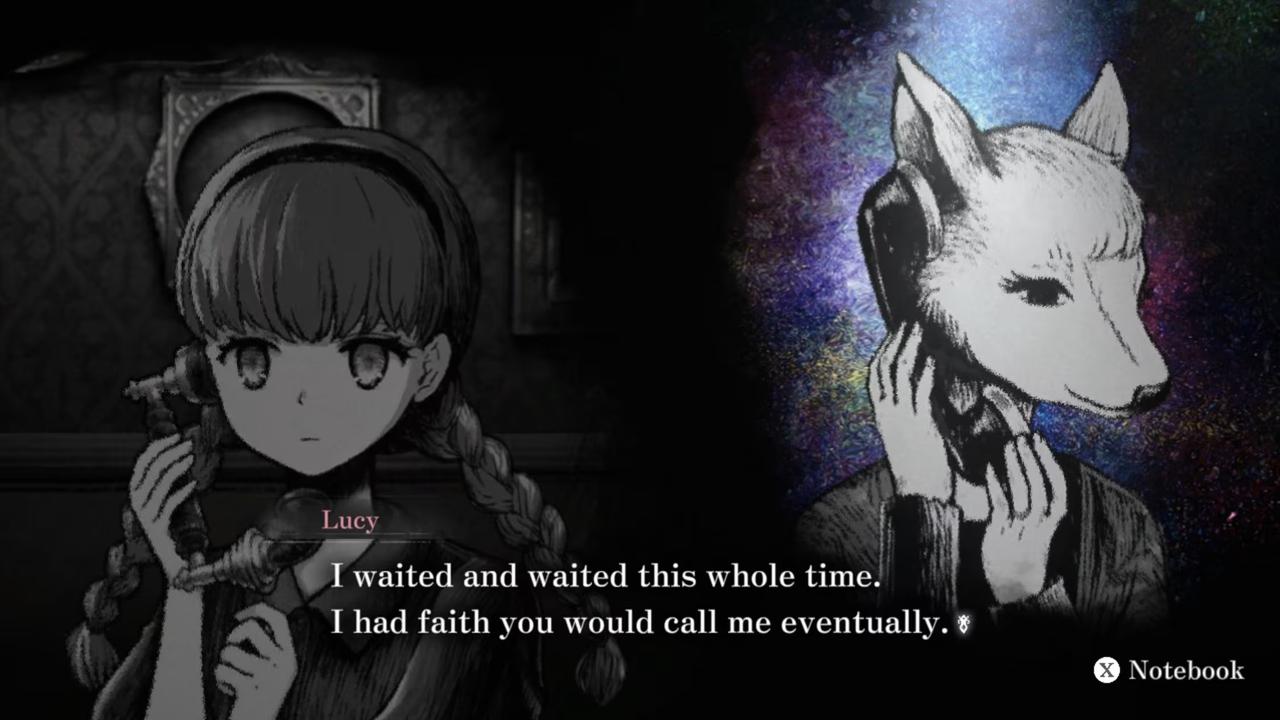
The biggest issue with Schrödinger’s Call is repetition. The story relies on flashbacks to reinforce important scenes and revelations, but those moments repeat more than they need to. Early on, the technique makes sense. A visual novel built around fading memory needs to revisit key moments. Later, the repeated material starts explaining things the story has already made clear.
That creates a strange push and pull. The mysteries around Mary and the callers are strong enough to keep you going, but the pacing sometimes stalls because the game doesn’t always trust you to connect the details yourself. That’s frustrating because Mary’s notes already do a lot of that work. If you need a reminder, you have a record of names, clues, and emotional details sitting inside the game.
The limited choice impact also becomes more obvious during these repeated scenes. Since you aren’t branching into new outcomes, the repeated material doesn’t open a different path or change the direction of the story. It mostly reinforces the same point. For a game that runs about 7 to 10 hours depending on reading speed, that repetition is noticeable.
Even with that issue, the story stays focused enough to recover. Each character section brings a different emotional angle, and the larger mystery around Mary keeps the phone calls from feeling isolated. Schrödinger’s Call is at its weakest when it repeats itself. It’s at its strongest when it lets a caller’s silence, hesitation, or changed reaction carry the moment.

Colour And Sound Turn Each Call Into A Memory
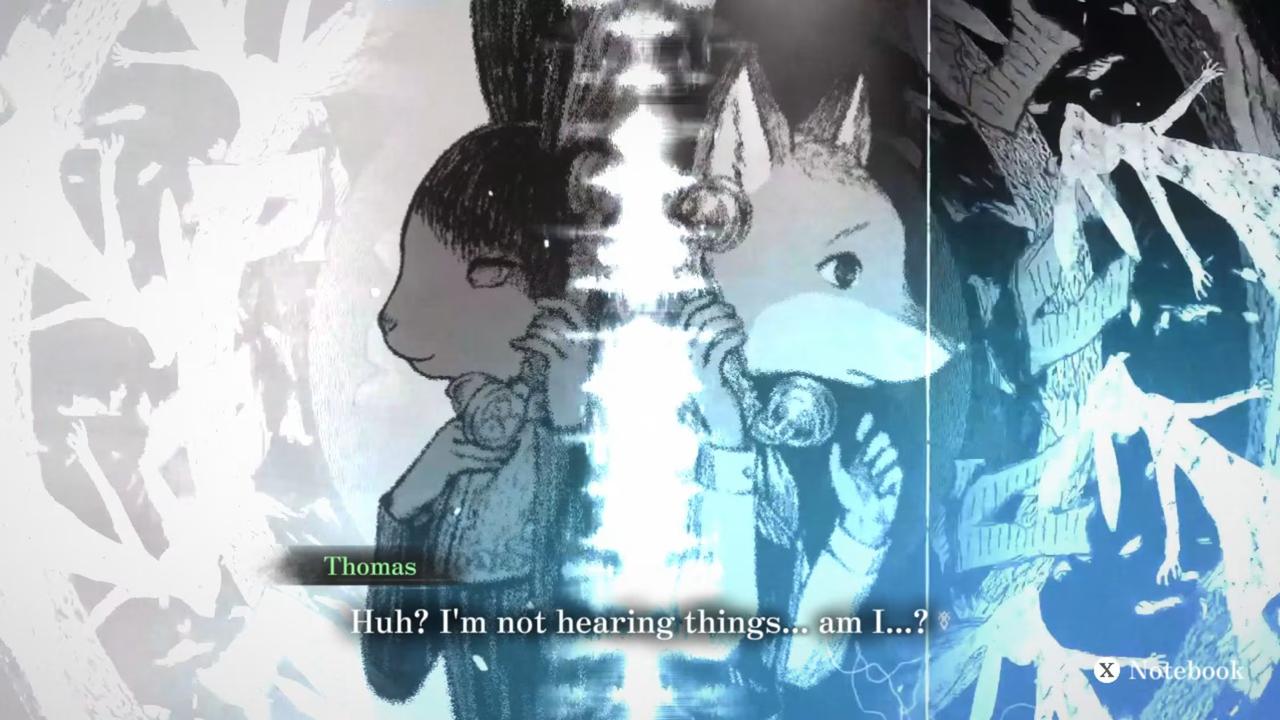
Schrödinger’s Call uses a mostly black-and-white look in Mary’s room, then lets colour break through during calls, memories, and more intense story moments. That visual contrast is one of the game’s clearest strengths. The room itself feels cold and closed off. The calls open small windows into other lives, and the sudden use of colour separates those memories from Mary’s present state.
The art style mixes sketch-like character work with surreal images. Faces, eyes, rooms, and abstract shapes appear during key moments, turning conversations into something more physical than a normal phone call. This is where the game pushes beyond a basic visual novel layout. It doesn’t just show a character portrait next to dialogue. It uses the screen to suggest panic, confusion, denial, or recognition without spelling everything out in text.
Audio is just as important. The music shifts with the emotional state of a scene, moving from calmer tones into more dissonant or uneasy sounds when a conversation turns darker. The fragmented Japanese vocal murmurs also add texture to the dialogue. You still read the lines, but those faint voices make the callers feel less distant. The phone becomes more than a menu device. It’s the way the game keeps every conversation feeling close.
I didn’t run into any major performance issues that pulled me out of the experience. The bigger thing to know is that the visual and audio design can get intense. Sudden colour changes, static, and surreal flashes are part of how Schrödinger’s Call builds discomfort, so that’s worth keeping in mind if you’re sensitive to abrupt visual or sound shifts.
Schrödinger’s Call Is Made For Visual Novel Fans Who Want A Guided Story
Schrödinger’s Call is a focused, emotional visual novel with a very clear sense of what it wants to do. It doesn’t offer the complexity or consequence-driven structure that some visual novel fans chase. Instead, it builds one direct path around Mary, Hamlet, a phone, and a group of people trying to understand their final regrets before the moon ends everything.
That decision pays off more often than it gets in the way. The phone-call structure keeps the story intimate, and Mary’s notes create just enough interaction to keep you reading actively instead of watching scenes pass by. The best conversations work because you’re piecing together what someone refuses to say out loud, then choosing the prompt that lets Mary reach them.
There are limits to that approach. Repeated flashbacks drag certain sections longer than necessary, and the choices don’t reshape the outcome in a major way. If you need a visual novel with branching paths, alternate endings, or a lot of control over the path forward, Schrödinger’s Call is going to feel restrictive. The game tells one story, and your role is to understand it rather than redirect it.
If you come to visual novels mainly for the story, that focused approach is a big part of why Schrödinger’s Call works. Schrödinger’s Call uses a small room, Mary’s notes, and a telephone to tell a much larger story about memory, grief, family, and acceptance. It’s heavy, sometimes uncomfortable, and occasionally too repetitive for its own good. But if you’re fine with a guided story and want a visual novel that treats listening as the main interaction, Schrödinger’s Call fits that mood really well.
Schrödinger’s Call



Summary
Schrödinger’s Call is a focused visual novel about Mary, Hamlet, and a telephone that connects them to people caught in their final moments. Its choices don’t reshape the story in a major way, but the phone-call structure, Mary’s notes, and strong emotional writing make the guided experience work. Repeated flashbacks slow the pacing at times, but the story, art, music, and intimate conversations make this a strong fit if you enjoy visual novels built around listening, memory, and one clear path forward.
As always, remember to follow us on our social media platforms (e.g., Threads, X (Twitter), Bluesky, YouTube, and Facebook) to stay up-to-date with the latest news. This website contains affiliate links. We may receive a commission when you click on these links and make a purchase, at no extra cost to you. We are an independent site, and the opinions expressed here are our own.