


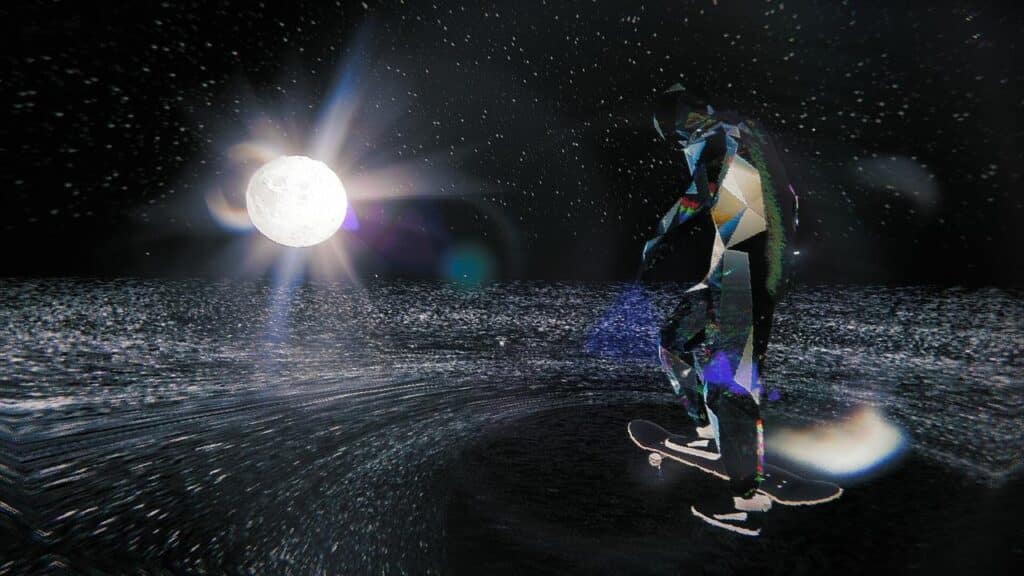
Skate Story is not a skateboarding game that eases you in or explains itself up front. It drops you into its world and lets motion do most of the talking. You play as a glass demon on a skateboard, moving through strange spaces in the underworld with one simple goal. Eat the moons. How you get there is where the game starts to show its personality.
From the first few minutes, skating feels like the main language here. The game is less interested in menus or exposition and more focused on how it feels to push forward, build speed, and hold a line together without shattering. You spend a lot of time learning the weight of movement and how quickly things can go wrong if you mistime a turn or clip a wall. That constant risk gives even short runs a sense of pressure.
The world itself is unusual, but the game does not rush to explain it. You skate through surreal environments that mix skate-friendly layouts with unfamiliar shapes and colours. Characters appear, say odd things, and send you off in new directions. The story is present, but it stays in the background early on, letting skating remain the focus.
Early on, Skate Story feels comfortable giving you room to figure things out. It does not push you forward aggressively or bury you in objectives. You are free to move, fall apart, retry, and slowly get a feel for how everything connects. That approach sets the tone for everything that follows and makes it clear this is a game built around feel first.
A Strange Trip Through the Underworld
Skate Story takes place in a version of the underworld that follows its own rules. You play as a demon who signs a contract with the devil and is given a skateboard, tasked with consuming seven moons scattered across hell. That simple setup carries the game forward, even as the spaces and characters around you drift into stranger territory.
The underworld is broken into chapters, each built around a new area with its own layouts, routes, and encounters. These locations mix recognizable skate-friendly elements like rails, ramps, and downhill paths with shapes and structures that feel unfamiliar. Streets bend into abstract corridors. Platforms float where you do not expect them to. It always feels designed for skating first, even when the surroundings look unnatural.
Characters you meet along the way rarely explain much. They offer short conversations, odd requests, or brief bits of guidance before sending you back onto the board. The game does not rely on long dialogue or heavy exposition. Instead, it lets repetition, movement, and small interactions carry the story forward. Each chapter ends cleanly, giving a sense of progression without spelling out every detail.

I liked that the story never got in the way of skating. I didn’t feel pulled out of a run just to read or figure something out. Even when things got weird, I always knew what I was supposed to be doing and where I was headed.
The setting supports that approach well. Hell in Skate Story is not presented as a place of constant danger or spectacle. It feels quieter and more abstract, with moments of calm between runs and encounters. That restraint helps keep the focus on motion and flow, letting the story sit alongside the skating rather than competing with it.
Learning to Hold a Line
Skating in Skate Story sits at the centre of everything, and the game is clear about that from the start. Movement is built around momentum, timing, and keeping control while moving fast. You push to gain speed, carve through turns, and link tricks together without ever fully stopping. When it clicks, runs start to feel smooth and intentional. When it does not, you shatter quickly and reset just as fast.
Tricks use straightforward inputs, so you can get started quickly, but keeping them clean gets harder once the speed picks up. Building combos becomes less about memorizing moves and more about reading the space in front of you. Tight corners, narrow rails, and sudden elevation changes force you to think a few seconds ahead. I had several runs where I was less focused on pulling off something flashy and more concerned with surviving the line I had already committed to.
Progression is tied to chapters and new areas rather than a traditional skill tree. As you move forward, new tricks and gameplay ideas are introduced naturally through play. Boss encounters are folded into this structure. To damage them, you need to chain tricks, build a combo, and end it with a stomp in the right place. Later fights add movement and positioning pressure, which forces you to stay aggressive while still staying upright.
You also earn Soul by skating, which can be spent on boards, wheels, and cosmetic items. These options are fun to collect, but they never felt required. I swapped gear a few times, mostly out of curiosity, but my approach to skating stayed the same.
The challenge in Skate Story comes less from strict failure conditions and more from maintaining control at high speeds. Wipeouts happen often, especially early on, but restarts are instant. That quick loop encourages experimentation, even when a section pushes your timing or routing harder than expected. It keeps gameplay moving forward without turning mistakes into long setbacks.

A Look That Supports the Ride
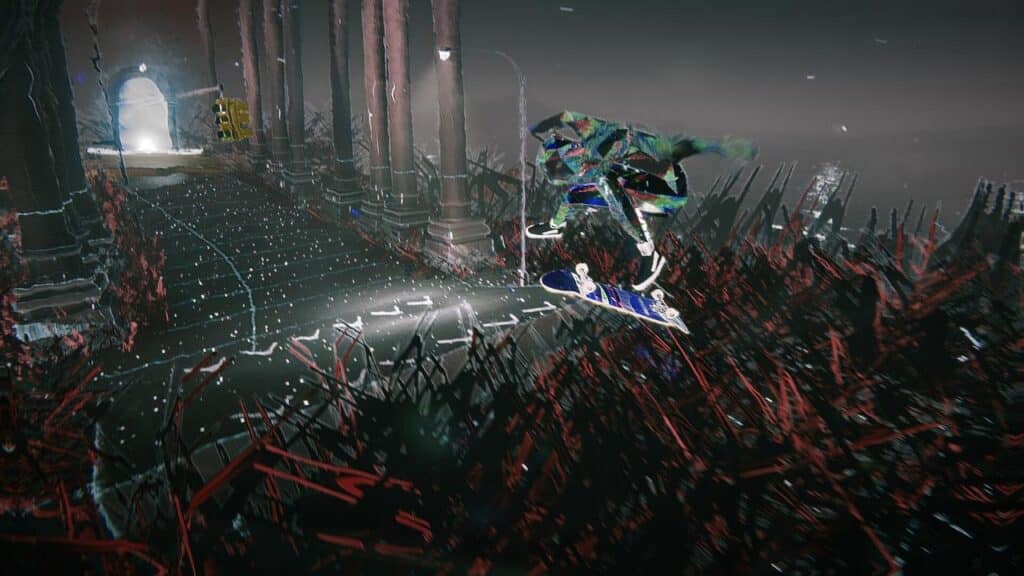
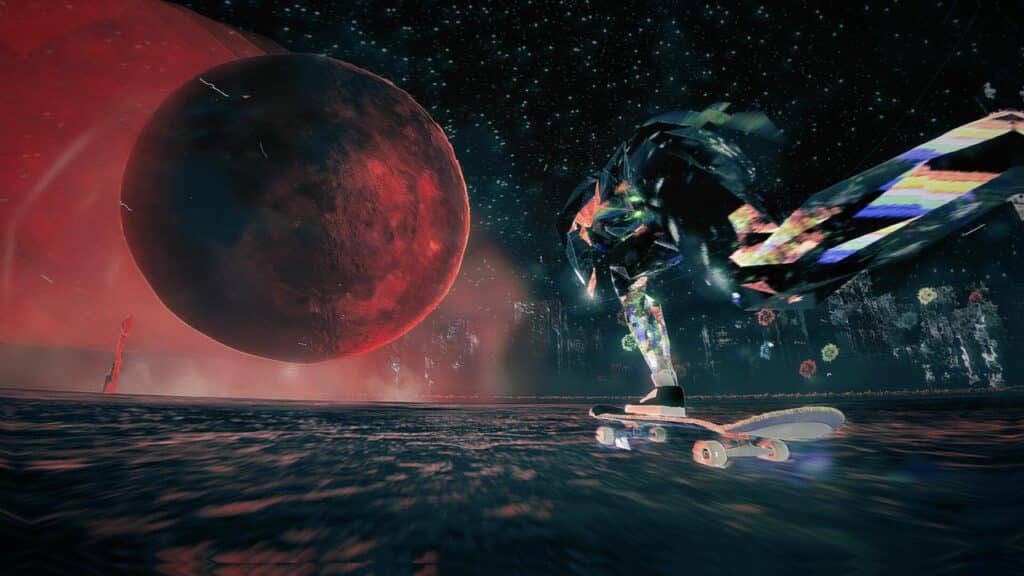
Skate Story has a look that is hard to pin down, but it stays consistent from start to finish. The world uses abstract shapes, glowing surfaces, and sharp colour contrast, with environments built to support movement rather than realism. Rails, slopes, and paths are always readable enough to skate, even when the space around them feels unfamiliar. I rarely felt confused about where I could go, even when the surroundings looked strange.
The glass skater stands out against every backdrop. Shattering on impact is clear and immediate, which helps reinforce how fragile movement can be at higher speeds. Animations stay readable, especially during quick turns, reverts, and stomp finishes. When runs fall apart, it is usually obvious why, which made retries feel fair instead of frustrating.
Sound plays a big role in how skating feels moment to moment. Music shifts between calmer tracks and faster beats depending on the pace of what you are doing, and it pairs well with the rhythm of pushing, carving, and landing tricks. I found myself settling into longer runs partly because the audio kept me focused instead of distracted. Sound effects are clean and consistent, from wheels on the ground to the impact of a failed landing.
Performance is mostly steady, though I did notice brief hiccups in some open areas. They never lasted long, but you could feel them most when you were flying through a section or trying to hold a tight line. I also ran into a few small audio quirks, like sounds sticking around longer than they should. It never stopped me from moving forward, but it did break the rhythm for a moment when it happened.
In the end, the look and feel work with the skating instead of fighting it. You can read the space, the music keeps you locked into a run, and the small performance hiccups don’t pull your focus away for long.
Skate Story Is All About the Feel of the Ride
Skate Story is a game that puts a lot of trust in how skating feels from moment to moment. It does not rely on constant prompts or heavy structure to keep things moving. Instead, it asks you to learn its rhythm, accept a few wipeouts along the way, and keep pushing until runs start to come together.
The skating itself is the strongest part of the experience. Speed, momentum, and line choice matter more than pulling off flashy tricks, and the quick restart loop makes experimentation easy. Boss encounters and chapter progression give those ideas direction, even if some areas feel lighter on content than others. The lack of extra modes or stage selection also means you are mostly seeing everything through the main path.
The look and feel work well with that focus. The world stays readable while still feeling strange, the soundtrack helps lock you into longer runs, and the few technical hiccups do not linger long enough to derail a session. None of it pulls attention away from movement, which fits the game’s priorities.
By the end, I found myself spending time in areas longer than required, replaying sections just to smooth out a line or clean up a run. That says a lot about how well the skating holds up on its own. Skate Story may not offer endless content or traditional skate features, but when everything clicks, it delivers a focused experience built around motion and flow.

Skate Story
Summary
Skate Story focuses on how skating feels moment to moment, putting speed, control, and line choice ahead of flash or structure. Its strange underworld setting stays mostly in the background, giving you room to learn runs through repetition and quick restarts. Boss encounters and chapter progression add direction, even if extra modes and content are limited. When everything clicks, it delivers a focused experience built around motion, rhythm, and staying upright at full speed.
As always, remember to follow us on our social media platforms (e.g., Threads, X (Twitter), Bluesky, YouTube, and Facebook) to stay up-to-date with the latest news. This website contains affiliate links. We may receive a commission when you click on these links and make a purchase, at no extra cost to you. We are an independent site, and the opinions expressed here are our own.