


I spent the better part of the last week watching my digital friends fight over a virtual hamburger in Tomodachi Life: Living the Dream and I don’t regret a single second of it. It’s been over a decade since the last Tomodachi game, and I honestly wasn’t sure if Nintendo still had this specific brand of weirdness in them. I’ve seen plenty of life simulators come and go, nothing captures the specific energy of a Mii-filled island.
Tomodachi Life: Living the Dream is exactly what I wanted it to be. It’s a weird and completely absurd soap opera that works just as well on the big screen as it does on the go. If you value personality and humour over the usual grind of checking off boxes, you’re going to have a great time here. It answers the long-standing question of whether the series could evolve without losing its soul.




Nintendo managed to fix the biggest issues from the past but kept the “hallucination-style” nonsense that made the original a cult hit. This local experience fits perfectly into a busy schedule. It doesn’t ask for twelve hours of your day. It just asks you to check in, laugh at something stupid, and move on.
A Soap Opera You Can Influence
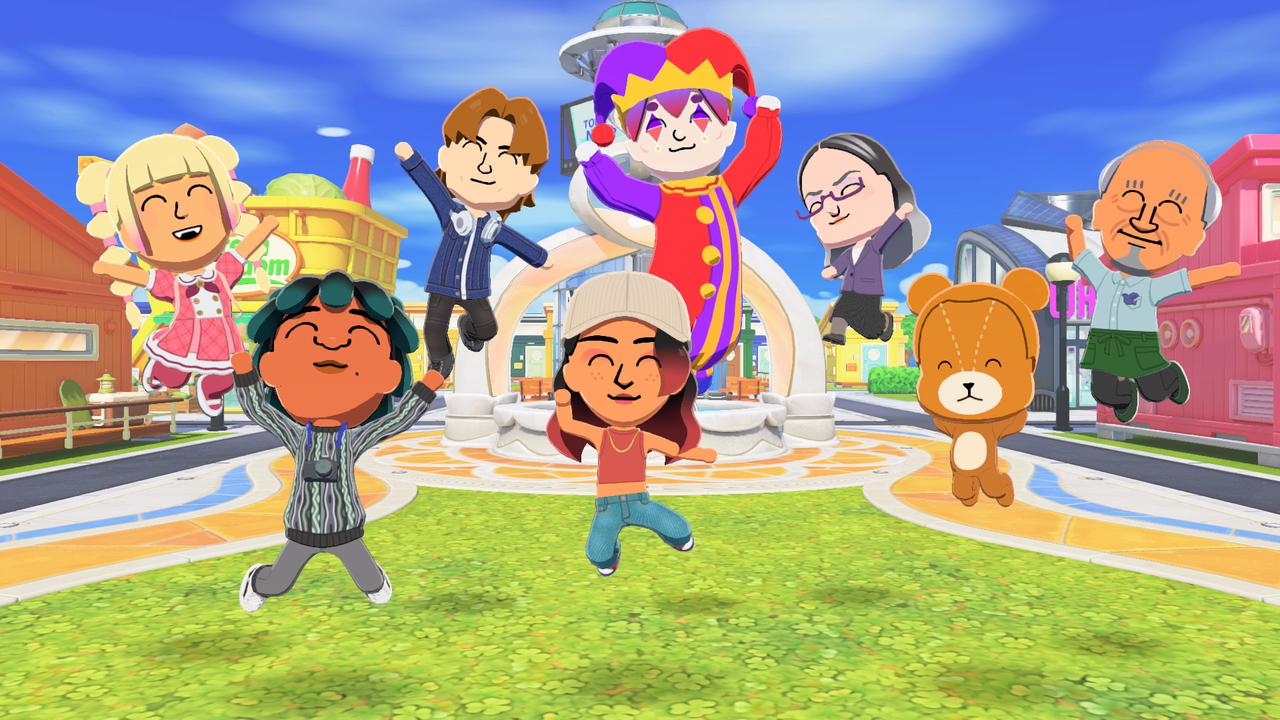
The story here isn’t something written by a developer in a boardroom. It’s something you enable as the “Divine One” on Good Vibes Island. You fill an island with Miis, which are still the best avatars Nintendo ever made, and then you just wait for the nonsense to happen. My first few hours were spent watching a 115-year-old mascot try to console a heartbroken resident who just got rejected by a roommate. That kind of emergent storytelling is something most big-budget RPGs can’t touch. You don’t play for a grand finale. You play to see who hates shrimp today and who starts a sword fight in the town square tomorrow.
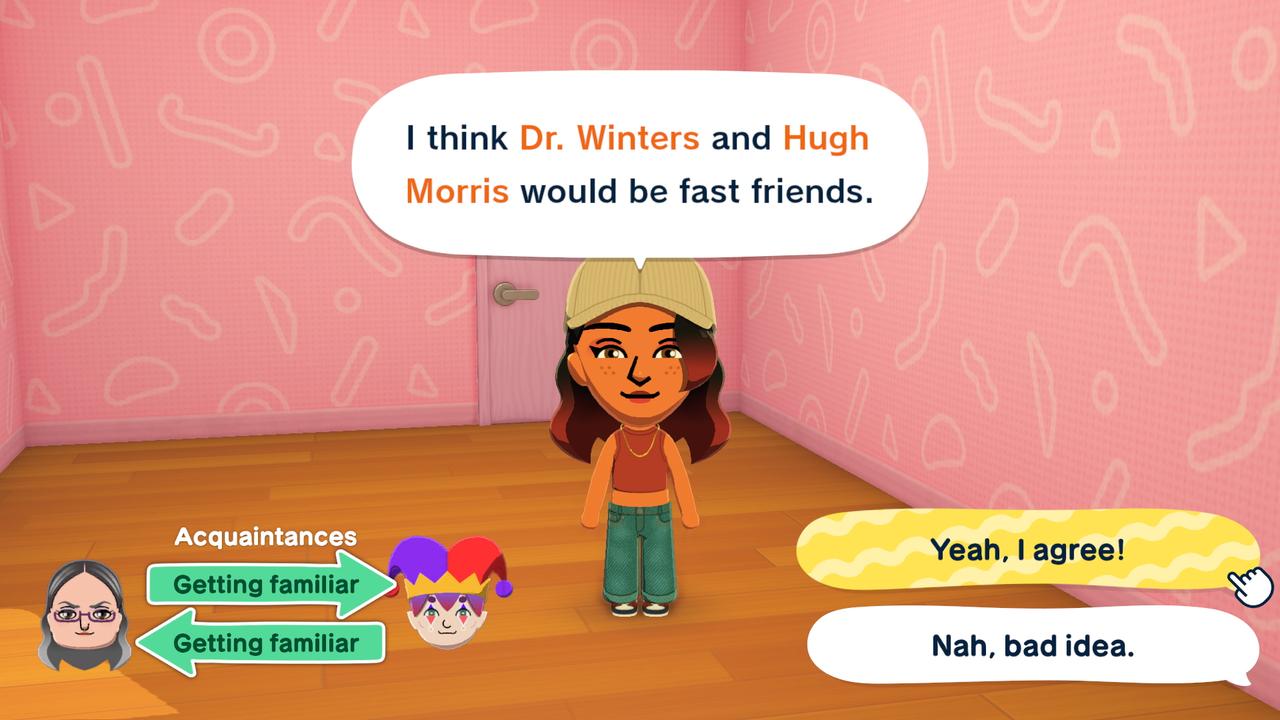
It feels like the characters have way more of a mind of their own this time around. They don’t just wait for you to feed them. They forge unlikely friendships, get into heated arguments, and fall in love unexpectedly. I noticed one Mii obsessing over a crush and asking me for advice. I told them to go for it. They got rejected in front of a Ferris wheel. The game lets these moments breathe. It’s genuinely laugh-out-loud funny because the dialogue is so unpredictable. The addition of same-sex couples and non-binary options means everyone can finally see themselves in this weird little world.
Island Building and Daily Chores
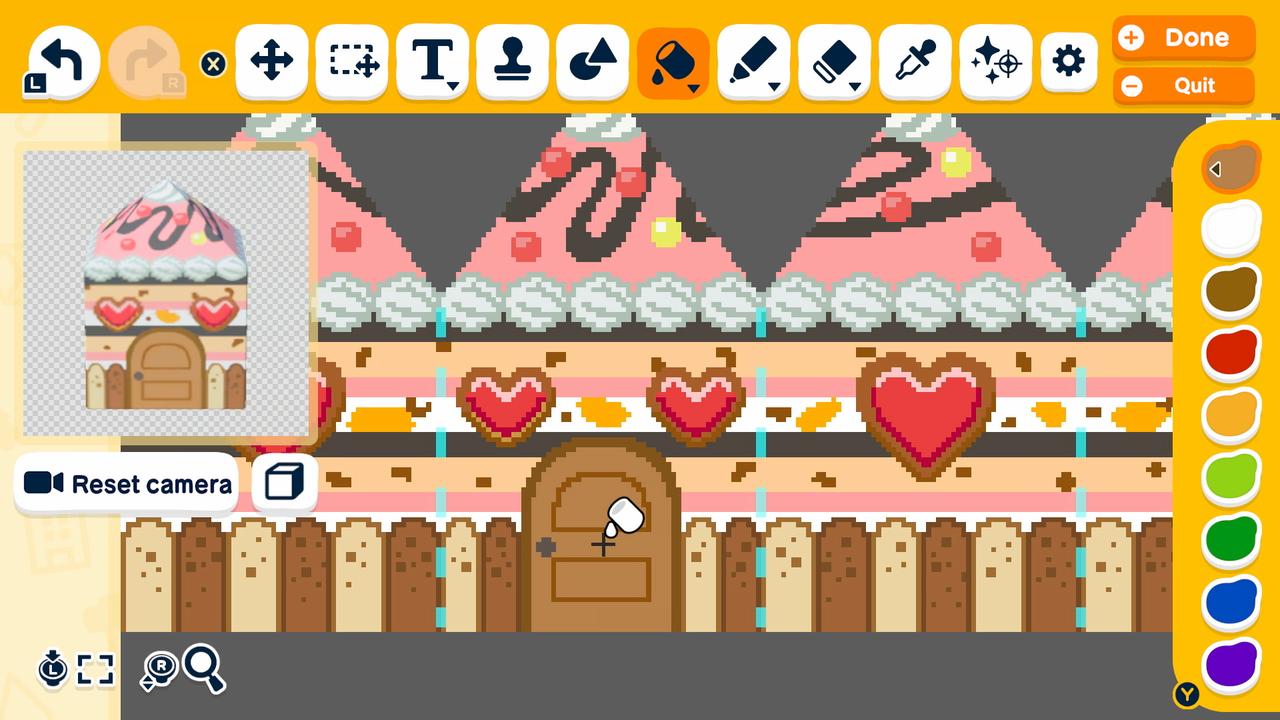
The Island Builder is the real star this time around. I found the tools way more hands-on than what I’ve used in Animal Crossing, letting me reshape the ground or drop a shop exactly where I wanted it to go. I spent a lot of time in the Palette House Workshop, where you can draw your own furniture and clothes from scratch. If you have an idea for a house made of dessert or a fence made of meat, you can probably make it. The routine is simple. You check in for an hour, solve some problems, feed your residents, and collect Warm Fuzzies.
Warm Fuzzies are the currency you earn by making your Miis happy. You use them to level up the island, which unlocks new buildings and props like a paint easel or a bubble blower. The progression feels natural. Every time a Mii reaches a new happiness level, they get a quirk.

I taught one of my residents to talk with a creepy warble and another to walk with a swagger. It makes every person on the island feel unique. The only real downside is that QR code sharing is gone. If you want a specific friend on your island, you’re building them yourself.
Bold Colours and Rock-Solid Performance
The game looks clear and colourful on the Nintendo Switch 2. Even though Tomodachi Life: Living the Dream is a Nintendo Switch game, the colours are bold. The Mii News Network broadcasts are a highlight of the day. These are daily broadcasts that share bizarre, fake updates about your residents, like someone forging a lonely earbud or reacting to a new local soda. Seeing these in high definition made the absurd humour even better than it did on older handhelds. The audio is just as quirky, with text-to-speech voices that you can tune to sound exactly how you want.
Performance on Nintendo Switch 2 is exactly what it needs to be. I never ran into a stutter when moving residents around or dropping them into conversations. Even when the screen got busy with a group of Miis blabbing at each other, everything stayed smooth. It’s a low-pressure experience that works well in the background of your actual life. You can leave it running, check a broadcast, and then get back to whatever you were doing.
Tomodachi Life: Living the Dream Is a Hilarious Return for the Series
Nintendo clearly listened to the people who played the original game. They kept the heart of the series but gave us much better tools to build our own destinations. The Island Builder and Palette House Workshop give you a level of creativity that the series lacked before.
It’s the kind of game where you get out exactly what you’re willing to put in. If you spend the time to customize every resident and draw every piece of furniture, you’ll have an ecosystem that feels alive and completely your own. Repetition only starts to set in once you have a huge number of residents all demanding attention at once. Even then, the “no filter” approach to dialogue keeps things interesting.
You don’t need complex stats or deep management to have a good time here. You just need a sense of humour and a few minutes a day to solve some digital drama. Tomodachi Life: Living the Dream is a joy to play and easily the weirdest fun I’ve had with my Nintendo Switch library in years.
Tomodachi Life: Living the Dream

Summary
Tomodachi Life: Living the Dream is a brilliantly bizarre return to one of Nintendo’s most creative series. By giving you more hands-on tools like the Island Builder and Palette House Workshop, it transforms from a simple life simulator into a deeply personal soap opera simulator. While the removal of QR code sharing adds some manual work to Mii creation, the added inclusivity and refined humour more than make up for it. It’s an essential daily routine for anyone who enjoys watching digital absurdity unfold.
As always, remember to follow us on our social media platforms (e.g., Threads, X (Twitter), Bluesky, YouTube, and Facebook) to stay up-to-date with the latest news. This website contains affiliate links. We may receive a commission when you click on these links and make a purchase, at no extra cost to you. We are an independent site, and the opinions expressed here are our own.