


Roguelites keep landing, and it takes something different to keep you hooked. Towa and the Guardians of the Sacred Tree does just that. Developed by Brownies Inc. and published by Bandai Namco, it blends dungeon crawling with village life in a way that feels fresh.
You play as Towa, a priestess serving the Sacred Tree known as Shinju. Alongside eight guardians called the Prayer Children, your goal is to stop Magatsu, a corrupted deity trying to spread chaos. Every run pushes the story forward while testing your ability to adapt and survive.




What makes Towa stand out is how it balances combat with downtime. Runs through dungeons are filled with fights, upgrades, and big bosses. When you return to Shinju Village, the pace slows down. Fishing, forging, and talking with villagers give you a breather before the next push. These parts don’t feel like filler. They become just as important as your sword swings.
When we covered the preview, that balance between action and community life was already clear. Now in the full game, it defines the experience even more. There’s also an emotional edge. Guardians you grow attached to might need to be sacrificed, forcing you to change strategies and deal with the loss.
Towa and the Guardians of the Sacred Tree doesn’t reinvent the genre. It builds its own rhythm around combat, story, and community, and that rhythm’s worth sticking with.
Sacrifice at the Heart of the Journey
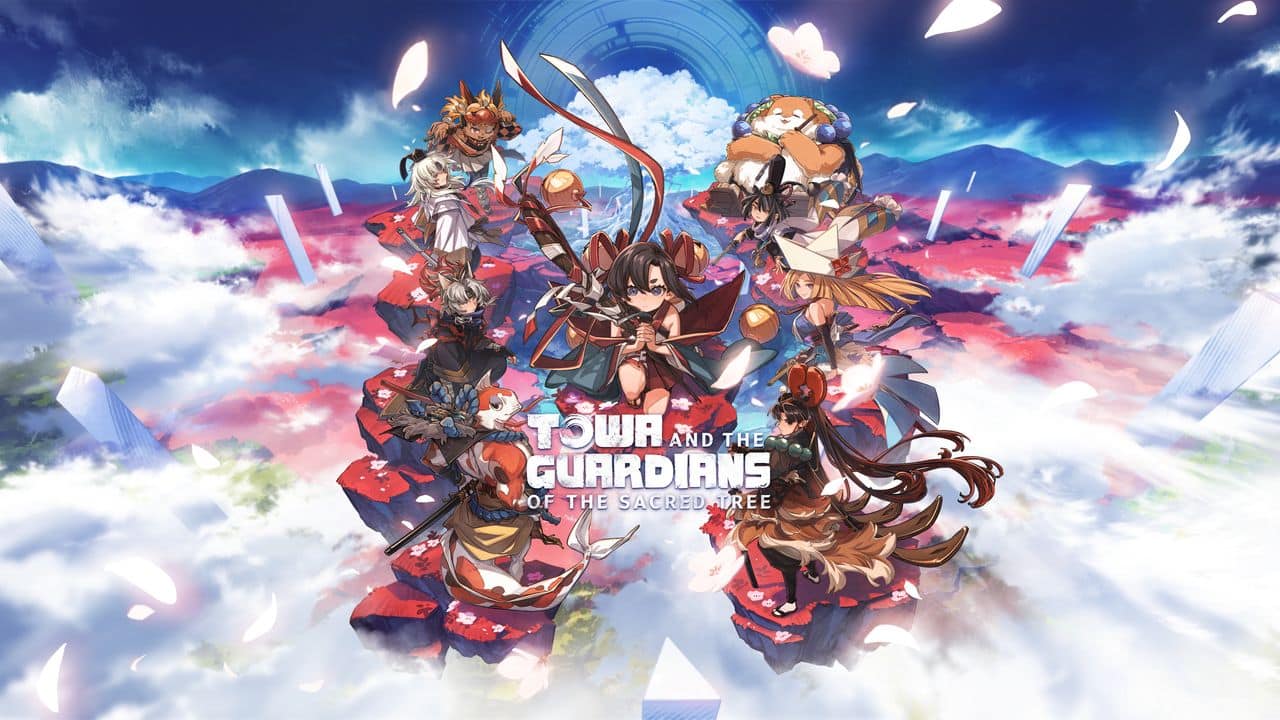
At its core, Towa and the Guardians of the Sacred Tree is about duty, sacrifice, and the bonds that form under pressure. Towa, a priestess chosen by Shinju, carries the responsibility of fighting back Magatsu, a corrupted deity spreading miasma across the land. She doesn’t do this alone. The Prayer Children join her, each with unique personalities and backstories that come to life both in the village and during runs.
On paper it looks straightforward, but the game sneaks in smart twists. After each boss fight, a guardian may need to be sacrificed to restore mana, forcing you to continue without them. It’s a clever mechanic that pushes the story forward while making the weight of your choices sink in. The loss isn’t just mechanical. You feel it when a character you’ve been building disappears from your team. How those sacrifices are presented matters just as much as the mechanic itself.

The story’s presentation is more uneven. Dialogue and cutscenes often stretch out longer than they should. Some moments hit hard, but others stall momentum when all you want is to get back into a run. It’s not that the conversations are meaningless. They add context and show off character quirks, but the pacing could have been tighter.
Those issues aside, the sacrifices still carry weight. When I had to sacrifice Bampuku, the oversized chef, it hit harder than I thought it would. His farewell scene made me realize just how attached I’d become without even noticing. Overall, the story is both a strength and a stumbling block. The world, lore, and bonds are memorable, even if the pacing sometimes gets in the way.
Fighting with Blades and Bonds
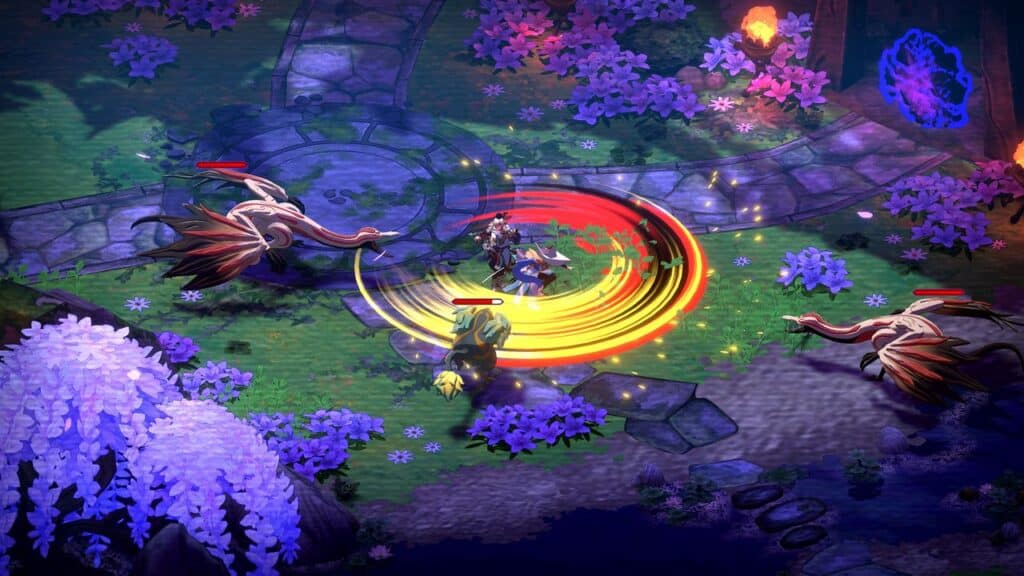
Combat in Towa and the Guardians of the Sacred Tree revolves around two roles. The Tsurugi handles melee with dual swords, while the Kagura supports with spells. You control the Tsurugi directly, but your partner’s positioning and abilities matter just as much.
The durability system forces you to swap swords mid-fight. At first it feels like a neat rhythm, but over time the pattern of attack, switch, and repeat gets old. Graces help shake things up, giving you buffs and encouraging different builds. They’re fun to play with, though they don’t always make long runs feel less grindy.
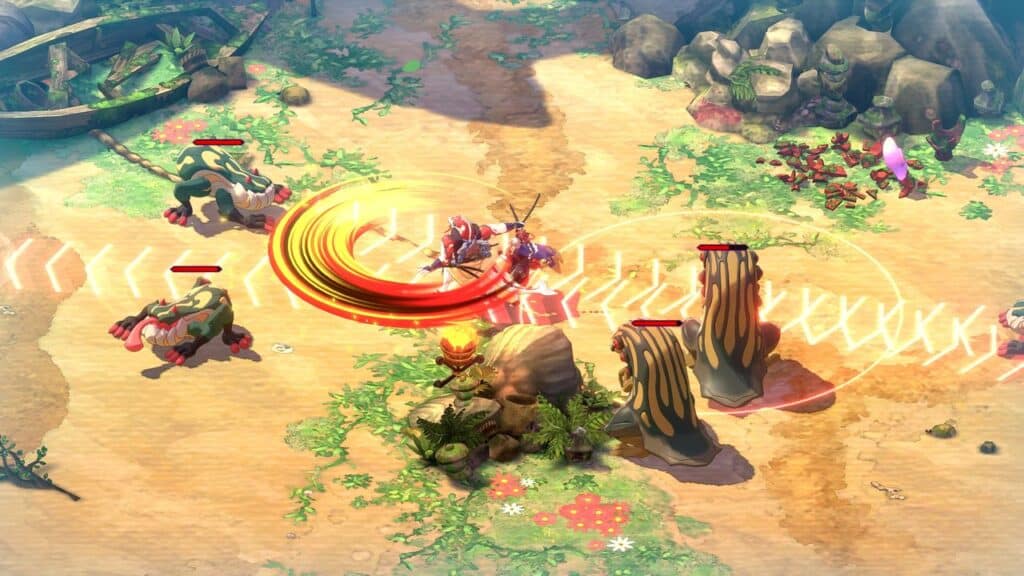
Boss fights are exciting and annoying at the same time. They look great and keep you on edge, but some drag on with huge health bars. The sudden difficulty spikes don’t help either, especially when a boss wipes you out after cruising through a stage. Story Mode softens the blow, but pacing problems still creep in.
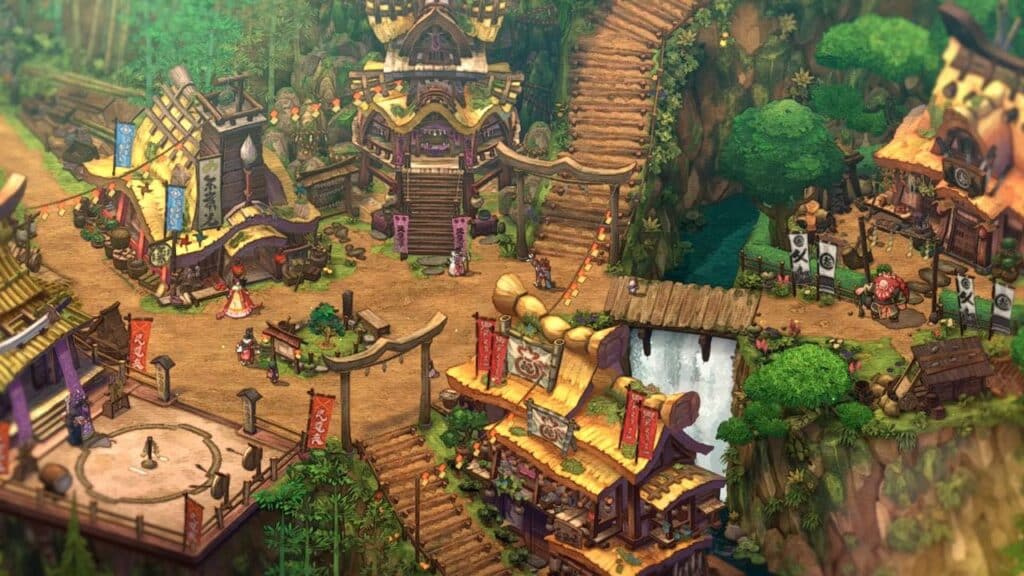
Between dungeon runs, Shinju Village slows things down. Fishing, forging, and upgrades at the dojo or shrine give you reasons to care about what happens outside combat. These breaks matter, because the resources you earn can carry you further next time. I noticed this during the preview, and in the full game it’s even more obvious.
My most memorable fight came when I paired Rekka with Nishiki. Rekka’s wide swings cleared out smaller enemies, while Nishiki’s water spells saved me from a nasty boss attack. Winning that fight felt earned, and it showed how good the duo system can be when it clicks. Gameplay hits highs and lows. Combat has cool ideas and the village adds variety, but repetition, pacing, and uneven difficulty drag it down.
A World Painted in Motion
Visually, Towa and the Guardians of the Sacred Tree grabed my attention right away. The watercolour style makes areas feel like moving paintings, and the guardian designs stand out. Seeing Bampuku next to Towa or Nishiki gives the cast a real sense of variety. It looks great in motion, but not everything clicks. When spells and boss attacks start filling the screen, it’s easy to lose track of what’s going on.
The audio side holds up well. Hitoshi Sakimoto’s soundtrack mixes traditional Japanese instruments with more dramatic tracks, and it fits both boss fights and quiet village moments. Japanese voice acting feels natural and brings out each character’s personality. The English voices aren’t as convincing, often sounding flat in comparison. If you want the best experience, I’d say the Japanese audio with subtitles is the way to go.
Performance is mostly solid. Runs feel smooth, even with a lot happening on screen. Load times are short, and moving between the village and dungeons doesn’t slow things down. Still, big boss fights can trigger occasional drops when the screen fills with effects. It’s not constant, but it’s noticeable when it happens.
Towa and the Guardians of the Sacred Tree Brings New Ideas with Some Bumps Along the Way
Towa and the Guardians of the Sacred Tree carves out its own space in a genre that’s packed. It doesn’t flip roguelites on their head, but it adds enough wrinkles to stand out. The tag-team combat, sword durability, and Graces shape each run, while time spent in Shinju Village breaks up the action in a good way.
The story hits on themes of sacrifice and connection, and the guardian mechanic makes those ideas feel real. Giving up a character after a boss fight actually matters. The downside is that the game takes its time getting those points across. Some cutscenes drag, and the pacing slows when you just want to jump back into a run. Even so, the characters are worth sticking with.
Gameplay is a mix of fun and frustration. Swapping swords feels neat at first, but long runs make it repetitive. Boss fights can be awesome one minute and exhausting the next, with difficulty spikes that feel unfair. The village helps here, giving you something useful to focus on between fights.
Presentation keeps things interesting. The watercolor visuals give it style, the soundtrack sets the mood, and the Japanese voice work sells the cast. Visual clutter and weaker English voices hold it back, but the look and sound still stick.
For me, losing Bampuku after a tough run sealed it. That sacrifice hit harder than I expected, and it made me want to dive right back in. Towa and the Guardians of the Sacred Tree isn’t perfect, but if you’re into roguelites with a twist, it’s worth checking out.
Towa and the Guardians of the Sacred Tree Review



Summary
Towa and the Guardians of the Sacred Tree mixes roguelite action with downtime in Shinju Village, giving it a rhythm that feels fresh. Combat has neat ideas, but repetition and sharp difficulty spikes stop it from always landing. The story’s sacrifice twist hits hard, even if cutscenes drag longer than they should. Towa and the Guardians of the Sacred Tree isn’t perfect, but if you’re into roguelites with a twist, it’s worth checking out.
As always, remember to follow us on our social media platforms (e.g., Threads, X (Twitter), Bluesky, YouTube, and Facebook) to stay up-to-date with the latest news. This website contains affiliate links. We may receive a commission when you click on these links and make a purchase, at no extra cost to you. We are an independent site, and the opinions expressed here are our own.