



I came into ZERO PARADES: For Dead Spies expecting an RPG that would make me work for every answer, and that’s exactly what I got. This is a game built around reading closely, second-guessing people, making ugly calls, and trying to keep Hershel Wilk from falling apart as the assignment gets stranger. You don’t play this one for nonstop action. You play it for the moment a conversation turns sideways and a bad roll leaves CASCADE carrying the damage into the next scene.
ZERO PARADES: For Dead Spies is easy to recommend for anyone who likes story-first RPGs where people lie, choices get ugly, and the city itself seems to know more than you do. The trade off is that you need to be ready for a lot of reading, some unclear stat feedback, and consequences that don’t clean themselves up after a failed check. That’s exactly the kind of RPG I like when the writing holds up, and here, it does.



Portofiro Gives CASCADE A Mission Built On Missing Pieces
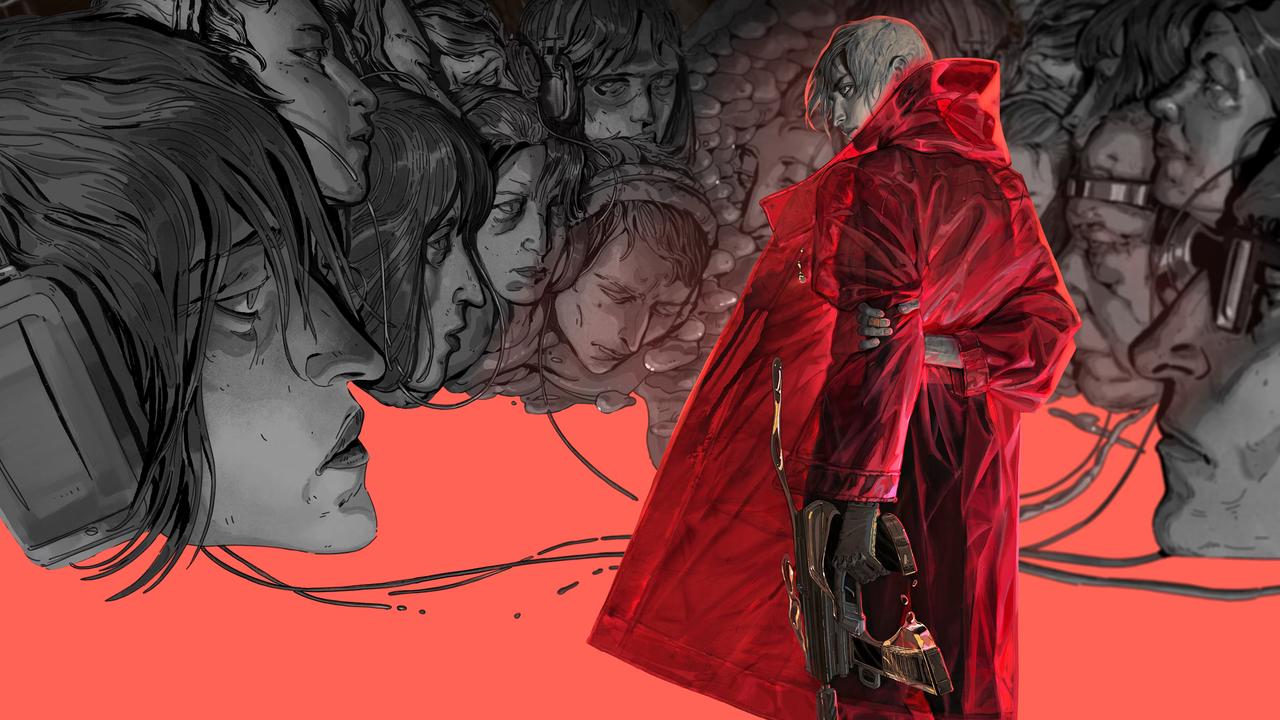
ZERO PARADES: For Dead Spies follows Hershel Wilk, an operant better known by the codename CASCADE. She returns to field work carrying the fallout from a failed mission five years earlier, and the game wastes no time showing how much damage that history left behind. Pseudopod was supposed to brief her, but he isn’t able to give CASCADE the answers she needs. That leaves her tracking the assignment through conversations, half-truths, and scraps of information across Portofiro.
The mystery works because Portofiro never comes across like a simple checklist. The city is packed with agendas. Some people want help and some want leverage. Some sound honest until a later conversation makes you rethink what they actually said. The political and ideological struggle across the city gives every exchange a sour edge, especially once CASCADE’s personal guilt starts connecting to the unrest around her.
This is where the writing does most of the work. ZERO PARADES: For Dead Spies is loaded with text, and there’s no getting around that. Long conversations, internal reactions, and branching responses are the backbone of the experience. The upside is that most conversations give you something to work with: a lead, a character read, a new angle on CASCADE, or a choice that nudges her in a specific direction.
CASCADE’s past is the part that kept pulling me forward. You aren’t just solving an assignment. You’re trying to understand what happened to her team and why the old damage keeps following her into every new room.
Fatigue Anxiety And Delirium Make Bad Rolls Hurt
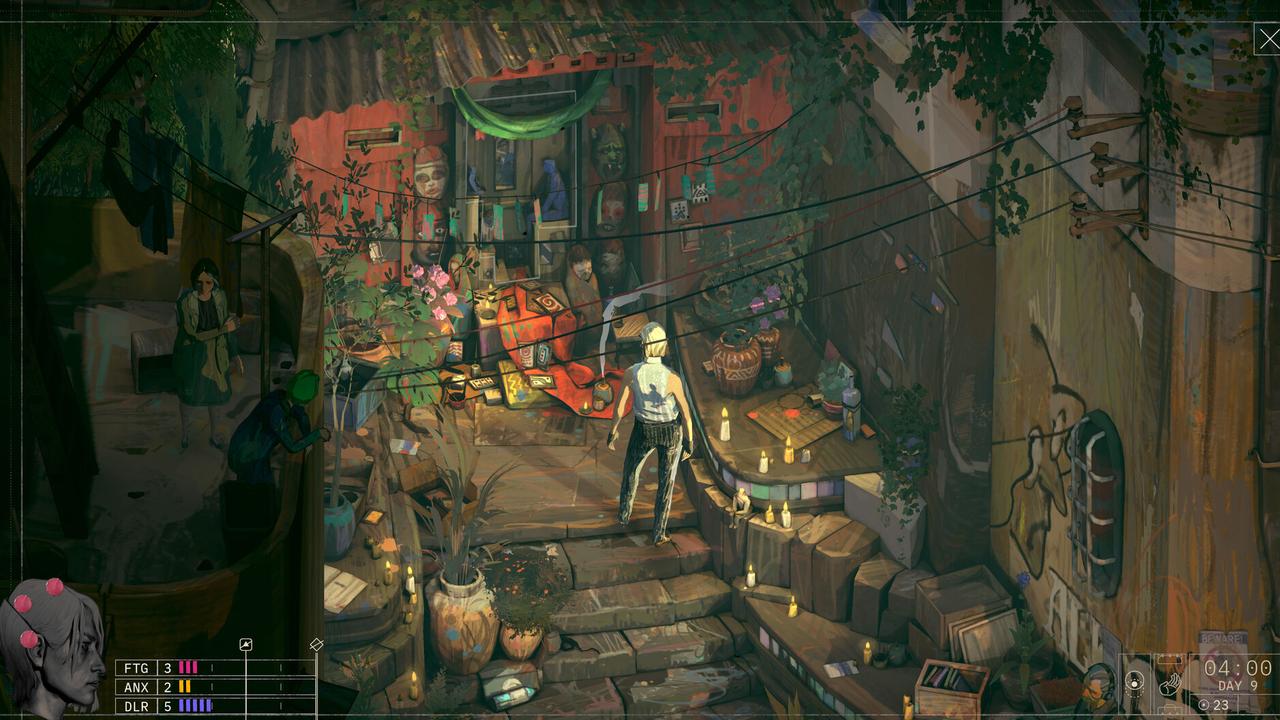
The first thing to understand about ZERO PARADES: For Dead Spies is that failure doesn’t usually stop the game. It creates a new problem. That is where Fatigue, Anxiety, and Delirium come in. These three pressure gauges track CASCADE’s condition, and they give conversations a risk that goes beyond passing or missing a check.

A bad roll can push one of those gauges higher. Push too far, and CASCADE can lose part of what makes her useful. That changes the way you approach dialogue because every risky answer carries a cost. You aren’t just hunting for the most dramatic response. You’re asking whether CASCADE can afford another hit before the next major exchange.
That structure gives failure a real place in the story. I like RPGs that let bad choices become part of the path instead of acting like a reason to reload. ZERO PARADES: For Dead Spies does that well. It lets you limp forward after a mistake, then makes you deal with the person CASCADE becomes after too many bad calls.
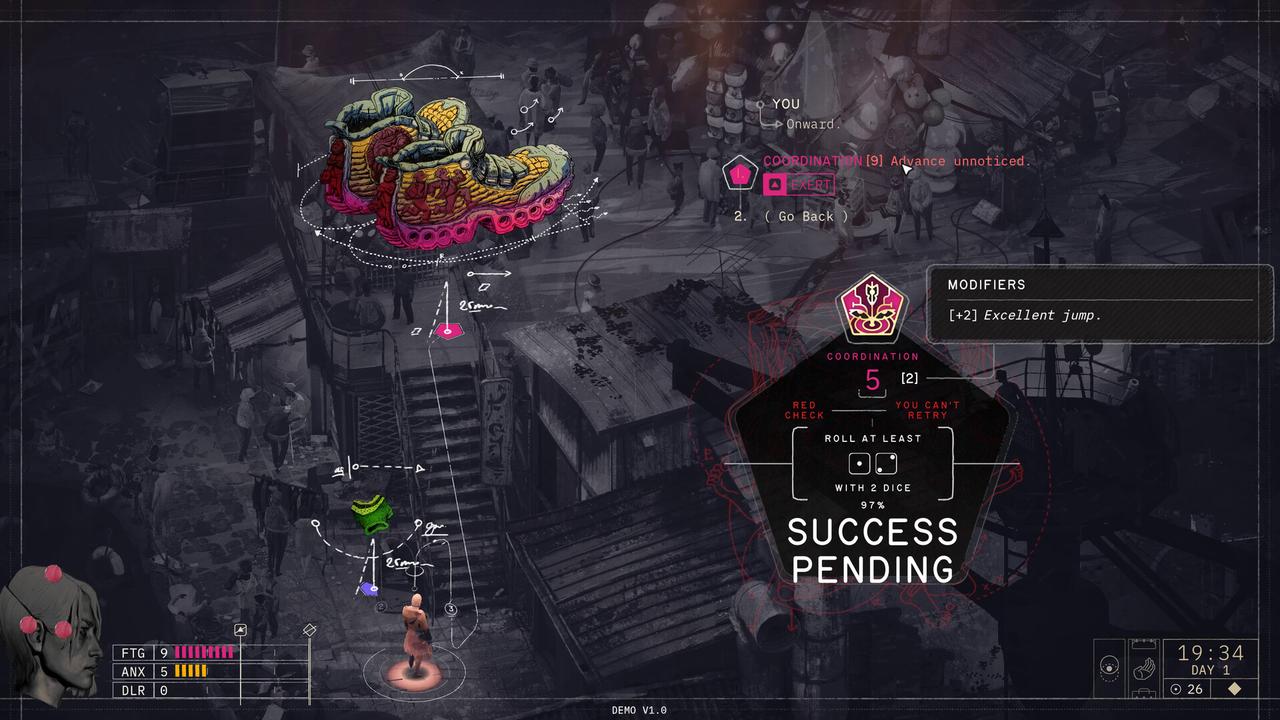
Dice checks are usually clear enough. The bigger problem comes from standard checks that happen without the same warning. Those moments can make stat choices harder to understand early on, especially when you’re still learning how Action, Relation, Intellect, and the three pressure gauges connect. The character growth has good ideas behind it, but the feedback isn’t always as clean as it should be.
Portofiro Makes You Read Between Every Line
ZERO PARADES: For Dead Spies works best when you stop trying to rush it. This isn’t the kind of RPG where you skim a few lines, chase the next marker, and expect every answer to line up neatly. Portofiro gives you names, places, political fragments, odd rumours, and partial hints. The journal helps, but it doesn’t turn the investigation into a guided tour.
That approach fits the spy angle. CASCADE is trying to rebuild a mission without a clean briefing, so it makes sense that you often feel under-informed. You talk to someone, pick up a lead, leave with more questions, then realise later that a small detail changed the meaning of an earlier conversation. When the pieces connect, it works. When they don’t, the game can make you work hard to remember which clue still has value.
Equipment also changes how you approach problems. Clothes and gear can affect stats or open different options, and consumable items can help manage Fatigue, Anxiety, and Delirium. That gives your inventory a purpose beyond flavour. Before a risky conversation, it’s worth checking what CASCADE has equipped and whether one more exchange is worth the pressure it could add.
The downside is that the interface doesn’t always explain the cause and effect cleanly. When you’re choosing where to put a skill point or deciding whether CASCADE should keep pushing before resting, the game should communicate the stakes more clearly. ZERO PARADES often gets there through writing, but its stat feedback sometimes makes you do extra work.

Portofiro Looks Strange Without Losing Its Human Edge
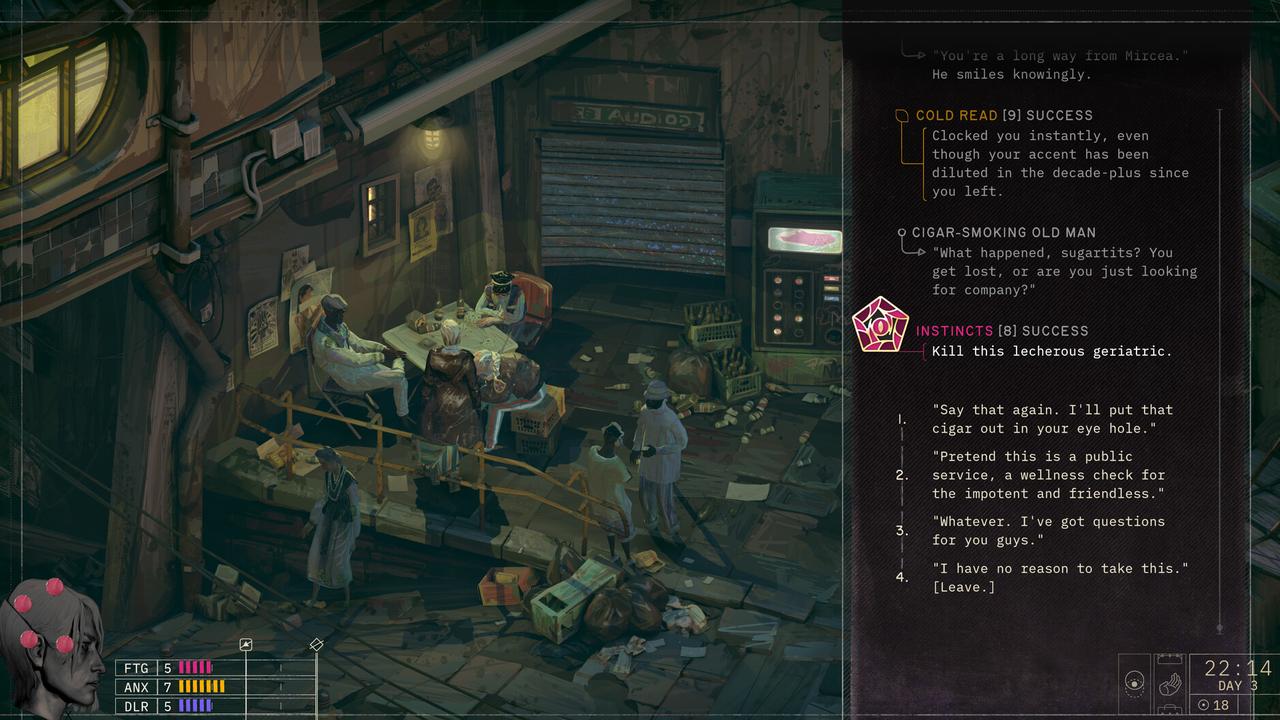
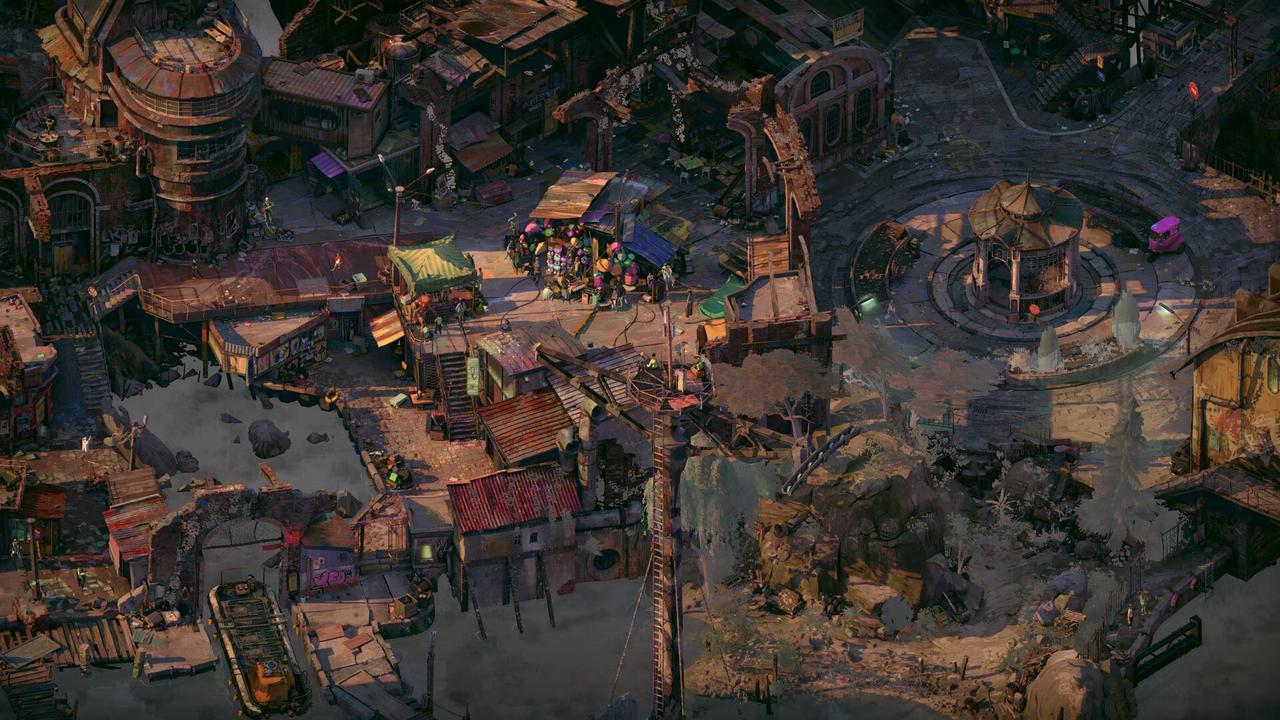
ZERO PARADES: For Dead Spies has its own visual identity. Portofiro doesn’t look like a generic sci-fi city or a standard noir backdrop. It mixes political clutter, strange fashion, public decay, and dreamlike details in a way that makes the city look slightly wrong on purpose. That visual style gives the game personality without needing constant action to hold your attention.
Character portraits, environmental detail, and scene composition carry a lot of the experience during long conversations. That helps in a game where so much happens through text. Faces, rooms, streets, and background objects give you something to study as the dialogue unfolds. Portofiro comes across as a place people actually live in, not just a backdrop for branching conversations.
Voice acting is another key part of the presentation because the writing asks so much from each exchange. When the delivery works, it gives CASCADE and the people around her more bite. You hear exhaustion, paranoia, and strange humour in ways that help sell the city’s mood. The sound design supports that well enough, though some smaller moments don’t have the same pull as the bigger story scenes.
There are some technical issues worth calling out. I ran into stutters when running around Portofiro, and I noticed times where the spoken dialogue didn’t line up with the text. That’s frustrating in a game where the writing is doing so much of the work.
ZERO PARADES: For Dead Spies Turns Messy Choices Into Its Best Moments
ZERO PARADES: For Dead Spies works because it understands the kind of RPG it wants to be. It’s slow, wordy, strange, and often grim. It gives you a damaged spy, a city full of competing beliefs, and choices that don’t always resolve neatly. That won’t work for everyone, but for the right RPG fan, each conversation has a purpose.
The best part is the way failure changes the path. Bad rolls don’t just punish you. They push CASCADE into worse situations, force different approaches, and make the investigation more personal. Fatigue, Anxiety, and Delirium give those mistakes a shape you can track, even if the game isn’t always clear enough about every stat and hidden check.
The drawbacks are practical. Some progression language takes time to learn. Standard skill checks don’t always give you enough warning before they happen. The heavy reading load will turn some people away quickly. I also ran into stutters when moving through Portofiro, along with a few spoken lines that didn’t match the written text. In a game built this heavily around conversation, those interruptions are hard to brush off.
Even with those problems, ZERO PARADES: For Dead Spies is an easy recommendation for anyone who wants a story-first RPG that isn’t afraid to let things get messy. It isn’t a casual spy adventure you can half-follow while doing something else. You need to read closely, make ugly choices, and live with the fallout. For that audience, ZA/UM has made a strange and memorable RPG that kept me invested right through the end.
ZERO PARADES: For Dead Spies


Summary
ZERO PARADES: For Dead Spies is a strong story-first RPG about Hershel Wilk, CASCADE, trying to survive Portofiro’s lies as much as her own past. Fatigue, Anxiety, and Delirium make failed rolls sting, and the writing gives every conversation a clear purpose. Some unclear stat feedback, stutters around Portofiro, and voice/text mismatches hold it back slightly. If you like RPGs built around reading closely and living with ugly choices, this is game is for you.
As always, remember to follow us on our social media platforms (e.g., Threads, X (Twitter), Bluesky, YouTube, and Facebook) to stay up-to-date with the latest news. This website contains affiliate links. We may receive a commission when you click on these links and make a purchase, at no extra cost to you. We are an independent site, and the opinions expressed here are our own.