


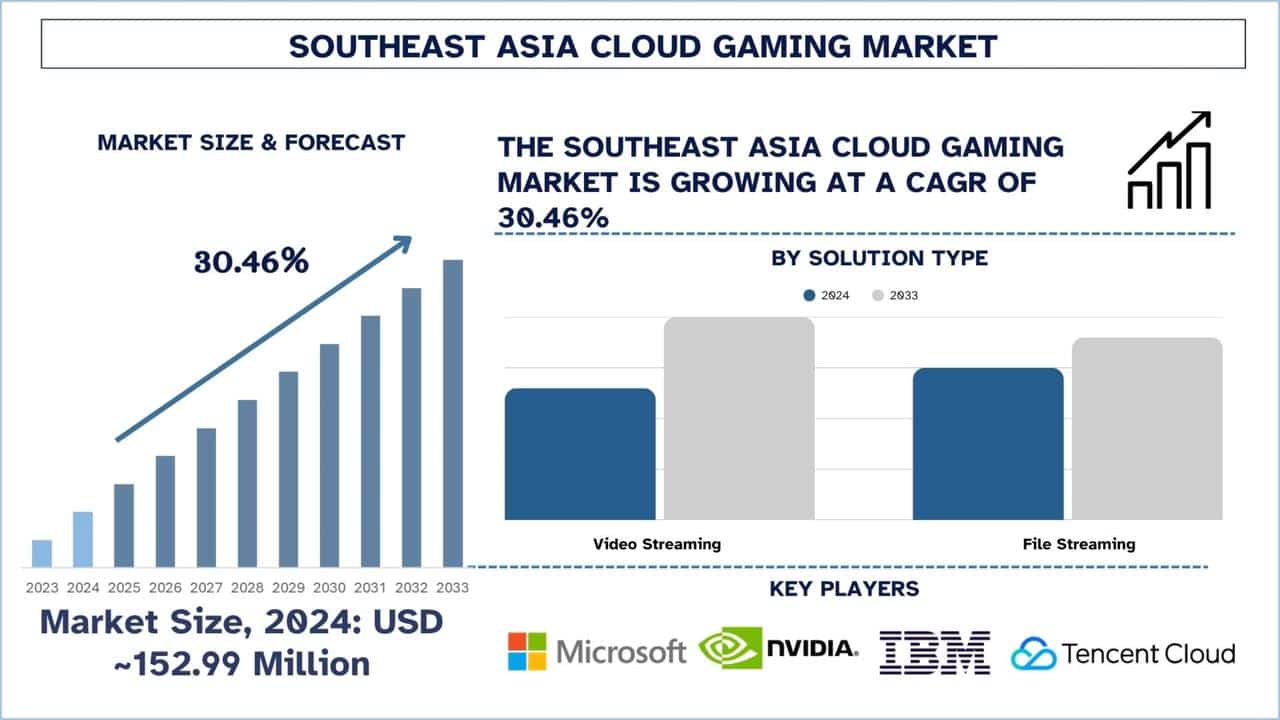
A new market report from UnivDatos projects that cloud gaming in Southeast Asia will grow at a compound annual rate of 30.46% through 2033. At a glance, that number sounds dramatic. Growth at that pace would put the region among the fastest-growing cloud gaming markets in the world.
The part that needs context is where that growth starts. The same report values the entire Southeast Asia cloud gaming market at roughly USD 153 million in 2024. That doesn’t invalidate the projection, but it does change how it should be read. This isn’t a massive market exploding overnight. It’s a relatively small base that could grow quickly if the conditions line up.




The Assumptions Behind the Projection
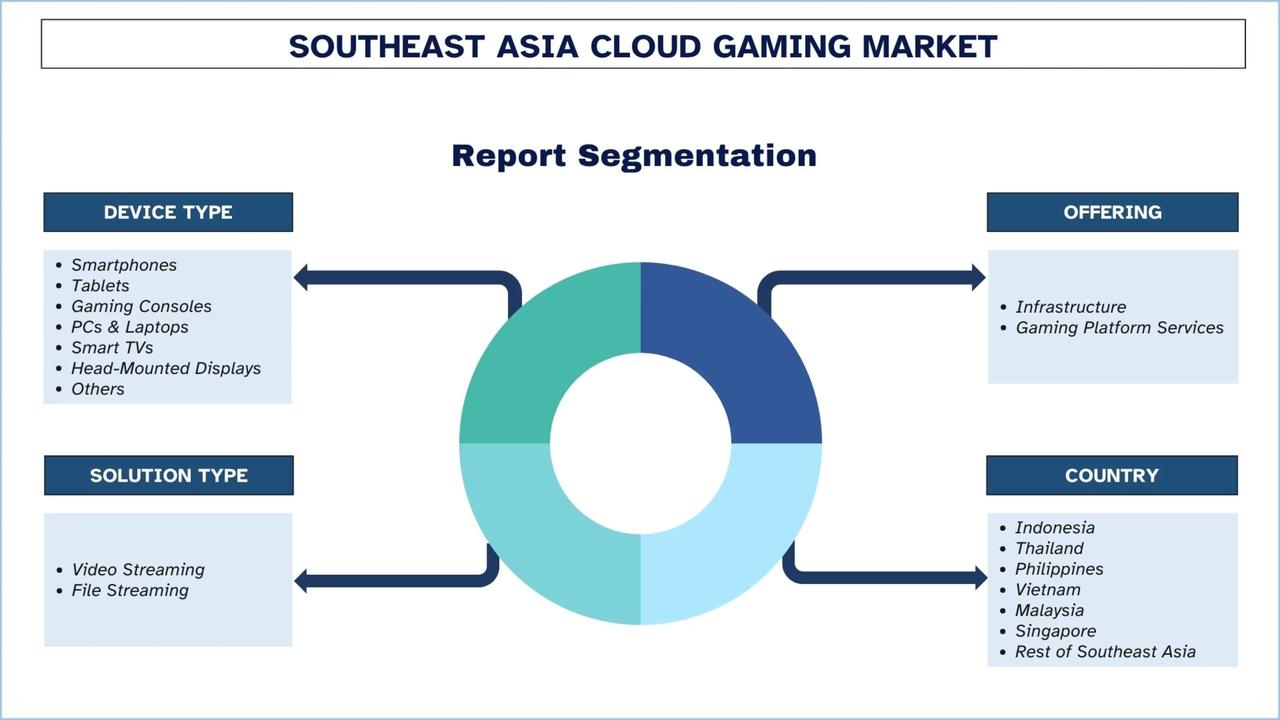
The forecast covers the 2025–2033 period and spans a wide range of devices, including smartphones, tablets, PCs, smart TVs, and consoles. It also separates cloud gaming into video streaming and file streaming approaches, with file streaming expected to grow faster over time.
On the regional side, Indonesia is identified as the largest contributor today, while Vietnam is projected to grow at the fastest rate over the forecast period. The drivers behind the projection are familiar: expanding 5G and fibre networks, high smartphone adoption, improving digital payments, and growing interest in subscription-based access to games.
None of this is surprising. These are the same factors that show up across most cloud gaming forecasts. The question isn’t whether they exist. It’s whether they translate into services that people actually stick with.
Much of the projected revenue growth is tied to platform services and subscriptions rather than raw infrastructure expansion, which helps explain how aggressive growth rates can coexist with relatively modest baseline numbers.
Southeast Asia as a Mobile-First Growth Region
There are good reasons Southeast Asia keeps showing up in cloud gaming discussions. Gaming in much of the region is already mobile-first. Consoles and gaming PCs have never been mainstream for large parts of the population, which lowers the barrier to streaming games instead of running them locally.

Telecom investment also plays a major role. The report points to examples like Singtel’s work with Tencent Games on Honor of Kings ∙ Cloud using network slicing. That kind of deployment shows how cloud gaming can work when connectivity, infrastructure, and content are aligned.
Indonesia’s position as the region’s largest market also tracks. A large population, widespread mobile use, and improving network coverage create conditions where cloud gaming can scale faster than in regions that are still hardware-centric.
Singapore also functions as an infrastructure and testing hub for cloud gaming in the region. Its low latency, strong data centre presence, and higher average subscription spending make it a natural place to pilot and scale services before expanding further across Southeast Asia.
Interpreting a 30% Growth Curve
A 30% compound annual growth rate sounds explosive, but the starting point matters. Growing from roughly USD 153 million leaves plenty of room for percentage gains without immediately turning into a large revenue pool.
This is where projections can feel more dramatic than the underlying reality. Sustaining that growth means more than adding users. It requires supporting consistent performance across countries with very different network quality, pricing sensitivity, and infrastructure maturity.
Low average revenue per user remains a constraint in many Southeast Asian markets. Cloud gaming removes the need for expensive hardware, but it doesn’t remove operating costs. GPUs, data centres, power, and ongoing maintenance still have to be paid for, even when subscription pricing stays low.
Infrastructure Determines Whether Growth Holds Up
One of the more interesting details in the report is the expected growth of file streaming alongside traditional video streaming. Hybrid approaches that reduce bandwidth demands and allow partial local processing could make cloud gaming more workable in areas with uneven connectivity.
That detail matters because it shifts the conversation away from adoption alone. Cloud gaming growth depends on how services are built, not just how many people want to try them. Infrastructure has to be deployable across regions without turning every new market into a special case.
Edge data centres, telecom partnerships, and regional server placement help close the gap, but they don’t remove the need for consistency. As cloud gaming expands into more varied network environments, keeping performance predictable becomes harder, not easier.
Market Reports Don’t Tell the Whole Story
Market reports like this are useful for showing direction and potential scale, but they smooth over a lot of complexity. They don’t reflect the day-to-day realities of running GPU-heavy infrastructure across multiple countries, where costs, regulations, and network conditions vary widely.
That gap matters. Growth projections assume those differences can be managed consistently, but in practice, service quality depends on how well infrastructure is deployed and maintained on the ground, not just on demand trends or subscriber counts.
Growth Is Possible, Not Guaranteed
Southeast Asia has the ingredients that make cloud gaming growth possible. Mobile-first play is already the norm, networks are improving, and telecom operators are actively pushing services closer to users. That creates opportunity, but it doesn’t remove the hard parts.
Growth at this scale doesn’t hinge on projections or subscriber forecasts. It depends on whether platforms can deliver consistent performance across very different markets, with very different costs and network conditions. Infrastructure has to hold up. Pricing has to stay realistic. Services have to work the same way from one region to the next.
A 30% annual growth curve looks clean in a report. The real test is whether cloud gaming platforms can turn expanding networks into experiences people actually keep using, not just trying once.
As always, remember to follow us on our social media platforms (e.g., Threads, X (Twitter), Bluesky, YouTube, and Facebook) to stay up-to-date with the latest news. This website contains affiliate links. We may receive a commission when you click on these links and make a purchase, at no extra cost to you. We are an independent site, and the opinions expressed here are our own.