

In a new AWS for Games blog post, Tyler Ng shared new details about how Amazon Luna operates behind the scenes. Ng is part of the Amazon on AWS Marketing team. Richard Lawrence, Director of Engineering for Amazon Luna, also contributed. One of the biggest details is GPU sharing. The cloud gaming service can run four or more simultaneous game sessions on a single GPU. Rather than dedicating one GPU to each session in most cases, Amazon Luna shares GPU resources between multiple game sessions. Each game is certified around its target performance.
That’s only part of the new look under Amazon Luna’s hood. The post also reports 76% active-time utilization across Amazon Luna’s GPU fleet. It explains how games normally run inside lightweight Linux containers and confirms that Amazon GameLift Streams powers Amazon Luna’s infrastructure. Amazon also says Amazon Luna handles millions of game sessions every night.
Amazon Luna Runs Four or More Game Sessions on One GPU
When you start a game on Amazon Luna, the service selects an available GPU-equipped Amazon EC2 instance based on network latency. Amazon’s global fleet of GPU-accelerated EC2 instances spans dozens of AWS Regions. That allows Amazon Luna to select a nearby available instance and reduce how far the data needs to travel.
That instance handles the work that would normally happen on a gaming PC. Ng and Lawrence explain that it processes the game logic, renders the frames, and manages memory while your local device displays the result. Each environment is also optimized for the specific game being run. Games normally launch inside lightweight Linux containers, with Windows instances used in rare cases.
Streaming, Latency, and Shared GPU Resources
Rendered frames are encoded and streamed at 1080p and 60fps. Controller inputs travel back asynchronously from the game stream. That means the input data makes its return trip separately from the video coming to your screen.
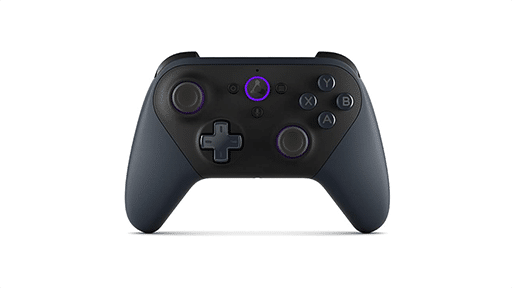
The Amazon Luna Controller takes a more direct route. Because it connects over Wi-Fi, controller inputs go directly to the cloud rather than passing through the display device first. The post explains that this avoids Bluetooth overhead and contention with the TV’s processing path.
Amazon also uses peering and adaptive bitrate encoding as part of its approach to latency. Ng and Lawrence describe the goal as managing latency rather than eliminating it, with regional GPU provisioning, purpose-built input hardware, and adaptive bitrate working together across the connection. I think that distinction is important because latency still exists in cloud gaming. Amazon is explaining how it manages the whole path, because network delay doesn’t simply disappear.
Then there’s the GPU itself. Ng and Lawrence explain that Amazon Luna doesn’t dedicate an entire GPU to one person in most cases. Its multi-tenancy system can run four or more game sessions on the same GPU at once, with each session receiving an allocated slice of that GPU.
The post reports 76% active-time utilization across Amazon Luna’s GPU fleet and describes it as a density metric. That gives us a rare number showing how heavily Amazon is able to use the GPU hardware behind the service.
Every Amazon Luna Game Goes Through Performance Certification
Sharing a GPU between several sessions only works if each game can still hit its performance target. Ng and Lawrence explain that every game in the Amazon Luna catalogue goes through certification. The process checks whether it can maintain its target frame rate within its allocated GPU slice under peak load.
If a game can’t hold 60fps, the post says it won’t ship until the bottleneck is resolved or it is moved to a configuration that can provide the required performance. That gives us a better idea of what happens before a game actually reaches Amazon Luna.
Once a session ends, the environment resets and the instance becomes available for another session. Save data also syncs through your Amazon account across devices. Most games allow those saves to be exported so you can continue on a local PC, although that option isn’t available for every game.
GameLift Streams Powers Amazon Luna Behind the Scenes
The AWS for Games post also directly confirms that Amazon GameLift Streams is the game-streaming service powering Amazon Luna’s infrastructure. We’ve covered GameLift Streams before as Amazon has expanded the technology beyond Amazon Luna, but this gives us clear first-party confirmation of the connection between the two.
Millions of Nightly Sessions and a Bigger Prime Push
The scale behind that infrastructure is becoming clearer too. Amazon says Amazon Luna handles millions of sessions every night. It doesn’t provide a unique-user figure or total number of GPUs behind the service, so those nightly sessions shouldn’t be treated as millions of individual users.
Amazon is also tying Amazon Luna more closely to Prime. Games can be surfaced to more than 200 million Prime members across multiple places in Amazon’s ecosystem, including the Prime Video app. It’s important to note that this is the potential distribution audience, not a claim that more than 200 million people use Amazon Luna.
That comes as Amazon has much bigger plans for Amazon Luna. In July, we reported that Amazon wants the service to reach tens of millions of people within five years. The company also plans to expand Amazon Luna deeper into Prime Video, Fire TV, Twitch, and other parts of its business.
Now we have a much better look at the technology behind that push. Amazon has given us a rare look at what happens behind the scenes when you start a game on Amazon Luna. That includes a GPU fleet spread across dozens of AWS Regions, game-specific environments, and direct controller input. It also includes shared GPUs, performance certification, and GameLift Streams.
As always, remember to follow us on our social media platforms (e.g., Threads, X (Twitter), Bluesky, YouTube, and Facebook) to stay up-to-date with the latest news. This website contains affiliate links. We may receive a commission when you click on these links and make a purchase, at no extra cost to you. We are an independent site, and the opinions expressed here are our own.