


PlayStation is moving toward a future where new console games are sold digitally rather than on discs. A California lawsuit is putting a basic part of that transition under scrutiny. What does it actually mean to “buy” a digital PlayStation game?
The proposed class action was filed on June 18, 2026. That’s less than two weeks before PlayStation announced that physical disc production for new games will end starting in January 2028. The plaintiffs argue PlayStation Store’s checkout process doesn’t make it clear enough that purchasing a digital game grants a license rather than conventional ownership.
Sony Interactive Entertainment has now responded. Game File reports that in an August 21 filing, Sony argues its existing disclosures comply with California law and that reasonable consumers wouldn’t be misled about the rights attached to digital purchases.
The timing makes the dispute especially relevant for PlayStation’s increasingly digital future. If discs are disappearing from new releases, account-based licenses will become even more important to how people buy, keep and access their games.
Sony Says Its Existing Checkout Disclosure Is Enough
When someone buys a digital game from PlayStation Store, the checkout process includes language saying the purchase is subject to PlayStation’s Terms of Service and Software Product License Agreement. Both documents are linked before payment.
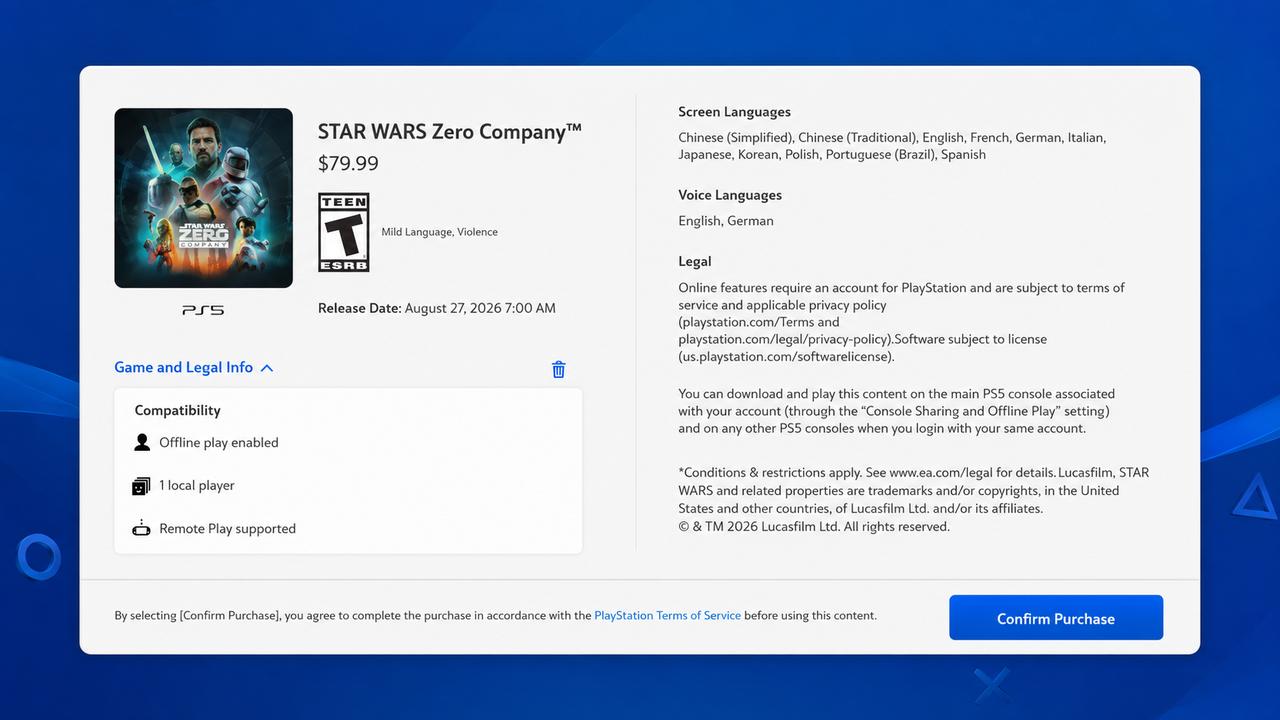
The plaintiffs argue that isn’t enough to satisfy California law. Their complaint points to storefront language such as “Buy Now” and “Confirm Purchase”. While alleging that the actual transaction grants a license rather than transferring ownership of the software.
Game File reports that Sony takes the opposite position in its August 21 filing. Sony points to language in its agreements explaining that customers can use a product according to the license but don’t own the product, and that PlayStation software is licensed rather than sold.
Game File also reports that Sony argues a reasonable consumer wouldn’t understand a digital game purchase as ownership in the same way they would understand ownership of a physical object. Sony’s argument distinguishes a digital copy, which can be licensed to many customers, from a physical object held by one person.
That is Sony’s position in the case. The court hasn’t ruled that the argument is correct.
California Law Regulates How Digital Purchases Are Described
California’s AB 2426 added Business and Professions Code §17500.6 and took effect January 1, 2025. The law covers qualifying digital goods, including digital applications and games.
It doesn’t ban digital licenses, and it doesn’t require companies to provide permanent ownership. Instead, it regulates how sellers use terms such as “buy” and “purchase” when the transaction grants a license that can potentially be revoked.
The statute provides two disclosure routes.
One allows the seller to obtain an affirmative acknowledgement from the customer during each transaction. That acknowledgement must state that the transaction grants a license and provide access to the restrictions and conditions governing it.
The other allows a seller to provide a clear and conspicuous statement before the transaction. That statement must explain in plain language that buying or purchasing the digital good grants a license. It must also provide a way to access the full license terms.
The law also requires the disclosure to be distinct and separate from other terms and conditions.
That distinction is central to the lawsuit. The dispute isn’t over whether PlayStation’s legal agreements contain license language. It is whether the way PlayStation presents that information during a California purchase satisfies the disclosure requirements.
PlayStation Terms Say Digital Purchases Grant a License
Sony’s current U.S. PlayStation Terms of Service spell out the relationship between a PlayStation Store transaction and ownership.
The terms say that when a customer orders or purchases a product from PlayStation Store, the customer receives a personal license for private, non-commercial use. They also say the customer doesn’t own the product.
Sony further states that words including “own,” “purchase,” “sale” and “buy” don’t mean ownership of the content or software has transferred. PlayStation content is licensed on a non-exclusive and revocable basis for limited personal use.
The current U.S. PlayStation Software Application End User License Agreement similarly says game software is licensed rather than sold. It describes that license as limited, non-exclusive, non-transferable and personal.
Those terms make Sony’s underlying licensing model clear once someone reads them. The unresolved legal issue is whether the disclosure a customer sees before completing the purchase meets California’s separate requirements.
The Court Hasn’t Ruled on Sony’s Argument
The case remains pending in the U.S. District Court for the Northern District of California.
The plaintiffs voluntarily dismissed Sony Corporation of America without prejudice on August 20. Sony Interactive Entertainment filed its motion to compel arbitration and stay the proceedings, or alternatively dismiss the complaint, on August 21.
The docket currently sets the plaintiffs’ response for September 4 and Sony’s reply for September 11. A hearing is scheduled for October 1 before Judge Vince Chhabria.
There has been no ruling that PlayStation’s disclosures comply with California law, and the proposed class hasn’t been certified.
The case becomes more interesting as PlayStation moves away from discs. Once new releases become digital-only, the license attached to a purchase will increasingly be the only route to accessing those games. Cloud access can extend that same account-based entitlement to more devices where supported, but the underlying purchase is still governed by a license.
The court isn’t being asked to settle every debate around digital ownership. The narrower question is whether PlayStation tells California customers enough about that license before they complete a digital purchase.
As always, remember to follow us on our social media platforms (e.g., Threads, X (Twitter), Bluesky, YouTube, and Facebook) to stay up-to-date with the latest news. This website contains affiliate links. We may receive a commission when you click on these links and make a purchase, at no extra cost to you. We are an independent site, and the opinions expressed here are our own.