


Video games have always been part of daily life in Canada, I can attest to this, but ESAC’s new Power of Play 2025 report shows just how far that connection really goes. The findings reveal that gaming today isn’t limited by age or gender. It’s part of everyday life for millions across Canada.
More women are gaming than men, and generations are split almost evenly. Canadians are also turning to mobile devices more than ever, it’s clear convenience and accessibility now shape how we play. For many, gaming isn’t just entertainment anymore. It’s a place to relax, connect, and find comfort in challenging times.
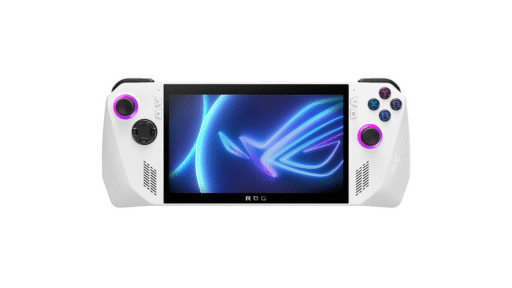
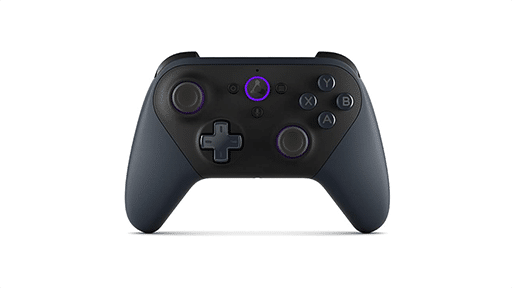
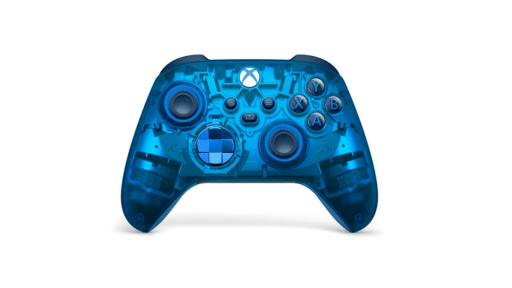
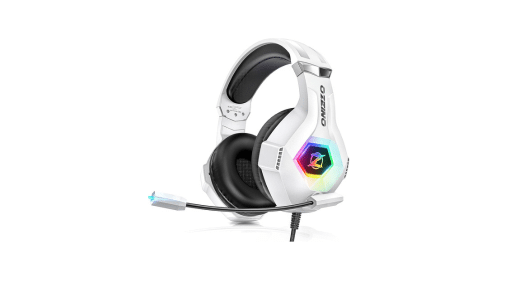
According to ESAC’s Power of Play 2025 report, a large majority of respondents say gaming helps with stress relief and mental well-being. It also strengthens relationships and bridges social divides, showing that games remain one of the most powerful shared experiences in modern life.
The numbers highlight a clear shift in how Canadians think about play, and honestly, it’s not surprising. Here’s what the data says about who’s gaming and why it matters.
Who’s Gaming in Canada and How They’re Playing
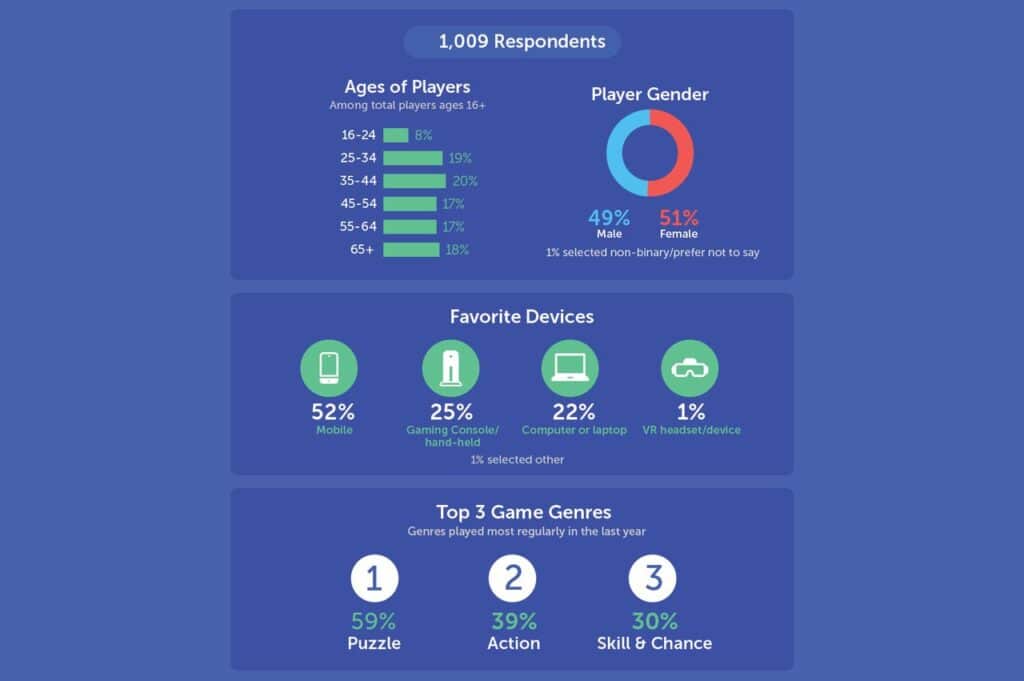
The Power of Play 2025 report paints a detailed picture of who’s gaming across the country. The findings show that gaming has truly gone mainstream, crossing age, gender, and lifestyle lines. Women now make up just over half of all gamers, while men account for slightly less. The numbers also show a near-even split across generations, with adults aged 35 to 54 representing the largest group. That’s my bracket too, and it’s great to see our generation still gaming strong. Older Canadians are also well represented, proving that gaming keeps going long after the teenage years.
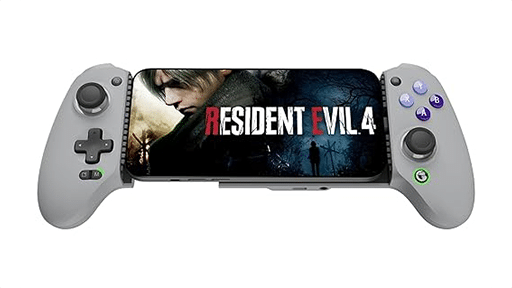
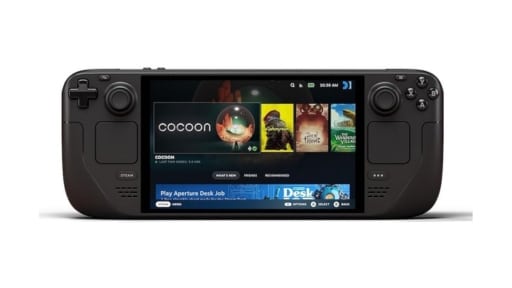
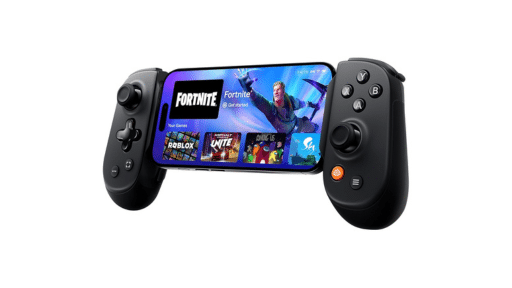
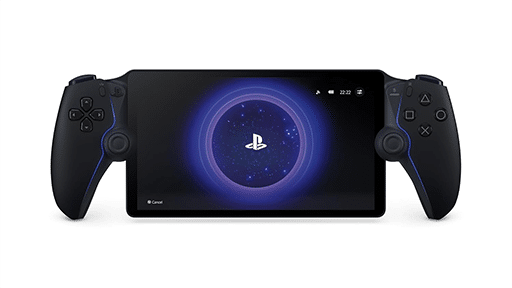
When it comes to how people play, mobile devices now lead by a wide margin. Just over half of us prefer phones or tablets now, with consoles and PCs trailing behind. ESAC’s Power of Play 2025 report notes this reflects a broader shift toward convenience and flexibility. Mobile play lets people fit games into their routines, while cloud technology makes high-end experiences easier to access than ever. Whether it’s a quick puzzle on your phone or a cloud-streamed action game on your lunch break, you’ve got options everywhere.
These trends show that gaming in Canada isn’t tied to one platform or age group anymore. It’s part of everyday life, accessible, flexible, and always evolving. Next, we’ll look at why gaming matters beyond entertainment, from stress relief to meaningful social connection.

Gaming for Wellness and Connection
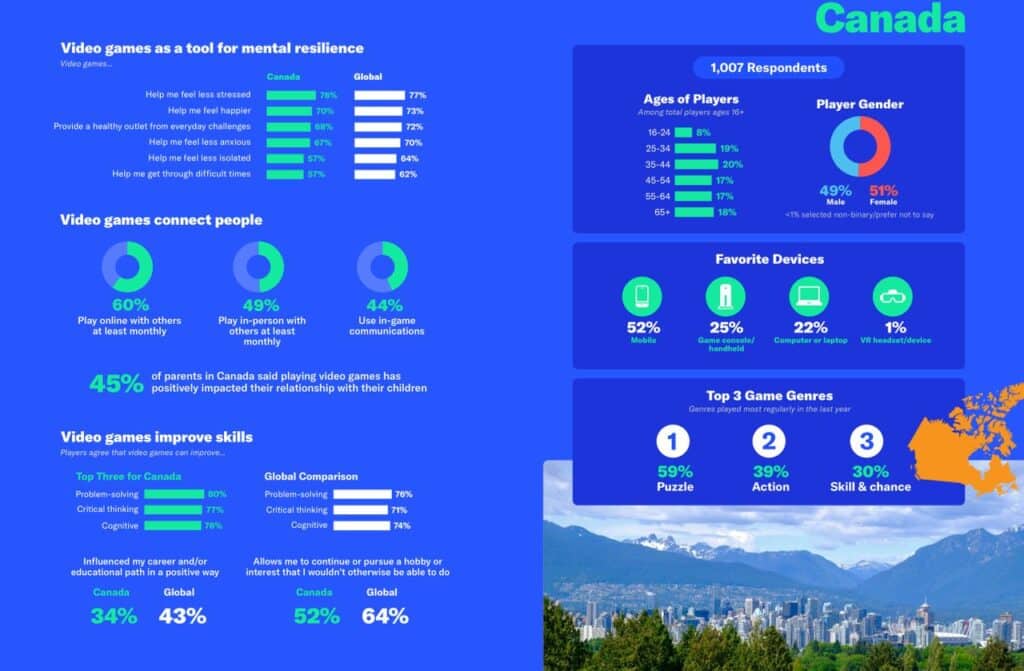
ESAC’s Power of Play 2025 report makes it clear, gaming’s more than a pastime now. For many Canadians, picking up a controller or tapping a phone screen is how they unwind and reset after a long day. The data backs that up: 80% play for stress relief or relaxation, and 70% say gaming makes them feel happier. It’s also seen as a healthy outlet, with nearly seven in ten calling it a way to handle everyday challenges.
Beyond personal wellness, gaming’s also helping Canadians strengthen real-world relationships. More than half use games to stay in touch with friends and family, and 43% have even met a close friend or partner that way. Whether it’s co-op nights that keep old friends connected, weekend puzzle games with parents, or voice chats during an online match, the social side of gaming’s hard to ignore.
That sense of connection goes beyond personal circles, too. Nearly three-quarters of Canadians say gaming brings people from different backgrounds together, and honestly, that checks out. It’s a reminder that games, whether played on consoles, phones, or through cloud services, have become shared spaces where anyone can belong.
These results highlight how games have become tools for balance, bonding, and self-care. Up next, we’ll look at what this means in the bigger picture and how Canada compares to other countries around the world.
The Bigger Picture: Canada’s Place in Global Gaming
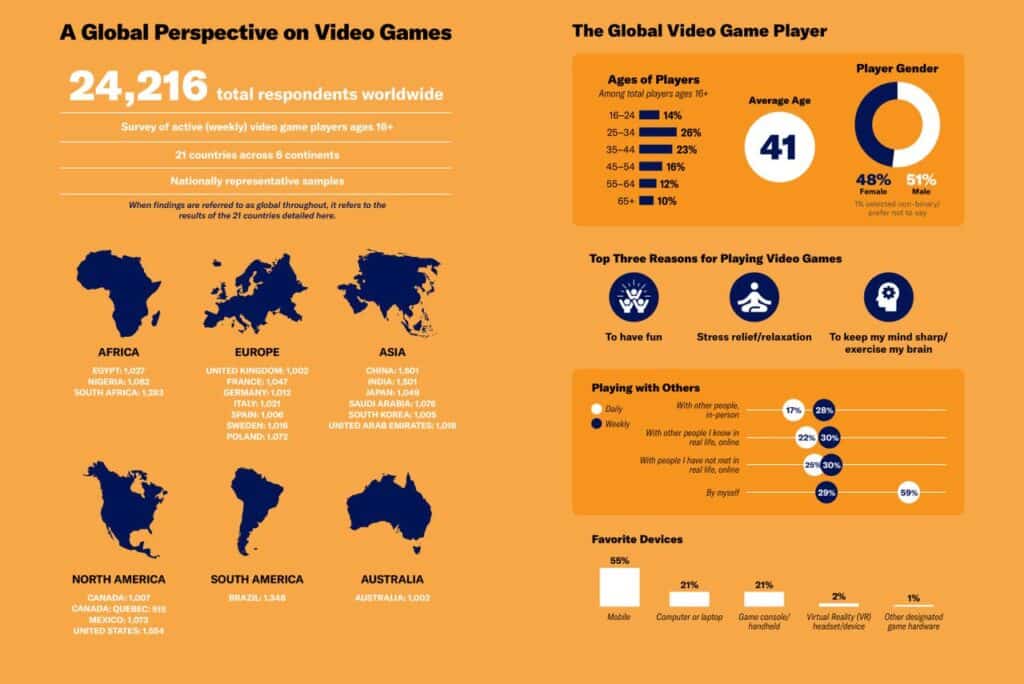
When you look at the Power of Play 2025 report alongside international data, it’s clear Canada stands out in a few key ways. Around the world, gaming keeps growing across every age group, but Canada shows a stronger balance between generations and a deeper connection between gaming and well-being.
Globally, 72% of respondents say games make them happier. In Canada, that figure sits at 70%, with 80% playing for stress relief and relaxation. The gender split is another major difference. While most regions still lean slightly male, Canada’s numbers flip that, with more women gaming than men at 51% to 49%. Puzzle and casual titles dominate here, likely because they’re easy to jump into on mobile or through cloud streaming.
What also stands out is Canada’s focus on community. Three out of four respondents believe games unite people from different backgrounds, a higher percentage than many countries in the report. It shows a gaming culture that’s open, friendly, and focused on connection as much as competition. I’ve noticed that same sense of community firsthand, whether it’s chatting with local gamers online or seeing families playing together at events.
These insights show Canada’s gaming scene isn’t just keeping pace globally. It’s helping define what inclusive, balanced gaming looks like. In the next section, we’ll look at what all this says about the future of play and why it matters now more than ever.
Canada’s Connection Through Power of Play 2025
The Power of Play 2025 report shows a country where gaming’s more than entertainment, it’s part of everyday life. As a Canadian who’s grown up gaming, that feels completely true. The numbers tell a consistent story: Canadians are turning to games for balance, connection, and fun. Whether it’s for stress relief, a quick mental break, or time with family and friends, gaming keeps finding new meaning in people’s routines.
What stands out most is how universal it’s become. The balance between men and women, the even spread across generations, and the rise of mobile play all point to one thing. Gaming belongs to everyone. It doesn’t matter if it’s a puzzle on your phone, a co-op session with friends, or a cloud-streamed action game during a lunch break, you’ve got endless ways to play. The barriers are gone, replaced by convenience and community.
Personally, I love seeing the data line up with what so many of us already know. Gaming isn’t just a hobby anymore. It’s where friendships form, families connect, and people find comfort during difficult times. Those small moments, whether online or on the couch, show how meaningful games have become in shaping modern life.
As technology keeps making play more accessible, Canada’s inclusive and connected approach might just set the standard for the rest of the world. How has gaming helped you stay connected or unwind this year?
As always, remember to follow us on our social media platforms (e.g., Threads, X (Twitter), Bluesky, YouTube, and Facebook) to stay up-to-date with the latest news. This website contains affiliate links. We may receive a commission when you click on these links and make a purchase, at no extra cost to you. We are an independent site, and the opinions expressed here are our own.