


Unlike traditional video streaming, cloud gaming can’t rely on buffering or long look-ahead windows. Every frame needs to be encoded, sent, and displayed almost instantly. Sony’s work focuses on improving visual quality under those tight conditions without increasing latency, which is one of the biggest hurdles for cloud platforms.

Why Game Streaming Is Harder Than Video Streaming
Video streaming platforms can prepare content ahead of time. They analyze scenes, adjust quality levels, and smooth things out using buffers. Cloud gaming does not have that luxury.
When you press a button, the game must react immediately. That means:
- No buffering
- No pre-rendered quality adjustments
- Extremely tight latency limits
- Very little time for decision-making
Sony’s engineers point out that most content-adaptive encoding systems simply cannot work under those conditions. They require too much processing time or rely on data that is not available during live gameplay. That’s where CAE-IGS comes in.
What CAE-IGS Actually Does
Instead of analyzing full video frames, Sony’s approach looks at encoder statistics from previous frames. These stats already exist as part of the encoding process, so the system does not need to perform extra analysis or slow things down.

Using this data, a lightweight AI model predicts the best resolution to use for the next scene. The key idea is that changes only happen at natural scene transitions, which avoids visual instability and keeps performance steady.
According to Sony’s testing:
- The AI runs in under 1 millisecond on a single CPU core
- No extra buffering or lookahead is required
- No additional encoding passes are needed
- The system adapts only when scene changes occur
This makes it suitable for real-time cloud gaming, where even small delays can affect responsiveness.
Measurable Gains Without Added Latency
Sony evaluated the system using modern 1080p60 game footage under strict low-latency conditions. The tests showed:
- Up to 2.3 VMAF improvement compared to static encoding ladders
- Lower bitrate usage without visible quality loss
- Slightly fewer dropped frames during gameplay
- No measurable increase in encoding delay
The biggest improvements appeared in lower and mid bitrate ranges, which are common for handheld devices and remote play scenarios.
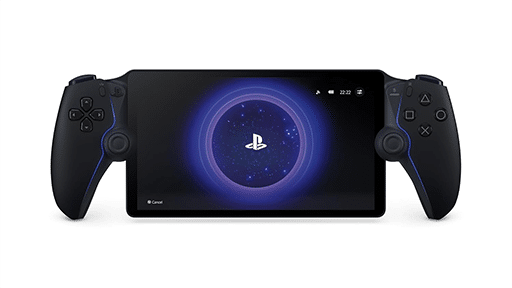
Sony specifically mentions this being relevant to portable streaming use cases, including devices like the PlayStation Portal, where bandwidth and stability can change frequently.
A Shift Toward Smarter Cloud Streaming
Sony’s work highlights something that often gets overlooked when people talk about cloud gaming. Visual quality is not just about bandwidth or raw bitrate. It also depends on how intelligently the stream reacts to what is happening on screen in real time.
Traditional streaming approaches tend to rely on fixed quality levels or heavy buffering. That works for video, but it falls apart in interactive environments where every input needs to be reflected instantly. CAE-IGS takes a different approach by adapting resolution only when it makes sense, using encoder data that already exists rather than analyzing full video frames.
This allows the system to make adjustments without adding delay or increasing processing load. Instead of reacting after quality drops, it anticipates changes and adjusts at natural scene boundaries. The result is a stream that stays visually consistent without interrupting gameplay.
At a technical level, the approach focuses on:
- Adjusting resolution based on scene behavior rather than static presets
- Using predictive data instead of raw video analysis
- Keeping processing overhead extremely low
- Prioritizing smooth delivery over raw visual sharpness
That direction lines up closely with where cloud gaming needs to go. Players move between networks, devices, and screen sizes constantly. A system that adapts in the background is far more useful than one that chases maximum image quality at the expense of stability.
Where This Could Lead
Sony has not said where CAE-IGS will be deployed first, but the design fits naturally with modern cloud and remote play setups. The research is clearly aimed at real-world use, especially in scenarios where bandwidth fluctuates or latency margins are tight.
If this approach is adopted more broadly, it could lead to:
- More consistent image quality across cloud gaming services
- Lower bandwidth requirements without visible loss
- Better performance on handheld and remote devices
- Fewer interruptions caused by sudden network changes
It also reinforces the idea that future gains in cloud gaming will come from smarter encoding, not just stronger hardware or higher bitrates. Improvements like this scale well and benefit every user, regardless of device or connection speed.
A Subtle but Meaningful Step Forward
It’s not the sort of work that gets announced on a stage, but it plays a big role in how cloud gaming improves over time. Stability, responsiveness, and visual consistency are what determine whether a service feels usable day to day.
By focusing on adaptive encoding built specifically for interactive content, Sony is addressing one of the core challenges holding cloud gaming back. It may not be obvious at first, but it has a direct impact on how stable and responsive a streamed game feels.

If cloud gaming is going to continue growing beyond early adopters, this is exactly the type of work that needs to happen behind the scenes.
As always, remember to follow us on our social media platforms (e.g., Threads, X (Twitter), Bluesky, YouTube, and Facebook) to stay up-to-date with the latest news. This website contains affiliate links. We may receive a commission when you click on these links and make a purchase, at no extra cost to you. We are an independent site, and the opinions expressed here are our own.