


Modern PC gaming hardware delivers impressive results, but it does so by pushing the hardware to its limits. When a demanding game loads, desktop GPUs ramp up, cooling systems kick in, and power draw climbs almost immediately. Games like Cyberpunk 2077, Alan Wake 2, or Starfield can push modern PC GPUs to their limits, especially at higher settings. That visual quality comes with a real energy cost.
Most of the time, that cost stays out of sight. You sit down, launch a game, and play. Meanwhile, the electricity meter keeps ticking away in the background. Month to month, it rarely feels dramatic enough to worry about. Over time, especially if gaming is part of your regular routine, it adds up.
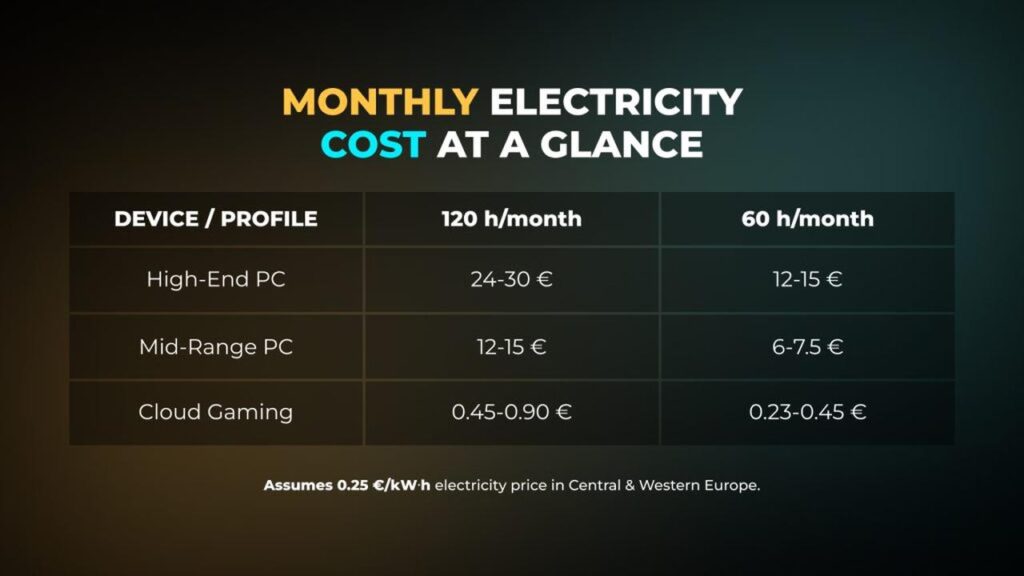
That growing gap between performance and power use is one reason cloud gaming keeps coming up in cost discussions. Boosteroid recently published a detailed breakdown comparing the electricity impact of local PC gaming and cloud gaming. While their numbers reflect specific usage scenarios, the broader pattern behind them is familiar to anyone who has watched their desktop GPU ramp up during a demanding game.
What Your Gaming PC Is Doing While You Play
A local gaming PC handles everything itself. The CPU and GPU render every frame, cooling systems ramp up, and power draw stays high for as long as the game is running.
High-end desktop PCs can easily pull several hundred watts when running modern PC titles like Baldur’s Gate 3 or Microsoft Flight Simulator 2024. Even more modest PC builds still consume far more power than most people expect during longer stretches of play. That is especially true once you factor in cooling, monitors, and everything else running alongside the game.
Sometimes I’ve left a performance overlay on just to see what happens, and the power usage jumps the moment a game kicks in. It is a small detail, but it makes the cost feel real fast. All that PC performance has a constant energy footprint attached to it, whether you notice it or not.
How Cloud Gaming Changes the Power Equation
Cloud gaming flips that setup entirely. The heavy work happens in a data centre, not inside your PC tower. Your local device is no longer rendering frames or pushing a desktop GPU under load. It is decoding a video stream and sending controller inputs back upstream.

In practice, that means your local device barely breaks a sweat, even during longer playtime. Laptops stay quiet. Small PCs stay cool. Smart TVs do not suddenly sound like they are under strain.
Since I’ve been using cloud gaming more often, this difference has become obvious without needing to track numbers closely. Fans stopped ramping up. Rooms stayed cooler. From a day-to-day perspective, it simply feels easier to live with.
Small Differences That Add Up Over Time
On any single day, the power difference between local PC gaming and cloud gaming might not feel important. Over weeks and months, it starts to matter.
Most gaming habits are consistent. A few evenings during the week. Longer stretches on weekends. When that pattern repeats month after month, lower power draw stops being theoretical and starts showing up in real ways.
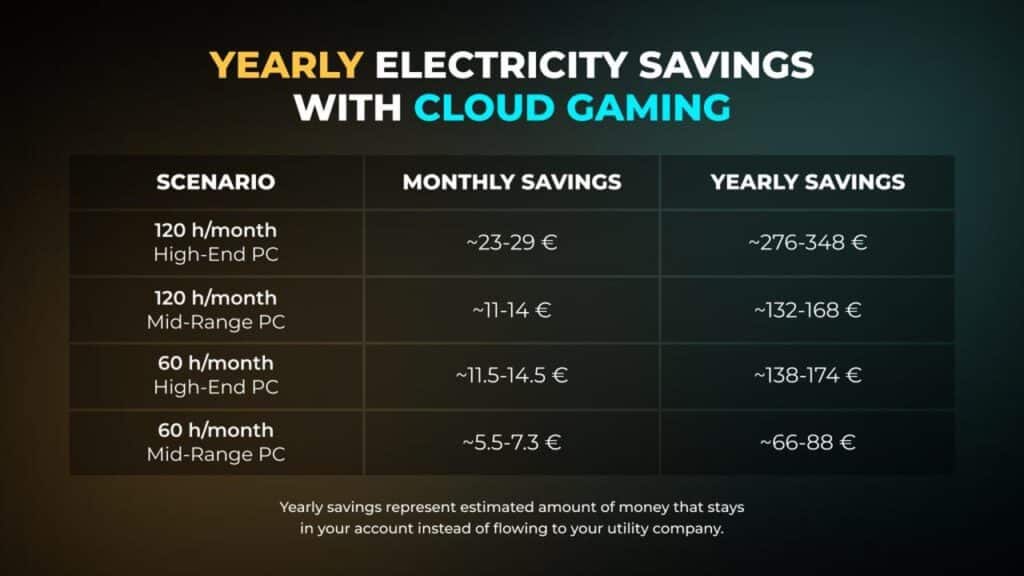
Boosteroid shared one recent breakdown that puts real numbers behind this, showing how replacing a high-end gaming PC with cloud gaming can lead to noticeable yearly power savings. The exact figures depend on local energy prices and usage patterns, but the broader takeaway applies anywhere. Rendering modern PC games locally is energy intensive. Streaming them is not.
Cloud Dosage has looked at this from a household angle before as well, including hands-on power testing across everyday devices in a previous energy cost comparison. That difference becomes harder to ignore the longer gaming remains part of your routine.
Electricity Is Only Part of the Cost Conversation
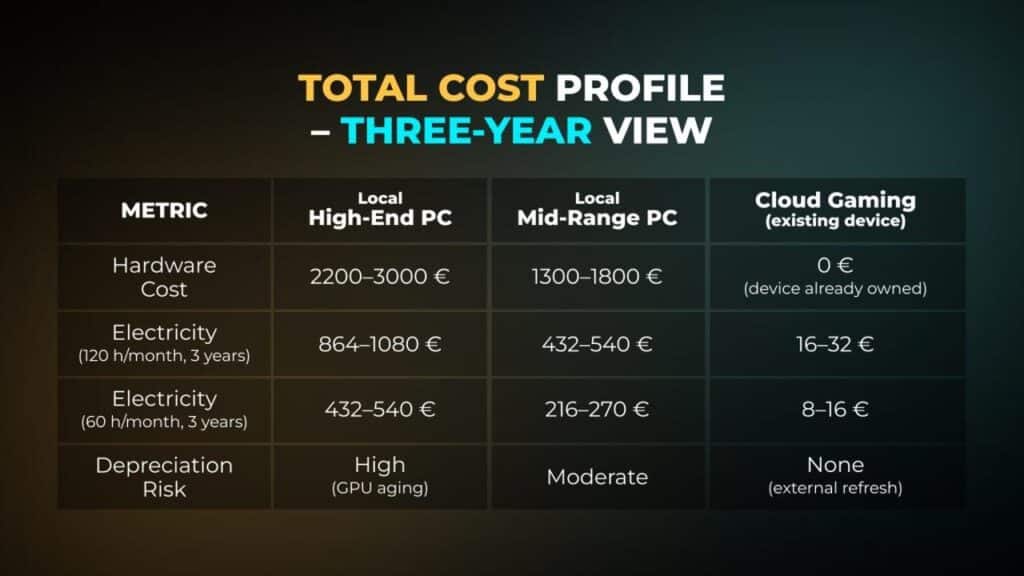
Power usage is only one part of the overall picture. PC hardware itself is a much larger commitment. Gaming PCs and laptops are expensive, and they age quickly. That upgrade pressure tends to arrive faster than most people plan for. A PC that feels comfortable today can start feeling stretched a few years later as new releases raise performance expectations.
Cloud gaming does not remove hardware costs entirely, but it changes how they are handled. Many people already own laptops, tablets, or smart TVs for work, school, or entertainment. Using those same devices for gaming spreads their value across more use cases instead of tying performance to a single desktop build.
I notice this most on days when I switch devices without really thinking about it. Playing on a laptop earlier in the day, then picking up the same game on the TV later that night. No upgrades. No downloads. No extra setup.
Looking at the Long-Term Tradeoff
Over a longer window, the difference between local PC gaming and cloud gaming becomes clearer. Local setups tie performance, power usage, and upgrade cycles directly to your personal hardware. Cloud gaming separates those concerns, shifting most of the heavy lifting away from your home and onto centralized infrastructure.
The cost does not disappear. It moves. Instead of managing higher power draw at home and planning when the next GPU upgrade becomes unavoidable, you rely on hardware that is refreshed out of sight. For some gamers, that tradeoff will never feel right. For others, especially those juggling limited space, shared living areas, or multiple screens, it can be a practical alternative.
Neither approach is universally better. What matters is flexibility and having options that fit how you actually play.
Why This Matters for Cloud Gaming’s Future
Cloud gaming is often framed around convenience or access, but power usage adds another reason it continues to gain attention. Modern PC games are more demanding than ever, and that trend is not slowing down. As visuals improve and hardware requirements climb, the energy side of PC gaming becomes harder to ignore.
This does not mean local PC gaming is going away. Hybrid setups already feel normal. Some games still make the most sense on a desktop. Others fit better in the cloud, depending on the moment, the device, or how much overhead you want to deal with.
Boosteroid’s data helps underline how wide the power gap has become, but the idea extends far beyond one platform. Once you see that difference clearly, cloud gaming stops feeling like a novelty and starts feeling like a practical option you can reach for when it fits your setup.
As always, remember to follow us on our social media platforms (e.g., Threads, X (Twitter), Bluesky, YouTube, and Facebook) to stay up-to-date with the latest news. This website contains affiliate links. We may receive a commission when you click on these links and make a purchase, at no extra cost to you. We are an independent site, and the opinions expressed here are our own.