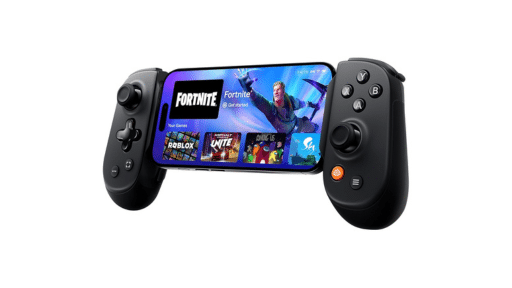



Cloud gaming runs on GPUs in data centres you never see. When you start a game through a cloud gaming service, you’re borrowing a small slice of that power. That GPU might be shared with AI training jobs, film rendering, or a range of enterprise tools. The same hardware behind chatbots and fraud detection is also responsible for streaming your games.
A new GPU-as-a-Service market report puts real numbers on that shared pool. It estimates the market at around USD 5.7 billion in 2025 and USD 7.36 billion in 2026. The same report projects USD 26.43 billion by 2031. That path works out to growth of just over 29% a year. Those numbers cover every workload that rents GPUs, not only games.
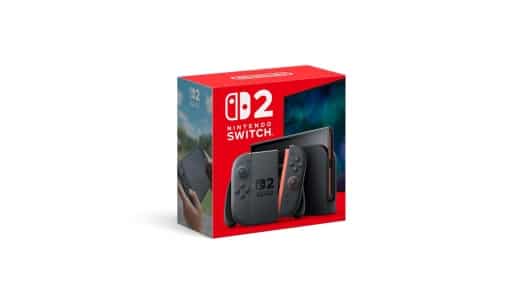


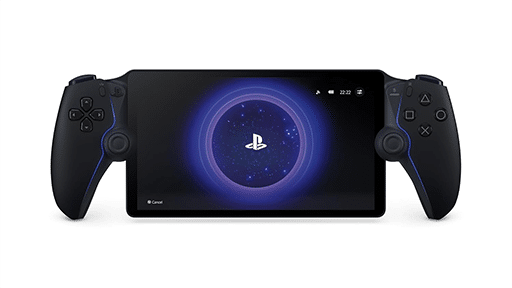
Recently, we looked at Southeast Asia’s projected 30% annual cloud gaming growth. That piece focused on how that market might develop over the next decade. This time the focus shifts to the GPU-as-a-Service infrastructure behind those services. It shows where cloud gaming fits inside a much larger pool of rented GPU power.
Cloud gaming sits inside that bigger story. It doesn’t drive most of the revenue today, but it is one of the fastest rising entertainment uses for rented GPUs. Understanding where it fits helps explain why some services expand quickly. It also shows why others arrive in limited regions and why premium tiers still cost what they do.
GPU-as-a-Service Turns GPU Power Into Something You Rent
GPU-as-a-Service, or GPUaaS, is a way to rent GPU power instead of buying graphics cards outright. Providers run large pools of GPUs in data centres and carve that capacity up across many customers. One group might be running AI research. Another uses the same hardware for video rendering. Cloud gaming slots into that same pool during busy hours.
This model suits modern GPUs because they are built for massive parallel workloads. They can handle AI models, image processing, simulation, and real-time game rendering from the same hardware base. Renting that power avoids the up-front cost of filling racks with GPUs. It lets companies scale up or down based on demand instead of guessing years in advance.
The report calls out two broad groups of providers. On one side are hyperscalers like Amazon Web Services, Microsoft Azure, Google Cloud, and other large platforms that already run global infrastructure. On the other side is a growing list of specialist GPU clouds such as CoreWeave, Lambda, Vast.ai, and RunPod. They focus on GPU capacity with tuned pricing or performance for particular workloads. Both paths can form the foundation for cloud gaming services.

Behind the scenes, data centres are pushing denser racks and liquid-cooling upgrades to fit more GPUs into the same physical space. For cloud gaming, more GPUs in a region mean more room for new services and better headroom for 4K, higher frame rates, and ray tracing.
AI Gets First Call on Most of Today’s GPUs
Right now, AI is the main reason GPU-as-a-Service exists at this scale. The report estimates that artificial intelligence workloads account for around 46.7% of GPUaaS revenue in 2025. Banks, car makers, retailers, and tech companies are booking large clusters of NVIDIA H100 and H200 cards for language models, recommendation tools, and analytics.
These projects go far beyond a handful of cards in a single rack. Training large transformer models can tie up thousands of GPUs for weeks at a time. Many of these customers sign multi-year contracts or reserved-capacity deals. They commit to a set amount of GPU power over time in exchange for price breaks and dedicated support teams.
Large enterprises hold more than half of the revenue in this market, roughly 55.5% in 2025 according to the report. That means a lot of the highest-end GPU supply is already spoken for before cloud gaming enters the picture. Smaller teams and start-ups still benefit because they can rent the same hardware without owning it, but they have to fit around those bigger bookings.
For cloud gaming, that order of priorities shapes which GPUs are still available. If AI customers lock in the fastest GPUs in a region, gaming providers might rely on older generations or fewer cards per server. Some providers also use mixed setups that share hardware between games and other visual workloads.
Cloud Gaming and Media Rendering Grow Fastest Inside GPUaaS
Within that context, cloud gaming and media rendering are growing especially quickly, even if they don’t dominate revenue yet. The report groups cloud gaming and media rendering together. It projects that category to grow at around 30.35% a year through 2031, the fastest rate among the major application groups in GPUaaS.
That category covers a few related activities. Cloud gaming uses remote GPUs to render frames and stream them back to you as video. Media rendering covers film and TV content, cutscene production, visual effects, and other work where artists queue scenes to be rendered on demand. Newer workloads blur the lines, like streaming Unreal Engine projects to remote clients or simulating autonomous vehicles using game engines alongside AI tools.
Providers try to match these activities to daily and weekly patterns. Gaming demand often spikes in the evenings and on weekends, while film rendering and many enterprise jobs can be scheduled during quieter hours. Renting the same GPU pool to both groups keeps cards busy and improves utilisation. That balance helps justify regional build-outs and new data centre investments.
For cloud gaming, the important point is that it is no longer treated as an isolated edge case. It is part of a broader set of entertainment and visual workloads that are starting to be recognised as a serious use for rented GPU power.
Pricing and Providers Show Why Costs Still Matter
One of the clearer parts of the report is how it describes pricing tiers. A common reference point is NVIDIA’s A100 and H100 GPUs. The public summary pegs A100 instances at around USD 0.66 per hour in some configurations, while H100 instances sit at USD 4.00 per hour or higher, depending on how much memory and bandwidth they offer.
Those numbers are not tied directly to any one cloud gaming platform, but they show some of the economics behind subscription prices and premium tiers. A cloud gaming provider has to cover GPU rental, data centre space, power, network bandwidth, and licensing costs for games. If they want to run newer GPUs to support higher resolutions and ray tracing, their hourly cost goes up.
Hyperscalers can hide some of this behind broader contracts and bundled services, while specialist GPU clouds compete by tuning price and performance for specific workloads. For cloud gaming, that competition can help. A smaller provider might offer a better deal on certain GPU types or in specific regions, which makes it easier for platforms to roll out new markets or test different quality tiers.
At the same time, those prices explain why it is hard to drive subscription fees down without limits. AI customers are often willing to pay more per hour than a typical gaming subscription can support. That is especially true for short bursts of heavy training. If capacity is tight, providers have to decide whether to sell that time to AI workloads or allocate it to cloud gaming.
Regional GPU Growth Shapes Where Cloud Gaming Can Expand
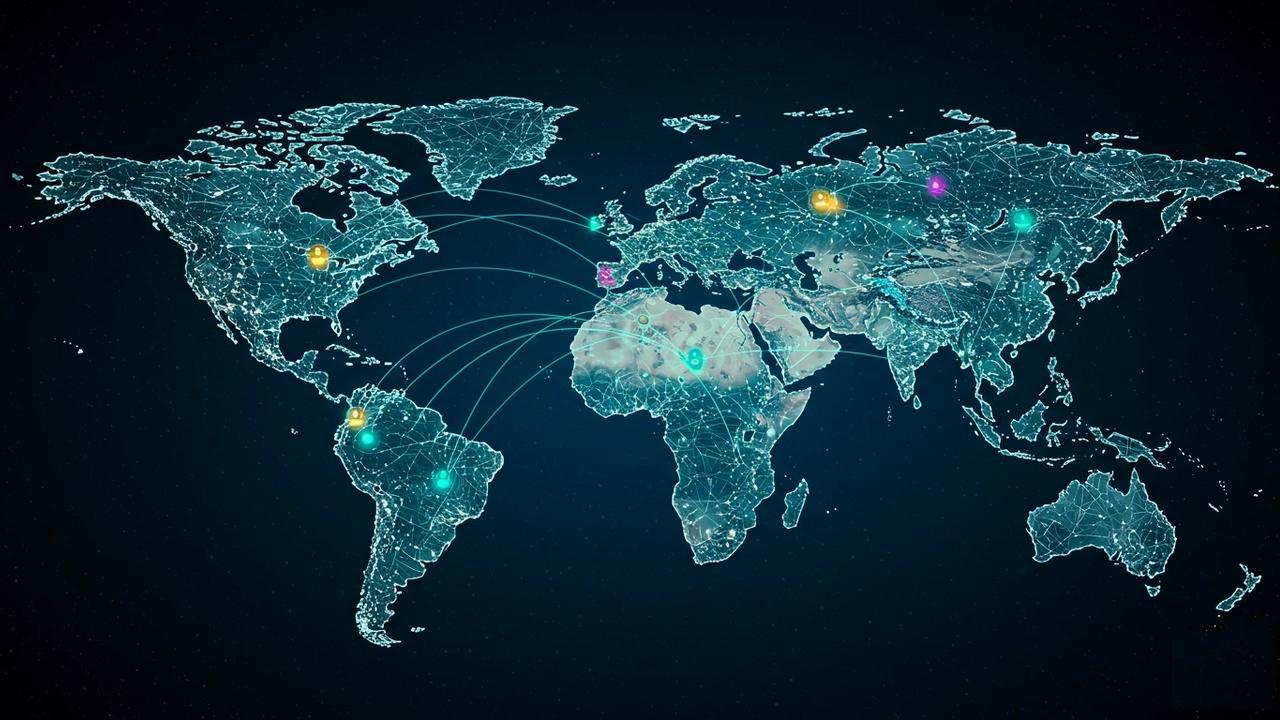
The GPU-as-a-Service report also breaks down growth by region, which lines up with where you already see strong cloud gaming footprints and where launches have been slower. North America currently holds just over 30% of global GPUaaS revenue. It benefits from deep hyperscaler presence, established data centres, and a large base of enterprise AI projects.
Asia-Pacific is projected to grow almost as quickly as the overall market, with a forecasted rate of around 29.7% a year. Government-backed AI clouds, manufacturing digitisation, and incentives in countries like Singapore, India, Japan, and South Korea all feed into that curve. More regional GPU capacity means more potential homes for cloud gaming servers, especially when telecoms and cloud providers work together.
Europe’s growth is shaped by sustainability rules and data-residency requirements. Providers invest in renewable energy, heat reuse, and regional clusters that keep data within specific borders. South America and the Middle East & Africa are smaller in absolute terms. Both regions show double-digit growth as broadband improves and local AI ecosystems develop.
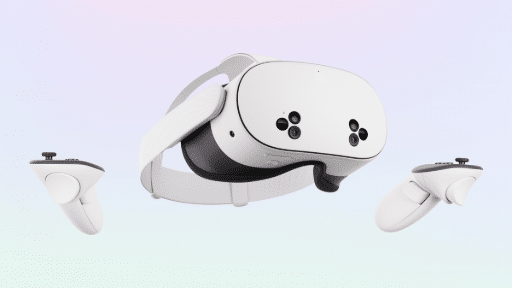


For cloud gaming, all of this translates into a simple pattern. Services expand fastest where GPUaaS is already established or accelerating. If a region is building out AI and enterprise GPU capacity, it is easier for a cloud gaming platform to build on top of that investment. Where GPUaaS grows more slowly, cloud gaming has to wait, accept limited coverage, or rely on more distant data centres with higher latency.
Cloud Gaming’s Place in the Growing GPUaaS Ecosystem
Putting it all together, GPU-as-a-Service is turning GPU power into a shared utility that many industries draw from. AI and enterprise tools pay for most of the capacity today. Cloud gaming and media rendering are among the fastest rising entertainment uses within that pool.
When you open a cloud gaming app and jump into a match, you’re tapping into the same infrastructure that runs chatbots and fraud detection. The same data centres also support language translation and film rendering. The price of those GPUs and the way they are allocated between customers shape where you can stream games and which quality settings are available. Data centre locations also decide how quickly new territories come online.
Cloud gaming does not need to own the entire GPUaaS market to keep growing. It needs stable access to a share of that expanding pool in regions where connectivity and demand justify the investment. As GPUaaS heads toward the projected USD 26 billion mark by 2031, that shared foundation is likely to matter more than any single forecast about subscriber counts or individual platforms.
As always, remember to follow us on our social media platforms (e.g., Threads, X (Twitter), Bluesky, YouTube, and Facebook) to stay up-to-date with the latest news. This website contains affiliate links. We may receive a commission when you click on these links and make a purchase, at no extra cost to you. We are an independent site, and the opinions expressed here are our own.