


Jack Buser, Global Director for Games at Google Cloud, believes AI could change more than the way games are developed. His bigger idea is what he calls “living games,” where characters remember what you’ve done, relationships can change over time, and game worlds react without relying entirely on predetermined outcomes. The interesting part for cloud gaming isn’t just the AI. It’s the infrastructure needed to keep those experiences running.
That’s an important distinction. A game doesn’t become a cloud game simply because it uses Google Cloud servers, databases, or AI processing. You could still download and run the game locally on your PC or console. But if more games begin relying on persistent memory, AI inference, and worlds that react to your history, cloud infrastructure could become increasingly important to what happens inside the game itself.
Living Games Go Beyond Traditional Adaptive AI
Games have been reacting to your actions for decades. Dynamic difficulty can adjust a challenge, procedural generation can rearrange environments, and NPCs have long followed behaviour trees or state machines. Buser argues that living games cross a different line.
That distinction became clearer in the LinkedIn discussion around his article. Aniket Sinha asked where adaptive design ends and a living game begins. Buser’s answer centred on persistent contextual memory and agency. In his description, characters can remember prior interactions, relationships can evolve, and the world can change without every outcome being mapped in advance.
Google is already pointing to early examples. Square Enix is integrating Chatty Slimey into Dragon Quest X Online, a Gemini-based companion designed to form an evolving relationship with you. YOU vs. Zombies uses AI generation to create personalized playable heroes, while Ubisoft’s Teammates prototype lets you direct AI squadmates through natural voice commands.
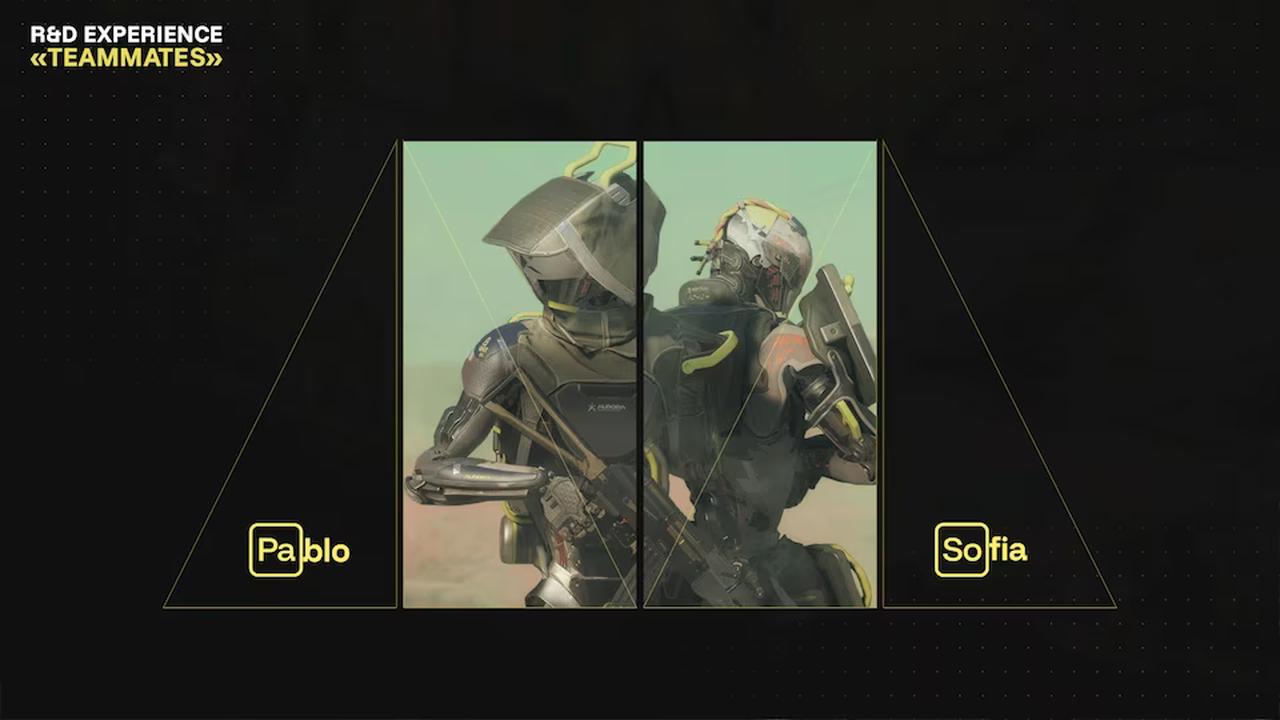
These examples don’t establish that a completely new genre has arrived. They do make Buser’s definition easier to understand. The shift he is describing isn’t simply smarter enemies. It’s a game maintaining enough context about your actions for later interactions to change because of them.
Cloud Infrastructure Becomes Part of the Equation
This is where the infrastructure side gets much more interesting.
In his LinkedIn reply to Sinha, Buser called infrastructure for these experiences a largely unresolved problem. Community-hosted servers are particularly tricky because running heavy AI inference locally could require more GPU resources than operators can reasonably provide. He suggested that optimized low-latency cloud APIs and state caching could move that workload away from individual hosts.
Google Cloud’s own gaming infrastructure already covers several pieces that would be useful for that model. Google Kubernetes Engine can run and scale dedicated game servers, while Cloud Spanner is designed to maintain fast and consistent data access across large online games. Google positions Cloud Spanner for persistent game worlds and its generative AI services for dynamic in-game experiences.
None of that means Google’s current products automatically solve persistent AI memory at massive scale. Buser’s LinkedIn answer specifically describes that area as unfinished. What it does show is why the cloud conversation around AI games goes beyond streaming pixels from a remote machine.
A living game may need somewhere to remember your relationship with a character, maintain changes you’ve caused in the world, process an AI model, and deliver the result quickly enough that the interaction still feels immediate. Those jobs sit much closer to cloud infrastructure than traditional local game logic.
AI Is Already Taking Work Out of Game Development
Capcom is already using AI agents for automated testing. Google says the company’s setup performs more than 30,000 hours of autonomous playtesting each month. Different agents inspect visuals, identify areas more likely to break, preserve internal development knowledge, and help developers work through large technical datasets.
That is different from having an AI companion remember you inside a finished game. It’s also useful evidence for Buser’s broader argument because it deals with one of the least glamorous parts of making increasingly complicated games.
Research conducted by The Harris Poll on behalf of Google Cloud found 95% of surveyed developers said AI was reducing repetitive work. Playtesting and balancing were among the most common areas where respondents were already using it. The same study found 29% believed AI could help smaller studios compete with established companies.

There are limitations to those numbers. Google Cloud commissioned the study, and its respondents were game developers rather than the wider gaming public. The research also found substantial concerns. Data ownership was cited by 63% of respondents, with player-data privacy at 35% and uncertainty around ownership of AI-generated content at 32%.
Cloud Gaming and Cloud-Powered Games Aren’t the Same Thing
That distinction is important because cloud gaming and cloud-powered game infrastructure solve different problems.
Cloud gaming moves game execution away from your device and streams the resulting experience to you. Cloud infrastructure inside a locally executed game is different. It can support multiplayer servers, databases, live operations, AI processing, persistent state, and other work without streaming the whole game.
We’ve already seen how deeply cloud infrastructure sits behind modern gaming. Google’s living-games argument pushes that idea another step. If persistent memory and AI-driven reactions become normal parts of game design, the cloud may increasingly help determine not only whether an online game stays connected, but what that world remembers about you.
That future isn’t settled. Buser himself acknowledges that some of the infrastructure needed for community-operated living worlds remains unresolved. But that’s exactly why this part of the AI discussion is worth watching. The next major cloud-gaming story may not always be another service streaming another game. It may be the cloud becoming part of how the game behaves in the first place.
As always, remember to follow us on our social media platforms (e.g., Threads, X (Twitter), Bluesky, YouTube, and Facebook) to stay up-to-date with the latest news. This website contains affiliate links. We may receive a commission when you click on these links and make a purchase, at no extra cost to you. We are an independent site, and the opinions expressed here are our own.