Cloud Infrastructure

T-Mobile Completes Live 5G AI-RAN Call With NVIDIA and Nokia

T-Mobile has completed a live 5G AI-RAN call using NVIDIA and Nokia technology in Bellevue, Washington. We look at the network trial, Supermicro’s supporting infrastructure and how the development connects to existing cloud gaming improvements.
Read More
Gaming Tops GPU-as-a-Service Market as AI Demand Grows
Gaming topped GPU-as-a-Service revenue in 2025 as AI demand grew. What does the $14.46 billion forecast really tell us about cloud gaming?
Read More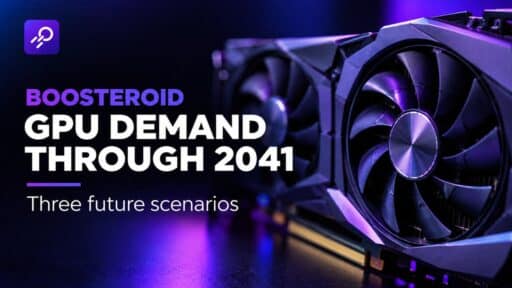
Boosteroid Models How Future Games Could Change GPU Demand
Boosteroid has published three scenarios for GPU and accelerator demand through 2041, examining the roles of AI agents, robotics and interactive entertainment. Graphics, gaming and media range from 12% to 25% of new infrastructure demand in the 2041 scenarios. More complex game worlds could require more server computing power for each hour of play.
Read More
How Cloud Gaming Is Bringing 3D Worlds to Web Browsers
Cloud gaming technology is finding uses beyond games. Epic’s Pixel Streaming, PropVR property tours, and NVIDIA CloudXR.js illustrate how remote GPUs make interactive 3D accessible through browsers.
Read More

Dreamlands Launches on Google Cloud Marketplace With Fortnite Project
Dreamlands has launched on Google Cloud Marketplace. Three creators are turning Fortnite into a stage for fan-made Pride and Prejudice stories.
Read More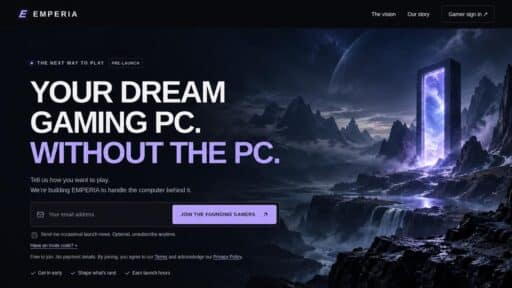
EMPERIA Launches Founding Community Before Its Cloud Gaming Platform
EMPERIA, a new cloud gaming startup, has launched its free Founding Gamers community before its platform exists. See what comes next.
Read More
Zain KSA Deploys Nokia Deepfield for Low-Latency Cloud Gaming and Streaming
Zain KSA deploys Nokia Deepfield across 100+ Saudi cities, adding real-time network visibility for cloud gaming and streaming.
Read More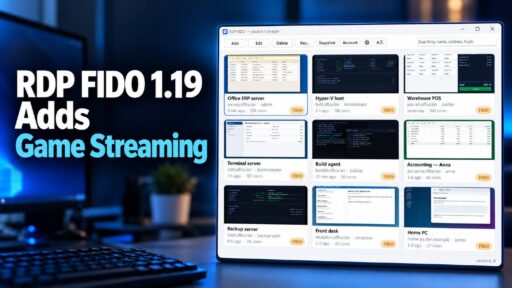
RDP FIDO 1.19 Adds Game Streaming for Windows Cloud PCs
RDP FIDO 1.19 adds FIDO Stream, a new game-streaming mode for Windows PCs and cloud virtual machines. It keeps FIDO2 hardware-key access in place while adding controller support, high refresh rates, and other gaming-focused features.
Read More
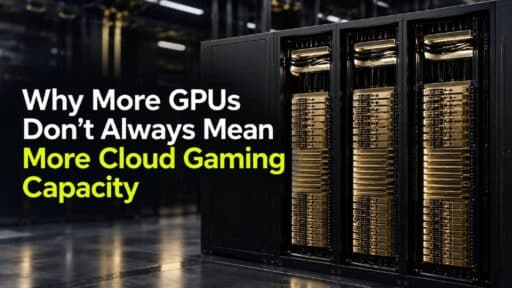
Why More GPUs Don’t Always Mean More Cloud Gaming Capacity
Adding more GPUs can increase cloud gaming compute, but it doesn’t guarantee the same increase in usable capacity. We look at how scheduling, location, resource demands, and peak usage affect how much new hardware can actually support.
Read More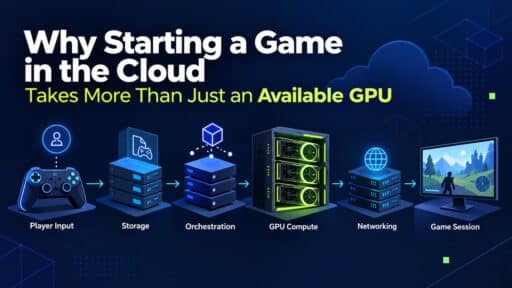
Why Starting a Game in the Cloud Takes More Than Just an Available GPU
Starting a game in the cloud takes more than an available GPU. See how storage, orchestration and networking turn compute into a playable session.
Read More