


Buying a gaming PC can set you back $1,000 or more before you’ve even bought a game. GeForce NOW and Boosteroid offer another way to play PC games without that big upfront purchase. A remote computer handles the game and streams it to a laptop, phone or TV you already own. You still need a reliable internet connection and access to supported games, but you don’t need to buy a powerful desktop to get started.
That makes cloud gaming considerably cheaper upfront, but what happens after you’ve paid for a subscription for one, three or even five years? Those payments add up, and depending on how often you play, the savings might not be as big as you’d expect. In our comparison, annual cloud gaming subscriptions generally cost less than buying a new gaming PC. However, extra gaming hours, subscription fees and the value of owning a computer you can keep or sell can change the numbers.
What Cloud Gaming Actually Costs
GeForce NOW offers Performance and Ultimate plans, each with a monthly allowance of premium gaming hours. Boosteroid Ultra takes a different approach, offering unlimited monthly playtime and a lower effective monthly rate when you pay annually. Here’s what both services charge at their standard published prices, before taxes or payment fees. NVIDIA lists its prices in U.S. dollars, and Boosteroid lists them in euros.
| Service | Monthly billing | Annual billing | Premium monthly playtime |
|---|---|---|---|
| GeForce NOW Performance | $9.99 | $99.99 | 100 hours, with up to 15 unused hours carried over |
| GeForce NOW Ultimate | $19.99 | $199.99 | 100 hours, with up to 15 unused hours carried over |
| Boosteroid Ultra | €16.89 | €89.89 | Unlimited under Boosteroid’s stated policy |
Boosteroid’s annual price works out to roughly €7.49 a month, but you pay the full €89.89 upfront. GeForce NOW’s 100-hour monthly allowance applies to both paid tiers. Members who use all their premium hours can buy more or continue with free-tier access until the allowance resets. NVIDIA doesn’t show the current extra-hour price in its public FAQ.
For the comparison, we’re converting euros using the European Central Bank’s November 2nd, 2026 reference rate of €1 to $1.1216. That puts Boosteroid Ultra at roughly $18.94 for one month or $100.82 for a year. Twelve separate monthly payments cost approximately $227.33. Your actual bill could differ because of currency conversion, regional pricing and payment fees.
The subscription pays for access to remote gaming computers, not ownership of every game in a service’s catalogue. You generally need the right game licence or store account, and a game that works on your own PC won’t necessarily be available on either service. That’s why we’re leaving game purchases out of the cost comparison rather than assuming cloud subscribers receive them for free.
Shadow PC is another option, but it works differently. Instead of streaming games through a supported catalogue, you’re renting a full Windows PC where you can install compatible games, mods and other software. Its Neo Lite plan costs $29.99 per month in the U.S. and includes up to 120 hours monthly, with each connection limited to four hours. That’s about $1,800 over five years before electricity, more than the $1,196 RTX 5060 desktop in our comparison.

Extra Costs Can Change the Cloud Gaming Total
GeForce NOW has another potential expense. Performance and Ultimate include 100GB of temporary storage for supported Install-to-Play games, but keeping those game installations available between visits can require paid persistent storage. NVIDIA lists 200GB for $2.99 a month, 500GB for $4.99 and 1TB for $7.99. The smallest option would add $179.40 over five years if you kept it continuously. Many games won’t need this extra purchase, so it’s excluded from our main totals.
Your internet connection can add to the cost. NVIDIA specifies at least 25 Mbps for 1080p at 60 FPS and 45 Mbps for 4K at 120 FPS. Boosteroid lists 80 Mbps as the minimum for 4K at 120 FPS and recommends at least 100 Mbps for a more reliable connection. If your existing internet already meets your needs, there’s no new broadband bill to add. If you have to pay an extra $10 per month for better internet, that’s another $600 over five years. Data limits and connection quality are worth checking before subscribing.
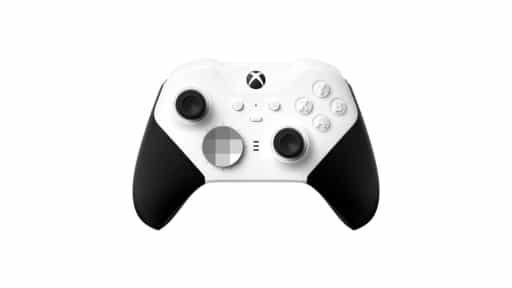
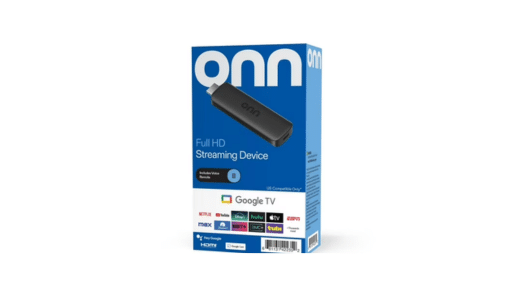
Our streaming figures also assume you already own a compatible phone, computer or TV. If you need a separate streaming device or controller, add its purchase price to your own calculation. A hypothetical $100 purchase, for example, adds $100 to the five-year cloud total.
How Much Does a Gaming PC Cost?
An RTX 5060 gaming desktop was selling for about $1,000 in the U.S. when we checked. Move up to a desktop with an RTX 5070 and you’re closer to $2,000. We also checked Best Buy US and Micro Center, where some similarly equipped desktops were listed for more. Those aren’t direct performance matches for GeForce NOW or Boosteroid, but the upfront cost is exactly what cloud gaming lets you avoid.
Component prices can also change between buying a PC and upgrading it. TrendForce forecast fourth-quarter 2026 contract-price increases of 10–15% for conventional DRAM and 15–20% for NAND flash. Those are industry forecasts, not confirmed increases for individual RAM kits or SSDs at a retailer. They don’t add to the cost of a PC you’ve already bought unless you decide you need new components.
Owning a desktop means you can use it for work and other PC tasks, install compatible games, and play games that support offline use without relying on an internet connection. You can decide when to replace components, and the PC may retain some resale value. Those advantages are worth considering alongside its price.
There’s a different calculation if you already own a gaming PC that still plays the games you enjoy. You don’t need to buy that computer again. The relevant costs are its electricity use and any component replacements or upgrades you actually need, compared with taking on a new subscription. Our main tables are for someone considering a new desktop purchase, not someone keeping a PC they already own.
For electricity, we’ll use the U.S. residential average of 18.16 cents per kilowatt-hour for August 2026. We’ll assume a desktop draws 300 watts during gaming and a device you already own draws 30 watts when streaming. These are illustrative power figures, not measurements of the two listed desktops or a particular streaming device. At 60 hours a month, that works out to approximately $39 a year for the desktop and $4 for streaming.
Cloud Gaming vs. Gaming PC Costs Over Five Years
Let’s use 60 hours of gaming a month as a starting point. That falls below GeForce NOW’s 100-hour allowance, so neither paid tier needs extra premium hours. Here’s what the purchase price or subscription payments add up to, including our estimated household electricity costs.
| Option | One year | Three years | Five years |
|---|---|---|---|
| GeForce NOW Performance, annual billing | $104 | $312 | $520 |
| GeForce NOW Performance, monthly billing | $124 | $371 | $619 |
| GeForce NOW Ultimate, annual billing | $204 | $612 | $1,020 |
| GeForce NOW Ultimate, monthly billing | $244 | $731 | $1,219 |
| Boosteroid Ultra, annual billing | $105 | $314 | $524 |
| Boosteroid Ultra, monthly billing | $231 | $694 | $1,156 |
| $999.99 gaming desktop | $1,039 | $1,118 | $1,196 |
| $1,999.99 gaming desktop | $2,039 | $2,118 | $2,196 |
These are approximate U.S. dollar totals rounded to the nearest dollar. They assume five years at the same subscription prices, exchange rate and electricity rate. They exclude taxes, purchased games, peripherals, additional internet charges, PC replacement-part costs and resale value. For cloud gaming, they assume you already own a suitable device.
All three annual cloud plans cost less than the $999.99 desktop over five years in this example. GeForce NOW Performance comes to about $520 with annual billing, compared with $1,196 for the desktop. Paying monthly is a different story. GeForce NOW Ultimate reaches $1,219, which is $23 more than the PC. Boosteroid Ultra costs $1,156 with monthly payments, just $40 less.
An upgrade would change the PC totals, but it shouldn’t be treated as unavoidable. For example, adding a hypothetical $300 component purchase in year four brings the $999.99 desktop’s five-year cost to about $1,496 at 60 hours a month. Someone happy with their existing graphics card and RAM could keep the original $1,196 estimate instead.
Small changes can reverse the closer results. These five-year examples each change only one assumption from our 60-hour comparison. They’re not forecasts or costs everyone will face.
| Five-year scenario | Modelled cost |
|---|---|
| $999.99 PC, original 300-watt estimate | $1,196 |
| Same PC averaging 200 watts during gameplay | $1,131 |
| Original PC model with $200 recovered through resale | $996 |
| GeForce NOW Ultimate, annual billing | $1,020 |
| Ultimate with continuous 200GB persistent storage | $1,199 |
At $996 after an illustrative $200 resale, the desktop comes out cheaper than GeForce NOW Ultimate. Adding the smallest persistent-storage plan instead makes Ultimate slightly more expensive than the desktop’s original $1,196 total. Neither outcome applies to every gamer. The point is that the closer comparisons depend on your actual expenses, not just the advertised subscription price.
How Cloud Server Upgrades Change Long-Term Value
A desktop won’t gain a newer graphics card unless you buy one. GeForce NOW Ultimate subscribers gained access to Blackwell-powered RTX 5080-class servers when NVIDIA began its September 2025 upgrade. The monthly subscription remained $19.99 at the time.
Boosteroid has been working with AMD on its cloud servers. In June 2026, AMD shared Boosteroid’s reported support for up to 4K and 120 frames per second. That’s a company-reported capability, not a performance result we’ve tested. What you actually get can depend on your game, location and available servers.

There’s no guarantee those server upgrades will come at the same subscription price. Boosteroid increased Ultra’s monthly price from €12.89 to €16.89 in September 2026, about 31%, even though its annual plan stayed at €89.89. PC components can get more expensive too. We don’t know what either will cost five years from now, which is why our tables keep today’s prices unchanged.
How Your Gaming Habits Change the Numbers
Playing 20 hours a month instead of 60 won’t change your subscription fee, but it does mean using less electricity. Playing 120 hours a month is different. You exceed GeForce NOW’s standard premium allowance, but Boosteroid Ultra doesn’t have a monthly playtime cap under its published policy.
Here’s the five-year cost at both ends of our playtime comparison. The 60-hour results remain in the main table above.
| Option | 20 hours/month | 120 hours/month |
|---|---|---|
| GeForce NOW Performance, annual billing | $506 | $898* |
| GeForce NOW Performance, monthly billing | $606 | $997* |
| GeForce NOW Ultimate, annual billing | $1,006 | $1,758* |
| GeForce NOW Ultimate, monthly billing | $1,206 | $1,957* |
| Boosteroid Ultra, annual billing | $511 | $543 |
| Boosteroid Ultra, monthly billing | $1,143 | $1,176 |
| $999.99 gaming desktop | $1,065 | $1,392 |
| $1,999.99 gaming desktop | $2,065 | $2,392 |
The 120-hour GeForce NOW figures are illustrations, not verified current checkout totals. They assume two extra 15-hour packs every month at NVIDIA’s previously published rates of $2.99 per pack for Performance and $5.99 for Ultimate. The calculation does not credit any potential rollover of unused purchased hours, which we couldn’t verify. NVIDIA confirms that additional premium hours can be purchased, but members must check their account portal for the current price. The other rows use the same assumptions and exclusions as the main table. All figures are approximate U.S. dollars.
The heavy-use example shows why the same answer won’t work for everyone. Under our historical extra-hour assumption, GeForce NOW Ultimate reaches about $1,758 over five years with annual billing, or $1,957 if you pay monthly. The $999.99 desktop comes to $1,392. That doesn’t make it an equivalent gaming experience, but it does make the desktop cheaper in this example.
You also don’t have to subscribe all year. Someone who only plays PC games for a few months might pay less by subscribing during those months and cancelling afterward. Our tables assume continuous access, so they don’t represent someone who regularly takes breaks from a paid plan.
When Does Owning a Gaming PC Make More Sense?
At 20 and 60 hours a month, our calculations favour annual cloud subscriptions when you already own a suitable streaming device and play supported games. The savings can be substantial if you’d otherwise buy a desktop only for gaming.
You can switch between supported devices without downloading huge game files or maintaining a dedicated gaming desktop. Some games still need to be installed on a remote server first, and you’ll need a reliable connection and compatible controls.
Buying a PC still makes sense when you need it for other tasks, prefer full control over installed games or don’t want to depend on cloud availability and connection quality. Locally installed games may support mods, offline play or accessories that aren’t available through your cloud service. Competitive gaming can also make connection delays harder to ignore. Check whether your favourite games and their features are supported before committing to either cloud subscription.
A new desktop could last longer than five years and still have resale value. It doesn’t suddenly become unusable because newer graphics cards exist, although replacing failed parts or upgrading components can add to the cost.
So, is cloud gaming cheaper? In most of our examples, yes, particularly if you’re starting without a gaming PC and already have suitable internet and a device for cloud gaming. Annual billing can save hundreds of dollars over five years. But if you already own a capable desktop, need extra cloud storage or internet service, or expect to recover part of a PC’s purchase price, ownership can cost less. Check what you already have and what your games require before deciding.
As always, remember to follow us on our social media platforms (e.g., Threads, X (Twitter), Bluesky, YouTube, and Facebook) to stay up-to-date with the latest news. This website contains affiliate links. We may receive a commission when you click on these links and make a purchase, at no extra cost to you. We are an independent site, and the opinions expressed here are our own.