



Cloud gaming does not always arrive with a big launch moment. Sometimes it grows quietly inside services people already use, only becoming visible once a broader pattern starts to form. That has been the case with PLEIO, a cloud gaming platform that has been around longer than many people might expect.
PLEIO first launched in 2020 as a cloud gaming service developed by Gamestream and made available through Bouygues Telecom in France. From the beginning, the idea was simple: stream games from the cloud without a console, without downloads, and across multiple screens. Rather than chasing a global direct-to-consumer audience, PLEIO was introduced through a telecom partner and positioned as part of a wider digital service, sitting alongside mobile plans, broadband, and TV hardware.
PLEIO’s Early Years Inside Telecom Bundles
In the years since, PLEIO has continued operating within telecom environments, particularly through Bouygues Telecom. During that time, the platform evolved quietly inside those partnerships, with changes to its catalogue, device support, and overall cloud gaming experience delivered as part of bundled mobile, broadband, and TV services. While cloud gaming as a concept gained more mainstream attention elsewhere, PLEIO remained embedded within existing telecom offerings rather than marketed as a standalone destination.
What has changed recently is not PLEIO’s existence, but its visibility. Over the past several weeks, the platform has appeared through a series of announcements from broadband and TV providers, particularly in the UK. These launches did not land all at once, and they were not framed as major cloud gaming debuts. Instead, PLEIO has been bundled into broader entertainment packages, sitting alongside live TV, streaming apps, and fibre broadband. Individually, each announcement is easy to miss. Seen over time, these announcements show how cloud gaming is increasingly being packaged and distributed.
This is the first time Cloud Dosage is taking a focused look at PLEIO, and the timing feels right. With its multi-year roots and its recent expansion through telecom and ISP partners, PLEIO offers a clear example of how cloud gaming is becoming part of everyday broadband and TV services, rather than something you have to actively seek out.
What Is PLEIO?
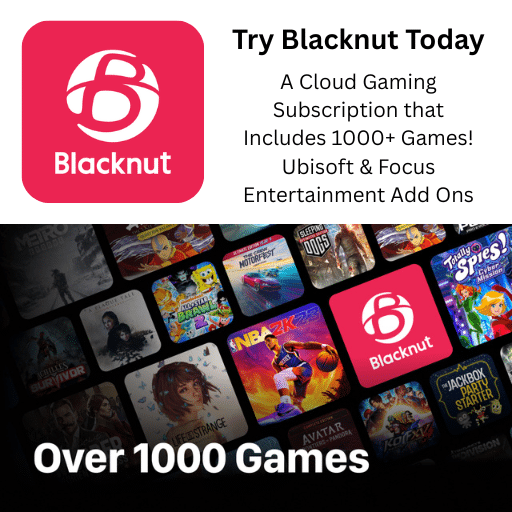
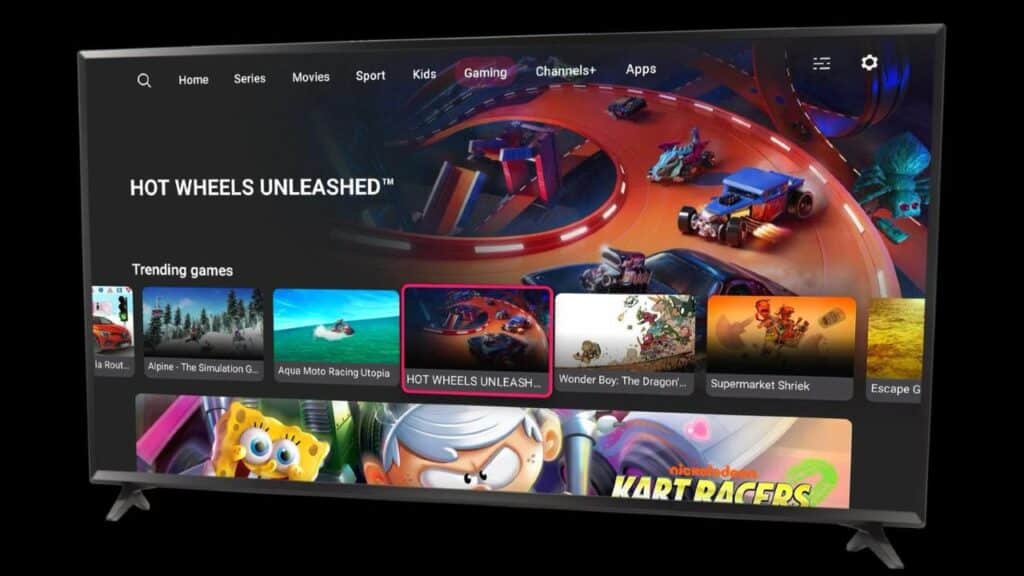
At its core, PLEIO is a cloud gaming platform designed to stream games from remote servers rather than run them locally. You do not need a console, and there are no downloads or updates to manage. Games launch over an internet connection and can be played across multiple devices, including TVs, PCs, smartphones, and tablets, depending on how the service is bundled by a provider.
PLEIO offers a curated catalogue of games rather than an open marketplace, with access included as part of a subscription. That subscription is typically bundled and billed by a telecom or broadband provider, rather than offered through a standalone storefront. This approach makes PLEIO feel less like a traditional gaming platform and more like an extension of an existing digital service.
Another defining part of PLEIO’s design is flexibility. You can use a physical controller, try games with touch controls on mobile, or play with a keyboard and mouse on PC. Features such as local multiplayer support and parental controls reinforce its household focus. PLEIO is built to fit naturally into shared living spaces, rather than centre on a single screen or a dedicated gaming setup.
Netgem’s Role Behind the Platform
PLEIO is not a standalone startup or a one-off telecom experiment. The platform is currently owned and operated by Netgem, a company that has spent years building technology for TV, streaming, and cloud-delivered entertainment services. In this setup, Netgem provides the platform itself, while telecoms and broadband providers handle distribution, billing, and customer relationships.
That distinction matters. Netgem controls how PLEIO operates behind the scenes, including the cloud gaming technology, platform updates, and content aggregation. Internet service providers do not build their own cloud gaming systems. Instead, they license PLEIO and bundle it into their existing broadband or TV offers, often under their own branding.
Netgem’s interest in cloud gaming is not accidental. In its business updates, the company has described cloud gaming as a key growth area alongside streaming and FAST channels. Netgem also strengthened its position by acquiring Gamestream’s cloud gaming assets in October 2024. Making it a fully fledged operator of its cloud gaming offering. With those assets in-house, Netgem now operates the technology behind PLEIO directly.
From Bouygues Telecom to UK Fibre ISPs
PLEIO’s original deployment through Bouygues Telecom established a clear template for how the platform would be distributed. Rather than launching as a standalone service, PLEIO was integrated into a telecom environment. And bundled alongside mobile plans, broadband, and TV hardware. This approach placed cloud gaming inside services people already used, rather than positioning it as a separate destination.
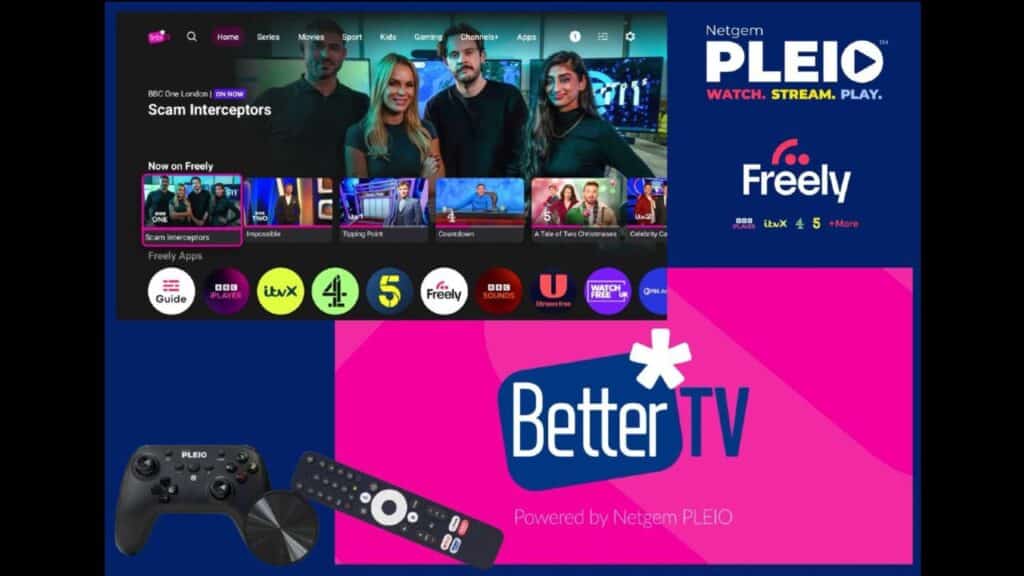
More recently, that same distribution model has become easier to spot through a series of announcements from UK fibre broadband and TV providers. These include brsk, Connect Fibre, and WightFibre. Each introducing PLEIO as part of a broader TV and entertainment offering rather than as a dedicated gaming product. In each case, cloud gaming is positioned alongside live TV and streaming apps. Framed as another feature within a connected household.
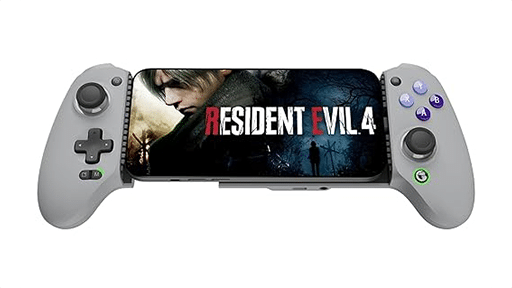
Across these rollouts, the structure remains consistent. PLEIO is presented as an included or optional service within a broadband package, supported by compact hardware and a bundled controller. The emphasis is on accessibility and ease of use rather than technical specifications or competitive positioning. Cloud gaming is treated as part of the overall entertainment experience, not the headline feature.
What stands out is how repeatable this approach has been. Each provider introduces PLEIO in a similar way, even though the announcements arrive weeks apart. That steady cadence aligns with a gradual expansion model. Where cloud gaming becomes part of everyday broadband and TV services without relying on a single launch moment.
Cloud Gaming as a Built-In Feature
One of the clearest takeaways from PLEIO’s rollout is how cloud gaming is being positioned as a built-in feature rather than a standalone destination. In these bundles, cloud gaming sits alongside live TV channels, on-demand streaming apps, and broadband services.
This approach lowers the barrier to entry. There is no console to set up, no store to browse, and no long-term commitment beyond a broadband or TV package. Cloud gaming becomes part of the same environment people already use for watching TV or streaming films, which changes how it fits into daily habits. It is less about replacing traditional gaming setups and more about offering another option within the household.
PLEIO’s design reflects that intent. The inclusion of a controller, compact hardware, and support for multiple screens makes it easy to move between casual play sessions without reconfiguring a living room or dedicating a specific device. For families and shared spaces, that matters. Cloud gaming is treated as a practical extension of home entertainment. Not a separate ecosystem that requires its own learning curve.
Why This Model Keeps Working
PLEIO’s steady expansion highlights why a telecom-first approach continues to resonate for cloud gaming. Internet service providers already manage the infrastructure, billing, and customer relationships. Adding cloud gaming through an existing platform does not require them to become gaming companies. Or take on the risks of building something from scratch.
For Netgem, the model works in the opposite direction. Rather than competing for consumer attention in a crowded market, PLEIO gains reach through distribution partners that already sit at the centre of the household. Cloud gaming becomes another service that benefits from scale and consistency. Even if it is not marketed as the main attraction.
This approach also aligns with how many people actually engage with games at home. Not every session needs to be long or planned. Cloud gaming in this context supports short play sessions, shared use, and low-friction access. It fits around existing routines instead of trying to replace them.
What stands out is not speed or spectacle, but repeatability. PLEIO’s rollout shows how cloud gaming can grow incrementall. Embedded inside broadband and TV services, without relying on a single defining moment.
Why Cloud Dosage Is Paying Attention Now
PLEIO has been part of the cloud gaming landscape for years, but its recent visibility makes it worth closer attention. With multiple ISPs adopting the same model in a short span, the platform offers a clear view of how cloud gaming is being distributed today.
For Cloud Dosage readers, PLEIO is not about disruption or replacement. It is about integration. It shows how cloud gaming can exist comfortably alongside streaming, live TV, and broadband, becoming part of the background rather than the headline.
As more providers explore similar approaches, PLEIO serves as a useful reference point. Its path offers a clear example of cloud gaming evolving through integration rather than attention-driven launches.
Related reading:
- Amazon Luna Arrives on Comcast and Rogers Xfinity Devices in the US and Canada
- Blacknut Arrives on the new LG Gaming Protal in India
- Blacknut Announces ZAP!, a Zero-Cost Ad-Powered Cloud Gaming Option
- Netflix Games on TV Brings Easy Party Gaming to Your Living Room
- Blacknut Cloud Gaming Arrives in Algeria Through New Ooredoo Partnership
As always, remember to follow us on our social media platforms (e.g., Threads, X (Twitter), Bluesky, YouTube, and Facebook) to stay up-to-date with the latest news. This website contains affiliate links. We may receive a commission when you click on these links and make a purchase, at no extra cost to you. We are an independent site, and the opinions expressed here are our own.




Great report about the subject! Congratulations!