


Cloud gaming and AI are starting to appear in some of the same GPU infrastructure strategies. Digital Alpha made that connection unusually direct with its new Blacknut investment. The firm described gaming and AI as complementary workloads and argued that cloud gaming can create durable demand for GPU capacity and edge networks.
Digital Alpha isn’t alone in seeing opportunities beyond gaming. Boosteroid says the infrastructure behind its cloud gaming platform can also support AI and other compute-heavy workloads. Companies with cloud gaming infrastructure experience, including Ubitus and Radian Arc, are also expanding deeper into AI and broader GPU infrastructure.



That raises a much more interesting question for cloud gaming. If this infrastructure can support a wider range of GPU workloads, could that make expansion easier to justify? The crossover is already happening at the business and infrastructure level. That still doesn’t mean gaming and AI routinely share the same physical GPUs.
Cloud Gaming Infrastructure Is Expanding Beyond Games
A cloud gaming service needs more than remote servers and a video stream. Companies have to manage GPUs, CPUs, storage and networking. They also have to keep the experience responsive enough for your inputs to reach the game quickly.
That expertise is starting to have value outside gaming. Digital Alpha’s argument starts with the history of GPUs. Graphics processors were gaming technology long before the current AI boom. The firm now sees gaming and AI as complementary workloads and cloud gaming as an ongoing source of demand for GPU capacity and edge networks.
That’s Digital Alpha’s investment thesis, not proof that the model will work everywhere. But some cloud gaming companies are already building broader GPU businesses. Boosteroid is one of them. Its cloud gaming infrastructure uses custom server configurations with AMD EPYC processors and Radeon GPUs. In material created by Boosteroid and republished by AMD, the company says its platform can extend into AI, visualization and high-performance computing.
Boosteroid also says its software stack can support AI and other demanding compute workloads using infrastructure originally built around gaming. That goes further than simply saying a cloud gaming company also owns an AI business. The claim is still Boosteroid’s. AMD notes that the material originated with Boosteroid, so we should not treat it as independent validation of every performance or business benefit described.

GPU Infrastructure Expertise Is Expanding Into AI And HPC
The shift is showing up in both large data-centre projects and telecom-edge deployments. Boosteroid now describes itself as designing and managing large-scale GPU networks for AI, high-performance computing and cloud gaming. It is also part of a 300MW AI data centre agreement announced earlier in 2026.
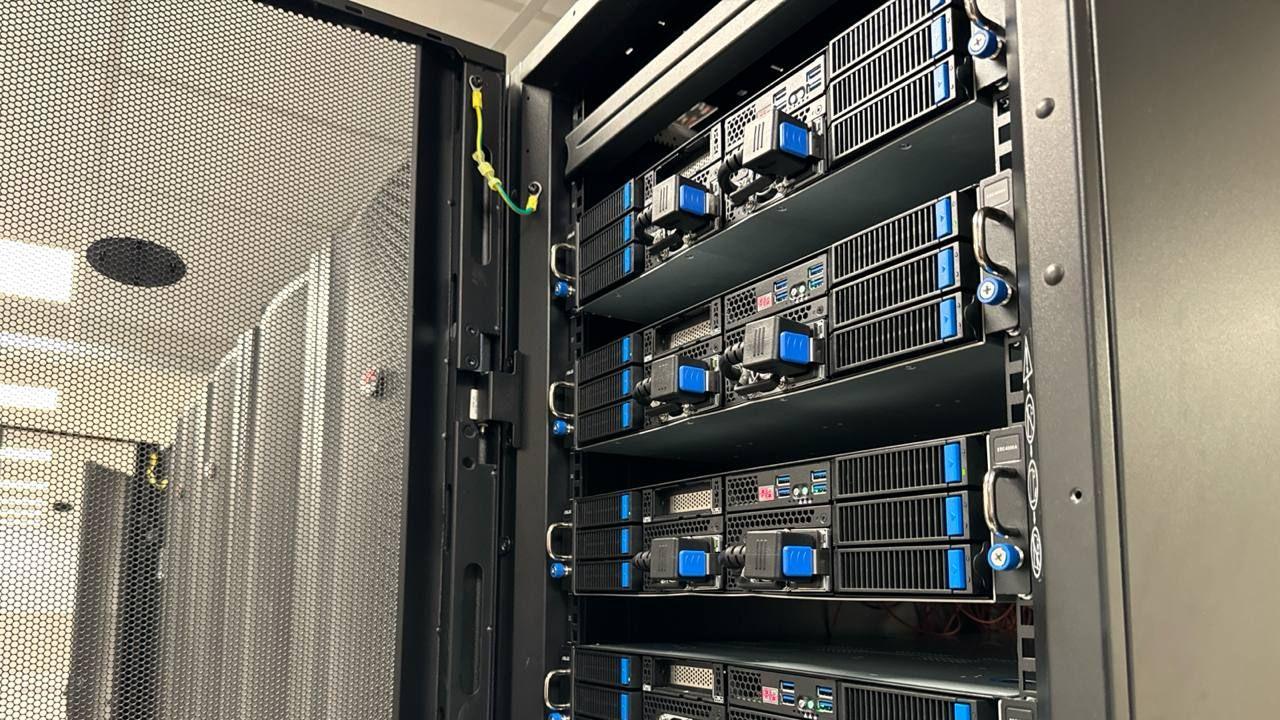
Ubitus is expanding its AI capacity in Japan. The company has announced a Maizuru City data centre built around NVIDIA Blackwell GPUs and its NeoCloud architecture. That sits alongside a cloud gaming business built on years of GPU virtualization and cloud streaming experience.
Radian Arc is taking the idea deeper into carrier networks. Its GPU infrastructure is deployed with telecom operators for cloud gaming, AI, machine learning and other compute-heavy applications. In Vietnam, Radian Arc, VNPT and Blacknut launched GPU infrastructure with cloud gaming as an early consumer use case. Radian Arc has also described AI and enterprise services as future uses for that capacity.
These companies are not following one technical model. Their architectures, business plans and deployments differ. What they share is experience operating GPU-heavy cloud services and a growing interest in applying that expertise beyond games. The pattern is not that every cloud gaming company is becoming an AI company. It is that GPU infrastructure built around gaming can become part of a wider compute business.
Edge GPU Infrastructure Could Widen The Opportunity
Where the compute sits adds a separate question. Cloud gaming benefits when GPU capacity is closer to you because controller inputs and video frames have to travel across the network. That has pushed some infrastructure deeper into telecom networks instead of leaving everything in large centralized data centres.
Blacknut and Qwilt are already pursuing that model. Their cloud gaming partnership plans to add dedicated GPU capacity inside ISP networks, along with storage closer to subscribers. Qwilt’s Open Edge strategy extends beyond entertainment. The company also discusses real-time applications such as AI inference, interactive services and other latency-sensitive workloads.
Qwilt hasn’t said the planned Blacknut deployment will support AI. But its broader strategy shows why edge GPU infrastructure could eventually serve more than cloud gaming. Radian Arc makes a similar case more directly. Its GPU infrastructure is deployed within telecom networks, and the company offers services across cloud gaming and AI. Radian Arc also has separate GPU deployments in India and the Caribbean targeting AI and other compute-heavy workloads.

That could matter for cloud gaming because deploying GPUs closer to customers is expensive. If telecom operators and infrastructure providers can justify those deployments through several businesses, gaming becomes part of a larger infrastructure decision. The evidence does not tell us whether that will create more cloud gaming capacity, lower costs or wider availability. Those would be much stronger conclusions.
Complementary Workloads Do Not Automatically Mean Shared GPUs
Digital Alpha can describe gaming and AI as complementary GPU workloads. Boosteroid can design infrastructure capable of supporting more than gaming. Ubitus and Radian Arc can operate businesses spanning both markets. None of that means every cloud gaming GPU is also being used for AI.
Different workloads can require different memory, networking, software and system configurations. Even when an infrastructure platform can support several uses, capacity allocation is a separate question. Boosteroid gives us the strongest evidence that the line can blur. Its own material says infrastructure created for gaming can also support AI and other demanding compute tasks. That still does not establish how often those workloads use the same resources in production or how capacity is scheduled between them.
We also do not have evidence that AI is subsidizing cloud gaming, filling idle gaming capacity or lowering the cost of streaming games. Those are interesting possibilities to investigate, but they are not conclusions we can make from the announcements we have now. What is clear is that some cloud gaming companies are thinking about their GPU infrastructure in broader terms. Boosteroid is expanding into general compute. Ubitus has moved heavily into AI. Radian Arc sells edge GPU services across gaming and AI use cases. Digital Alpha is explicitly arguing that gaming and AI can complement one another as infrastructure workloads.
For cloud gaming, the next part is worth watching. We need to see whether these broader GPU businesses lead to more gaming infrastructure, whether companies share capacity more dynamically, and whether the economics actually improve.
The crossover is already real at the business level. How far it reaches into the underlying GPU infrastructure is the more interesting question.
As always, remember to follow us on our social media platforms (e.g., Threads, X (Twitter), Bluesky, YouTube, and Facebook) to stay up-to-date with the latest news. This website contains affiliate links. We may receive a commission when you click on these links and make a purchase, at no extra cost to you. We are an independent site, and the opinions expressed here are our own.