



Demand for GPU compute is growing across AI, cloud gaming, and other accelerated workloads. But adding more GPUs is only part of the infrastructure problem. Where that compute is located can determine what it is actually useful for.
Large AI training workloads can favour locations with abundant power and room for dense infrastructure. Cloud gaming and some interactive AI workloads face a different constraint because network distance and proximity to users can directly affect performance.




Boosteroid drew attention to that distinction in an August 21 LinkedIn post about the geography behind GPU infrastructure. The company argued that power, cooling, fibre connectivity, nearby demand, and other local conditions can change which workloads suit a location. In Boosteroid’s view, expanding a GPU network doesn’t mean every site needs to perform the same job.
Cloud gaming makes that geography problem easy to understand. Distance between the gamer and the GPU directly affects the experience. As some cloud gaming companies expand into AI infrastructure, location is becoming part of a broader question. Where does each kind of GPU compute actually need to live?
GPU Capacity Depends On Where It Lives
That makes the location itself part of the infrastructure equation. A GPU cluster also depends on its power supply, cooling, network connections, and access to demand.
The useful capacity of a facility comes from more than the accelerators installed inside it. Electricity supply can affect how densely a site can operate and how quickly it can grow. Network position becomes more important when the workload needs frequent communication with people or other systems.
That idea also appears in broader data centre planning. McKinsey says time to power has become a major constraint on new AI capacity. Grid access, land, cooling, and network connectivity can all influence where new facilities are built. For large AI training jobs, access to power and high-density infrastructure can outweigh proximity to end users.

This changes what “capacity” means. A company may have plenty of GPU compute on paper but lack enough capacity where a specific workload needs it. For a latency-sensitive service, a distant GPU can be powerful without being equally useful.
AI Training And Real-Time Workloads Value Location Differently
Those location differences become clearer once you look at what the GPUs are actually being used for. AI training and inference can rely on many of the same broad computing resources, but they don’t place identical demands on the infrastructure around them.
Training large models can require tightly synchronized clusters and very high power density. McKinsey says those workloads can tolerate greater geographic separation. That gives hyperscalers more freedom to consider power-rich locations where grid capacity, land, and water are easier to secure.
Inference is more varied. Some workloads can remain centralized. Real-time applications, however, create a stronger reason to reduce the round trip between compute and the person, application, or data waiting for a result. McKinsey says this is helping drive inference capacity toward metro and surrounding areas with strong interconnection and lower round-trip times.
Akamai’s 2026 inference survey gives that pressure some scale. Among 200 decision-makers in North America and Europe, 60% said proximity to end users and decision points was important or critical. Half also listed maintaining acceptable latency at peak load among their hardest production-inference scaling challenges.
Akamai also found that 46% of respondents still run inference in a single centralized cloud region. That figure was expected to remain at 45% over the next one to two years. Closer compute is increasingly important for some use cases, but the industry isn’t simply moving every inference workload to the edge.
Distance Has Always Shaped Cloud Gaming
For cloud gaming, the effect of distance has been visible for years. A GPU can render a game correctly in a data centre. The experience still depends on how quickly inputs reach that server and rendered frames return.

Cloud gaming’s physical footprint is already widely distributed. Cloud Dosage’s datacentre map currently tracks locations across 11 cloud gaming services. They include GeForce NOW, XBOX Cloud Gaming, Boosteroid, Amazon Luna, and others. The map makes the physical side of cloud gaming visible because service coverage isn’t only about whether servers exist. It also matters where those servers sit relative to the people trying to use them.
Boosteroid has used the same logic in its own expansion. Earlier this year, it added more servers with České Radiokomunikace in the Czech Republic. Boosteroid described Central Europe’s fibre connectivity and location as important for low-latency cloud gaming and real-time AI workloads. The deployment illustrates why regional infrastructure can carry value beyond the raw number of GPUs installed.
Cloud gaming and AI inference aren’t the same workload, and they don’t need identical latency targets. They can still share a basic physical constraint in some situations. Once responsiveness depends on repeated trips across a network, geography becomes part of performance.
GPU Locations Could Become More Specialized
Once different workloads value location differently, a larger GPU network doesn’t necessarily need every site to do the same job.
Radian Arc describes physical compute location as one of three major decisions in a GPU deployment, alongside GPU and model selection. Its current architecture places high-density compute in core data centres for LLM training, reasoning, and complex inference. For latency-sensitive inference, Radian Arc instead uses telco infrastructure to shorten the network distance between its GPUs and the workload.
Cloud gaming is already part of that distributed model. In Thailand, Radian Arc’s GPU Edge Platform is deployed inside True’s national network to support Blacknut cloud gaming through TrueID. The companies said the deployment also lays the groundwork for future localized AI inference capacity and other services.

That doesn’t establish that Blacknut gaming sessions and AI workloads are already running on the same physical GPUs. It does demonstrate how one broader infrastructure strategy can assign different jobs to different deployments. Every site doesn’t have to serve every workload.
If that approach becomes more common, the next phase of GPU infrastructure won’t be measured only by accelerator counts. Power-rich sites may suit one class of work. Well-connected regional or edge locations may carry more value when distance affects the experience.
For cloud gaming, that could make AI infrastructure expansion relevant in a more precise way than simply saying both industries need GPUs. The thing to watch is whether companies begin assigning clearer workload roles to individual locations based on power, connectivity, local demand, and latency.
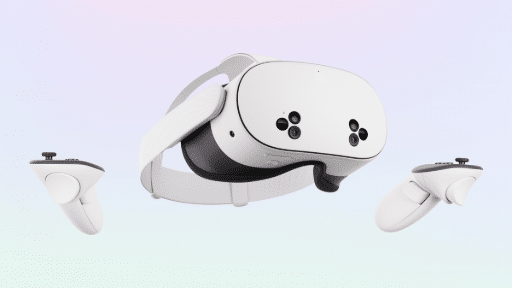
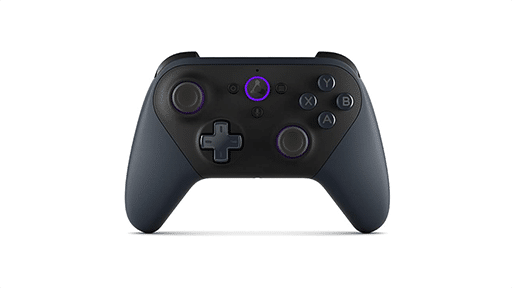
More GPU capacity will still matter. For cloud gaming and other real-time services, the question isn’t only how much compute exists. Enough of it also has to exist where the workload can use it effectively.
As always, remember to follow us on our social media platforms (e.g., Threads, X (Twitter), Bluesky, YouTube, and Facebook) to stay up-to-date with the latest news. This website contains affiliate links. We may receive a commission when you click on these links and make a purchase, at no extra cost to you. We are an independent site, and the opinions expressed here are our own.