

Smart TVs keep slipping into the centre of the gaming conversation, and it’s starting to feel like a real shift. What used to be a convenience feature is slowly turning into something bigger. You can see it in how publishers talk about cloud gaming, how TV makers push gaming hubs, and now, how advertisers are beginning to treat the living room screen as a serious place for interactive play.
A new report from PHȲND, shared publicly by David Wiesenfeld, the company’s Chief Strategy and Research Officer, makes the picture even clearer. The data points to a growing gap between how people play games and how the advertising world still thinks gaming works. As surprising as it sounds, gaming remains one of the least understood channels in modern media, even though millions of people already play without touching a console or PC. Smart TVs are becoming the bridge between those worlds, giving cloud gaming a way to reach families, casual gamers, and anyone who just wants to start playing without going through a long setup.
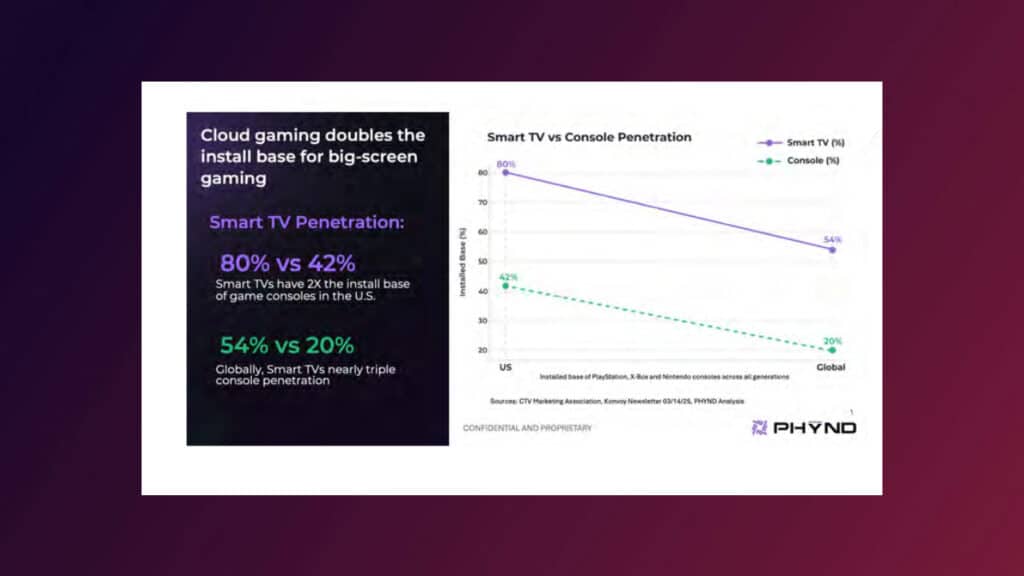
What caught my eye in the report is how naturally Smart TVs slot into the habits people already have. They sit in the room where households spend the most time, they already support streaming and apps, and they remove the biggest barrier gaming has always carried, the hardware cost. Once cloud gaming steps onto that screen with no fees or installation requirements, everything changes. Advertisers see a new space to reach people, and gamers get a simple, clean way to jump into something fun.
This shift has been building for a while, but now it feels real. Smart TVs are inching toward console territory, and the advertising world is finally noticing.
Why Smart TVs Are Suddenly Getting Attention From Advertisers
The PHȲND report shared by David Wiesenfeld makes something very clear. Advertisers are finally looking at Smart TVs as a real gaming platform, not just a place to stream shows. The shift comes down to a simple idea. Smart TVs already sit in the room where people spend most of their downtime, so reaching gamers there feels easier than trying to push them toward dedicated hardware they may never buy.
The report points out that Smart TVs can reach a much larger audience than consoles because they remove the usual barriers. No upfront cost for a device, no subscriptions, no downloads. That matters because casual gamers make up the biggest share of the gaming world, and most of them are used to free mobile play. When cloud gaming lands on a TV the same way a streaming app does, it fits into habits people already have. For advertisers, that means a broader and more reliable audience.
Another detail from the report stands out. Gaming on Smart TVs creates natural moments where short ads can fit without hurting the flow. Loading screens, transitions, and menu swaps are all places where a quick spot feels normal. It mirrors how ad-supported streaming works, which means advertisers can use tools they already rely on. That familiarity lowers the risk and makes it easier for brands to treat gaming as part of their regular media planning.
You can see why advertisers are paying attention now. Smart TVs offer scale, simplicity, and clear engagement points. It feels like the kind of environment advertisers have been trying to find in gaming for years, and the report makes it easy to see why this screen is becoming the new front for interactive content.
Cloud Gaming Is Turning Smart TVs Into Instant Consoles
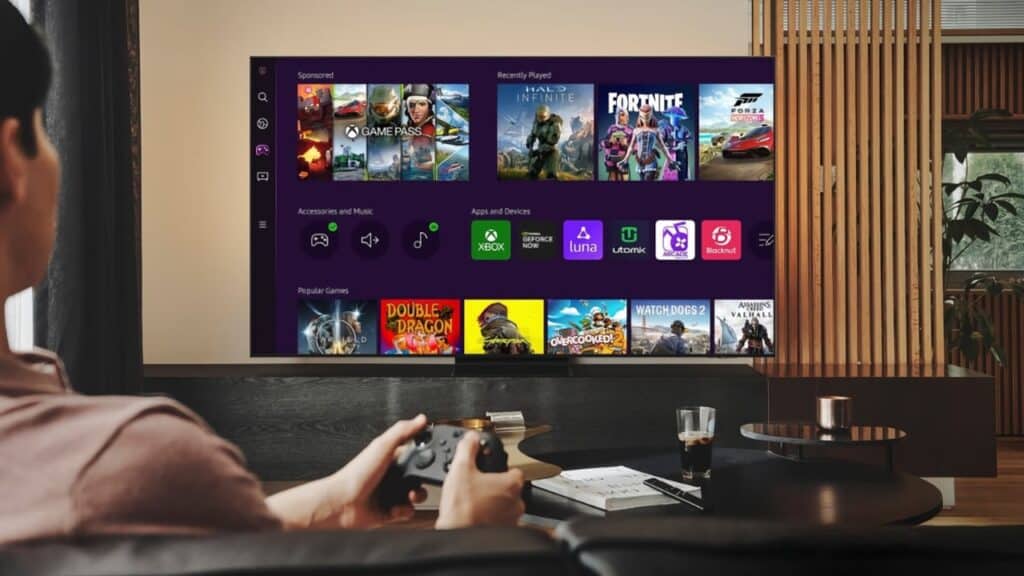
One of the strongest points in the PHȲND report is how cloud gaming changes what a Smart TV can be. Several years ago, the idea of playing full games on a TV without a console felt like a tech demo. Now it feels normal. Smart TVs already handle streaming, apps, and Bluetooth controllers, so cloud gaming becomes one more thing the TV can do without asking the user to set anything up.
The report highlights how this shift removes the biggest friction points in gaming. There is no hardware to buy, no updates to install, and no storage limits to worry about. For most households, the Smart TV is already powered on, connected to Wi-Fi, and sitting a few feet from the couch. Cloud gaming steps directly into that space and turns the TV into a device that behaves a lot like a console without actually being one.
You can see the momentum across the industry. Platforms like Samsung Gaming Hub, LG’s integration with GeForce NOW, and the growing list of TV apps for cloud services show how fast this is spreading. It feels like each year brings a new update that makes TV gaming smoother and more accessible. When you look at the PHȲND research, it matches the trend we have been following for a while. The living room is turning into the easiest place to try cloud gaming without committing to hardware.
The result is simple. Smart TVs are stepping into a role consoles once owned entirely. They might not replace dedicated hardware for enthusiasts, but they make gaming feel as easy as picking a show to watch. And that convenience is what keeps pushing cloud gaming forward.
Ad-Supported Models Are Growing Because They Remove the Last Barrier: Cost
The PHȲND report makes a strong case for why ad-supported cloud gaming is gaining traction. For most people, the biggest barrier to playing on a TV has never been interest. It has always been the price of the hardware. When a platform removes that cost and keeps the experience free, it suddenly matches what casual gamers already expect. Mobile gaming set that expectation years ago. The report notes that most of the world’s players choose games that cost nothing to start, so Smart TV cloud gaming fits that behaviour almost perfectly.
Why Ad Breaks Work on Smart TVs
What makes the ad model work is how natural it feels in a cloud environment. The report points out something simple that often gets overlooked. Cloud games have loading screens and transition moments where short video ads can play without interrupting the experience. It mirrors the way ad-supported streaming works, and advertisers understand that format well. Instead of trying to push ads into gameplay, the idea is to place them in pauses that already exist. It feels familiar to anyone who uses streaming apps or watches FAST channels.
This approach opens the door for a much wider audience. Families, casual players, and people who do not want to invest in a console can jump in without thinking about ongoing costs. Advertisers get a clear way to reach viewers in a big-screen environment, and gamers get access with minimal friction. It is a balance that has been hard to achieve in the past, but the report shows why it is finally possible on Smart TVs.
Cloud gaming has always been about access and convenience. Pairing it with a free model backed by light advertising feels like the missing piece. It is the kind of shift that broadens who gaming is for, and that is something the industry has been chasing for a long time.
Where PHȲND Fits Into This Growing Trend
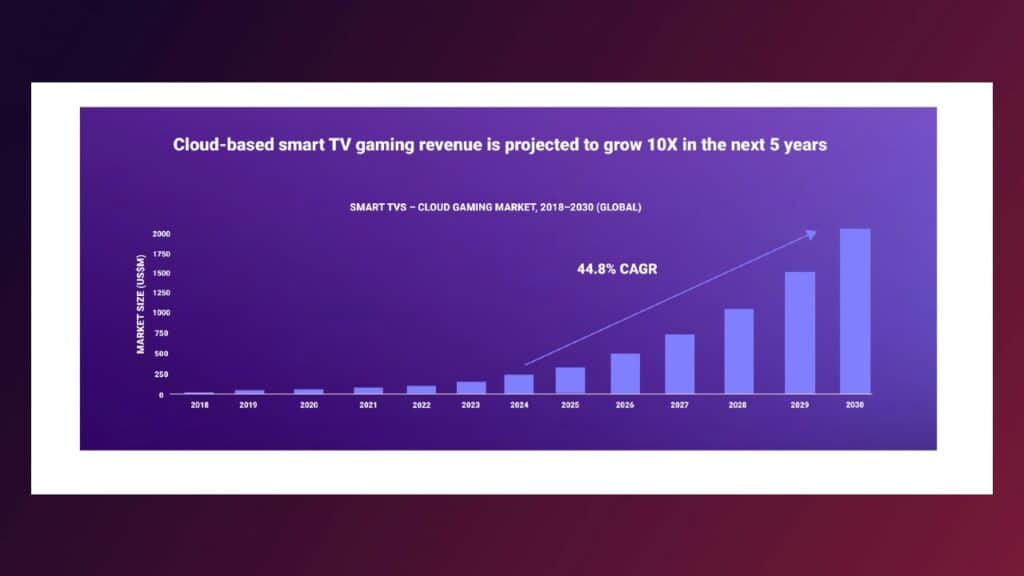
Since the report came from PHȲND, it is worth looking at how the company fits into the bigger picture. The research shared by David Wiesenfeld shows that PHȲND’s Smart TV approach lines up with what many advertisers are now looking for. A simple way to reach people on the biggest screen in the home, without asking them to buy hardware or subscribe to anything.
PHȲND positions itself as a service built around the living room first. It focuses on TV access, light ad placements, and the idea that gaming should feel as easy as streaming. That direction matches the trends highlighted in the report, especially the push toward frictionless access and free entry points. Other platforms are exploring similar ideas, so PHȲND is not alone. But its research helps explain why this model is gaining momentum.
What stands out is how the company frames the opportunity. Instead of trying to replace traditional consoles, PHȲND leans into the idea that Smart TVs can serve a different audience. People who want quick access, simple controls, and no setup. The report shows why advertisers find this valuable. It also helps explain why cloud gaming on TVs is becoming part of regular media discussions.
It is still early, but PHȲND’s role in this shift is becoming clearer. The platform reflects the direction the industry is heading, where gaming is less about hardware and more about convenience. And as advertisers keep looking for new ways to reach people where they spend their time, services like PHȲND will sit right in the centre of that conversation.
How This Shift Changes the Way People Play
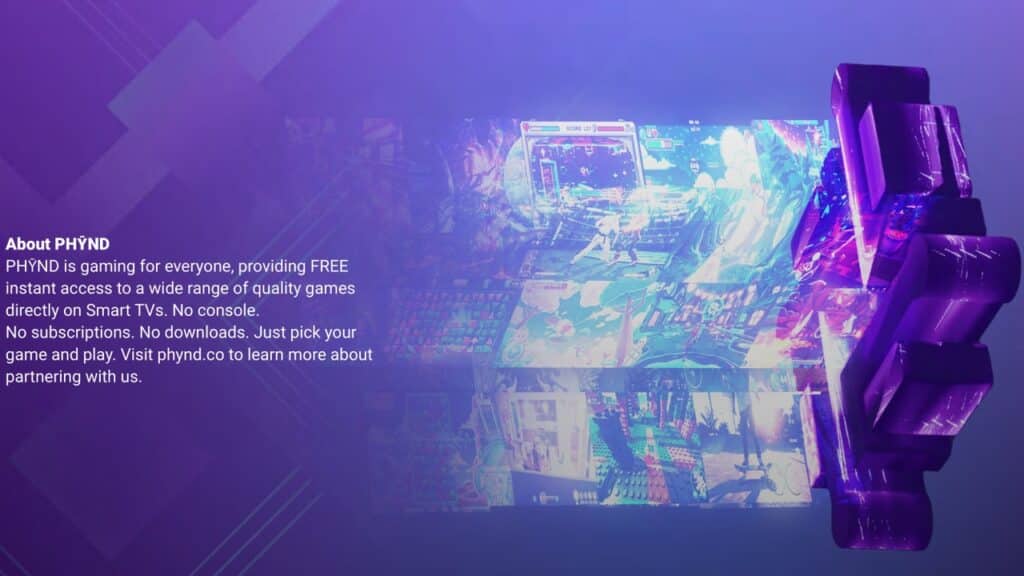
The PHȲND report does more than outline advertiser interest. It shows how cloud gaming on Smart TVs is quietly changing everyday play habits. When gaming moves onto a screen that most households already use, the whole experience feels easier. No setup steps, no downloads, and no hardware to buy. You pick up a remote or a controller and you are already close to playing something.
For many people, that level of convenience is what has been missing from big screen gaming. Not everyone wants a console or has space for one, and plenty of families stick to mobile games because they are simple to start. The report makes it clear that Smart TVs fill that gap. They offer the same low barrier to entry as a mobile game, only on a much larger screen.
There is also the question of ads. Anyone who has spent time with mobile games knows how messy that can get, so it makes sense to wonder how it will work on a TV. The report points out that the ad model for Smart TV gaming leans on short spots during loading moments, not inside the gameplay itself. That approach feels closer to streaming than mobile games, which keeps the experience cleaner and more predictable.
All of this creates a different kind of entry point for people who might not think of themselves as gamers. It opens the door for families who want something quick to play, or anyone who just wants to try a game without signing up for anything. It is a simple shift, but it changes the feel of gaming in the living room. And it makes the TV a natural place to play, not an add-on or an afterthought.
The Race for the Living Room
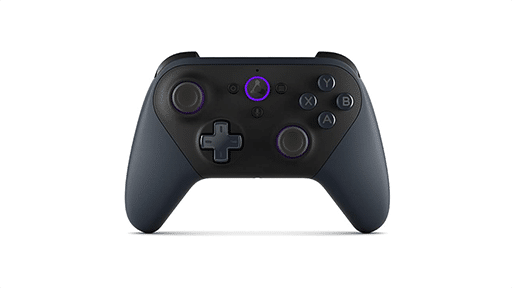
The PHȲND report lines up with something we have been tracking on Cloud Dosage for a long time. Every major cloud platform is trying to secure space on the living room TV. Blacknut is pre-installed on more than one hundred million smart TVs and keeps expanding through Samsung, LG, and regional partners. Amazon Luna leans on Fire TV devices to stay in front of households already tied into Amazon’s ecosystem. Netflix continues to experiment with cloud gaming and controller pairing on smart TVs as it works toward broader access beyond mobile.
Xbox Cloud Gaming plays a key part here too. Microsoft pushed early into the TV space through the Samsung Gaming Hub, giving Game Pass Ultimate subscribers a way to play without a console. It helped normalize the idea that full games can run on a TV with nothing more than a controller.
How PHȲND and GAMELOOP Fit Into the Shift
PHȲND is entering that same space from another angle. Its Samsung Gaming Hub partnership will bring free, ad-supported Smart TV gaming to millions of screens in the United States during its beta. The service focuses on instant access with no hardware or subscriptions, a direction that lines up closely with what advertisers and publishers want right now. It’s still early, but PHȲND’s Smart TV-first approach lines up with the wider shift happening around the living room.
GAMELOOP is also carving out its own lane, offering a live channel powered by Amazon GameLift Streams where people can jump into games with a single “Play Now” prompt. No app, no setup, just one button. It’s a very different approach, but it still aims at the same audience.
The Bigger Trend Behind All These Moves
Placed beside the PHȲND research, the broader trend becomes hard to miss. None of these platforms are chasing console replacement. They are trying to make gaming feel like streaming. Always there, frictionless, and just part of how people already use their TV. We have seen it across nearly every announcement this year. Blacknut expanding its cloud gaming offers during LG Streaming Week. Luna’s placement on Fire TV. Netflix getting ready for bigger screens. Xbox proving high-end cloud gaming works. GAMELOOP pushing a live-channel format. PHȲND preparing a beta built around free access and simplicity.
The report shared by David Wiesenfeld helps explain why all of this is happening at once. Advertisers need new places where people stay engaged, and the TV is still the most consistent screen in the home. Cloud gaming gives brands a path into that space, and it gives gamers an easier way to try games without extra hardware. When you line up these signals, it becomes clear that the living room has become cloud gaming’s next major battleground. Not defined by one winner, but by a steady move toward gaming that fits naturally into the screens people already use every day.
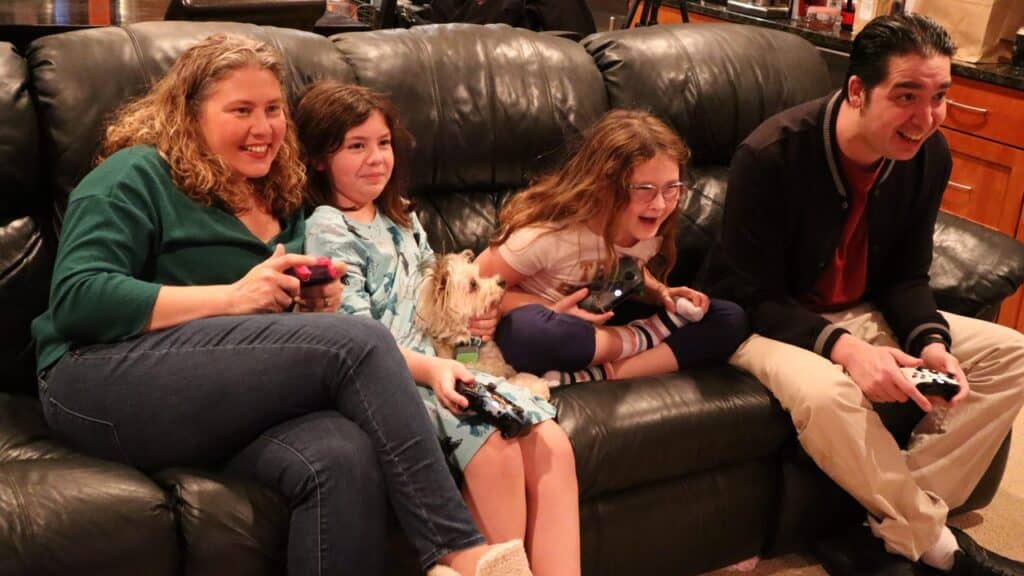
Where Smart TV Cloud Gaming Goes Next
Looking through the PHȲND report, it’s hard not to miss how quickly the living room has become the centre of cloud gaming’s momentum. A few years ago, most of this movement lived on phones and browsers. Now the biggest screen in the house is pulling ahead, and advertisers are paying closer attention than ever. Smart TVs used to feel like a bonus option for cloud gaming, but the trends in the report show how quickly that perception is changing.
How Every Cloud Platform Is Pushing Toward the TV
Across the industry, the same pattern keeps showing up. Services keep finding new ways to reach the TV, even if their approaches differ. Some platforms rely on pre-installation deals with TV makers. Others lean on app stores, streaming devices, or controller pairing tests to get people playing on a bigger screen. Even Google Stadia, long before the market was ready, pushed the idea of cloud gaming on TVs through Chromecast and helped set early expectations for what TV play could look like. PHȲND and GAMELOOP now add their own angles to this shift, with one focusing on free, ad-supported access and the other pushing instant “Play Now” entry through a live-hosted channel.
The Trend That Ties It All Together
When you compare these moves to the PHȲND findings, the broader picture becomes clear. Every service is trying to meet people where their attention is already anchored — the living room TV. It’s the easiest shared screen in the house, always on, always a remote click away. If cloud gaming can sit comfortably there, it becomes much easier for people to try something without worrying about hardware, downloads, or setup.
From a cloud gaming perspective, the shift feels overdue. We’ve covered so many announcements this year pointing in this direction, and the PHȲND report explains why they’re all happening at once. This isn’t about replacing consoles or matching high-end PC setups. It’s about building a version of gaming that fits into everyday TV use, the same way streaming became second nature over time. And honestly, watching how quickly the TV space is evolving has been one of the more interesting trends to follow this year. If this pace keeps up, the living room might end up being the place where cloud gaming finds its most natural home.
Related Reading About Cloud Gaming on Smart TVs
- Blacknut and LG Partner to Bring Ad-Funded Cloud Gaming to LG Smart TVs
- Blacknut Expands ‘Single Game’ Offerings On LG Smart Tv’s
- LG and Blacknut: Cloud Gaming Smart TV Integration Geets Deeper
- Blacknut Companion App Update Adds Multiplayer Support on Smart TVs
- Adweek NY 2025 Puts Gaming Center Stage as PHȲND Backs an Ad-Supported Cloud Gaming Future
- Xbox App Arrives on Select LG Smart TVs
- GAMELOOP Brings Ad-Supported Cloud Gaming to Samsung Smart TVs with Amazon GameLift Streams
- Xbox Cloud Gaming App Launches on LG TVs and Fire TV in Brazil
- Blacknut Heads to the 2025 APAC TV Summit as Cloud Gaming Expands on Smart TVs
As always, remember to follow us on our social media platforms (e.g., Threads, X (Twitter), Bluesky, YouTube, and Facebook) to stay up-to-date with the latest news. This website contains affiliate links. We may receive a commission when you click on these links and make a purchase, at no extra cost to you. We are an independent site, and the opinions expressed here are our own.